The film industry in one place - Articles, Reviews, trailers and hype!

Monday, 30 April 2018

‘Solo: A Star Wars Story’ Teases a “Rite of Passage” for an Iconic Character

Between blaster fire and new best Wookie friends, a closer look reveals a potentially fun romp rife with rugged charm.

For the longest time, I was not excited for Solo: A Star Wars Story. This sentiment has definitely been shared among other Star Wars fans who may have had trouble picturing anybody but Harrison Ford embodying Han Solo. And especially now — after eight Skywalker-focused movies in this film franchise — it feels about time to break out of the legacy mould a little (even if fanboys don’t agree).

Yet not one but both Solo trailers have inspired a change of heart in me, at least to the point of giving the film a benefit of the doubt. Of course, the more different Alden Ehrenreich‘s iteration of Han feels to Ford’s original, the better, but the movie itself is also already tonally intriguing from what little footage we’ve seen. Despite Rogue One being the only other anthology film we can compare Solo to at the moment, the latter seems primed to continue a welcome trend of smaller Star Wars adventures that are rough around the edges but brimming with personality — not unlike Han himself when we meet him as a more optimistic almost-hero.

In Lucasfilm’s newly released featurette titled “Becoming Solo,” fans are taken on a journey into the depths of this new-old Han that they’ve never met before. Watch it below:

That’s the biggest gamble for Solo at the moment: the constant tension between being fresh enough to warrant its own existence and a reminder that Han as a character is deeply linked to the lore that kickstarted Star Wars in the first place. Thankfully, the promotional material for Solo has so far managed to balance out both those elements impressively and then some. We have to wait for opening day to really decide Solo‘s fate, but bit by bit, it’s getting more hopeful.

Solo: A Star Wars Story premieres at Cannes on May 15th and lands in cinemas domestically on May 25th.

The post ‘Solo: A Star Wars Story’ Teases a “Rite of Passage” for an Iconic Character appeared first on Film School Rejects.

‘Avengers: Infinity War’ is the New Opening Weekend Box Office Champion

A lot of people went to see Marvel’s latest.

When you make a crossover event movie like Avengers: Infinity War, you know you’re going to draw in the crowds. Marvel threw together characters from some of the most successful superhero releases of all time, and naturally the result was one of the most populous opening weekends of all time.

Infinity War sold 27.2 million tickets in North America over its first three days. That includes Thursday night previews, which alone brought in more than four million fans of the Marvel Cinematic Universe. After that first wave, it looked like the Avengers sequel could pass Star Wars: The Force Awakens to have the best opening of all time. Domestically, it fell short of that movie’s 28.5 million tickets. Worldwide, however, Infinity War is the new box office champ.

For international figures, only grosses are available. We can’t tell if attendance for the MCU’s main event was higher overseas than it was for The Force Awakens. But according to Box Office Mojo, Infinity War made $380 million. That was more than the Star Wars episode’s foreign debut ($281 million) but was still only second-best, below The Fate of the Furious ($443 million). Combined with its domestic dollars, Infinity War would appear to have the best worldwide opening of all time.

That’s even accounting for inflation. While The Force Awakens is still technically the domestic champ due to its greater number of tickets sold, adding up to a higher opening weekend gross at home, when that inflated figure is added to the movie’s international opening gross, the amount is still below Infinity War‘s astounding total of $630 million.

Not that it matters much which of the two movies is the true champ. Disney wears the crown either way. The studio now has 10 of the top 20 best domestic openers ever, most of them being Star Wars or Marvel movies. Without accounting for inflation, the number is up to 11, with nine of the top 10 being Disney releases. They make what the people want to see.

Also amazing is the fact that Disney and Marvel had two of the top five movies at the box office this past weekend. Black Panther jumped back up the chart to fifth place by selling 477,200 tickets. That’s still the movie’s lowest weekend attendance yet, but we can bet it would have been even fewer without Infinity War making its debut. Surely there were moviegoers who went to see both MCU installments in the theater. Maybe more than it seems if there was any theater hopping going on.

Obviously Infinity War had the best-selling superhero movie debut, topping The Avengers (25.5 million) with number of tickets sold. Impressively, the third of the Avengers movies gave the series a comeback after Age of Ultron dipped with an opening weekend attendance of 22.2 million. Does the combo cast have something to do with that? Infinity War was able to draw in crowds who might just have been into Avengers movies or Guardians of the Galaxy movies or Black Panther.

Infinity War had the least-positive reviews of the last four MCU installments, its Rotten Tomatoes score of 84% being just one point above that of Guardians of the Galaxy Vol. 2. That’s just slightly above the franchise average of 83.8% too. If we look only at “top critics” on the site, however, its 74% score falls slightly below the MCU average of 76.2%. Over at MetacriticInfinity Wars‘ score of 68 is above the franchise average of 65.3.

But regardless of the relative acclaim for Infinity War, this is a movie for the fans, and they were not disappointed. Opening night moviegoers gave the movie an ‘A’ grade via CinemaScore polling, which is standard for Marvel. It’s not as great as the ‘A+’ marks received by the first Avengers movie or Black Panther, but it matches every other MCU installment save for the below average responses to Captain America: The First AvengerThor: The Dark World, and The Incredible Hulk, each of which earned an ‘A-‘, and the first Thor, which got a ‘B+’.

For the first three days, fans are favoring Infinity War over other MCU installments, according to Rotten Tomatoes’ user polling. Despite the anti-Marvel crowd declaring another attack on the latest from the MCU brand, a la Black Panther, presently the RT “audience score” is 93%, which is a franchise best, above even previous (tied) record holders Guardians of the Galaxy and Captain America: The Winter Soldier.

Infinity War is also as of this writing the highest-rated MCU installment on IMDb, with a score of 9.0 from more than 160,000 votes. That could dip, of course, once more people see the movie and rate it on the site. The Avengers has more than a million votes, for instance, and that movie and Guardians of the Galaxy are otherwise the franchise champs there with score of 8.1.

How does all that compare to The Force Awakens? The Star Wars movie had better reviews (94% on RT) and the same CinemaScore grade but for now has the lower audience score on RT and lower rating on IMDb. As far as the whole franchises go, Marvel openings average at 15 million tickets sold compared to Star Wars‘ 12.5 million, which includes attendance for non-wide debuts in the series’ early years.

If we only count the same era, meaning Disney releases, the Star Wars franchise is up to a 23.4 million opening average from the last three movies. Marvel wasn’t always produced and distributed by Disney either, so we should compare to the studio’s releases (excluding even Spider-Man: Homecoming), which gives the MCU an average of just 16.8 million. But if we just look at the three Avengers titles, Marvel wins with an average opening weekend attendance of 25 million.

Again, Disney wins all around. But also 2018 is winning once again. Thanks to the massive debut of Infinity War, the year is up to 417.4 million tickets sold through April 29th. That’s more than the movie attendance up to this time of the year for each of the past five years.

The post ‘Avengers: Infinity War’ is the New Opening Weekend Box Office Champion appeared first on Film School Rejects.

More to Read:

Watching "The Nothing Factory" in Quito

Pedro Pinho's The Nothing Factory (2017), which is receiving an exclusive global online premiere on MUBI, is showing from April 20 - May 20, 2018 as a Special Discovery.
The Nothing Factory
Rainy season has begun in Quito. After a long day, I take a crowded Ecovía—one of the city’s public transportation lines—to be dropped right in front of the Casa de la Cultura Ecuatoriana Benjamín Carrión. This institution houses the Cinemateca Ecuatoriana Ulises Estrella, which is carrying out an exhibition on the best films of 2017. The year has just initiated in deceiving rhythms that haven’t allowed me to watch many films. The Nothing Factory by Pedro Pinho will be the third of the year. An image with men of different ages and heights raising their arms with the palms of their hands spread widely, wearing blue coats and expressing protest and discontent in their faces, kept appearing in front of me with persuasive insistence as I went through film magazines, websites, brochures, festival programs and social network posts of the last year. That image, however, felt fairly distant.
***
Portuguese cinema has become well acquainted with Quito in the last years, with the surging of the Week of Portuguese Cinema (Semana de Cine Portugués). This event, which is organized by the cinematographic association and film distribution company Vaivem, occurs annually and has brought some of the country’s most striking films in recent years to some of our screens: Tabú and the Arabian Nights trilogy by Miguel Gomes, the short films of Gabriel Abrantes, John From by João Nicolau, and Correspondências by Rita Azevedo Gomes, to name a few. The relevance of them being screened here not only stems from the fact that together they form a particular tendency in Portuguese cinema that brims with innovative energy, but most importantly from the fact that the non-traditional production modes that foster them are responsive to the difficult economic conditions that the country faces, which are not distant from the ones we live with in Ecuador. Therefore, a valuable dialogue has been established. One of the main venues in which it has taken place is the Cinemateca Ecuatoriana Ulises Estrella, and the screening of The Nothing Factory is a continuation of it.
***
The Cinemateca sits on the threshold between modern and colonial Quito. It is part of the Casa de la Cultura’s main building, which is a roundish structure surrounded by a green area. In front of it sits a McDonald’s and a commercially bustling park named El Ejido. The way into the main building involves going through a parking lot and a few stairs, then one has to circle it towards the left until some other stairs appear. That is the entrance into the Cinemateca’s main movie theatre, called Sala Alfredo Pareja Diezcanseco, which takes its name after a well-known Ecuadorian novelist, essayist, historian and diplomat. There is a big saloon in which the audience often queues; its walls are decorated with posters from well-known Ecuadorian films, and a number of old cameras are displayed in glass cases. At the bottom of the room is a big cafeteria that is often closed, but once it becomes active is a lovely space to share expectations or after thoughts of the films with strangers. Although the saloon is relatively cold, its windows that look towards the north east of Quito have allowed me to glimpse the most beautiful sunsets.
***
The walls of the Sala Alfredo Pareja Diezcanseco are wooden and brown and the seats are blue, the same kind of blue of the coats worn by the characters of The Nothing Factory. Only twenty seats were taken when the trailers started rolling. The premiere of Rubén Mendoza’s Señorita María, La Falda de la Montaña from Colombia was announced. A few months earlier a retrospective of his work was held in that same movie theatre. When The Nothing Factory started, more people came in. Now I have to go back to the notes I took on my notebook, which I tried to take quite subtly in order to not interrupt the experience of watching the film. The film also beings with an interruption: Zé and his wife are sharing a sexually intimate moment when his mobile phone starts vibrating with an alarming insistence. This scene, I later realized, gives clues to one of the film’s most important explorations: the ways in which intimacy can be interrupted by the abrasive forces of a violent and unforgiving power structure.
***
There is tension outside of an elevator factory where the workers are defending their workspace. A woman enters the frame with the camera following her as if warning that she is carrying terrible news. The conflict is established early on: the elevators will stop being produced because bringing others from China is cheaper. As a result, the workers will be let go of their jobs; the jobs they have been executing for many years, the financial source of sustenance for their families. At some point the film drifts towards the voice of a woman describing the European economic crisis. She describes it as an “end without an ending,” and then says, “human work in capitalism is unsustainable and obsolete.” A particular scene stuck with me: one of the characters is flaying a rabbit’s skin. A sense of disgust was felt in the room. The metaphor is clear: the skin is to the work, what the rabbit is to the workers.
***
The film does a dynamic job of balancing acts of deep intimacy with landscapes of cold industrialism. In fact, the camera often drifts away from scenes of intimacy towards the gray and open landscapes of a country in economic crisis. Director Pedro Pinho suggests the crisis is not only present in the latter. They are intrinsically connected, there is a clear causality involved. The economic crisis, however, also suggests the fostering of alternative modes of living and being. A certain splash of creativity seems to derive from there, and in the case of film production, film conceptions that are often found on the margins of production and viewership, come to life. Cooperative methods make possible what the state and private markets won’t. Cooperative methods such as when the workers take the factory in their hands, making work possible when capitalist enterprises deny it. I’m happy that this is one of the first films I have seen in 2018.
***
The experiences I have had of watching films at the Cinemateca Ecuatoriana Ulises Estrella have been warmly cocooned by a sensation of collective unity. Full seats on rainy Mondays, entire families at films that are rare findings in Ecuadorian screens, informative and personal presentations prior to the screenings. The team comprised by the movie theatre manager, the projectionist and others has been the same for several years, and whenever I go I am welcomed by them with warm hugs and smiles, even if I only worked with them for a few months. My relationship to this place also grew fonder when, talking to my mom, she confessed that when she was younger and worked nearby; she would spend her afternoons watching films there. It is now me sitting here.
Some people have left the screening (not as many as in Correspondências a few months earlier), others cough, some murmur, and at times I feel invaded by the desire to listen to their comments. But I am never able to do it. When the word capitalism is mentioned, some members of the audience raise their heads and extend their necks as if something of the word would wake their deepest arousal. The film reaches its ending and someone in the back starts applauding. We follow that person’s initiative.
***
I am left with the feeling that whatever form intimacy might take, it is more powerful than the forces that intend to silence it. I suspect that is what Pinho means to suggest. I am confident he is describing a collective kind of intimacy. There is a scene of intimacy in which all the workers sing and dance and interrupt whatever sort of expectation we might have of the film's story. I am reminded then, that not all interruptions are necessarily negative.
It stopped raining. We are leaving the cinema at 23h00. It’s a rarity for a Monday, probably as rare as having witnessed the premiere of this film here in Quito.

Eisenstein makes a scene: IVAN THE TERRIBLE Part II on the Criterion Channel

For Yuri Tsivian

DB here:

Everyone knows Eisenstein as a theorist and practitioner of something called montage, which in his hands comes to mean a lot of things. But he was no less interested in what he called expressive movement. He believed that the viewer could be aroused by dynamic physical action that carried powerful feeling. Expressive movement pervades the set-pieces of his silent films. On the Odessa Steps of 1925’s Battleship Potemkin (1925), we get the robotic descent of the Cossacks opposed to the agitated flight of the citizenry, and the street massacre of October (1927) makes even mechanical bridges seem ferocious. But even less flamboyant moments, from the animalistic antics of the spies in Strike to the weeping masses at the Odessa quai, are full of expressive postures, gestures, and expressions. Eisenstein sculpts the human body so as to project extreme states of feeling.

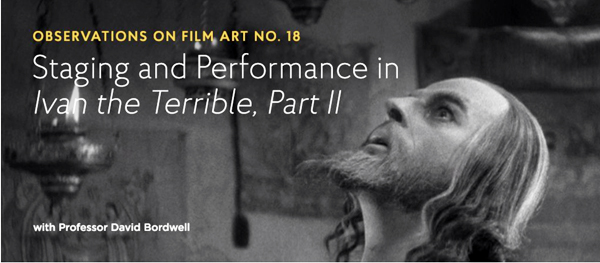
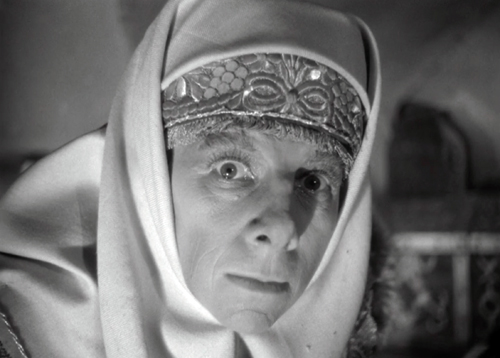
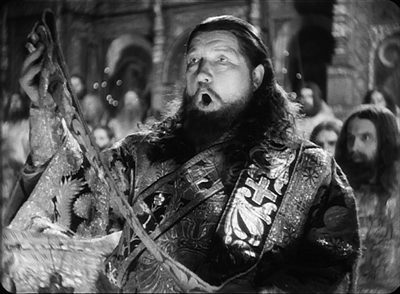
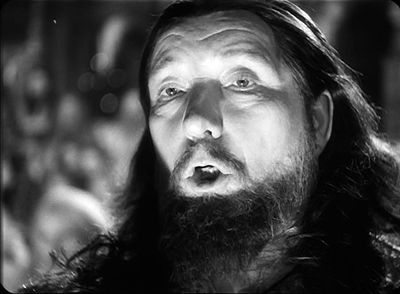
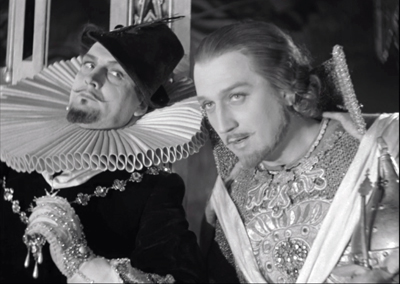
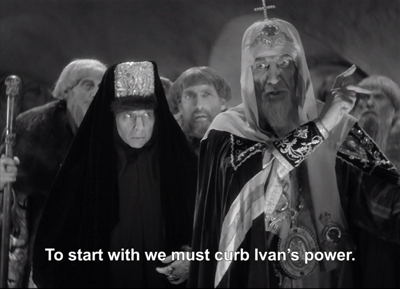
That effort is on full display in Ivan the Terrible Part II, which I discuss in our current entry on FilmStruck‘s Criterion Channel. My comentary builds on an analysis I offered in my book The Cinema of Eisenstein, but the clever experts at Criterion have created dynamic juxtapositions through cutting and replays that I couldn’t summon up in print.   I try to show how, as ever, Eisenstein sacrifices bland realism of behavior to something more sharp and intense. In this “theatrical” film, he goes  beyond line readings to offer maniacally heightened physical action–a sort of deadly serious, amped-up, live-action cartoon. Eisenstein worshipped Disney, after all.

Today’s blog entry bounces off that installment to show the connection between expressive movement and the most banal stock-in-trade of cinema: the standard scene of two people talking to each other.


Lessons with the master

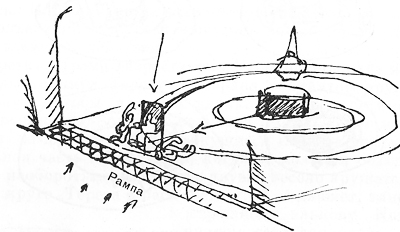
A sketch from Eisenstein’s lectures on Crime and Punishment.

Eisenstein’s silent films seek a “dramaturgy of film form” that would surpass traditions of theatrical and novelistic storytelling. This mission, which creates a sort of epic cinema, left an odd gap. From Strike (1925) to Old and New (1929), his films are notably lacking in one stock ingredient. He seldom creates sustained scenes showing a developing conflict between two characters in an ordinary setting–a parlor or office or street. With few exceptions, Eisenstein “explodes” even standard scenes by cutting to action elsewhere. The factory owners of Strike chortle over drinks while, thanks to parallel montage, the workers are rounded up by soldiers on horseback.

Other Soviet Montage directors were willing to work up theatrical scenes: Pudovkin has a Hitchcockian suspense sequence in Mother (1926), while Kuleshov turns the second stretch of By the Law (1926) into a Kammerspiel. But Eisenstein’s urge to splinter face-to-face dramaturgy came from a different sense of theatre–that “Theatricalism” of his teacher Meyerhold, who saw the stage not as the copy of a real space but as an arena for performance. Eisenstein extended this idea by thinking of the shot and the sequence as an arena for action, specifically expressive movement.

By the 1930s, Eisenstein may have sensed that sound cinema would make films more theatrical in a traditional sense. Sequences would be more concentrated in one locale and focused on a few characters. Crosscutting, a mainstay of silent film, would become rarer. He accordingly began to ponder creative ways of filming two-handers. In his courses at the Soviet film school VGIK he explored ways to intensify dramatic face-offs without interruptive cutting.

These lectures are inspiring because they show you a filmmaker thinking through problems and tracing how one solution leads to new problems. A soldier returns from the war to find his wife pregnant with another man’s child. With his students Eisenstein spent weeks scrutinizing options for performance, shooting, and cutting this simple situation. A banquet is held for Dessalines, Haitian hero. How do you film his realization that his hosts are planning to kill him? How do you present the bedroom of Shostakovich’s Lady Macbeth of Mtsensk, or the claustrophobic apartment of Thérèse Raquin? How do you stage Raskolnikov’s murder of the pawnbroker in Crime and Punishment…and do it in one fixed shot? (You don’t hear much about Eisenstein the long-take man.)

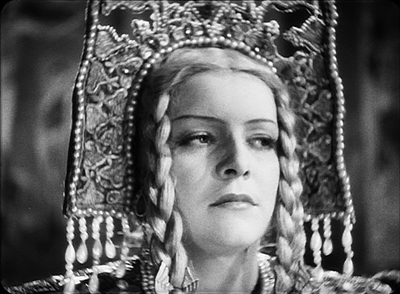
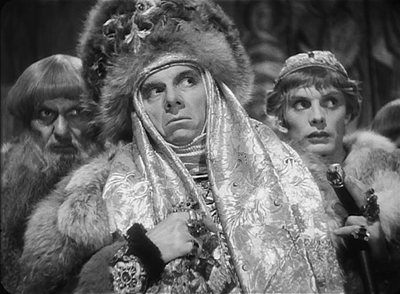
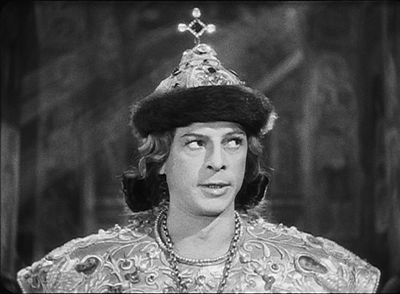
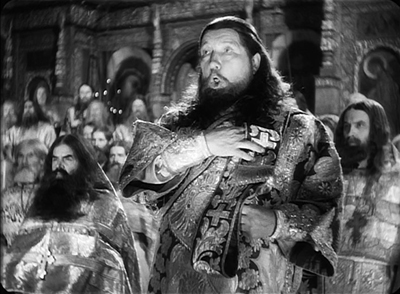
The results of this line of thinking show up in his films. Alas, we have only glimpses in what remains of Bezhin Meadow (finished 1937; banned, now lost). And Alexander Nevsky (1938), still conceived on a broad canvas, doesn’t really face up to the demands of intimate scenes. It’s only in both parts of Ivan the Terrible (1944, 1946) that we can see how Eisenstein plunged into doing what most directors do: filming uninterrupted scenes of people talking to one another.

Needless to say, he doesn’t do it the way they do.


The tsar in your lap

Expressive movement is involved, but so too are other stylistic strategies. For one thing, Eisenstein rethinks analytical editing. Characters need not face one another; they can be turned to the viewer and interact by shifting their eyes. No need for over-the-shoulder reverse angles either; you can cut in or out along the camera axis. Both strategies are introduced at the start of Ivan the Terrible Part I.


More elaborately, Eisenstein may dissect a scene through what he called in his VGIK classes the “montage unit” (uzol), a cluster of shots taken from roughly the same orientation. These yield chunks of space that overlap when edited together. He diagrammed this procedure in an illustration of cherry blossoms he found in a Japanese drawing manual.


This collage of overlapping bits, anticipating Hockney’s photo paste-ups, is actualized on film in the Pskov sequence of Ivan Part I, as I discuss in my book.

Another strategy is the use of depth. While Renoir, Welles, William Cameron Menzies, and other directors were trying out deep-space staging and depth of camera focus, so was Eisenstein. Well before Welles, he and his Soviet colleagues offered grotesque wide-angle shots. Below, Old and New and China Express (Ilya Trauberg, 1929).


More rigorously, Eisenstein began to think of how to arrange his scenes along the camera axis. True, a great many of his scenes are staged laterally, with figures arrayed from left to right.


But others, particularly those at a dramatic pitch, are staged in depth. And what distinguishes Eisenstein, to my mind, is a strikingly confrontational or immersive approach. You can see it emerging in the VGIK exercises, notably in his stage designs for a hypothetical production of Thérèse Raquin. Here the paralyzed, speechless Madame Raquin terrorizes the murderous lovers with her glittering eyes. Eisenstein wanted the actors to perform on a turntable that would show her chair rotating to spy on the couple’s affair from different vantage points. At the climax, when the guilty lovers commit suicide, Madame Raquin’s chair was to break from the circle and propel itself forward, so that she would be staring furiously into the audience.

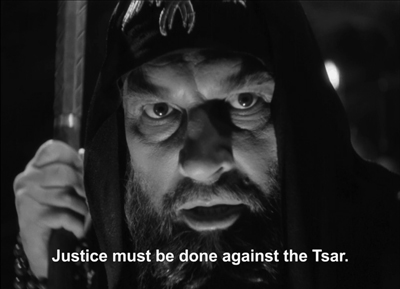
This might look gimmicky, a sort of stage equivalent for what we can easily accomplish in cinema. Don’t directors often heighten the drama by making their actors advance to the camera? But in many scenes Eisenstein moves his players toward us, then cuts further backward, letting axial cuts create an unfolding foreground. A new playing space is opened up, and the actor is free, or rather compelled, to thrust further forward, sometimes into uncomfortably big close-up.

The Soviets called axial cuts “concentration cuts,” and we mostly find them used to enlarge, usually shockingly, something far off. But Eisenstein creates something more unusual and risky.“In my work,” Eisenstein wrote,  “set designs are inevitably accompanied by the unlimited surface of the floor in front of it, allowing the bringing forward of unlimited separate foreground details.” In principle the foreground could unfold forever.

The result sometimes yields direct address, as in my Criterion Channel example, but more generally it creates a sense of characters passionately engaged in clamping their will upon others and hurling themselves not just at one another but at us. Characters confide in the camera, and–long before all today’s talk of “immersive” cinema–the camera is us.

The short lesson is that we still have a lot to learn from Eisenstein–and his films. Apart from opening up new vistas of cinema, they offer thrilling experiences. Ivan Part II, subtitled “The Boyars’ Plot,” is a dark Jacobean drama of bloody revenge and betrayal. It’s twisted enough to satisfy any connoisseur of palace intrigue. It’s also brilliantly weird as cinema. Once more the Old Man comes through.


Thanks as ever to Peter Becker, Kim Hendrickson, Grant Delin, and their colleagues at Criterion for the making this installment, which  was a bit tougher than usual. Thanks as well to old friend Erik Gunneson. Our entire Criterion Channel series is here.

The best source for Eisenstein’s VGIK classes remains Vladimir Nizhny’s Lessons with Eisenstein, my pick for one of the top ten film books ever published. Direction, Volume 4 of Eisenstein’s Selected Works in Six Volumes  (Izbrannie proizvedeniia v shesti tomakh, 1964-1969) is the source of other examples I use here, including Thérèse Raquin, from p. 622.

Of the immense literature on Eisenstein, I especially recommend Yuri Tsivian’s monograph on Ivan the Terrible in the BFI series. Kristin wrote a whole book on Ivan: Eisenstein’s Ivan the Terrible: A Neoformalist Analysis.

I discuss Eisenstein as an action director in an earlier entry. On axial cuts in Eisenstein and others, go here; Kurosawa’s use of them is discussed here.

Hockney’s photomontage Mother 1 is from 1985.

Also, too: I noted earlier that my book On the History of Film Style has gone out of print. An e-book edition, with updates and color images, is nearing completion. I hope to offer a pdf to you soon. Yes, Eisenstein is involved.

Eisenstein sketch: Ivan pleading for mercy in the Last Judgment, planned for Part III of the film.

Sunday, 29 April 2018

New Featurette for 'Solo' Gives a Look at How Han Becomes Han Solo

Solo Featurette

"We're meeting Han right before he becomes the Han that we know." Disney + Lucasfilm have revealed a fun new "making of" featurette for the Solo: A Star Wars Story movie, directed by Ron Howard. Is it not super exciting that we get to see a new Star Wars movie in less than a month?! This featurette for Solo gives us a quick look at how Han becomes Han Solo, which is essentially what this movie's story is all about. The video features interviews with director Ron Howard, screenwriter Lawrence Kasdan, and the principal cast. And I still think Lando might steal the show. Alden Ehrenreich stars as Han Solo, and the film's full cast includes Donald Glover, Emilia Clarke, Woody Harrelson, Paul Bettany, Thandie Newton, Warwick Davis, Clint Howard, and Joonas Suotamo as Chewbacca. Here we go, bring it on Lucasfilm.

Here's the "Becoming Solo" featurette for Ron Howard's Solo: A Star Wars Story, direct from YouTube:

And here's another new "Han" TV spot for Ron Howard's Solo: A Star Wars Story, also from YouTube:

Solo: A Star Wars Story

You can still watch the teaser trailer for Solo: A Star Wars Story here, or also the full theatrical trailer here.

During an adventure into a dark criminal underworld, Han Solo meets his future copilot Chewbacca and encounters Lando years before joining the Rebellion. Solo: A Star Wars Story is directed by Oscar-winning American actor-turned-filmmaker Ron Howard, of the films Grand Theft Auto, Splash, Cocoon, Willow, Backdraft, The Paper, Apollo 13, Ransom, Edtv, A Beautiful Mind, The Missing, Cinderella Man, The Da Vinci Code, Frost/Nixon, Angels & Demons, The Dilemma, Rush, In the Heart of the Sea, and Inferno previously. It was originally directed by Phil Lord & Chris Miller, before they were replaced by Howard. The screenplay is by Jon Kasdan and Lawrence Kasdan. This premieres at the Cannes Film Festival. Disney will then open Howard's Solo: A Star Wars Story in theaters worldwide starting May 25th next month. You in?

Vinegar Syndrome Explores the Darker Side of Fishing and More With Three Chillers From Decades Past

Blood Hook, Terror, and Blue Vengeance are all new to Blu-ray with 2K restorations!

Vinegar Syndrome’s monthly releases are always worthwhile blasts from the past as at the very least they’re guaranteed to introduce you to at least one or two new-to-you movies. They typically range across the genres, but April’s Blu-ray releases share the common theme of horror to some degree or another. One’s a fairly unique slasher, the next is a supernatural thriller, and the third features a killer fueled by his love for Satan.

Keep reading for my review of Vinegar Syndrome’s latest releases!

Red Dots

Blood Hook (1986)

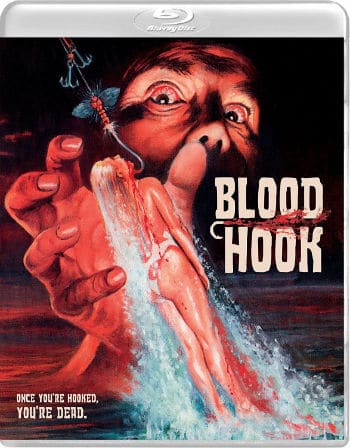
Peter was just a boy when his grandfather fell into the lake and disappeared, but seventeen years later Peter returns to the family cabin with some friends for a weekend of fun, fishing, and frolicking. Two out of the three are cut short, though, when locals and visitors alike start dying at the wrong end of a murderous angler’s fishing pole.

Blood HookThe setup to this oddball slice of rural slasher fun is as generic as they come — group of friends head to cabin in the woods and begin dying — but the film’s numerous charms come into play after the stage is set. The mysterious, gloved killer is stalking newcomers and locals alike, and his weapon of choice? A fishing pole.

It’s genius.

The killer’s handiwork is spread throughout the film, but it takes time for people to truly notice as bodies aren’t found and the quiet town is busy hosting a Muskie fishing competition. There’s a lot going on here with various character introductions, interactions, and violations, and while there’s never quite a dull moment there are plenty that don’t feel the least bit necessary. They pad out the film to an overly long 111 minutes which threatens to see it overstay its welcome, but happily, the kills, characters, and story beats keep things moving.

It’s billed as a comedy, but this isn’t a laugh out loud type and instead settles for quirky townsfolk and goofy visitors. The bloody bits run the gamut from cuts to detached limbs with the best stuff landing in the film’s back half. Still, it’s easy to imagine this being far-better remembered if it lost twenty minutes and added at least one stellar kill. The damn thing’s engaging on the character front, and performances are strong enough to hold viewers’ attention even as they’re immersed in a fish-catching contest. This is a slasher with personality to spare, and while a trim wouldn’t have hurt the end result is still a film you’ll enjoy watching.

Vinegar Syndrome makes that enjoyment even easier with a beautiful picture and a loaded Blu-ray. The disc’s extras include a trailer, still gallery, and the following supplements.

  • Hook, Line, and Sinker: An Interview with Director Jim Mallon [30:01] – He discusses the film’s production including its initial 300-page script, interacting with townspeople in the small community where they filmed, working with kids, and more.
  • First Blood Hook: An Interview with Actress Lisa Todd [18:42] – This was Todd’s first role, and she discusses her early career and the production itself.
  • What’s in the Tacklebox?: An Interview with FX Artist Jim Suthers [23:11] – He recalls his love of monster movies and makeup as well as pulling off various effects on a limited budget.
  • Audio Interview with Marsha Kahm [29:28] – The film’s cinematographer and editor recalls her work on the production.

Buy Blood Hook on Blu-ray from Vinegar Syndrome

Red Dots

Terror (1978)

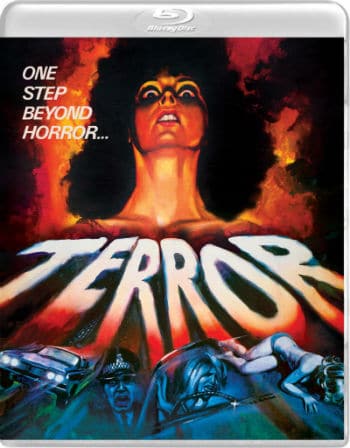
The movie business can be a tough one, but while James isn’t happy with his latest production there’s something deeper bugging him. The story is based on his own family — more specifically, it’s based on a supposed curse made against his family centuries ago by a witch who was burned alive — and while most dismiss it as legend James isn’t quite as convinced. Members of his family met and meet violent ends. When a party gets out of hand his newly arrived cousin triggers a new round of terror, but is she simply mad or has the long-dead witch returned to wreak more of her vengeance?

TerrorDirector Norman J. Warren has stated numerous times (including again here in the special features) that a major influence on this film was a cinema screening of Dario Argento’s brand new picture Suspiria. That’s evident in the finished product here as Warren applies boldly colored lighting choices alongside the unexplained acts of violence and incidents of weirdness.

And in keeping with the filmmakers’ excitement over Suspiria, there’s plenty of scenes involving unexplained weirdness. One killing sees black-gloved hands wielding a knife while the next involves a car levitating forty feet off the ground. What could be causing it? Maybe that’s not all that important.

Warren instead invests his short running time towards set-pieces that see his characters on the receiving end of trouble, and he does a fine job keeping viewers visually engaged even as the explanations are absent. It also does a good job leaving us suspicious of at least two of the characters, and the suspense holds before giving way to a wonderfully over the top denouement.

The disc features a newly 2K restored picture along with the following extra features.

  • Audio Interview with Director Norman J. Warren – Kat Ellinger, editor in chief of Diabolique Magazine interviews the filmmaker about his career, and it runs over the feature as a separate audio track.
  • Interview with director Norman J. Warren [20:34]
  • Interview with writer David McGillivray [12:47] – He’s kept a diary since he was twelve, and he reads from it regarding the night he pitched the story idea. McGillivray also talks about Suspiria‘s massive influence on the film.
  • Interview with actor Carolyn Courage [5:03] – Anecdotes regarding fake blood, floating car stunts, and her nickname from the set.
  • Interview with actor Tricia Walsh [8:49] – She recalls disappointing the crew by filming her supposed “nude” scene in bra and panties.
  • Interview with actor Mary Maude [8:33]
  • Interview with actor Peter Craze [10:06]
  • Deleted/extended scenes [4:46]

Buy Terror on Blu-ray from Vinegar Syndrome

Red Dots

Blue Vengeance (1989)

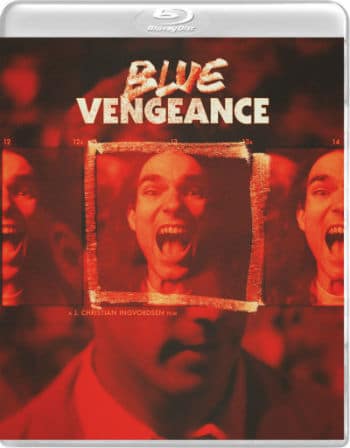
A murderer has escaped from jail leaving a trail of bodies in his wake, and only one cop is on his trail. Unfortunately for Mickey, he’s a disgraced cop with burned bridges in his past, so when he asks for help in his pursuit of the man named Trex he’s left empty-handed. That’s not going to stop him, though, and as Trex continues killing off members of an old metal band — he loves one of their satanic classics and is dismayed to learn the band has sold out and moved on while he rotted in jail — Mickey teams up with a young photographer to bring him down for good.

Blue VengeanceDirector Chris Ingvordsen teases a bit of the horrific with his cop vs psycho thriller in both the brutality of the attacks and the visions in Trex’s brain. He sees himself as a medieval warrior battling minions of good (evil?), and it plays almost like an evil version of Mazes & Monsters (1982) as Trex envisions it all while still fully knowing he’s causing mayhem in the real world.

The film stands apart from many in its genre/budget range thanks to its wildly energetic cinematography accomplished through true guerilla style shenanigans. A violent run through the NYC subway system? A foot chase across the Brooklyn Bridge? Ingvordsen and friends make it happen through sheer necessity, and the sequences jolt the film to life anytime it threatens to feel too mired in the deranged mindstates of its hero and antagonist.

Vinegar Syndrome’s Blu-ray looks quite good with its 2K restoration of the film’s original 35mm negative, and it includes the following special features.

  • Commentary with director Chris Ingvordsen and Michael Gingold
  • Commentary with actor John Weiner
  • Making Blue Vengeance [19:26] – Director Chris Ingvordsen and his fellow cast/crew members discuss the film’s production as well as their overall approach to guerilla filmmaking on the streets of NYC.
  • On Blue Vengeance [13:28] – Michael Gingold interviews director Chris Ingvordsen
  • The First Man [1:23:13] – Co-writer Danny Kuchuck 1996 feature film

Buy Blue Vengeance on Blu-ray from Vinegar Syndrome

The post Vinegar Syndrome Explores the Darker Side of Fishing and More With Three Chillers From Decades Past appeared first on Film School Rejects.

Saturday, 28 April 2018

Watch ‘Avengers: Infinity War,’ Then Watch These Movies

We recommend movies to watch after you see the epic Marvel Cinematic Universe crossover.

Marvel’s Avengers: Infinity War asks a lot of its audience. You have to have seen the previous 18 movies that make up the Marvel Cinematic Universe, and for one scene it helps to have seen another unrelated movie. Now, I ask of you a much smaller task: see the eight movies listed below, including that one non-MCU title seemingly required for Infinity War‘s appreciation. Some are cheesy, some are underrated, some are masterpieces.

Warning: this list of movies to watch after Avengers: Infinity War involves some spoilers for Avengers: Infinity War. As well as spoilers for a few of the older recommended titles, each of which is still worth seeing even if you know the ending.

Invasion U.S.A. (1952)Invasion Usa E
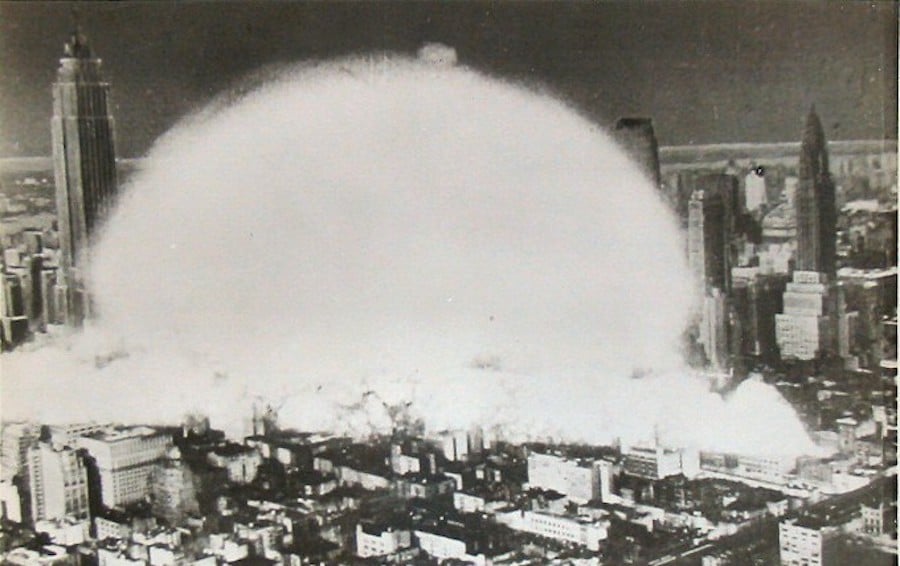
The world is threatened by a major superpower in this Cold War sci-fi thriller, and just when you think all hope is lost that our heroes will come out on top in the end. Well, they all die. Or so we think. It was all just an illusion, a hypnotic premonition created as a warning that World War III could really happen and that it would be devastating and impossible to win. All we can do is drink and be merry, for tomorrow we all die. Also, make love if you can until the commies come and kill your partner and you just give up and jump out the window.

Invasion U.S.A. is one of those cheap ’50s B movies that has an epic story but details most of it during exposition scenes without much action. There are some great bombing sequences, though, thanks to the repurposing of clips from other movies plus actual wartime stock footage. Most fans of the movie today discovered it via Mystery Science Theater 3000, but it was actually a huge box office hit when released, one of the highest-grossing efforts not produced by one of the major studios and likely one of the most profitable of any production that decade.

Its relevance to Infinity War is mostly that fake out ending. Marvel’s daunting epic “concludes” with a downer ending with Thanos having wiped out half the population of the universe. Or has he? Okay, he technically has turned all those people into dust, but you can be sure that everything will be reversed. After all, a few of the main characters we see die have sequels in development. But we won’t find out for sure until Avengers 4 whether Thanos’s Rapture is just an equivalent of a hypnotic suggestion, caused by the reality stone, or just something needing a reversal of events courtesy of the time stone. Either way, as is stated in Invasion U.S.A., we need a wizard (or other super-powered person) in charge if we want to defeat our enemies.

Red Dots

It’s a Mad, Mad, Mad, Mad World (1963)Mad Mad Mad Mad World

An enormous ensemble races to find a treasure in this madcap classic that can be viewed as a crossover of great comedy all-stars. Not only does the main cast feature the likes of Milton Berle, Sid Caesar, and Phil Silvers, but It’s a Mad, Mad, Mad, Mad World slips in cameos from Buster Keaton, Jerry Lewis, the Three Stooges, and so many more. Meanwhile, you’ve got Spencer Tracy as the outlier character, a police detective who seems to be interested in taking all the others down but is actually interested in the same thing they are.

Infinity War can be criticized for featuring too many characters, depending on how well you think all the Avengers and Guardians of the Galaxy and additional supporting players are juggled. But a movie like It’s a Mad, Mad, Mad, Mad World shows that giant ensembles are manageable in a brilliant fashion. Provided you have a talent like Stanley Kramer at the helm and can hold the audience for three hours. Without a doubt, the Oscar-nominated editing team of Frederic Knudtson, Robert C. Jones, Gene Fowler Jr., were true superheroes.

Red Dots

A Bridge Too Far (1977)Rid

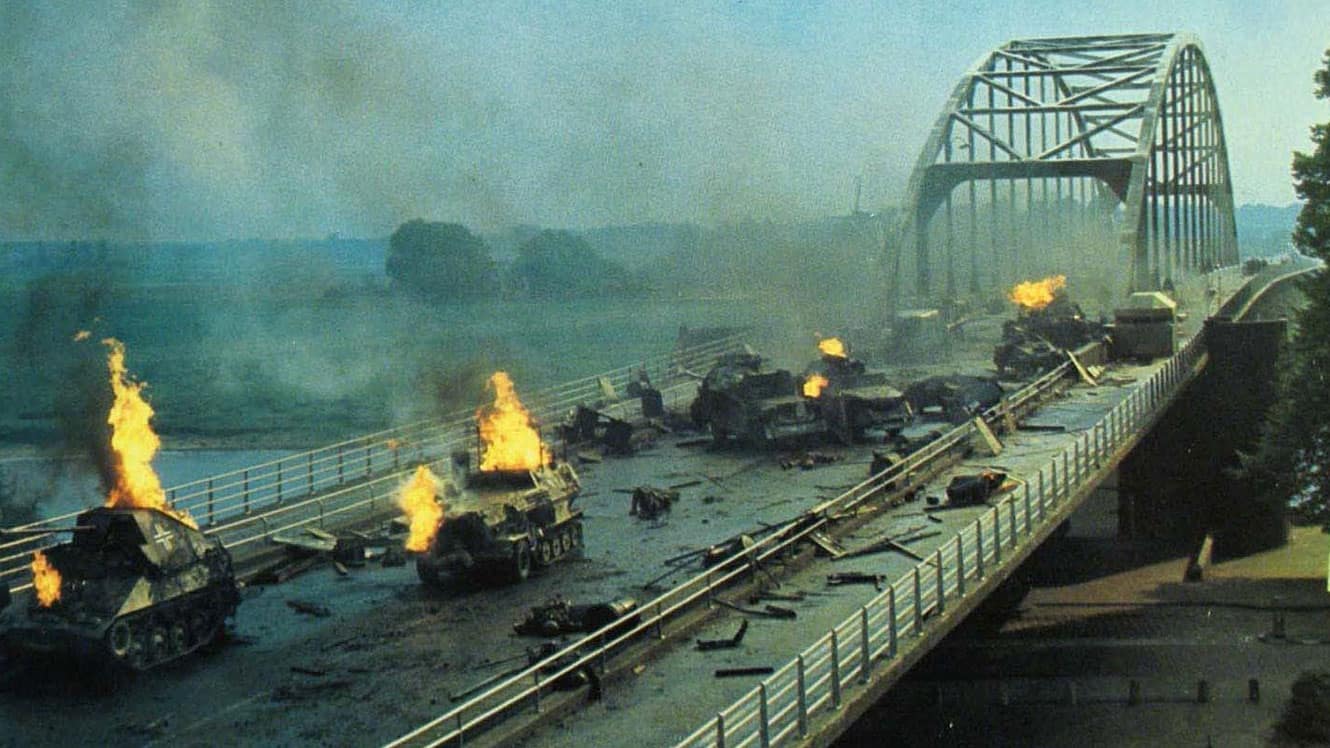
Another large, star-studded ensemble populates this war epic scripted by William Goldman and directed by Richard Attenborough. The cast includes MCU actors Anthony Hopkins and Robert Redford, as well as Michael Caine, Sean Connery, Laurence Olivier, Gene Hackman, Maximilian Schell, Elliott Gould, James Caan, and Liv Ullman. And it’s another movie where the good guys lose. This time for real. A Bridge Too Far depicts the failed World War II mission known as Operation Market Garden, which involved the Allies seizing many bridges in the Netherlands. Unfortunately, as the title suggests, we went after one bridge too many.

As with It’s a Mad, Mad, Mad, Mad World and Infinity War, the ensemble of A Bridge Too Far is broken up into several groups, all of them on a path toward the same goal. Here it’s groups of British, American, Polish soldiers aiming to converge at the titular structure. “Everybody dies,” in the “war game,” as Hackman’s character says, though here most of the main cast does make it out alive, even as the Allies lose the battle. That’s the miracle of the movies considering Market Gardens saw more Allied casualties than D-Day.

Red Dots

Aliens (1986)Aliens

If you’re going into a movie like Infinity War, you’ve likely been following the Marvel Cinematic Universe over the last 10 years and 18 previous features. And the shorthands of the movie’s plot expect you to be familiar with them all. But you wouldn’t know that you also should have seen other past blockbusters. Really, when do you have time for any other movies besides the onslaught of MCU installments anyway? But thanks to the movie geek characterization of Peter Parker, aka Spider-Man, you need to get certain references he makes.

Just as Parker invoked part of The Empire Strikes Back for an idea during the big airport battle in Captain America: Civil War, this time he brings up Aliens (another sequel that ramped up the action) for a suggestion of how to deal with Thanos’s minion Ebony Maw by creating a hull breach in his ship and jettisoning him out into space. In the Avengers movie, the moment is handled quickly and messily, and it’s kind of annoying the way it makes us think so consciously about another movie to get the bit but also doesn’t give us much time to stop thinking about that other great movie to reengage with the movie at hand and appreciate what happened.

Red Dots

2 Days in the Valley (1996)

Daysinthevalley

Once again, directors Joe and Anthony Russo looked to movies of the past to inform the tone of their own latest effort. Speaking to journalists on the set of Infinity War, Anthony revealed:

“We were inspired by ’90s crime films when we were working on the script. So it’s got an energy to it, a bit of a smash and grab energy. The movies that we looked at: ‘Two Days in the Valley’ and ‘Out of Sight.’ We always look to movies for an inspiration for the energy that we’re looking for, or a narrative construct that we want to be inspired by, and those two films in particular (were).”

Certainly you should also see Steven Soderbergh’s Out of Sight, which even features MCU actors Don Cheadle, Michael Keaton, and Samuel L. Jackson. It’s far and away the better of the two. But it’s so rare that anyone mentions 2 Days in the Valley anymore, we might as well highlight that one of the two. Viewed as a Pulp Fiction rip-off in its time, the ensemble crime film is written and directed by John Herzfeld and features a cast including Danny Aiello, Jeff Daniels, Eric Stoltz, Teri Hatcher, Glenne Headly, a young Charlize Theron, and I believe just one MCU actor, Ultron voice James Spader.

The plot is a convoluted intersecting-lives sort of L.A.-set movie taking place over, that’s right, 48 hours (two days). Thinking about the reason it’s connected to Infinity War, I now wish that between all the heroes bickering through their missions to thwart Thanos that some of them would have just killed each other in surprising, ’90s crime film fashion. Doctor Strange would have loved to decapitate Tony Stark. Thor could have electrocuted Star Lord. Oh well. Here’s more on what was watched and why from the other Russo brother:

“For us it helps when you are dealing with all these different types of characters and all these different tones that have been established in the various films and story lines,. It becomes our organizing principal for tone. In terms of what the world is that we’re creating, what rules are we playing by, how does that filter and every character, no matter where they’re coming from has to intersect with the sort of reality of that tone.

“I think sometimes people have misinterpreted in the past when I’m talking about movies, how we’re using them. Really (it’s) as inspiration for narrative imagery. These movies are so complex you need a unifying peace, or a sense of cohesion, and that cohesion can come from a narrative construct that you can apply all the characters to. It’s hard to find movies with this many characters; you can look at Altman films, which have a tendency to be more veritè. Where we found ‘Two Days in the Valley,’ which really had a narrative thrust to it, and had an energy that we were looking for. Again, just purely something inspires us in the room when we’re working on the script.”

Of course, if you want something more verite, as he says, after the narrative thrust of Infinity War, do check out Robert Atlman’s L.A.-set Short Cuts instead. That features top dog MCU star Robert Downey Jr. Also, Nashville, which has MCU actor Jeff Goldblum.

Red Dots

Terminator 3: Rise of the Machines (2003)
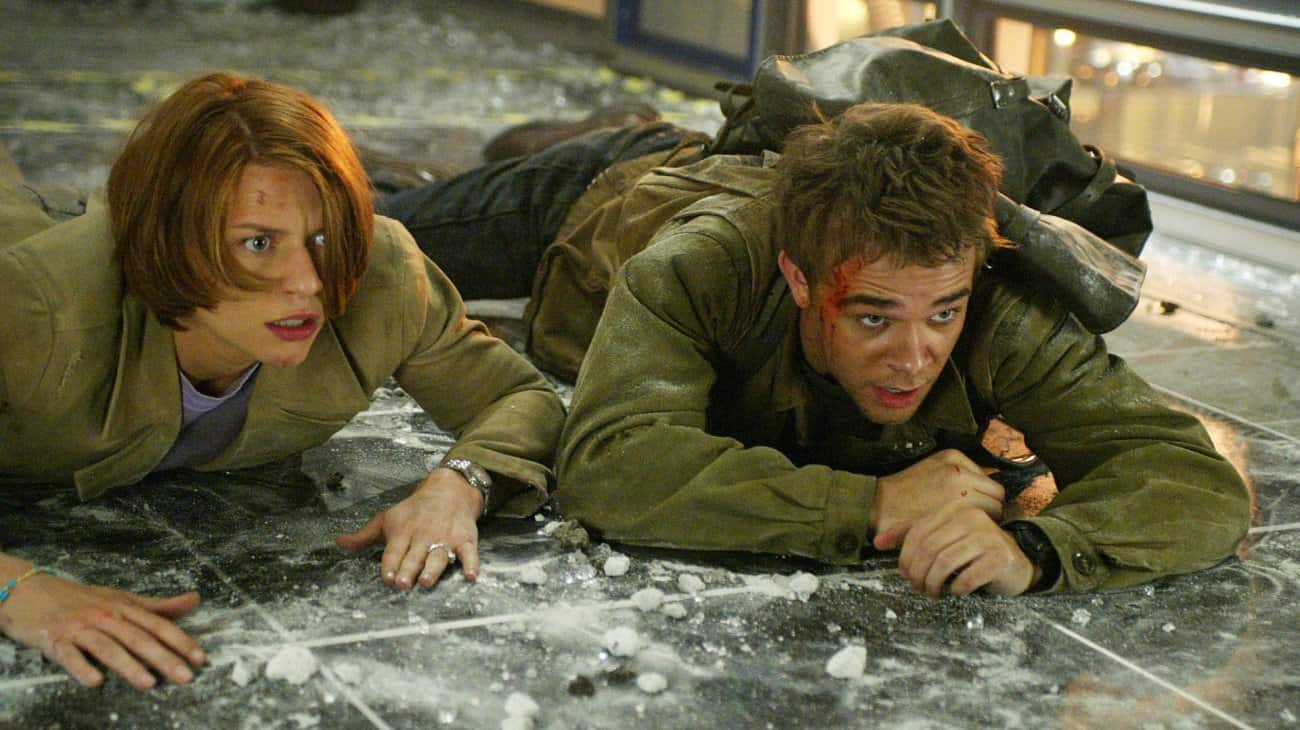
T

Another part three with a different director than the person who helmed the first two, Terminator 3: Rise of the Machines is not as good as the others but is also not that bad. In fact, the more they keep making other Terminator movies, the better this seems within the context of the whole franchise. There are a ton of things to like in this installment, including Nick Stahl’s performance, the crane truck chase, and the way it ends with the bad guys winning. As long as they were going to do another sequel after the Judgment Day-thwarting Terminator 2, they had to just give in and let the machines rise.

There are two ways Avengers 4 can go after Thanos wins at the end of Infinity War. Marvel can be really bold and just own all the death and destruction we’ve seen and have the remaining characters (minus a few that should probably die in the next one) fight to survive and defeat Thanos and live with what’s been done. Or they can go the route of the comics and have everything undone by reversing time with the Infinity Gauntlet. Technically, that’s what the humans have tried to do in the first two Terminator movies. But as Thanos says, “I know what it’s like to lose. To feel so desperately that you’re right, yet to fail all the same. Dread it. Run from it. Destiny still arrives.”

Red Dots

Population Boom (2013)

Eedbaeedd C

For this week’s obligatory documentary pick, I could have chosen some sort of crossover epic concert film, like say Take This Waltz. But as much as I endorse that Martin Scorsese-helmed music doc classic (especially for its 40th anniversary this week), it’s just not that relevant. Instead, I kept thinking about the issue of overpopulation, given that’s Thanos’s well-intentioned eco-terrorist crusade. There are a ton of docs dealing with population as a problem, but this one actually argues the opposite.

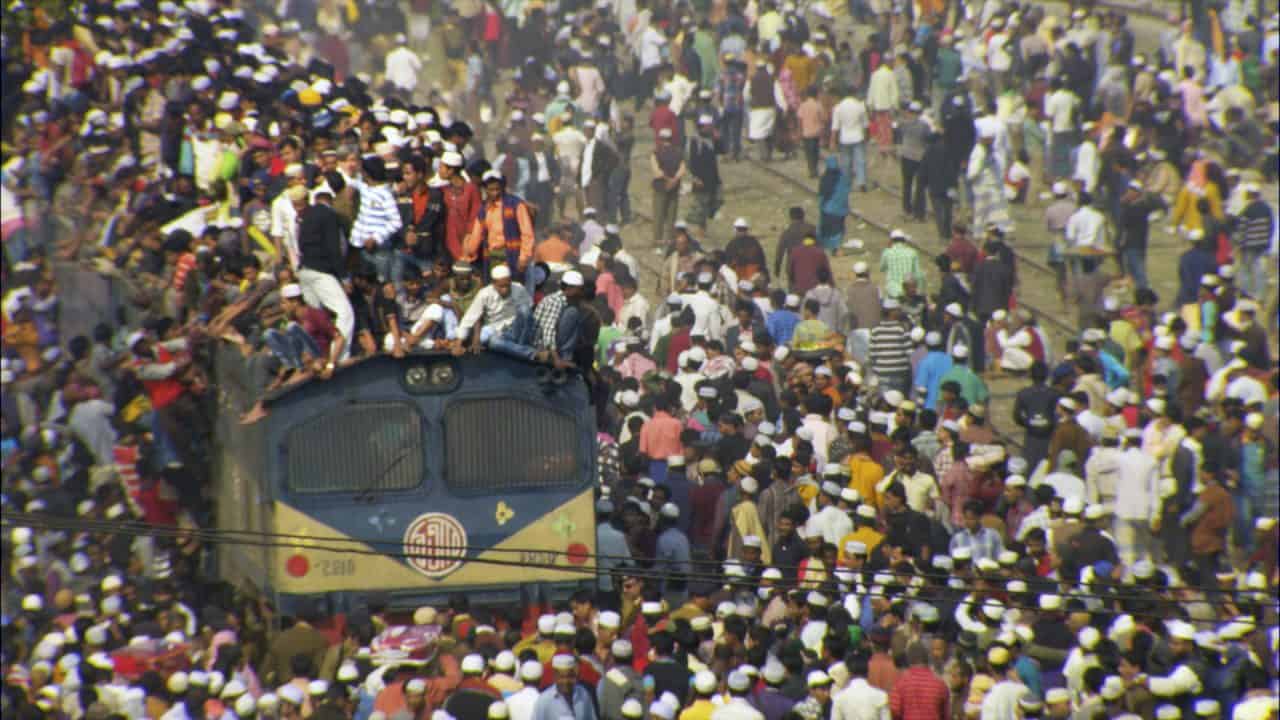
According to Population Boom, which is directed by Werner Boote of Plastic Planet fame and produced by Nikolaus Geyrhalter (director of Our Daily Bread), there’s little reason to think there’s a limit to how many people fit on Earth (or, in Thanos’s case, the whole universe). Boote travels the world, including parts of China, Japan, India, Mexico, and Kenya, observing the most populous cities, and talking to people who believe the more citizens the better, especially democratically. And population control, whether it’s through policies limiting the number of children you can have or intergalactic madmen on a rampage, is the real problem.

Red Dots

Ready Player One (2018)

Ready Player One Battle

It’s not common for me to recommend such a recent movie, one still in theaters, but I kept being reminded of Ready Player One while watching Infinity War. Both movies are mashups, the former being much more intensely filled with seemingly other properties. Although it’s not. Steven Spielberg’s adaptation of Ernest Cline’s book is just about a world where people are virtually cosplaying as favorite characters. It’s not the actual characters. Iron Giant, Chucky, King Kong, the Battletoads, the T-800, and all the other pop culture icons are not really there.

Sadly, I felt like the Avengers and Guardians of the Galaxy are not really there in Infinity War either. It’s like a simulation of a battle between the characters and Thanos where each character is reduced to his or her most base personality traits and sense of humor. Maybe it’s just that there were too many characters for any of them to be given enough time to seem like the real deal. Maybe there were too many characters for the screenwriters to give them all anything but shorthand familiar beats. Perhaps they’re all Skrulls impersonating our beloved heroes. Whatever the case, the movie is as entertaining but as soulless as Ready Player One.

The post Watch ‘Avengers: Infinity War,’ Then Watch These Movies appeared first on Film School Rejects.

Angela Schanelec: Life is Slow

MUBI's retrospective Angela Schanelec: Showing without Telling is playing from April 5 - June 3, 2018. The director's film Passing Summer (2001) is showing April 5 - May 5, 2018.
Passing Summer
The films of Angela Schanelec are made up of particles of experience, each work carefully sculpted out of fragmented slices of the everyday. They are an attempt to capture on screen the undifferentiated flow of time—seamless summer days in Berlin, idle lonely hours wandering around Marseilles, the dead time spent in an Orly airport terminal waiting to be carried off somewhere else. Schanelec pleasures in gaps and holes, allowing for narrative excursions, digressions, detours. Two friends sit in a café talking about their future, one is going off to Rome, and the other is staying behind in Berlin. The conversation freely drifts from one topic to another, in the background the rich green of trees; we hear the wind outside, the noise of car traffic. There is the immediate feeling that we are just dropping in on them before moving on to someone else. It is a scene wonderfully familiar: you and I have seen it, lived it before. It is as if her films were made up of a double movement from life to film and back again.  
Often the camera is placed at a middle distance from her characters; discreetly observing them sunk in the everydayness of things, every shot explicitly constructed and edited with each cut a shock to our sense of spatial and temporal continuity. Her films inhabit a purely cinematic space, rejecting the kind of cheap and worn out techniques that are often employed to create the illusion of reality—extraneous character and plot details that feel tacked on solely for the sake of trying to make it seem more ‘real.’ Schanelec’s cinema is interested in something far more subtle and ineffable: the texture and scent of ordinary experience, of time's slow inevitable progression towards the end (and beginning) of a specific period or moment of our life.  
Watching her third film, Passing Summer (2001), is such an experience. It is one long sustained exhalation towards the end of a season wherein its characters are suspended between a ‘before’ and an ‘after,’ caught floating in that weightless transitional phase between young and no longer so young when your parents grow ill, your friends get married or divorced, and the shape of your life begins to cement itself into something frighteningly permanent. At the film's narrative center is Valerie: a late twenty-something architecture student, who has decided to remain in Berlin over the summer, living in a shared middle-class apartment with a married couple, Marie and Alexander, along with their daughter. Different narrative constellations begin to form as we drift closer or further away from characters: Valerie’s father becomes deathly ill; Thomas, Marie’s brother and a divorced father becomes romantically involved with Valerie; Marie becomes unwittingly pregnant, Maria, the twenty one-year old babysitter is engaged to be married. For such a seemingly ‘small’ film, it contains the stuff that entire dramas are made of: infidelity, a wedding, a death—here treated as the necessarily harsh pinpricks of experience that are a part of the events in the continuous flow of time, the common baggage of life moving at its own rhythm. The pockets of ennui that are diffused across the film are done so in a kind of playful earnestness, counteracting the seriousness of occurrences with enormous lightness.
Every moment that happens in the film, large or small, has happened a thousand times before: there the old woman alone in the train, there the two friends in the café on a summer day talking and talking, there a father and child spending the afternoon in the cinema, the father drifting off to sleep. Breath-giving moments because each one is instantly recognizable, causing an internal click in the body (like a fist opening up into a palm) that induces a state of enormous attention and calm, an aura of soothing slowness spreading out from the screen. A static shot of a park, the wind in the trees, the air a whirl of autumn leaves, in the middle ground three children playing: a scene of Straubian beauty you never want to end, the desire to just watch and watch. Or the two dance scenes: 1) another static shot of Valerie and her brother Ben in a club on an otherwise empty dance floor, the revolving lights of the disco ball, in the background in the semi-dark leaning against the wall a couple of onlookers, the loud pulsating rock song, brother and sister joyfully, uninhibitedly moving their bodies to the music; 2) Maria’s wedding, towards the end, opening with the camera on her father, played by Rüdiger Vogler (!), speaking lovingly about his daughter, how they used to go to the movies together when she was a child, how she’s gotten older and now he has to go alone and he says: “Maria? Shall we dance together?” The strum of an acoustic guitar, the camera moves to the left catching Maria as she enters the frame to join her father and soon the whole frame is crowded with dancing guests while the camera (and us with it) performs it own levitating dance. All are scenes full of such tenderness towards the moments that they are showing, a gentle lingering without intrusion, yet still so grounded in the actual, all in all: a touch of truth. 

Friday, 27 April 2018

Full Japanese Trailer for Pixar's 'Incredibles 2' Filled with New Footage

Incredibles 2 Japanese Trailer

"Suit up." Whoa! This trailer is packed with all kinds of awesome footage we haven't seen before. Disney has released a full-length Japanese trailer for Pixar's Incredibles 2, which is known as Incredible Family in Japan (the first movie was titled simply Mr. Incredible or Misutâ inkurediburu in Japanese). Another full theatrical trailer (for America) debuted a few weeks ago and it's a good trailer, but this one is even better! So much going on here. Obviously all the family tension, but there's clearly a big battle with the Underminer in this, who first appears at the end of the original movie. And this trailer also seems to hint at a big plot point involving Elastigirl. Craig T. Nelson is back to voice Bob, with Holly Hunter, Samuel L. Jackson, and Sarah Vowell. I can't wait to see this! Looking better and better the more we get to see. And now I kind of wish I could watch with the Japanese dub instead of English, it sounds so much cooler. You have to see this.

Here's the full Japanese trailer for Brad Bird's The Incredibles 2, found on YouTube (via GeekTyrant):

The Incredibles 2 Movie

You can see the first teaser for Pixar's Incredibles 2 here, the second teaser or the latest full-length trailer.

In Disney•Pixar’s Incredibles 2, Bob (voice of Craig T. Nelson) is left to navigate the day-to-day heroics of "normal" life, giving him an opportunity to bond with his younger son, Jack-Jack, whose superpowers are emerging—much to Dad's surprise. Produced by John Walker and Nicole Grindle. Incredibles 2 is both written and directed by acclaimed American animator/filmmaker Brad Bird, of the films The Iron Giant, The Incredibles, Ratatouille, Mission Impossible: Ghost Protocol, and Tomorrowland previously. This was made at Pixar Animation Studios in Emeryville, CA. Disney will release Pixar's Incredibles 2 in US theaters everywhere starting on June 15th, 2018 in the middle of the summer. How does that look? Your thoughts?

Copyright © Cinenus | Powered by Blogger

Design by Anders Noren | Blogger Theme by NewBloggerThemes.com