The film industry in one place - Articles, Reviews, trailers and hype!

Showing posts with label Observations on film art. Show all posts

Tuesday, 10 November 2020

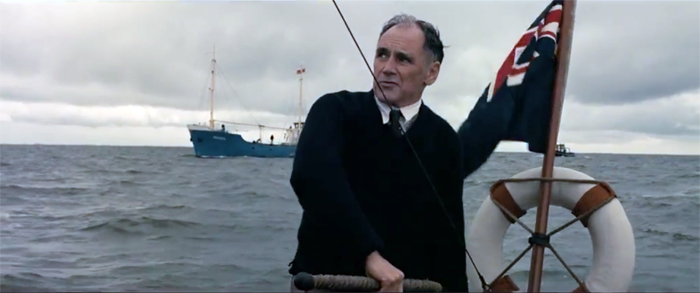
1917 and DUNKIRK: A conversation

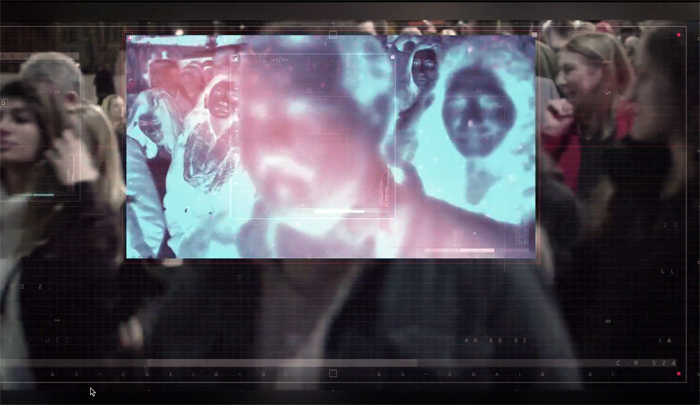
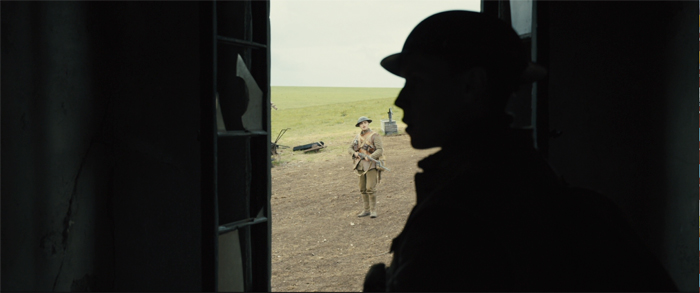
1917 (2019).

DB here:

For over twenty years, the Willson Center for Humanities and Arts at the University of Georgia at Athens has hosted Cinema Roundtable, a series of film screenings and discussions. Covid-19 hasn’t stopped them from keeping it going, and they kindly invited Kristin and me to visit, virtually, and talk about two war films. The title is “Wartime Suspense in ‘Dunkirk’ and ‘1917’: A Conversation with Kristin Thompson and David Bordwell.”

We discussed aspects of style and genre. Many participants, notably Professor Tanine Allison of Emory, brought up other points about these two intriguing movies. It was also nice to see some old friends from Wisconsin logging in.

The entire session is on YouTube.

We enjoyed participating and thank our hosts, Dick Neupert and Dave Marr. In preparing for the session, I think it’s fair to say we liked both films better on rewatching them.

And no, we haven’t yet seen Tenet. Health precautions keep us at a distance. But we are keen, and when we can write about it, we will.


In a piece of good timing, Tom Shone’s book The Nolan Variations came out three days before our session. It’s excellent and offers the most comprehensive overview of this director’s achievements.

Our e-book on Christopher Nolan is available for download here. (Thanks to those Willson attenders who picked it up!) There’s some background on the book here. Our various blog entries on Nolan’s work are here.

Dunkirk (2017).

Sunday, 1 November 2020

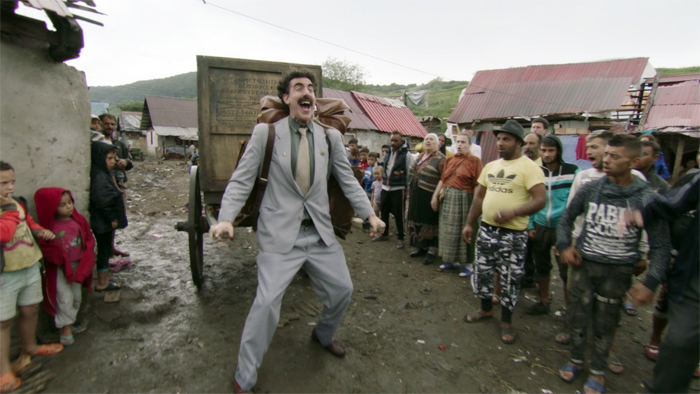
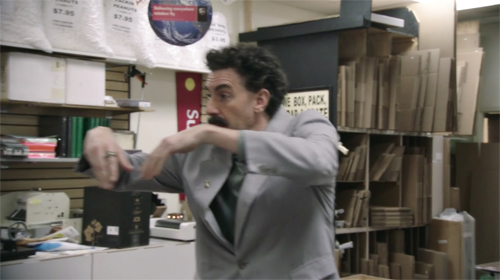
Borat: Keep it stupid, simple

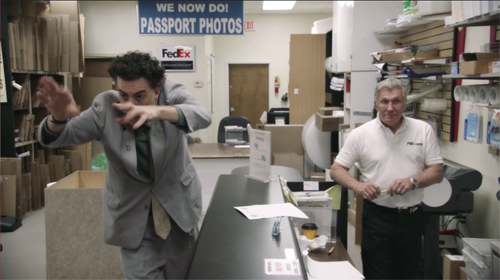
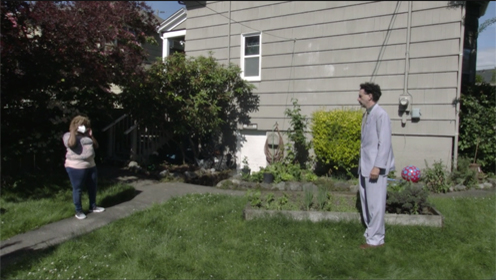
Borat Subsequent Moviefilm: Delivery of Prodigious Bribe to American Regime for Make Benefit Once Glorious Nation of Kazakhstan (2020).

DB here:

Defending some of his wildest films, Hong Kong director Tsui Hark pointed out: “Sometimes it’s fun to be stupid.” True enough. But we need to be stupid in sync. When a leader is being stupid and only some of our fellow citizens are, it’s a lot less fun.

The situation invites you to respond with meta-stupidity: Showing how invincibly stupid others are being by doing something stupid yourself. One option is silly satire (Saturday Night Live), but there’s a more deeply disturbing alternative. You can be stupid in a savage, no-holds-barred way.

This can disturb your audience. Shock defeats geniality, obliterates wit. You get called heavy-handed, on-the-nose, over-the-top, and other hyphenated things. You may even move into the realm of the grotesque.

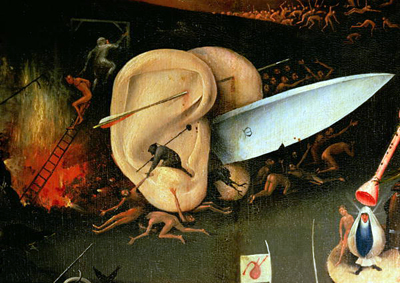
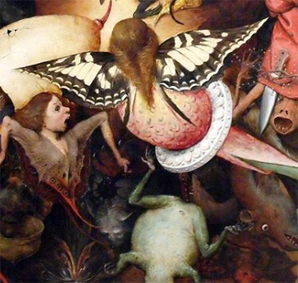
Blunt, tasteless, outrageous grotesquerie has been an important artistic strategy through the millennia. Bosch (below), Bruegel (next), Goya, and other artists  have taken exquisite pains to present giddy images of human folly, bursting the limits of taste and sense.


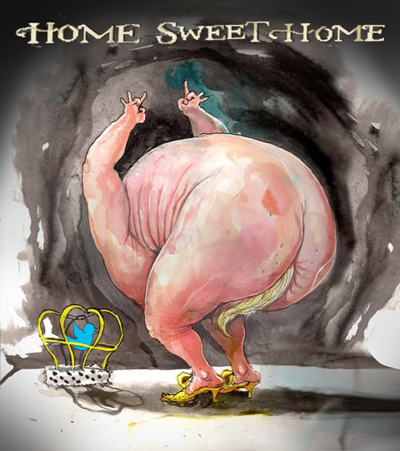
Unsurprisingly, in America the grotesque flourished during the 1960s, in Robert Crumb comix and Paul Krassner’s Disney orgy. Nowadays, Australia’s David Rowe has done fastidious work with slack jaws, skin blotches, and, inevitably, flab.

The realm of the stupid grotesque is one that Sacha Baron Cohen has made particularly his own. It suits our moment.


Friction between  parts

The Republican Party’s steamrolling takeover of civil society, begun in earnest in the 1980s but turbocharged under Trump, has created a Golden Age of American agitprop. Responding to the lava flows of vile, vacuous sludge on social media, carefully crafted counterstrikes have shown a fair bit of wit. Call it the spontaneous genius of the American people. That usually comes down to jaunty disrespect.

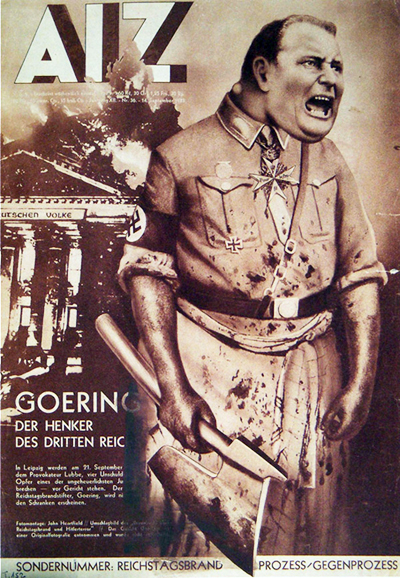
Caricature is the go-to format for those who can draw. But it’s striking that the photomontage techniques of John Heartfield, aimed at an earlier Reich, have been revived for the Age of Trump. Below, Heartfield’s 1933 portrait of Goering as butcher of the Reischstag, alongside an ailing Trump.


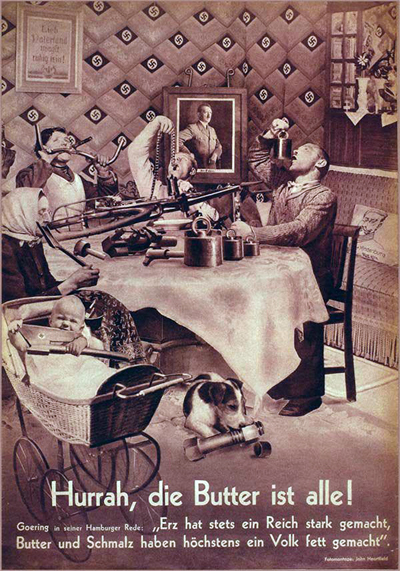
Photoshop makes the craft of photomontage easier than in earlier eras, but the trick is still to have an ingenious idea–a play on words, or a reference to a meme. Heartfield’s famous “Hurrah, the Butter’s All Gone!” defiles the guns-vs.-butter motto of classical economics by suggesting that we’re foolish enough to think we can survive on instruments of death. It also quotes Goering’s speech: “Iron has always made an empire strong, butter and lard have, at best, made a people fat.” While suggesting that Hitler’s followers have a hearty appetite for self-destruction, Heartfield has shrewdly created metaphors: handlebars like a corncob, a bandolier like spaghetti, a bomb like a coffeepot, a grenade serving as a doggy’s bone The baby teething on an axe-blade is a bonus, as are the sprightly swastikas in the wallpaper.


In the gentler example, Trump isn’t just any baby, he’s the kid in Home Alone (covert reference to his cameo in the sequel), with the invaders as both the Blump and, for once, a smiling Bob Mueller.

Note that these aren’t deepfakes, undetectable blends. Montage promotes friction between parts. The juxtaposition bears the traces of the act of bringing disparate pieces together. (Trump’s hands are plausibly small, but that icebag is an awkward fit.) They create a coherent spatial layout, but there’s enough mismatch to remind you of the act of assemblage.

Of course montage is also a film technique, and sometimes–as with the Soviet films of the 1920s, or found-footage films like those by Bruce Conner–we sense a jolt or abrasion between shots. By and large, though, a film like Borat Subsequent Moviefilm: Delivery of Prodigious Bribe to American Regime for Make Benefit Once Glorious Nation of Kazakhstan is less an exercise in montage (despite all its jump cuts) than a faux-documentary mixing the casual norms of prosumer video and quickie tabloid-crime cable fodder. Perhaps the worst-directed major film of 2020, it has its compensations. Instead of the relatively softball treatment of POTUS seen in my images, Borat Subsequent Moviefilm gives us something much closer to Heartfield’s blood and bombs. As in a photomontage, bits of reality are turned into a cartoon that’s outrageous, even offensive. But like Heartfield, Baron Cohen reminds us of one crucial point. Fascism, like stupidity, can be fun.


Just another movie?

Spoilers ahead, of course.

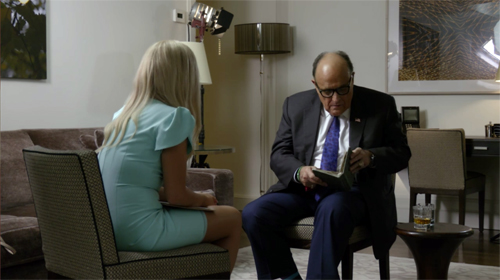
The grotesque is usually associated with deformation, but Borat Subsequent Moviefilm has a firm structure. At the risk of sounding silly, I insist that it’s a surprisingly tightly-knit classically conceived film.

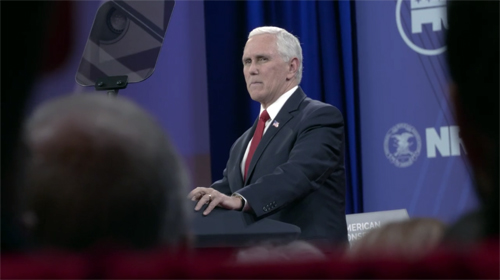
The hero starts off with a goal. Ex-journalist Borat Margaret Sagdiyev will get a reprieve from penal labor if he will deliver Johnny the Monkey as a bribe to well-known “pussy hound” Mike Pence. Borat’s daughter Tutar joins Borat in the US by smuggling herself into Johnny’s cargo crate, and because she has eaten Johnny, she must replace him as Pence’s bride.

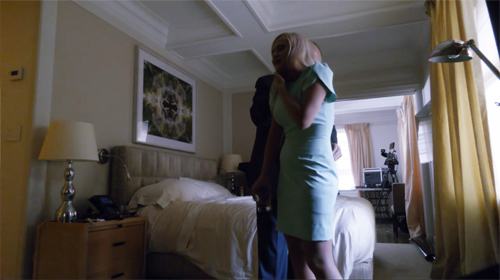
The film falls into the familiar four parts. The setup introduces Borat’s goal and peaks at the invasion of CPAC. As usual, the development section that follows redefines the initial goal. Turned away by Pence’s guards, Borat gets his boss’s permission to offer Tutar to Rudy Giuliani instead. This goal forms the through-line for the rest of the film, as Borat undertakes to make over Tutar into a submissive American woman.

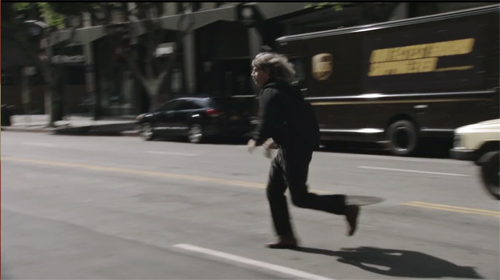
The third section is occupied with various delays and stretches of character change. Tutar starts to liberate herself from Kazach patriarchy and Borat comes to accept his daughter as a person. At the climax, when Tutar decides to offer herself to Giuliani to save her father, while he races to rescue her–prepared to sacrifice himself to save her from violation. The epilogue celebrates a new stability with a happy ending, if a worldwide pandemic counts.

The main thread is the familiar device of the naive traveler, the alien who reminds us of how strange our everyday world can seem to an outsider. Borat is introduced to smartphones (though he never figures out the camera), cyberporn, plastic surgery, QAnon, and Covid-19. Tutar learns that her vagina will not chomp her arm, that women can drive cars, and that fathers can walk hand in hand with their daughters.

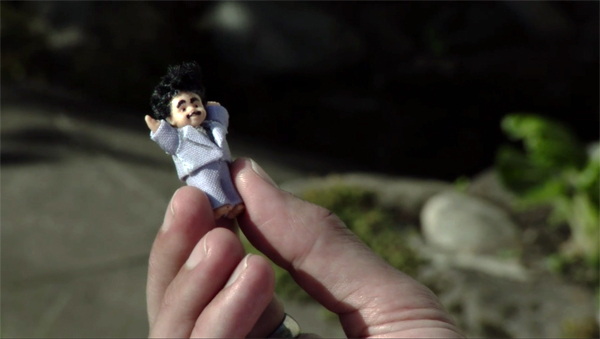
As in a traditional film recurring motifs–raw onions, a chocolate cake, a plastic baby, strings in the brain–bind the scenes together. Stylistically, the apparently offhand shooting displays classic camera ubiquity. We always have the best view because multiple setups are covering the action (something not common in a true documentary), and probably scenes are retaken. Matches on action are the giveaway.


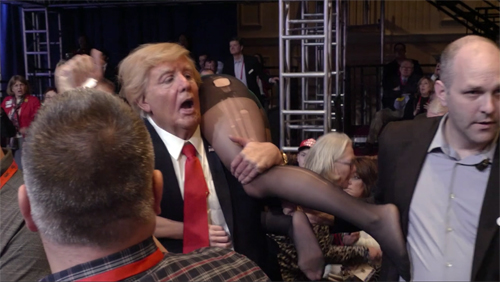
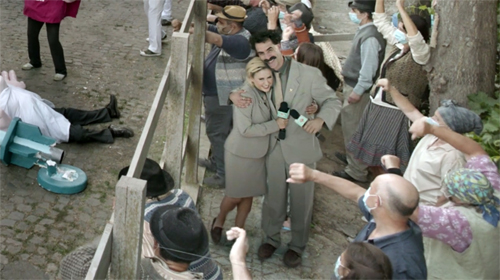
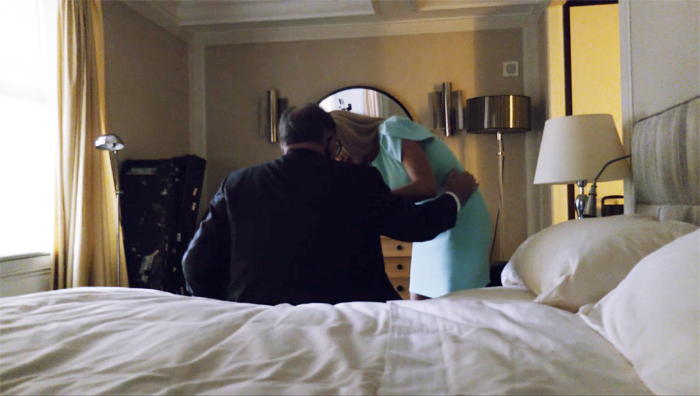
Many of the scenes, particularly those involving crowds at right-wing events, are made to cohere through the Kuleshov effect. Editing allows Pence to appear to react (stonily) to Borat’s appearance in a Trump fatsuit at the back of the hall.


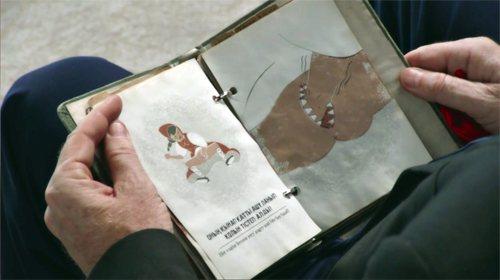
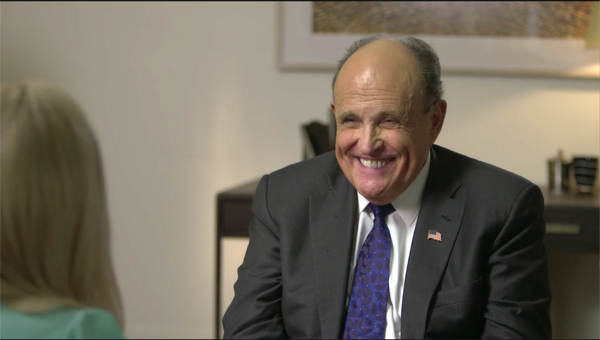
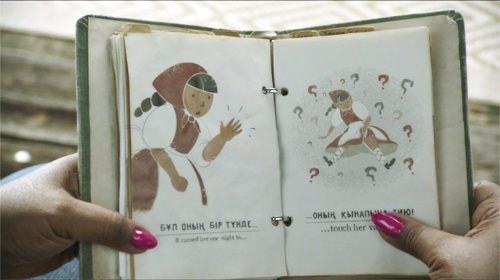
Think Rudy really inspected these pages of Tutar’s book? He is very moved by receiving it.


And there’s a nice homage to Griffith-style crosscutting, when Borat scrambles to rescue Tutar from the clutches of America’s Mayor.


I grant that Borat Subsequent Moviefilm seems pretty episodic when you watch it, but I suspect that’s partly because of the inherent looseness of a road-movie plot, and partly because of the shock effect of individual scenes. That shock depends, I think, on the relentless grotesquerie on display. Classical clarity of presentation enables the film to chart two major types of stupidity at large in our world.


Leering in bestial degradation

The aesthetic of the grotesque centers on fanciful but disturbing deformation, an exaggeration that’s at once playful and threatening. Art critic John Ruskin, describing the carved heads he found on the Bridge of Sighs in Venice, was appalled to see them “leering in bestial degradation.” That’s not a bad description of Borat Subsequent Moviefilm. The operative word, of course, is leering. The grotesque, as James Naremore points out, mixes fear, disgust, and laughter.

The grotesque breaks categories. Borat’s main disguises as a spare-tired redneck make him implausibly cartoonish. Animals become human (Johnny the chimp is a porn star) and humans become animals, or simply raw material. The producer of Borat’s previous film has been turned into an armchair, with privates preserved.

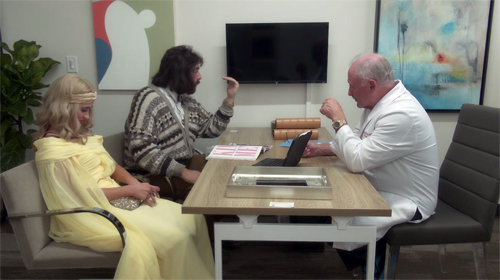
Species transmogrify. Borat himself–hugely tall, loping like a moose, shitting in front of Trump Tower, with his inane grin and wobbly vocal pitches, high-fiving with hands like seal flippers–is a walking graffito, something you might see scrawled on a remote East European grotto. Tutar, like all Kazakh daughters, is kept in a cage. Grotesque art also breaks taboos. The film wallows in menstruation, incest, masturbation, animated POTUS erections, kinky birth stories, and sex toys, including a gag that pivots on Borat’s accent (Amazon delivers “fleshlights” instead of flashlights). In this context, Rudy Giuliani’s 1200-watt smile becomes wolfishly sinister.

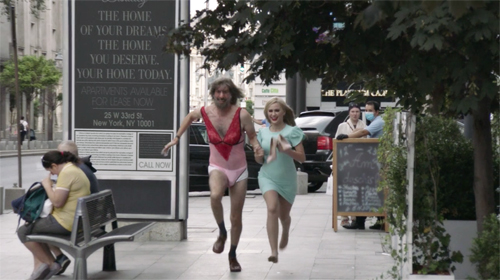
Again, though, narrative processes provide some development. Tutar abandons her cage and (in a sign that Borat is warming to her) joins her dad in the trailer. She becomes a high-gloss Fox-babe interviewer. Borat correspondingly submits to a gender revision, showing up in a bikini to save her from Giuliani. The armor-plated gender roles assigned by Kazakh culture melt a bit in Borat’s odyssey, though again–faithful to the grotesque–father and daughter’s final slow-mo romp through Washington streets is less a lyrical reconciliation after two “character arcs” complete than another bit of tawdry public cosplay.

Eisenstein thought that the grotesque had two registers, the comic (say, slapstick) and the pathetic (say, The Hunchback of Notre Dame). So you could argue that the Borat film moves broadly from the first to settle on the second. In the very last scene, there’s even a hug as a “normalized” Tutar and Borat assume meritocratic professional identities.

Still, this normalization doesn’t really wipe away a cruel Boschian vision of a hellscape seething with grotesques. The film sets up two parallel cultures, Kazakhstan and the USA, each deeply committed to imposing stupidity on its populace.

Kazakhstan is a parody of traditional folk patriarchy as recast by a Communist state. Fathers treat daughters as livestock while corrupt officials execute their enemies. Social life is ruled by a guidebook that Tutar dutifully carries everywhere. It details all the powers due to men and all the roles allotted to women, with special instructions about areas they must not touch.

The USA, for all its wealth, is filled almost completely with deadpan imbeciles who advise Borat on how to cage his daughter and gas gypsies. Women instruct Tutar in finding a sugar daddy and behaving at a debs’ ball. True, Tutar learns that the Kazakh manual is bunk, but her new vessel of truth is Facebook, which assures her that the Holocaust didn’t happen.

Armed only with a barbaric yawp, Borat visits anonymous malls and bland bakeries. This moronic inferno houses the pious women of a Republican club, the well-heeled attenders of a CPAC meeting, and the Gadsden flag-wavers. As the virus spikes, Borat takes refuge with conspiracy theorists who claim that the Clintons drain children’s adrenaline and feast on blood. Crashing a Second Amendment rally, Borat can quickly teach the audience a song which urges that members of the press be chopped up “like the Saudis do.”

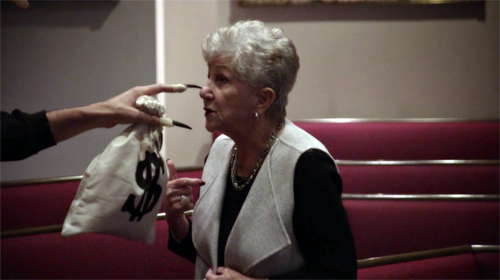
Does an elderly Jewish woman provide a glint of light? After all, she assures Borat that the Holocaust really happened. But the twist is that he’s comforted because her news vindicates his countrymen’s historic role working in the camps. And the image remains pure grotesquerie: a Nosferatu-like Borat measures the lady’s nose, in an echo of the visit to the obliging plastic surgeon who discusses Jewish noses.


If the Kazakhs have been regimented in the service of the state, the American social default is freewheeling, blank indifference. You can tell someone you’re chaining up your daughter, you can send a penis image by fax, you can walk into a conservative gathering in KKK robes, and at best people raise an eyebrow. Stupidity is stolidity. Behind every reaction shot is the unspoken American version of tolerance: Whatever. 

The French call us les grands enfants, the big kids. In a country where you do whatever you want until somebody says you can’t (and then you will demand to do it as an expression of freedom), why shouldn’t a man suggest paying for breast implants by letting perverts watch the procedure? (“The perverts,” the staff member explains, “have to be medical personnel.”) Why shouldn’t a birth counselor overlook the father’s apparent confession of impregnating his daughter? You want “Jews will not replace us” squiggled on a cake, with a happy face underneath? No problem. Why shouldn’t the President’s personal lawyer claim on the record that the Chinese invented the virus and deliberately unleashed it on the world? Maybe. Might be something to that. I’m just saying. Check out the retweet.

The most redemptive moments come with Jeanise Jones. As Tutar’s babysitter she nudges the girl away from having breast implants and sets her on the way to thinking independently. Jeanise also teaches Borat that the pain he feels in his heart is love for Tutar. Another way this is a classical movie: Borat Subsequent Moviefilm has its own Magic Negro.


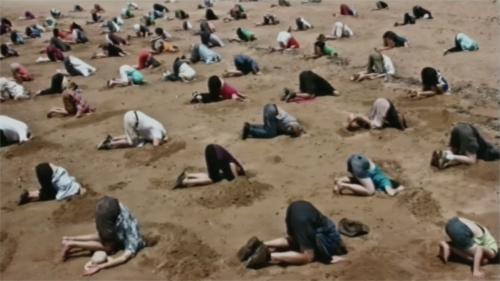
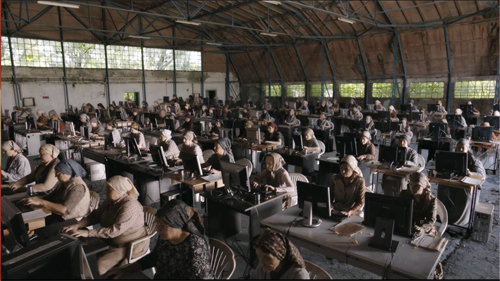
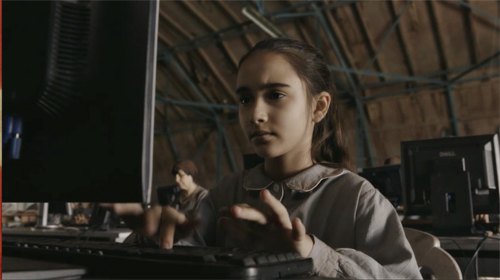
Narrative being narrative, the climax brings a change. Borat returns home, expecting execution, but he learns that his mission has actually been accomplished. He learns that his real purpose was to spread the coronavirus, developed in Kazakh labs to punish the world for laughing at the homeland after his first film. He has been the Typhoid Mary of the pandemic (his middle name is Margaret), and with his success Kazakhstan recovers a place of honor in the world community. It has moved forward to the digital age. Instead of playing ostrich, cut off from the outside world, the people are now staffing troll farms.


Now the daughters have joined globalization and have something important to do: overturn American democracy.

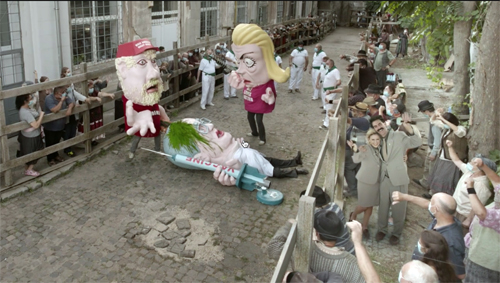
And instead of the Running of the Jew, the honorable tradition revealed in the first film, the homeland can afford to look down on a new scapegoat: America. In a colossal magnification of the grotesque, the ballcap hillbilly and the gun-toting Karen terminate Dr. Fauci.


Satire gone gross, pranks and punking pushed to randy delirium: No wonder Sacha Baron Cohen was so suitable for the role of the Yippie Abbie Hoffman in The Trial of the Chicago 7. In Borat Subsequent Moviefilm, I think he has done something important. He has made the 1960s put-on a vehicle of political criticism, by simply demonstrating how scary the pleasures of being stupid can be.

The movie cons its subjects, people say. No, they con themselves, aided by the Whatever principle. It’s not always very amusing, detractors say. Right. The grotesque never is. Being thoroughly stupid isn’t thoroughly fun. We are going to learn this over and over in the days and years ahead.


For enlightening commentary on Heartfield, visit here. On comix, the authoritative source is James P. Danky, Underground Classics: The Transformation of Comics into Comix (Abrams, 2009).

The standard survey of the grotesque is Wolfgang Kayser’s The Grotesque in Art and Literature. Jim Naremore makes the case for Stanley Kubrick as an artist of the grotesque in On Kubrick (British Film Institute, 2007). My quotation from Ruskin comes from p. 26 of that.

On the camera-ubiquity convention of pseudo-documentary, as it bears on The Office, you can see this entry. There’s also this one, on the Paranormal Activity series. The Kuleshov effect is discussed throughout our entries, especially here and in this video.

A noun, a verb, and . . . copping a feel in Borat Subsequent Moviefilm.
Friday, 16 October 2020

Little stabs at happiness 6: Breathe

Commander in Chief (2020).

Last summer, in hope of reviving spirits in these times, I ran a series of clips I admired for their ability to arouse and energize. They created a sort of disciplined exhilaration through adroit editing, camerawork, and music. They reliably gave me a lift, and maybe you too.

Now, in the Caligula phase of Trump’s presidency, it seems appropriate to pay my respects to a masterpiece of engaging agitprop. I’ve registered my reservations about the Lincoln Project in an earlier entry, but there’s no denying that these  walking wounded of right-wing partisanship have recruited some very talented filmmakers. Their “Covita” assemblage was superb, and they have outdone themselves with this morning’s masterpiece.

Here it is:


Experience it–but then we should study it.

It’s an excellent example of what we call in Film Art associational form–a blending of images, sounds, and texts to imply ideas and provoke feelings, in the manner of lyric poetry. The text itself is a lyric poem, at once ode, elegy, and epideictic. Demi Lovato’s rising and falling choked vibrato is in itself powerfully expressive. Just as important, the audiovisual texture enriches the words. Sometimes it’s a matter of the image echoing the words, and sometimes the associations are purely visual. An element in one shot, such as a gesture or facial expression, will call up something similar, or a contrast.

The effects flash by quickly. Taken just as images, what do these shots have in common?

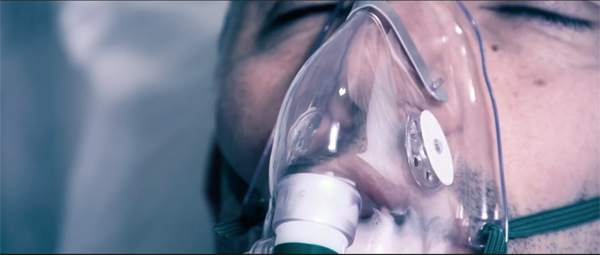
Nothing but a pulse: Labored breathing on a ventilator matches the beat of an emergency vehicle’s turn signal, as if life is running out before our eyes..

The structure mimics the song’s layout. We move from problem to solution, from crisis to resistance, ending on a resolution that puts action in the hands of the viewer. Threading it all together is the way “I can’t breathe” gets redefined. The phrase shifts from being associated with George Floyd and other victims of police atrocities, to the COVID-19 pandemic, before adding a twist: Trump’s own bout with the virus, capped in a direct address to him. How does it feel to be able to breathe? By the end breathing becomes metaphorically linked to voting. How does that feel?

As I mentioned in that earlier entry, contemporary agitprop reminds us how much every filmmaker owes to traditions. The techniques used in Commander in Chief stretch far back into the history of cinema; the upraised fists of the finale could have come straight out of Soviet montage.

It might seem pedantic to talk this way about such a powerful piece of cinema. But the point is that the things we study are really out there, crafted by creative filmmakers and having an impact on viewers. The art we care about has concrete effects, and in studying it we can clarify just how those effects are achieved. Analyzing forms and styles can broaden our sense of what cinema can do, and it can strengthen our respect for the filmmakers who explore it.

A similar analysis could be undertaken with many of the best current polemical documentaries, like Unfit and Totally Under Control. These galvanize us not just through their subjects and “messages” but through their fresh use of conventions of form and style. (The section of Totally Under Control devoted to First Capon Jared Kushner will remain models of satiric montage.) As with the best of Adam Curtis’s work, these are important contributions not just to political discourse but the history of film as an art form.

Those goosebumps, that quivering gut, those tears? They come from cinema, grand synthesis of the arts.


Another documentary working in this vein, Leo Hurwitz’s Strange Victory, is discussed here. It’s completely appropriate to our current crisis.

For other reflections on the Trump coup attempt, go here and here and here and here.

Totally Under Control (2020).

Wednesday, 7 October 2020

Vancouver: Continuing our world tour

Eyimofe (2020)

Kristin here:

Turning back from documentaries to international art cinema, I’m recommending three films, two from Eastern Europe and one from Nigeria.


Servants (2020)

Ivan Ostrochovsky, an established Slovak producer of documentaries, whose first feature Goat (2015) was successful on the festival circuit, has followed it up with a second. Servants showed in the Encounters program at Berlin and earned enthusiastic reviews (Variety, Screen Daily).

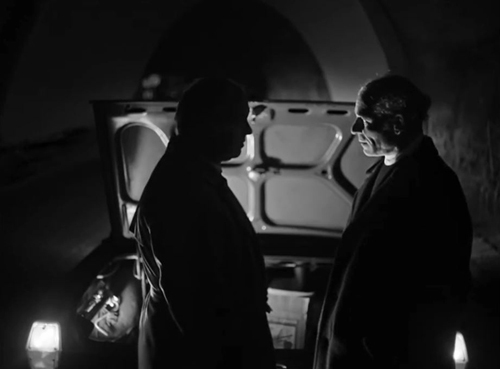
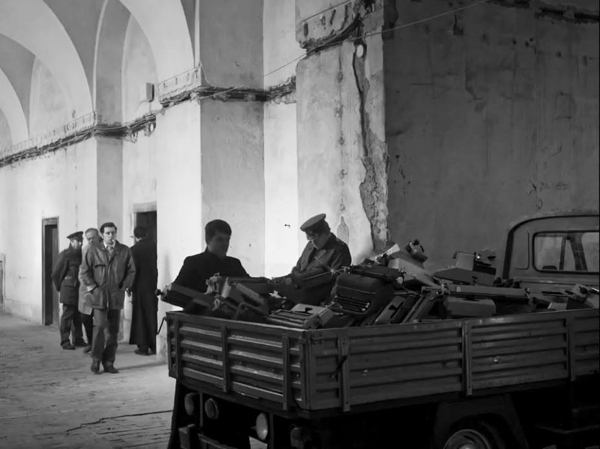
The film opens with a flashforward as a body is dumped on a dark country road–a scene that will later be replayed when we have more information as to who the victim is. Suddenly a title, “143 days earlier,” appears, and the plot focuses on two beginning seminary students, Juraj and Michal. Briefly we seem to following their personal stories, but their introduction to the seminary routine serves largely as exposition for us. Signs of Communist repression of Catholicism begin to surface. A defiant note anonymously posted leads to a confiscation of all the students’ typewriters (above) in a search for clues as to its author.

The organization behind the repression is an actual historical agency, “Pacem in Terris,” which spied on and controlled the Catholic Church, from 1971 to the early 1980s. (The film is set in 1980.) Its goal was to seek out any signs of political activity, i.e., rebellion, among the clergy and seminarians. Juraj and eventually Michal join a small clandestine group of students working against Pacem in Terris. They become the targets of a ruthless agent, “Doctor Ivan,” (seen at the right below). He is the man responsible for the body-dumping in the opening.

Servants, impressively shot in black-and-white, has been called a film noir, and it certainly has all the sinister tone, the chiaroscuro lighting, and the ill-fated heroes of that genre, mixed with the trappings of art cinema.

Ivanovsky demonstrates how much suspense and dread can be packed into a mere eighty minutes.


On the Quiet (2019)

Another short feature that packs a lot of drama into its 81 minutes is Hungarian director Zoltán Negy’s first feature, On the Quiet. It deals with the touchy subject of alleged sexual abuse of a minor. The film’s smart script, co-written by Negy, is credited as having been developed at the “My First Script Workshop” of the Zagreb Film Festival. As I have suggested elsewhere, such workshops run by festivals have come to play a major role in making such sophisticated storytelling possible.

The main strength of the script is how it maintains an utterly balanced ambiguity about the allegations at its core. The beginning introduces the protagonist, Dávid, first violinist in a student orchestra in a prestigious music school. The teacher-conductor, Mr. Frigyes, employs eccentric techniques with the players. When Dávid fails to perform his solo part adequately in rehearsal, Frigyes tells the other students to gather round to massage his shoulders. This apparently helps him improve.

Soon Frigyes is giving private lessons to 14-year-old Nóri, a pretty, inexperienced but talented cellist. The first lesson we witness has him relaxing her by having them toss a ball back and forth. He touches her elbow and shoulder to adjust her posture. That is all that we witness. Yet soon Nóri complains to Dávid that the teacher has done “weird” things to her, but she won’t specify except to say they were “intimate.” Disturbed by this, Dávid gives her his phone to secretly record a lesson with Frigyes. The resulting dialogue could equally be the teacher directing the girl’s cello technique or instructions about sexual caresses. Dávid’s girlfriend points out to him that Frigyes uses his touchy-feely approach with all the students, but he persists in trying to discover the truth.

The situation escalates as Dávid informs a female counselor, who interviews Nóri and her mother. The girl denies that anything untoward happened. Still, the gossip spreads and the situation eventually threatens Frigyes’s position at the school.  Did he abuse the girl? Did he simply not realize how his hands-on guidance could make the girl uncomfortable? Is she naively over-reacting to teaching methods that don’t seem to bother the other students?

I have seen one review that simply declares that the teacher is a perverted abuser, but the film seems far more subtle to me. Without ever implying that Nóri’s complaints should be dismissed, the film explores the effects of the spreading rumor on all those involved. It does show that no real investigation of the claims, which would be the logical way to proceed, ever takes place. In short, it is a careful presentation of its sensitive subject.

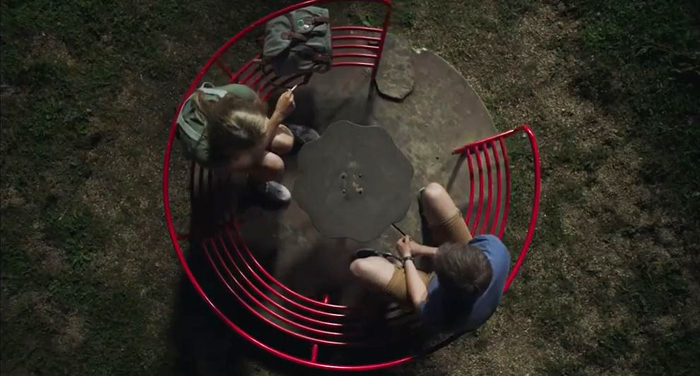
The film is well directed, though far from flashy. It does have the occasional striking shot, as when Dávid ponders the situation one evening (above) or sits talking with Nóri on a playground merry-go-round in an overhead shot (see bottom) that hides their expressions and suggests his confusion.

An interview with Negy about the film suggests that he is a thoughtful as well as a promising director–and one with three more film scripts underway.


Eyimofe (2020)

From the early 1990s, Nigeria has built up a thriving production of low-budget, DIY and professional films. At first distributed on VHS tape and then on digital disk, these have had enormous success at home and among the African diaspora. Kunle Afolayan formed a company that commanded government support and product placement to finance October 1 (2014), which played at film festivals, mostly within Africa. More recently, Kemi Adetiba’s The Wedding Party (2016) premiered at the Toronto International Film Festival, and Kathryn Fasegha’s 2 Weeks in Lagos premiered at the 2019 Cannes festival, where it was somewhat overshadowed by Mati Diop’s Atlantics, playing in competition.

Now comes Eyimofe (This Is My Desire, in English, but much of the coverage on the internet uses the Yoruba title). It is directed by twins crediting themselves as Arie and Chuko, though their family name is Esiri. They have created an formally and stylistically impressive film that gives fascinating insights into the society of the sprawling conurbation of Lagos, an area with an estimated population of 21 million.

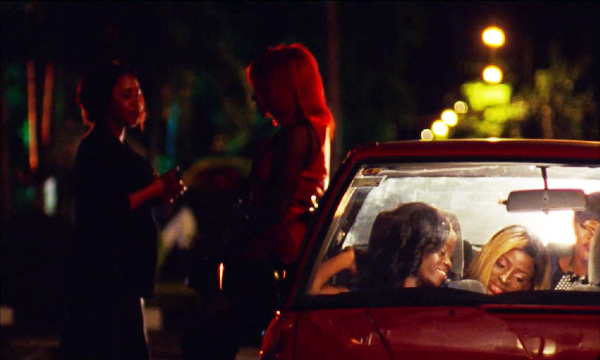
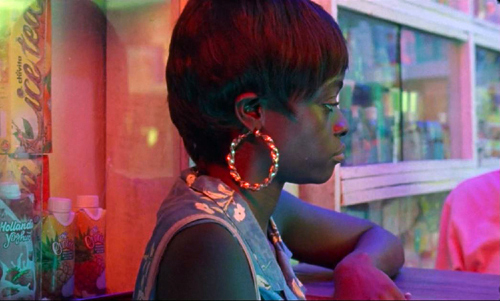
Arie Esiri studied Screenwriting and Directing at Columbia University’s School of the Arts, while Chuko Esiri earned an MFA, also in Screenwriting and Directing, from New York University’s Tisch School of the Arts. They wisely shot Eyimofe on 35mm, and the lush visuals exploit the bright colors of Sub-Saharan African clothing (see top of entry) and furnishings. Cinematographer Arseni Khachaturan adds bright colored light, especially at night and in shops, to create a gorgeous look (above and below).

The plot is split into two parts via titles: “Spain” and “Italy.” In each part, the main character is struggling to migrate. Mofe, an electrician, is gradually collecting the documents and money he needs for his move to Spain, where he will adopt the name Sanchez. Rosa, working both as a beautician and cocktail waitress, has similar aspirations to relocate to Italy, taking her younger sister Grace along. Both protagonists must scrape up money to pay for the passport, visa, fake letters promising employment, and other expenses. There are many complications, including a death in Mofe’s family and an unexpected revelation of the lengths to which Rosa and Grace will go to secure their passage.

The two stories are largely separate. There are moments when the characters pass each other briefly, and Grace even chats with Mofe at a little repair stand he sets up. Yet none of these chance encounters involves any causal connections between the two plots.

Early in the film Mofe visits an open-air “office” where a man who specializes in getting passports and visas–for a hefty fee (see top, where Mofe is on the right). In the background we glimpse a woman getting a passport photo taken against a white cloth. Late, near the beginning of the “Italy” section, we meet Rosa, having her passport photo taken in front of a similar backdrop (below). She’s in a different passport shop, however, suggesting that such informal establishments, vital for aspiring emigrants to cut through the red tape and delays of government procedures, are common in Lagos. It’s also the first of several parallels between her story and that of Mofe, clearly intended to suggest how common such struggles to leave for Europe are.

Unlike Mofe, Rosa aspires to a fun, modern social life, buying fancy clothes while sleeping with her landlord (who happens to be Mofe’s landlord as well) and then starting an affair with a wealthy Lebanese-American businessman. Her nightlife offers the occasion for flashy images, including the positively Godardian composition of her in a car with her friends (at the top of this section). As with Mofe, an unexpected death helps derail her plans, and we learn just how far she and Grace had been willing to go in their hopes for a better life abroad.

Eyimofe is a powerful film and well worth seeking out at a festival or on streaming. It’s having its UK premiere at the London Film Festival, which starts tomorrow. For a brief discussion by the directors about the film’s background, financing, and festival life, listen to this BBC radio interview. For a detailed description of the film’s success during its screenings during the Berlin festival from a Nigerian point of view, see here.


As a remarkably rich and successful festival draws toward its end, special thanks to Alan Franey, PoChu AuYeung, Jane Harrison, Curtis Woloschuk, and their colleagues for their help during it.

On the Quiet (2019).

Saturday, 3 October 2020

Vancouver: “It’s the Arts”

Frida Kahlo (2020)

Kristin here:

I wonder how many of my readers will recognize the source of this entry’s title. Is Monty Python’s Flying Circus still the perennial classic it was among young people for decades after its original series was broadcast? That brief sentence was the title of the sixth episode of the first season, shown in 1969, though I didn’t see it until some years later. The episode itself has little to do with the arts, but for some reason that particular title stuck with David and me, as few if any others did. Whenever we have encountered a TV program or a review, often something pretentious, one of us will turn to the other, or both simultaneously, and say, “It’s the Arts!”

The Vancouver International Film Festival has an admirable custom of showing many documentaries. They often deal with ecological issues and Canadian subject matter. One prominent thread, however, is documentaries about the arts. These are known as MAD, or “Music, Art and Design.” Although, as I mentioned in my previous entry, I tend to stick to the Panorama program of international fiction films, I always try to attend a few of these arts documentaries when they fit in with my interests. Most of these are in fact wonderful, not pretentious. Still, I am too accustomed to the phrase, and I think automatically, “It’s the Arts.”


Paris Calligrammes (2019)

One documentary that I was keen to see is Ulrike Ottinger’s autobiographical account of her years living in Paris during the 1960s. Ottinger is known, at least in the US, primarily for her experimental fiction films, like Freak Orlando (1981) and Joan of Arc of Mongolia (1989). I had not encountered her work since then and was eager to catch up with her at this year’s festival.

Ottinger did what many young people think of doing but never carry through on. She left home at the tender age of twenty for an exciting new life. In 1962, she moved from Germany to Paris, where she lived until 1969 before returning to West Germany. In France she lived among Bohemians and stayed long enough to witness the protests of May, 1968.

Naturally she was hugely influenced by her experiences. She tells of encountering artists and ideas: “In my euphoria, I wanted to convert all my experiences directly into art.” But how? Early on, she muses on how to convey those experiences of decades ago:

I ask myself that same question over fifty years later. How can I make a film from the perspective of a very young artist I remember, with the experience of the older artist I am today? In Paris, I followed in the footsteps of my heroines and heroes. Wherever I found them, they will appear in this film.
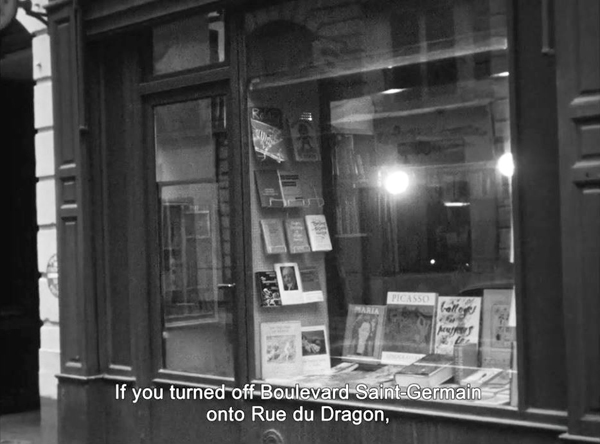
There is no footage of Ottinger from this period, and relatively few relevant photographs. Instead she wisely organizes the early portions of the film around her connection to an extraordinary bookshop that was a center of artistic and intellectual life at the time: Calligrammes (above), founded in 1951 by Fritz Picard, who had fled Nazi Germany in 1938. As a dealer in rare German and other books on the arts, Picard became host to innumerable avant-garde artists and intellectuals. Ottinger recalls buying many books on the German Expressionists and other avant-garde artists and movements of earlier decades.

(David bought some books for his dissertation on French Impressionist cinema at Calligrammes in the summer of 1973. Picard died in November of that year, though the shop was continued for a time by others.)

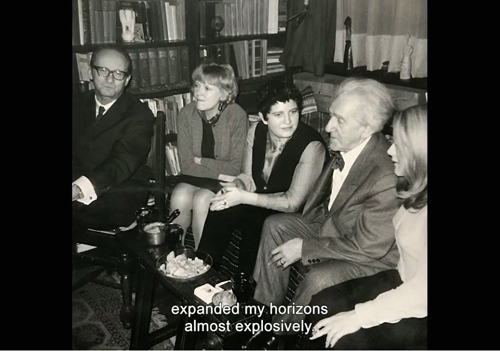
Ottinger became a friend of Picard and socialized with the patrons and visitors of the shop. Below, she’s in the black vest, sitting beside Picard at a party. She also was indirectly influenced by the great artists of the past, such as Hans Richter, who had frequented Calligrammes. In one sequence she flips through the guest-book signed by many a famous visitor, and we see clips from films like Ghosts before Breakfast, which influenced her.

Following this section, Ottinger gives us sequences on the effects of the Algierian war on her friends in Paris and describes the protests of May, 1968, some of which she was able to see from her apartment near the Sorbonne.

Perhaps inevitably, Paris Calligrammes reminded me of some of the Agnès Varda’s late autobiographical work. Ottinger is less lyrical and personal, as well as being more overtly political. There is more of a sense of name-dropping, at least in the early section. Still, who wouldn’t be interested in hearing about the early life of someone who has had such adventures? Ottinger also describes the influences on her by the artists she learned about and met. The brief clips from her own films should inspire a new generation of film buffs to seek out her work.

Like so many of the films at the Vancouver International Film Festival this year, Paris Calligrammes was shown in Berlin. For an enthusiastic and informative review done at the time, see Richard Brody’s piece in The New Yorker.


Marcel Duchamp: The Art of the Possible (2020)

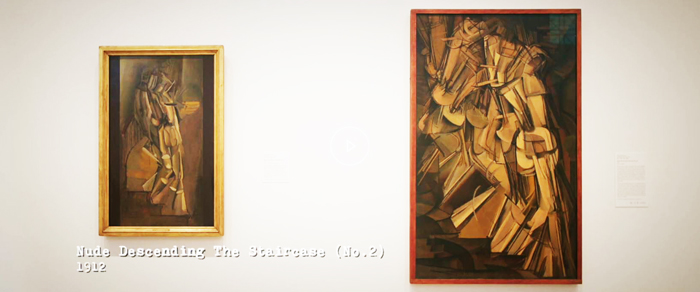
I am of two minds about Matthew Taylor’s documentary on Duchamp. It presents an excellent overview of the artist’s career and work, and one could learn a great deal from it. It makes clear, for example, the relationship between Duchamp’s early ready-mades and the fact that they were mostly subsequently lost and much later replaced by replicas–all with the artist’s cooperation. It puts his important early painting “Nude Descending a Staircase” (see bottom) in its historical context.

There are the usual experts explaining Duchamp’s intellectual approach to his artworks and his considerable influence on subsequent generations. We are not given much indication concerning who some of these experts are. The identifying labels often just say “Curator” or “Art historian” without linking the experts to any institution or publication. I tried looking one of them up on the internet and couldn’t find him. I’m sure, however, that they know Duchamp’s life and work well.

These experts are also almost all extremely enthusiastic about Duchamp’s work and especially the impact he has had upon art–not, as they emphasize, just specific trends but absolutely all subsequent art up to the present. Early on in the film, before we have been introduced to most of the talking heads, a voiceover declares, “Without him, imagine where we would be. We’d be painting in the style of Matisse or Picasso. That’s what modern art would be without Duchamp.”

(Ironic note: Duchamp’s stepson, Paul Matisse, is the grandson of Henri Matisse.)

That’s a pretty remarkable claim. It’s hard to think of a period that long in the post-Medieval era when art has just frozen in place for a century. Surely innovative styles and individual artists would have come along and produced distinctive work that did not depend on Duchamp’s main claim to fame, his demonstration that anything could become an artwork if we regard it as such. Did the Soviet Constructivists depend on Duchamp’s idea? Did the German Expressionists? Do highly individualistic artists? (See the section below.) Do manga and graphic novels, which are coming to be thought of as worthy of attention as art–not just because someone found them and declared them so, but because they contains qualities that were considered artistic well before Duchamp?

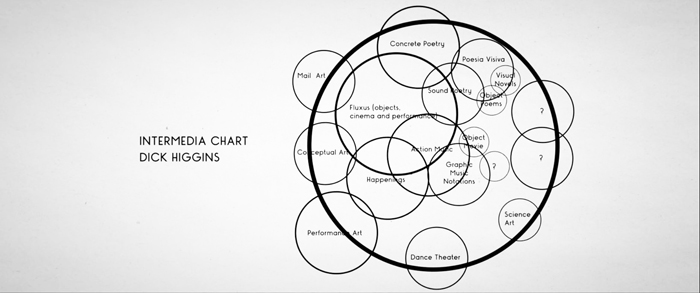
To be sure, Duchamp did have a huge impact, as this chart, shown in the film, suggests. It was devised by Dick Higgins, artist and co-founder of Fluxus. (The absence of Pop Art among the circles is rather puzzling, though it does figure in the film.) One could, however, devise many other circles for trends and institutions that do not reflect that impact.

Toward the end of the film, the experts go further, suggesting that Duchamp encourages the democratization of art by suggesting that anyone can be an artist, whether on their own or by taking and re-purposing existing artworks or objects or sounds. Yet would we say that the many outsider artists of the past century who have come to the recent attention of taste-makers had anything to do with Duchamp? And fanart, if that is included in this vast generalization, existed before Duchamp.

Despite the obvious excitement the experts display in extolling Duchamp’s work, someone watching the film might be less sympathetic, given the debatable state into which Postmodernism in general has led the art world. As one inevitably thinks, what’s next, Post-Postmodernism?

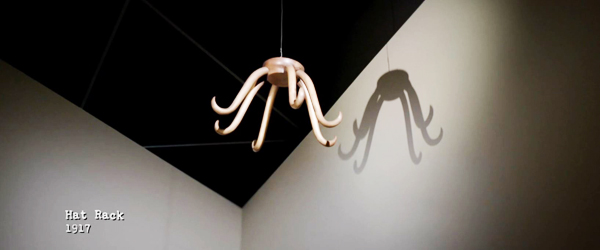
Duchamp himself seems, according to the film, to have had considerably less enthusiasm about his own artworks, preferring perhaps the idea of them rather than the execution. He took twelve years to complete the Great Glass and declared himself pleased with the results when an accident severely cracked its surface. He did not bother to keep track of his ready-mades, most of which disappeared. One wonders why he bothered to follow the initial venture into that area with “Fountain” (a urinal signed “R. Mutt 1911”), since subsequent ready-mades like “Hat Rack” (above) make the same intellectual point.

Late in life Duchamp seemingly gave up art-making to devote himself to competitive chess. After his death it turned out that from 1946 to 1966 he had been working on “Étant donnés,” a peep-show view of a spreadeagled nude woman, based on his mistress during part of that time. Despite the raptures expressed by the experts, it looks like it could be considered revenge porn. But only, presumably, if one calls it that.

Only one of the experts, Peter Goulds, departs from the general unquestioning idolization of Duchamp. Near the end he says,

Later in life, of course, he must have found it incredibly amusing to hear people latch onto his theories as though they were universal truths, when actually his whole life was about bucking those very conventions and defying them. So I’d like to suggest that his form of so-called conceptual art was a much more playful exchange. I’m not so sure about how even serious he was about it himself. Here he throws these things out as suggestions, with thought. Others, perhaps more needy than himself, would make these rules be therefore solely applicable.


Frida Kahlo (2020)

Frida Kahlo is one of those artists who don’t appear to owe much, if anything to the influence of Marcel Duchamp. As the film makes clear from the start, she was aware of European artistic movements and developments. Still, neither she nor her husband, muralist Diego Rivera, seem to have absorbed much from them. Kahlo always denied that her later work was Surrealistic, and one might rather attribute its fantastical elements derive more from the Latin American tradition of Magical Realism.

Indeed, the whole idea that Duchamp influenced all of modern art comes to seem remarkably Amero- and Euro-centric if one considers that it implicitly either scoops highly individual artists like Kahlo up into one enormous category or eliminates them from that category altogether.

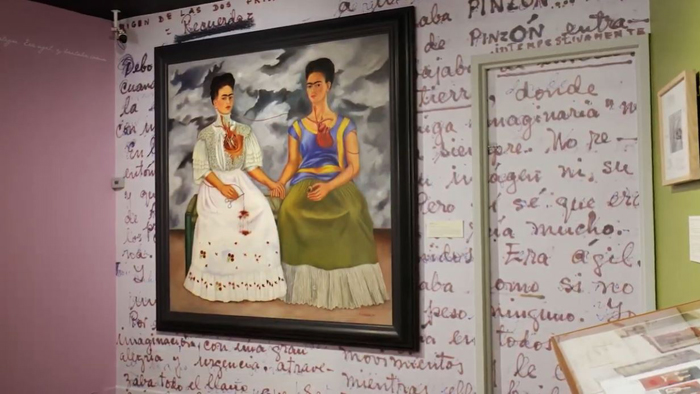
I found Frida Kahlo more satisfying than Marcel Duchamp. Its experts are all clearly identified as to their position and institution. Some are curators of the institutions which own her works, such as the Museo de Arte Moderno in Mexico City. There “The Two Fridas” is shown (see top) as the curator discusses it.

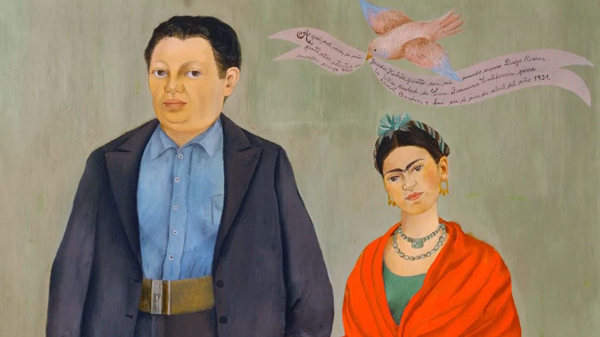
These experts are as enthusiastic about their subject as those in the Duchamp film, but they are focused entirely on recounting Kahlo’s life, her social context, and the influences on and changes in her style across her life. For example the simple presentation of “Frida and Diego Rivera,” an early portrait done shortly after their marriage, gives way to the more sophisticated and symbolic “The Two Fridas.”

Archival photographs and film clips illustrate the eras of the places where Kahlo lived and traveled. The impact of the lingering effects of her injuries in an extremely serious traffic accident in her youth, her travels with Rivera in the US, and the rockiness of their marriage are all discussed to help clarify the often cryptic visual references in her paintings.

In short, Frida Kahlo is a model of a staightforward and informative documentary on an artist. I was pleased to be introduced by it to its producers, Exhibition on Screen. In business since 2011, it has made twenty-six such documentaries. These are shown in theaters and festivals initially, before being made available on disc and streaming on their website. Frida Kahlo is promised for streaming on October 20.


Once again, thanks, as usual to Alan Franey, PoChu AuYeung, Jane Harrison, Curtis Woloschuk, and their colleagues for their help during the festival.

Marcel Duchamp: The Art of the Possible (2020)

Copyright © Cinenus | Powered by Blogger

Design by Anders Noren | Blogger Theme by NewBloggerThemes.com