The film industry in one place - Articles, Reviews, trailers and hype!

Wednesday, 2 October 2019

On the Run Together: 'Bonnie and Clyde' + 'Queen and Slim' Mashup

Bonnie & Clyde + Queen & Slim

"Y'all really gave us something to believe in. We needed that, for real." Great films from the past continue to inspire new films every day. Check out this trailer mashup combining Arthur Penn's classic Bonnie & Clyde (1967) and Melina Matsoukas's Queen and Slim (2019) arriving in theaters this fall. It's obvious that Queen & Slim is an updated take on the original crime duo, with a screenplay by Lena Waithe; the marketing materials even reference the classic film. H Nelson Tracey (aka "Hint of Film") put together this video making them both feel as one. "Bonnie and Clyde remains a classic movie that catapulted Warren Beatty and Faye Dunaway to legendary status. This fall, director Melina Matsoukas is releasing a Queen and Slim as a clear homage but with a modern approach, starring Daniel Kaluuya and newcomer Jodie Turner-Smith. Seeing the similarities, I decided to put them together in this trailer mashup." The trailer below is basically a rehash of Bonnie & Clyde with the Q&S audio, but the side-by-side video is much more poignant.

Below is the new Bonnie & Clyde / Queen & Slim mashup video - you can also watch them side-by-side.

You can watch the teaser trailer for Matsoukas' Queen & Slim here, or the two other full trailers for the film.

While on a forgettable first date together in Ohio, a black man (Daniel Kaluuya) and a black woman (Jodie Turner-Smith), are pulled over for a minor traffic infraction. The situation escalates, with sudden and tragic results, when the man kills the police officer in self-defense. Terrified and in fear for their lives, the man, a retail employee, and the woman, a criminal defense lawyer, are forced to go on the run. But the incident is captured on video and goes viral, and the couple unwittingly become a symbol of trauma, terror, grief and pain for people across the country. As they drive, these two unlikely fugitives will discover themselves and each other in the most dire and desperate of circumstances, and will forge a deep and powerful love that will reveal their shared humanity and shape the rest of their lives. Queen & Slim is directed by filmmaker Melina Matsoukas, making her feature directorial debut after a few short films and a bunch of music videos previously, including Beyonce’s "Formation" and the Nike "Equality" campaign. The screenplay is written by Lena Waithe, from a story by James Frey. Universal will debut Matsoukas' Queen & Slim in select US theaters starting November 27th coming this fall. View the latest trailer here. Thoughts?

Tuesday, 1 October 2019

Film Critic Biopic 'What She Said: The Art of Pauline Kael' Full Trailer

Ghosts of Sugar Land Trailer

"She refused to be intimidated." Film Forum has unveiled an official trailer for the documentary What She Said: The Art of Pauline Kael, a biopic doc profiling the controversial film critic with a "sharp tongue". This originally premiered at the Telluride Film Festival last year, and it has gone on to play at numerous festivals all throughout this year so far. The film is a portrait of the work of controversial film critic Pauline Kael (who passed away in 2001 at the age of 82) and her influence on the male-dominated worlds of cinema and film criticism. It's an often humorous, searing look at the power of film criticism and the passion Kael had for speaking up and sharing her opinion - even when others didn't like it. "In an inspired and passionate mash-up of her own words, contemporary interviews and the films she wrote about, Rob Garver has crafted in his feature documentary a remarkably captivating portrait of a tough grande dame of cinema." See below.

Here's the official trailer for Rob Garver's doc What She Said: The Art of Pauline Kael, from YouTube:

What She Said: The Art of Pauline Kael Poster

Pauline Kael (1919–2001) was undoubtedly one of the greatest names in film criticism. A Californian native, she wrote her first review in 1953 and joined 'The New Yorker' in 1968. Praised for her highly opinionated and feisty writing style and criticised for her subjective and sometimes ruthless reviews, Kael's writing was refreshingly and intensely rooted in her experience of watching a film as a member of the audience. Loved and hated in equal measure—loved by other critics for whom she was immensely influential, hated by filmmakers whose films she trashed—Kael destroyed films that have since become classics such as The Sound of Music and raved about others such as Bonnie and Clyde. She was also aware of the perennial difficulties for women working in the movies and in film criticism, and fiercely fought sexism, both in her reviews and in her media appearances. What She Said: The Art of Pauline Kael is directed by American filmmaker Rob Garver, making his feature directorial debut with this film. This premiered at the Telluride Film Festival last year, and also played at the Berlin Film Festival this year. Film Forum will release the doc in select theaters starting on December 25th at the end of this year. Interested?

Official Trailer for Award-Winning Short Doc 'Ghosts of Sugar Land'

Ghosts of Sugar Land Trailer

"This is not just paranoia." Netflix has debuted an official trailer for an indie documentary titled Ghosts of Sugar Land, a 21-minute short doc that premiered at the Sundance Film Festival earlier this year. Made by filmmaker Bassam Tariq, of the docs These Birds Walk and 11/8/16 previously. Ghosts of Sugar Land is about a group of suburban Muslims who attempt to reconcile the disappearance of a close friend and must learn to live with the consequences of his choices. Winner of a Short Film Jury Award for Non-Fiction at Sundance, the film "stirringly traces the guilt, fear, and sadness of these men as they try to piece together what happened to their friend." The way everyone has to cover up their faces in this is frightening and really worrying - not just a compelling creative choice, but it says so much. But the twist at the end is a whammy.

Here's the official trailer (+ poster) for Bassam Tariq's doc Ghosts of Sugar Land, direct from YouTube:

Ghosts of Sugar Land Poster

Ghosts of Sugar Land follows a group of Muslim Americans in the suburbs of Houston, Texas as they trace the disappearance of 'Mark,' a friend who is suspected of joining ISIS. A social misfit throughout his teens, 'Mark' converted to Islam before entering college. But his beliefs took an increasingly worrisome turn when he began alienating his friends and leaving cryptic notes on social media before he disappeared altogether. Ghosts of Sugar Land is directed by doc filmmaker Bassam Tariq, director of the feature docs These Birds Walk and 11/8/16 previously. It first premiered at the Sundance Film Festival this year, where it won the Jury Award. Netflix will debut Ghosts of Sugar Land streaming exclusively starting October 16th.

10 Great Directorial Debut Horror Films

This article is part of our ongoing series, 31 Days of Horror Lists.


The first cut is the deepest. In the horror genre, there’s an untold number of brilliant and innovative first feature films. Some of these films find new ways to strike fear into the hearts of seasoned horror veterans, some of them delight in a gleeful cavalcade of violence, and others keenly interrogate the social issues that have been the foundation upon which so much horror is created. To narrow a wide range of debut titles down to ten is no easy feat, but this list is a comprehensive catalog of incredible first cuts. Some of the films come to us courtesy of now-iconic directors who hit the ground running, others are more recent films that showcase emerging talent. Either way, these are all first times worth remembering.

To kick off our 31 Days of Horror Lists, FSR’s resident Boo Crew decided to begin in the logical place, with a celebration of firsts. Read on to find out the ten best directorial debuts as decided by Chris Coffel, Valerie Ettenhofer, Kieran Fisher, Brad Gullickson, Rob Hunter, Meg Shields, Jacob Trussell, and yours truly.

Red Dots

10. The Slumber Party Massacre (1982)

Hdnepwy Hhayypdqszmhw

Amy Holden Jones’ directorial debut was originally written as a parody of slasher films but then reworked to be more straight-forward. As a result, the film has a keen sense of humor about its premise: a bunch of high school girls are attacked by a power-drill wielding psycho-killer over the course of one night. Horrific and comedic in equal measure, The Slumber Party Massacre showcases some of the best fake blood the genre has seen and has a scene in which characters eat pizza off a dead body. While crafted with an awareness of its own horror tropes, Holden Jones’ film is also markedly different to similar movies made at the time. In juxtaposition to most well-known slasher films, there’s no mythology around the killer; he isn’t bestowed with preternatural abilities or afforded an extended backstory that’s interested in how he came to be. He’s just a dude who gets off on hurting women and the film never cares to make him anything more than that. The focal point of Holden Jones’ film is the women, not their killer. (Anna Swanson)


9. Fright Night (1985)

Screenshot At Pm

The premise for Fright Night came to Tom Holland while he was writing Cloak & Dagger, a well-reviewed, kid-oriented spy film that ultimately tanked at the box office. It was a simple idea: “what if a horror dork found out their neighbor was a vampire, and no one believed them.” The qualifier, “what if a horror dork found out their neighbor was a wildly erotic, steal-your-girlfriend, apple-munching vampire with a wildly aspirational sweater collection” came later. One assumes. Dissatisfied with how Michael Winner had directed his screenplay for Scream for Help, Holland fixed to direct Fright Night himself in an act of “self-defense.” And thank god. Fright Night is one of those films that feels like it was a blast to make; it delights in its own depravity, charm, and the sights it can’t wait to show you. Which are plentiful: Fright Night is home to some truly righteous 80s goop, and one of the most unforgettable maws in cinema. If, as the saying goes, a director is a film’s immune system, then Tom Holland came out the gate with a talent for keeping the madness on the level: teetering somewhere in the sweet spot that makes for one hell of a fun time at the movies. (Meg Shields)


8. The Night of the Hunter (1955)

Night Of The Hunter Png

First directorial forays into horror — and into films in general — are often rough and raw experiences as a filmmaker finds their footing, but as this entire list suggests, sometimes a debut delivers magic. Charles Laughton‘s The Night of the Hunter (1955) is that kind of magic, made even more impressive by the unfortunate fact that it’s Laughton’s only credited stab at directing, and it remains a tense and thrilling watch more than a half-century later. Credit Robert Mitchum‘s terrifying performance as the religious-minded madman, but credit Laughton for crafting the scenes, suspense, and nightmares that follow. (Rob Hunter)


7. Hellraiser (1987)

Hellraiser

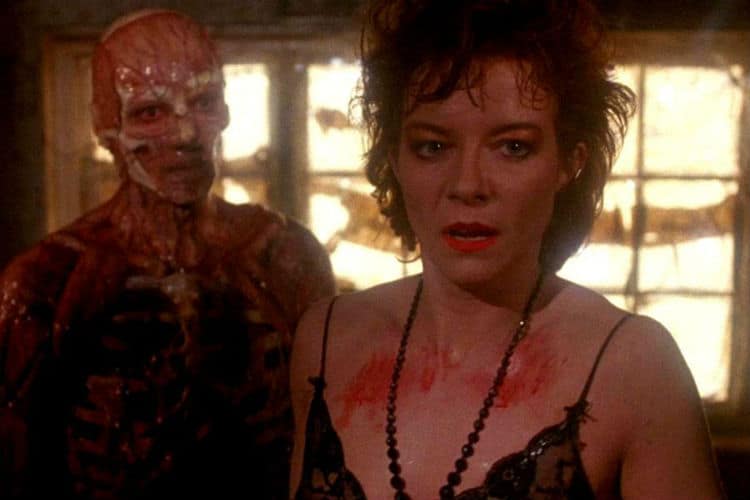
The most remarkable thing about Clive Barker’s directorial debut isn’t the fact he unleashed one of the greatest horror movies ever made. No, it’s how he managed to do so without having any relevant experience in the field of filmmaking beforehand. If you look up self-taught in the dictionary, you’ll see a picture of Barker next to it. Before taking on the task of helming Hellraiser — which is based on his own The Hellbound Heart novella — he read books on filmmaking from the library and learned the skills he needed on the set. He was also smart enough to surround himself with patient people who were good at their jobs. In the end, the film turned out to be a horror masterpiece that disguised its tiny technical flaws with strong performances, bold storytelling, and demons so visually horrifying that even their own nightmares are scared of them. (Kieran Fisher)


6. The Witch (2015)

The Witch

How the fuck does someone make a movie this good their first time to bat? When The Witch dropped, I wasn’t jaded on horror, but I hadn’t been surprised — or shocked — by the genre in a few years. As we’re introduced to Robert Eggers’s dread-inducing countryside with foreboding painted in black across the frame, we’re immediately sucked into this world, and behind the lushness of New England is a netherworld filled with blackened hovels, grim, blood-stained churns and images that are wholly unexpected in slow-burn horror.

But to say The Witch is slow-burn is to misrepresent the immediacy of the film. As quickly as the central family is cast from their town, their God again turns their back on them as the allure of the beyond grows in young Thomasin’s (Anya Taylor-Joy) eyes. What she finds in that void depends on how you view the film’s final moments, be it tragic or joyous. The Witch is inarguably a masterclass in tension from a director who will only grow more confident — and daring — in the decades to come. (Jacob Trussell)


Next Page

The post 10 Great Directorial Debut Horror Films appeared first on Film School Rejects.

First Trailer for 'Birds of Prey' Starring Margot Robbie as Harley Quinn

Birds of Prey Trailer

"Isn't this fun?! It's just like a sleepover!" Warner Bros has finally unveiled the first full trailer for Birds of Prey, the Harley Quinn movie arriving in theaters next February. They quietly dropped a teaser in theaters a few months ago, but it never debuted online. Now we have an exciting official trailer to watch and yes this looks badass. The full-on title is Birds of Prey: And the Fantabulous Emancipation of One Harley Quinn, starring Margot Robbie as the iconic DC Comics villain, reprising her role from Suicide Squad (it's sort of a sequel but without Joker or Batman). She joins superheroes Black Canary, Huntress, & Renee Montoya to save a young girl from an evil crime lord. The full cast includes Mary Elizabeth Winstead, Jurnee Smollett-Bell, Ella Jay Basco, Rosie Perez, Chris Messina, Ewan McGregor, Charlene Amoia, Talon Reid, with Ali Wong. So far so good! Lots of slick action, lots of colors, lots of goofy jokes.

Here's the first full-length trailer (+ fun posters) for Cathy Yan's Birds of Prey, direct from WB's YouTube:

Birds of Prey Posters

Birds of Prey Posters

For more info and updates on Birds of Prey - follow on Twitter @birdsofpreywb or visit the Facebook page.

Harley Quinn has split with the Joker following the events of Suicide Squad. Batman has disappeared, leaving Gotham City unprotected from crime. When a young girl named Cassandra Cain comes across a diamond belonging to crime lord who goes by the name of Black Mask, Harley joins forces with Black Canary, Huntress and Renee Montoya to protect her. Birds of Prey: And the Fantabulous Emancipation of One Harley Quinn is directed by Chinese-American filmmaker Cathy Yan, her second film following Dead Pigs previously, and a number of short films. The screenplay is written by Christina Hodson; based on the "Birds of Prey" comics created by Chuck Dixon, Jordan B. Gorfinkel, Greg Land. Warner Bros will release Yan's Birds of Prey in theaters everywhere starting February 7th, 2020 early next year. First impression?

Ryan Reynolds in First Full Trailer for Michael Bay's '6 Underground'

6 Underground Trailer

"The best part of being dead, is the freedom… No policies or politics." Netflix has launched the first official trailer for Michael Bay's next big movie titled 6 Underground, debuting streaming in December. Can you believe it? Netflix is releasing a new Scorsese movie AND a new Michael Bay movie this fall. Ryan Reynolds describes this as: "How Michael Bay Stopped Worrying and Love Explosions More." Six billionaires fake their own deaths and form an elite vigilante squad in order to take down notorious criminals. Starring Ryan Reynolds, along with Mélanie Laurent, Corey Hawkins, Adria Arjona, Manuel Garcia-Rulfo, Ben Hardy, Lior Raz, Payman Maadi, and Dave Franco. This looks crazy ridiculous but it's going to be so much fun! Oh it's good to see a new Michael Bay movie that isn't Transformers. I'll take this any day over that boring Bad Boys sequel. Bring it! Fire up the trailer below and let us know what you think? Look good?

Here's the first official trailer for Michael Bay's 6 Underground, direct from Netflix's YouTube:

6 Underground Poster

6 Underground introduces a new kind of action hero. Six individuals from all around the globe, each the very best at what they do, have been chosen not only for their skill, but for a unique desire to delete their pasts to change the future. The team is brought together by an enigmatic leader (Ryan Reynolds), whose sole mission in life is to ensure that, while he and his fellow operatives will never be remembered, their actions damn sure will. 6 Underground is directed by American action filmmaker Michael Bay, director of Bad Boys, The Rock, Armageddon, Pearl Harbor, Bad Boys II, The Island, Transformers, Revenge of the Fallen, Dark of the Moon, Pain & Gain, Transformers: Age of Extinction & The Last Knight, plus 13 Hours previously. The screenplay is written by Rhett Reese & Paul Wernick (Zombieland + Double Tap, G.I. Joe: Retaliation, Life, Deadpool 1 & 2). Produced by Michael Bay, Ian Bryce, David Ellison, Dana Goldberg, and Don Granger. Netflix will debut Bay's 6 Underground streaming exclusively starting December 6th. Cool?

Karen Kaia Livers & Wendell Pierce in Trailer for 'Burning Cane' Film

Burning Cane Trailer

"It's hard to dance with the devil…" Array has debuted an official trailer for an indie drama titled Burning Cane, the feature directorial debut of talented filmmaker Phillip Youmans. This premiered at the Tribeca Film Festival this year, where it won Best Cinematography, Best Actor, and Best Narrative Feature awards. Set amongst the cane fields of rural Louisiana, an aging mother struggles between her religious convictions and the love of her son. Starring Karen Kaia Livers as Helen Wayne, exploring the relationships within a southern black protestant community. The cast includes Wendell Pierce (who won the award in Tribeca), Dominique McClellan, and Braelyn Kelly. Ava DuVernary's Array has been scooping up and releasing some of the finest under-the-radar indie films out there, and this looks like another gem in their selection.

Here's the official trailer (+ poster) for Phillip Youmans' Burning Cane, direct from Array's YouTube:

Burning Cane Poster

Burning Cane tells the story of a deeply religious woman's (Karen Kaia Livers) struggle to reconcile her convictions of faith with the love she has for her alcoholic son (Dominique McClellan) and a troubled preacher (Wendell Pierce). Set in rural Louisiana, the film explores the relationships within a southern black protestant community, examining the roots of toxic masculinity, how manhood is defined and the dichotomous role of religion and faith. Burning Cane is both written & directed by New Orleans filmmaker Phillip Youmans, making his feature directorial debut after a few shorts previously. It's produced by Ojo Akinlana, Karen Kaia Livers, Mose Mayer, Wendell Pierce, Isaac Webb, as well as Cassandra Youmans. This premiered at the Tribeca Film Festival earlier this year, where it won three major awards. Array will release Youmans' Burning Cane in select US theaters starting on October 25th later this month. Who's interested?

Toward a Necessary Cinema: Pietro Marcello on “Martin Eden”

By the time a publicist signals that my turn has come, director Pietro Marcello has just wrapped his last roundtable interview of the day, and slouches on a sofa at the Excelsior Hotel, peering at the terrace a few steps away from us, and the Adriatic Sea, sprawling bright and calm further down. It’s the midway point of the 76th Venice Film Festival, and the thick late summer air above the Lido is packed with the noise of people besieging the red carpet. A self-taught documentarian (DIY credentials he would proudly and rightfully boast in our interview), Marcello first bowed on the Lido in 2007, when his Crossing the Line found a slot in the Horizons sidebar, before cementing his name in 2009 with The Mouth of the Wolf (awarded the top prize at the Turin Film Festival, Italy’s David di Donatello and Nastro d’Argento awards for best documentary, and the Berlinale’s Caligary and Teddy Bear prizes). Eight years since his 2011 documentary The Silence of Pelesjan world premiered on the Lido—again in the Horizons program—and four since his 2015 docufiction hybrid Lost and Beautiful, he’s returned to Venice as one of the three Italians in the year’s competition.
But unlike the mafia-themed features by Mario Martone (The Mayor of Rione Sanità) and Franco Maresco (The Mafia Is No Longer What It Used to Be), Martin Eden is a far more singular, sui generis offering. Co-authored by the director and Maurizio Braucci, and based on Jack London’s 1909 novel by the same name, Martin Eden follows a young unschooled sailor who writes his way into the elite, and upon turning into the revered writer he long craved to be, struggles to square the success with his low-born roots and the political ideals he’s sacrificed along the way. London set his novel in Oakland, California; Marcello moves the action to Naples, and recruits Luca Marinelli as lead. As it turns out, both choices work superbly.
Marinelli imbues Martin with an unbridled charisma; even as Marcello pauses to delve into the political and theoretical subtext underpinning the novel (and film), his towering performance and raw energy offer some respite from the more heavy-handed intellectual ruminations. Ostensibly set in the early twentieth century, the Naples his Martin saunters into seems to jut out of time, a mosaic of different eras. Andrea Cavalletto’s costumes harken back to the 1930s (or later decades, depending on the looks of the locales curated by production designers Roberto De Angelis and Luca Servino), while the technology hints to the 1950s. As per usual in Marcello’s oeuvre, archival footage abounds, old glimpses of the city here seamlessly integrated in Francesco Di Giacomo and Alessandro Abate’s 16mm cinematography. A portrait of a writer-cum-militant swells into a larger canvas of a community heading straight into the abyss. But in Marcello’s lyrical and anachronistic world, the lurking crisis feel unnervingly close: that perturbing, disorienting vividness may well be Martin Eden’s crowning glory.
Late in the afternoon and away from the scorching sun, I take a seat next to Marcello, and over coffee, we begin to chat.  

NOTEBOOK: I was quite struck by the timing of your project. London had published his novel in 1909… 
PIETRO MARCELLO: …and we turned it into a film 100 years later! [Laughs.] I know, it’s quite a coincidence. But I’d been quite familiar with the story for a while already. The book was first gifted to me by [co-script writer] Maurizio Braucci, one of my closest friends. He’d read it twenty years ago, and asked me to do the same. He was convinced I’d like it just as much. And so, twenty years later, we turned it into a script. As you can imagine, we had to grapple with all sorts of dilemmas. What on earth were we going to do with a book like that? Neither of us came from the Anglo-Saxon world. We don’t belong to that culture, to the writings of Conrad, Stevenson, Melville—to their kind of literature. Which is why we thought: let’s make Martin a Latin hero. After all, Eden is an archetype, much like Faust and Hamlet. It’s a simple story. A poor, young lad emancipates himself through culture, and becomes a man, propelled by this desire to rise up the social ladder—until he turns into a victim of the culture industry, so to speak. And the tale rings quite close to London’s own. If you think about his life, Jack London was among the first victims of the mass culture industry. On top of all that, we also found the novel to be very timely. London predicted the disasters that would unfold in the aftermath of the First World War: the rise of Hitler, Mussolini, and the like... And now we live in a world where the presence of fascism is almost taken as a given. We seem to have really gone back 100 years. You walk down the street, and you hear people talk about fascism as if it were the most normal thing in the world…
NOTEBOOK: I was wondering if there was also some form of personal identification between you and Martin Eden. I’m thinking about the way you often stress your DIY credentials, how you essentially taught yourself filmmaking…
MARCELLO: Well, Martin Eden is the self-taught folks’ novel. And I think the text is really emblematic for all DIY creatives out there. I’m a self-taught myself, and proud to be one. I may not have gone to film school, but I know my cinema, and if people ask me to talk about the movies I love I can go on for hours. I watched films, and learned how to do the little I do that way. That, and through my work as documentarian. It was by making documentaries that I learned the ropes, in the streets, teaching myself how to deal with the unforeseen and unpredictable elements of cinema. Now, in the case of Martin Eden I also served as producer, so I was sort of juggling many roles at once. I had to think about directing, production, and so on. Sure, the budget was larger, but it was still a wild bet, still a brave path we decided to embark on. And it was carried out in this idyllic state of grace: we were a commune of people working together, supporting the film and each other along the way.
NOTEBOOK: Speaking of brave things, I think the decision to stage London’s tale in Naples ought to count as one. And it works; I for one was mesmerized by the all the buzz, the colors, the sounds and smells of the city. It felt like a tactile portrait, so to speak—something alive, breathing. Yet I recall you saying that the Naples in the film “could be any city, anywhere in the world.”
MARCELLO: That’s right.
NOTEBOOK: Which sounded somewhat odd. The whole film feels so faithful, so loyal to its settings—almost like a valentine to the city.
MARCELLO: We brought this story to Naples because it’s a very tolerant city. I made my first few films there, so it felt like being at home, somehow. I was surrounded by all my dearest friends, and people who joined in to help bring this film into the world. Naples is a port city, and as such, it’s the kind of place that’s welcomed all sorts of men and women, sons and daughters of their eras. And that’s what happened to our Martin: a European, Italian, Latin hero, a child of the Mediterranean, the Mare Nostrum that washes him ashore, and into which he returns.
NOTEBOOK: There’s also a peculiar relationship with time. Your Naples seems to straddle past and future: there are elements that suggest a whole array of eras. It reminded me of the kind of temporal ambiguity you have in Christian Petzold’s Transit. Have you seen it?
MARCELLO: Not yet.  
NOTEBOOK: It’s a Holocaust drama set in present-day Marseilles, so you hear people talk about fleeing the concentration camps as they run around late 2010s France. It’s a bold choice, and works terrifically, for the drama feels unnervingly close, and vivid.
MARCELLO: Sounds like the sort of experiments Peter Watkins did in La Commune (Paris 1871)! Look, I like my cinema to remain anchored to the moral questions I constantly ask myself, such as the role we play in the time we live in, and what our needs should be in this particular moment in history. I think Martin Eden came about as the natural evolution of the films I did before. I may have had a bigger budget, but the instruments I used here are the same I used in previous works. I reckon that writing for the screen is always, by definition, somewhat incomplete, because you have to factor in the way your script will eventually morph into images. And that’s always subject to change. As for our own production, things on set would be trapped in this constant state of flux. Locations would not be ready, or someone would mess things up, and you’d have to dash and fix them. But that’s what cinema is like. And I like to think I brought many Martin Edens on set, and had many versions in my hands inside the editing room. But now the film is no longer mine. It’s become this collective object, and I’ve turned into a spectator myself. Sometimes I wish I could become a ghost, disappear and pop up again inside cinemas, just to see what that would feel like… [laughs].
NOTEBOOK: This is a Künstlerroman that’s very steeped in its political subtext. As well as a struggling writer, Martin is also a young man navigating the politics of his time.  
MARCELLO: Absolutely. And the film’s political turf is very timely, too. You have people arguing and fighting over topics that ring very contemporary: neoliberalism, fascism, populism…
NOTEBOOK: I was wondering how much time you spent into trying to flash out that political subtext while working on the script.
MARCELLO: Well, I think I should stress that Maurizio Braucci headed the writing process; he’s terrific. As for me, I want my cinema to be somewhat necessary. By that I mean, I need to find and stay focussed on what makes my projects necessary, and keep filming toward that goal. Otherwise I’d rather go teach, surround myself with kids and teenagers, and devote myself entirely to education… which may well be the single most important thing one can do in this day and age! [Laughs.] But really, as time goes by, I feel this urge to remain anchored to what’s necessary grow stronger. You know, you get older, you become a lot more self-critical, and so on. But I do think that in this particular moment in history, we ought to look out for what’s necessary in everything we do. Because we live in a society that’s increasingly hedonistic and narcissistic. Which makes us grow apart, more polarized. This is nothing new: Christopher Lasch and Guy Debord already predicted all this in the 1970s.
NOTEBOOK: You started off as a documentarian, and I was wondering if you could elaborate on what you were saying earlier: the teachings the medium gave you, and how it helped you in your fiction projects, too.
MARCELLO: Well, when you go out and shoot documentaries you know you won’t be able to have much time or flexibility in your hands. You can’t expect to go back home, and write, and have everything pan out the way you want it to. You have to be able to face all circumstances. That’s what shapes the kind of filmmaker you’ll be. I think documentary is just one of the many instruments of cinema, and it’s up to you to put that instrument to good use. And I couldn’t be any more grateful for all the skills it taught me - the ability to face and deal with the unexpected, for one thing. Which is why I was saying that I see writing for film as something that’s necessarily incomplete, because it can never truly capture the way the script will shape up on the screen. And I think if you look at Martin Eden from an Anglo-Saxon perspective, if you pit it against the apparatus of industrial cinema dictating how your traditional historical drama should feel and look like—the structure it should adhere to, and just how steeped in history it should be—then Martin Eden can be attacked on all fronts. I’m no structuralist; I really dislike the type of writing structuralists embrace. It’s just not part of my culture. It’s much more of an American tradition. And when I think that so many Italian script writers work with U.S. manuals… I find it a little ridiculous [chuckles]. But it makes sense: we all belong to an industry that dictates its own rules.
NOTEBOOK: Speaking of writing, I was wondering if you looked at older works that tackled London’s novel as you began to work your own. I’m thinking of that 1942 film with Glenn Ford, and the TV adaptations by the Germans, the French…
MARCELLO: …and the Russians. In the 1970s. Of course.
NOTEBOOK: What did you make of them?  
MARCELLO: I liked the Russian version better! I remember loving the performances. That, and it also just belonged to the kind of cinema I love, and studied a great deal. But I don’t really have models. I don’t think we should have them, honestly. At least that’s what Robert Bresson taught us in his Notes on the Cinematographer. It’s far better to make mistakes on your own, and let influences grow naturally, through the films that enriched us, and made us better cineastes. Of course, I did my fair share of iconographic research, but this is the film I put together in the end. My own ideals and expectations were quite different, before shooting began, and then circumstances just naturally changed the way things developed. Again, that’s what I mean by writing as an incomplete activity. There have been very few filmmakers who possessed a clear, total control over their writing. But I like to think that films ought to be imperfect, in a way. Because at the end of the day, what do we take home from a film? Some sequences, moments… that’s their real magic.  
NOTEBOOK: Part of the magic in your film was this seamless insertion of archival footage of the city. Sometimes they merge so well with your red and blue period tonalities it’s difficult to tell them apart.
MARCELLO: Oh, I always worked with archives. All my films feature some archival footage, however small or large their budgets. So really, the inclusion of those old snippets in Martin Eden is nothing but the natural continuation of what I did in previous works.  
NOTEBOOK: But where did the ones you inserted here come from? 
MARCELLO: Alessia Petitto worked on the archives. She’s extraordinary. Mind you, the film begins with some images of Italian anarchist Errico Malatesta, who was our own Lenin, if you will. He was the leader of what you may refer to as “ethical voluntarism,” which began developing in the early twentieth century. The father of Italian anarchism. We were talking earlier about Martin Eden as an ambiguous figure, a negative hero—and having Malatesta in the preamble was crucial for me. Plus, he comes from my own turf, and I am very big fan of his.
NOTEBOOK: Yours is a film of dichotomies—rich versus poor, elite versus proletariat, periphery versus city centre—and I was really fascinated by the way you celebrated the other, ostensibly poorer side of town, giving it back its dignity and beauty. You could tell there was a lot of humanism in the way you went about depicting the outskirts of Naples.
MARCELLO: I don’t know… [pauses]. I guess I’m the last person to ask about some judgement of my work. I have questions I like to keep asking myself, and which inform my work. I go through a lot of self-criticism, which I hope will help me to emancipate myself, and become a better man. But it’s difficult to say much more than that. All I can tell you is that I try not to betray my mission, which is: to make a cinema that registers as necessary, not the kind of cinema that obeys this or that monetary goal. I think cinema could have reached far higher heights, which probably accounts for the debate over whether this is or isn’t the seventh art—it may have fallen a few steps short of becoming it, perhaps. That’s why I think I feel closer to an artisan than anything else. After all, cinema was a fortuitous and fortunate plan B for me…
NOTEBOOK: I remember reading you wanted to become a painter.
MARCELLO: That’s right. And cinema is a spurious art, come to think of it. As in, an art that’s the summation of different others. I think one of the most beautiful things on that front is the interplay between cinema and painting. But I fear we may have lost that. If you really want to become a good director you need to know your art history, as a way to inform your shot composition. At any rate, that used to be the case in the past. Not anymore. People keep banging on about 4K, 10K, and whatever… but how does that help you with your shot composition?
NOTEBOOK: How did the collaboration with Luca Marinelli come about?
MARCELLO: His name and Carlo Cecchi’s were the first to come to mind. I needed a strong thespian; a histrionic, chameleonic actor. After all, this is the journey of a transformation: we start with a poor sailor, a stray boy, who finds some sort of emancipation through culture, and eventually becomes this illustrious, revered writer. And of course, being the script this necessarily incomplete piece of work, we would write, and experiment a little, and I would work on the dialogues with Luca and the rest of the cast. I felt it was crucial for me to bring the story to them, and to transform the script together. It’s almost inevitable. And as I’m used to work with unexpected changes and twists, I thought I was the right man for the job [chuckles]. But really, working with Luca was a great joy. Remember I had to wear many hats—the director’s, producer’s... and you can only imagine the amount of issues I had to deal with. But I think what’s most incredible about Martin Eden is that the project gave us all a chance to experiment together. It was a massive bet. And finding ourselves here is a great victory for us already. Now it’s up to the audience to tell us what they think.
NOTEBOOK: Is there anyone in particular you’d like to reach with this film?
MARCELLO: I wish I could take Martin Eden to schools. Show it to students. I think they need to see a tale like this. Because it’s very hard to remain optimistic in the era we live in, where modernity keeps us so apart. We have to return to a sense of community to truly propel social change. To start from minorities. From the youth. We may not be many, at first, but it’d be a good place to start. 

The History and Transformation of the Final Girl

This article is part of Tropes Week, in which we’re exploring our favorite tropes from cinema history. Read more here.


The Final Girl is an iconic horror trope, embodied by strong female characters able to survive any bloody scenario thrown at her. These women have made the term Final Girl a badge of honor. The two words, which are emblazoned on t-shirts and stamped onto enamel pins, form a self-imposed title that many in the horror community use to describe themselves. It is a phrase that carries implications of strength, perseverance, and resilience.

But where did the Final Girl come from and how has she changed?

Film scholar Carol Clover coined the term in her 1987 essay, “Her Body, Himself: Gender in the Slasher Film,” in which she extensively writes about the slasher subgenre of horror and its key parts. She details the characteristics of the “slasher,” the place where each murder happens, the weapons, and the sole survivor, whom she calls the Final Girl. Clover describes the character as such: “She is the one who encounters the mutilated bodies of her friends and perceives the full extent of the preceding horror and of her own peril; who is chased, cornered, wounded; whom we see scream, stagger, fall, rise, and scream again.”

This character is a woman who must go through hell and back, screaming, running, and stabbing her way to survival. She is a virginal figure but must slowly transform into a monster herself to defeat the murderer. Importantly, this character, despite her gender, must be relatable to the core audience of the slasher film — young men. She is not sexual and is rather shy around boys. Her name and appearance can be described as boyish. She is not totally feminine or masculine. The Final Girl is almost without gender. 

One of the most iconic Finals Girls is Laurie Strode (Jamie Lee Curtis) in John Carpenter’s 1978 slasher Halloween. She is the nerd of her friend group, shown prioritizing her studies and babysitting over hanging out with her friends on Halloween night. While her friends are having sex — and getting murdered for it — Laurie is babysitting her young neighbors. Her studious nature makes her the perfect Final Girl who is both resourceful and virginal; the infamous villain Michael Myers doesn’t stand a chance.

Related image

She finds her best friend and the girl’s boyfriend across the street, stabbed to death by Myers. After unleashing the typical blood-curdling scream characteristic of the Final Girl, she goes up against Myers for personal survival and to save the kids she’s babysitting. She arms herself with a massive kitchen knife, a phallic weapon which must be thrust into its victims, and turns to violence in self-defense. 

Then there is Sally Hardesty (Marilyn Burns) of Tobe Hooper’s 1974 film The Texas Chainsaw Massacre. Sally is one of the first examples of the Final Girl and like Laurie Strode is portrayed as neither masculine nor feminine, a non-sexual being who serves as a foil to her more scantly-dressed friend. She is shown taking care of her paraplegic brother and trying to figure out if their grandfather’s grave was vandalized.

As Sally encounters Leatherface and his deranged cannibal family, she is the sole survivor of her friend group and most endure their strange torture. Just as she thinks she has escaped them, she is brought right back by a truck driver working for the family. From there, she’s tied to a chair at Leatherface’s dinner table. She screams and cries at the demented group of men as they laugh and scream right back at her. Sally is a Final Girl who must go through absolute hell to earn her survival.

The Final Girl is still a prevalent figure in horror film. However, she has become much more complex and nuanced, no longer just a two-dimensional foil to the villain. Horror directors have taken audience expectations of the iconic female character and subverted them in increasingly fascinating and creative ways. They try to look past virginity and male identification with the character to create a commentary on traditional gender representation in the genre. The Final Girl also has grown into a figure of many subgenres. No longer is she confined to the slasher but can be seen in supernatural films, possession films, and more. 

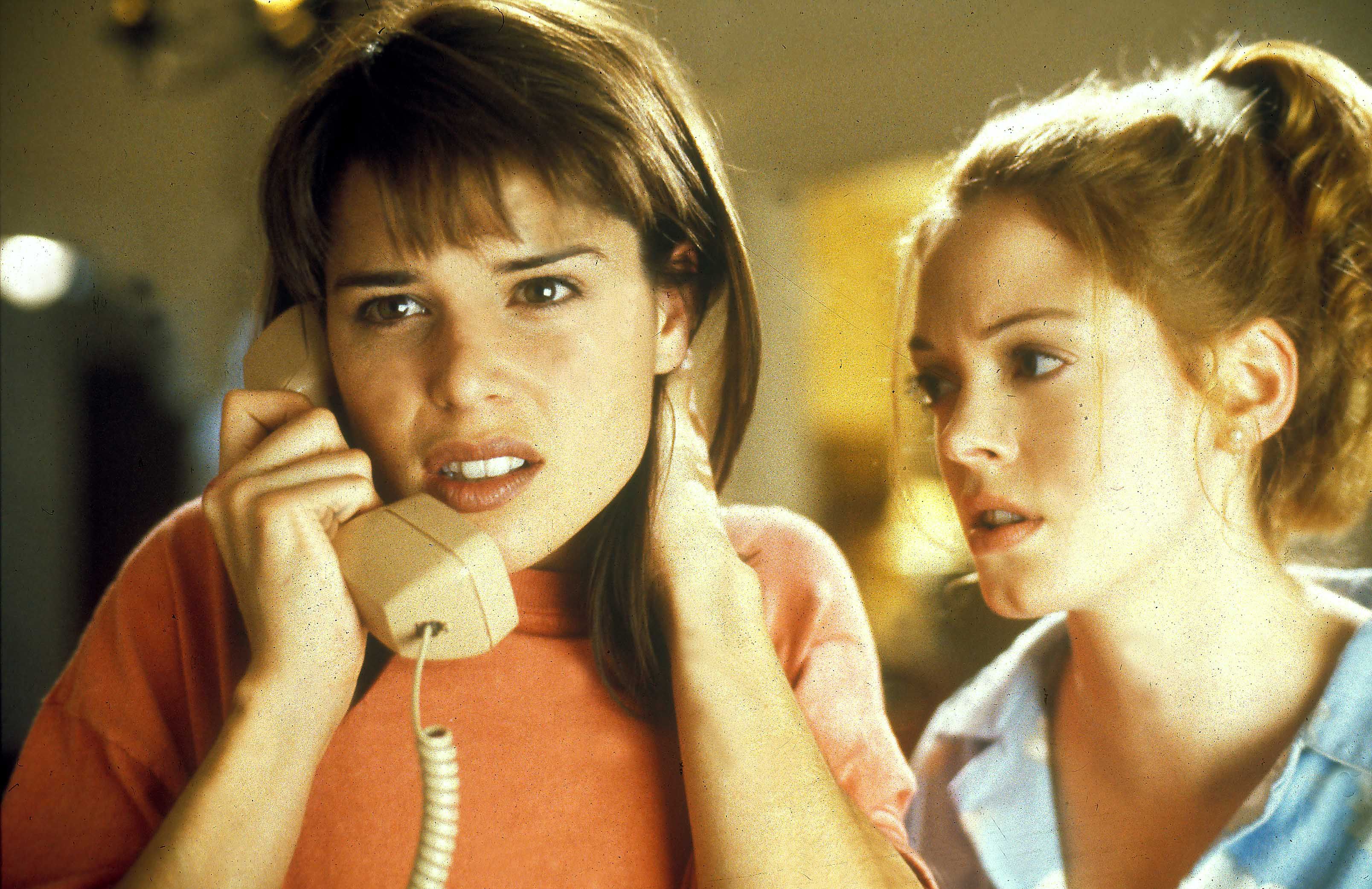
Wes Craven’s 1996 meta-slasher Scream is a film all about plainly stating the rules of the slasher and subverting them. The biggest subversion is with its Final Girl, Sidney Prescott (Neve Campbell). Sure, she is a little nerdy, doesn’t really party, and loves to wear black, but she also has sex with her boyfriend for the first time onscreen. Sex is usually a death sentence in slasher films, but in Scream, the act isn’t demonized, which is a big step for the genre. Sidney is able to lose her virginity, be resourceful, and survive until the very end — and through an entire franchise.

Image result for scream movie sidney prescott

A more recent example, in a film that is by no means a slasher, is Thomasin (Anna Taylor-Joy) in Robert Eggers’ 2015 feature debut, The Witch. It would seem unusual to apply the term to a film about witchcraft in colonial New England. However, Thomasin’s survival and endurance throughout the film mark a new kind of Final Girl who may not be facing off against a giant masked killer, but she is still a survivor. She is a Final Girl who represents reclaiming agency.

Related image

Thomasin shares an important quality with the typical Final Girl: she is virginal, as expected by her family and faith, marked by her stark white clothing. However, despite her piety, she is still accused of witchcraft by her family while an actual witch is wreaking havoc from deep in the forest. She must endure her mother’s verbal abuse as she ridicules Thomasin for her devilry, and she must watch her family die off, one by one. When she is the last one standing and makes a deal with Satan, she sheds her white clothing and enters the forest to join a coven. She is able to experience freedom from her religion and her overbearing family; she is finally in charge of her own body.

While horror has evolved throughout the decades and society’s monsters have changed faces, the Final Girl has remained constant. She has experienced a few changes along the way, but ultimately she has remained the iconic female character that unites the audience in cheering for her victory. The Final Girl has been the perfect figure to articulate the gender politics of the horror genre as she reflects societal ideas of what a female character should be and tries to break through them. Knife in hand, she has slashed through countless villains and monsters to prove that the Final Girl almost always comes out on top.

The post The History and Transformation of the Final Girl appeared first on Film School Rejects.

‘The Irishman’ Review: Scorsese’s Saga Is Everything We Wanted and More

Calling a new movie an “instant classic” is nonsense. The very concept of a “classic” is predicated on the lengthy amount of time spent reveling in it. To call a classic “instant” is to suggest it hasn’t spent enough time soaking in cultural consumption for us to say anything about its longevity. What’s instant about most films people label an instant classic is the urge to shout from the rooftop about its perceived brilliance. But often, the phrasing — along with the attempt to predict the future of mass artistic taste — is futile. In the case of Martin Scorsese’s The Irishman, an exception should be made.

In essence, it’s a film we’ve seen several times, and one that cinephiles, scholars, and audiences alike have celebrated, studied, and re-watched relentlessly. It’s peak shape mob Scorsese. If you put all of his crime films into a melting pot — Casino, The Departed, and Goodfellas serving as the meat and potatoes — The Irishman would pop out. That’s why we can say with some certainty that, barring a one-eighty in what we consider cinematic excellence, this is an instant classic.

Having worshiped this kind of Scorsese film for decades, it’s almost as if we’ve already vetted it on a national scale. We can go into it the way we’d go into Michael Apted’s upcoming 63 Up: certain about expectations but unaware of all the wonderful details that will unfold. That’s not to say The Irishman is a carbon copy of its counterparts but that it’s pristine Scorsese magic crafted in the way we’ve come to know and love by a team of his dearest and most impressive collaborators.

The 209-minute epic (besting the 3-hour record holder The Wolf of Wall Street to become Scorsese’s longest film) follows the life of Frank Sheeran (Robert De Niro in his first collaboration with Scorsese since Casino), a humble Irish-Philadelphian meat truck driver turned devoted mob middleman turned Hoffa right hand muscle. Frank is a man who prefers to leave his bedroom door ajar not because he’s paranoid, but because he’s open to whatever life brings his way, and he’s wise and even-keeled enough to see it coming and take an approachable stance.

He’s an incredible listener, patient, observant, and sharp, well-suited for his work because of his innate yearning to solve conflict, even if the means are way outside of what most would consider ethical. This is what makes Frank such a complex character. He’s a lovable, sincere, steadfast mediator that wants the best for everyone. He has a keen social sensibility. He’s simple in his traditional value. In Frank’s perfect world there would be no hits because everyone would respectfully observe the hierarchy and take no for an answer when advised to. But that’s not the world he lives in, and the allegiance he claims is to a people and culture that quietly exterminate conflict if it can’t be promptly and apologetically hashed out over red wine and palpable tension in a family owned restaurant late at night.

His story spans around 60 years, from the 40s to the early aughts, and doesn’t necessarily unfold in a linear manner. There’s a through line of chronology that gives it a linear feel, but in actuality, Scorsese bounces around constantly. We meet Frank in a nursing home near the end of his life. He investigates the lens and immediately begins unpacking his story for us, jumping from the 70s to the 50s to the 40s and so on in every temporal direction, pausing every so often to loosely deliberate over his loyalist working man ethic, issues he faced as a result, hits he took out, his family, beloved characters he met along the way, his time in WWII, emotions he felt then and now, et al.

Steve Zaillian’s screenplay (his first for Scorsese since Gangs of New York) adaptation of Charles Brandt’s I Heard You Paint Houses is so comprehensive of Frank’s life that an attempt at holistic summary seems impotent at best. If there were an outline of plot-descriptive chapter titles, they might read, “Frank Meets Russell,” “Frank Paints Houses,” “Frank Meets Jimmy,” “Teamster Frank,” and “Frank Grows Old.” Russell Bufalino (Joe Pesci in his first live-action role in 9 years) is Frank’s home base, his closest friend, confidant, and mentor. He’s also the catalyst for Frank’s life in the mob, which is, to say, Frank’s entire life as we witness it. A little less than an hour into the movie, Russell introduces Frank to Jimmy Hoffa (Al Pacino in his first collaboration with Scorsese), labor union extraordinaire and International Teamsters Union President.

Jimmy takes to Frank’s unwavering fealty and the two become inseparable right off the bat. It isn’t too long before Frank is deeply involved in the Teamsters and the mafia manipulation tactics Jimmy wields to the advantage of his union. Similar to the time spent with Russell (who still plays a major role amidst the more Hoffa-heavy chapters), a third of what we see between the two carries significant narrative weight, another third is comprised of asides or flashbacks, and the last third is playful, effective character development.

The depth of characterization is one of The Irishman’s most glowing achievements, and it’s not just restricted to Frank. Jimmy is as richly drawn as Frank, or Russell, or anyone else. Pacino is absolutely terrific as the electric Detroiter, proving that, as glad as we might be about him and Scorsese finally working together, we’ll always be left to wonder what an entire career collaborating might’ve gifted us. As should be expected for anyone familiar with the real-world Hoffa, Pacino bombastically meets his “cocksucker” quota and rarely brings his voice below a tight shout.

Scorsese and Zaillian infuse little details that make everyone pop off the screen, like Jimmy’s insistence upon shoveling ice cream down his throat in almost every scene, or Russell’s knack for telling “cute” jokes about birdies or other un-mob-like things. Whenever we meet a new mobster, Scorsese freezes on a mid-action shot and slaps a subtitle card with their name and cause of future death just to clue us in on the people Frank and company are doing business with. Most of them were shot in the head sitting in their cars, it turns out. But it’s not dark. The more the bit showed up, the harder the audience laughed.

We’re inundated with intimate one-on-one conversations between Frank and Russell/Jimmy that reveal how exquisitely crafted, interpreted, and portrayed these non-fictional characters are. You thought the De Niro/Pacino encounter in Heat was good? Just wait until you watch the two shoot the shit over the Kennedys in their pajamas or remind each other how deeply they care about one another after one gets socially butt hurt. An early scene of De Niro and Pesci giggling as they speak Italian over dinner and wine in the dimly lit Bufalino restaurant is later mirrored by the two dipping their bread in wine as they chat lightheartedly in less favorable circumstances.

The latter conversation between Frank and Russell is an explicit reference to the Catholic sacrament of communion, and it points to a larger theme that runs throughout the film. Like Irish and Italian mobsters, The Irishman is unbelievably Catholic. Scorsese is drawing from his well of a life lived in the midst of the more traditional yet crude version of the faith practice, in which, at its most extreme, Mass is something to be respectfully observed and the sacrament of confession sets one soul at ease with murder. The opening tracking shot telegraphs the theme by capturing the Immaculate Heart of Mary in its periphery. We sit through several still, prayerful moments between Frank and his pastor.

But more specifically than just being Catholic, The Irishman is penitent. Scorsese is wrestling with the concept of “love, betrayal, guilt, and forgiveness.” Like Mad Men‘s Don Draper, Frank does sickeningly inexcusable things, but remains a character we love, have empathy for, and relate to. He’s calloused to killing, neglectful of his family, and wrapped up in mafia life, but doesn’t crave power or wealth over companionship. He’s one of the only kind, honest, and peace-hungry people among his violent and inhumane breed. Through Frank, Scorsese wants us grapple with complexity of human life in the same way he is, whether that’s through a religious lens or not.

Scorsese’s direction is as sound as ever. He utilizes a dynamic camera, capturing symmetry, underwater shots, slow-motion effects, and more with enthusiasm and poise, never allowing for a lull no matter the mood. He handles the face-aging well and doesn’t shy away from its absurdity, regularly jumping back and forth between De Niro and Russell at various ages opposed to streamlining a narrative that would’ve made it less obvious. The first shot of De Niro’s young face replaces a closeup on De Niro’s extra old face as if to set off a special effects bomb. It looks like a video game for about one minute and almost immediately becomes a negligible detail (enough to make a conversation with a very young De Niro and a very balding Bobby Cannavale seem legitimate).

The 76-year-old director also reminds us why he’s recognized as the pioneer of pop music in film, opening with a do-wop that’ll whet any Scorsesian appetite. His layered storytelling technique works wonders in the hands of longtime editor Thelma Schoonmaker, whose work makes The Irishman feel like a companion piece to another auteur epic this year in Once Upon a Time… in Hollywood. Schoonmaker’s quick, puckish cuts serve as the heart of the film’s impeccable comedic timing. Little sayings like, “You charge a gun, but you run from a knife,” or “Now listen, Chuckie, you never want to keep a dead fish in your car” garners bellowing laughter. And the zoo of characters played by friends (Harvey Keitel, Anna Paquin, Stephen Graham, Cannavale) and newcomers alike (Jesse Plemons, Ray Romano) add to the humor and scope of the story.

If there’s anything to critique about this new masterwork, it’s the underdeveloped conflict between Frank and his eldest daughter, Peggy (Paquin). Almost every single one of her scenes can be summed up by her and her father staring at each other, one in earnest, the other in disapproval. Whether she says more than ten words in total is up for debate. We were reminded earlier this year that the number of lines someone speaks is not always indicative of the role’s significance or quality (Margot Robbie knocked her portrayal of Sharon Tate out of the park and served as the soul of Tarantino’s film while having very little dialogue), but in the case of The Irishman, it seems like Scorsese favored building out Frank’s background over adding depth to Peggy.

In the face of all the film’s brilliance, especially its character development, allowing Scorsese wiggle room for not including more character detail in his three and a half hour saga is fair, but it’s a shame — and perhaps indicative of a larger trend amongst male filmmakers — that the slighted character is one of the only decently strong female roles. His history of devotion and financing in regards to Margaret says he’s very pro-Paquin-in-strong-roles, but her part this time feels more like a cameo nod between friends than the emotional fulcrum it tries to be. Still, The Irishman is a stunning achievement of Homeric proportion and one we’re likely to champion for decades to come.

The post ‘The Irishman’ Review: Scorsese’s Saga Is Everything We Wanted and More appeared first on Film School Rejects.

Copyright © Cinenus | Powered by Blogger

Design by Anders Noren | Blogger Theme by NewBloggerThemes.com