We recommend films to watch after the Tonya Harding biopic, besides the most obvious one.
The fact that I, Tonya is being sold as “Goodfellas on ice” means I don’t need to recommend Goodfellas. Martin Scorsese’s classic gangster film is being used to recommend the Tonya Harding biopic. That means it’s already assumed that you’ve seen Goodfellas. Or at least know enough about it and realize that you should have seen it by now.
So, what is on the list of movies to watch this week? I’ve got the other obvious: a documentary version of the same story. Plus one of the actually acknowledged influences on its style, a classic story often cited in description of Harding’s life, and some other goodies I consider relevant to Craig Gillespie’s Oscar contender starring Margot Robbie and Allison Janney.
Pygmalion (1938)
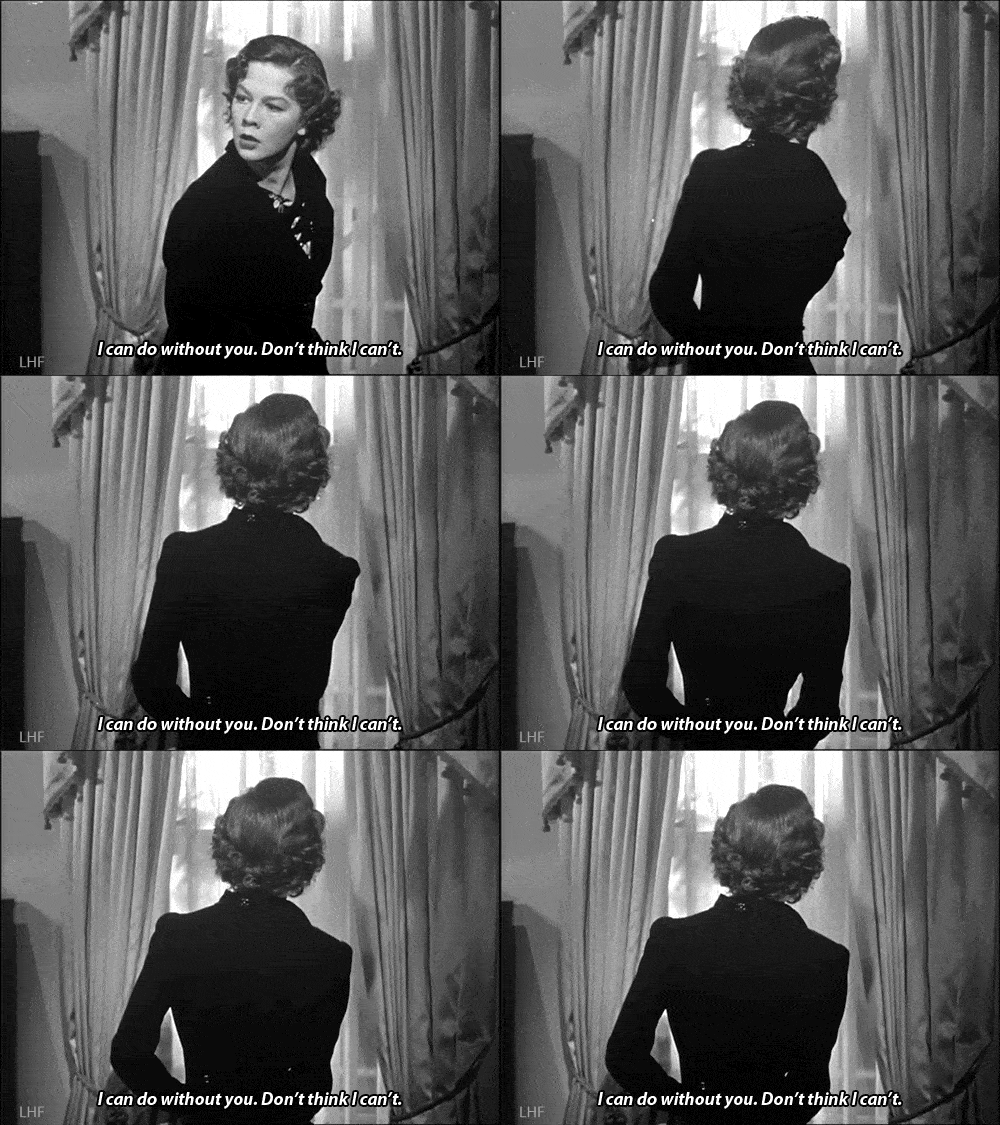 George Bernard Shaw’s play of the same name has been adapted many times, including in its musical form as My Fair Lady. “Pygmalion,” inspired by the myth of “Pygmalion and Galatea,” is about a young cockney flower girl molded into a proper lady fit for high society by a phonetics professor. And despite the romantic possibilities is not supposed to have a “happy” conclusion with the main characters being together.
Eliza Doolittle, the flower girl, was originally allowed her independence from the misogynistic, controlling Professor Higgins, while also winding up with a complicated social status somewhere between her true lower class upbringing and new semblance of upper class assimilation. That ending was altered over and over on stage and screen (it was a whole thing) but this first English-language version for the screen (a German and a Dutch production precede it) did come with a compromise ending the playwright begrudgingly allowed.
How Pygmalion relates to Tonya Harding has to do with her low-class roots, the high-class facade of her sport, and the attempt to get her to fit in with the latter. In the 1986 student-film documentary Sharp Edges, focused on a pre-fame 15-year-old Harding, figure skating coach Diane Rawlinson (portrayed by Julianne Nicholson in I, Tonya) says, “Skating for Tonya is her ticket out of the gutter.” And after 60 Minutes ran that and other clips from the doc in 1994 (see below), TV producer Don Hewitt was quoted in the New York Times as stating, “It was ‘Pygmalion,’ Diane and Dennis Rawlinson were Henry Higgins.” Harding was, of course, Eliza.
Continuing the reference that same year, Frank Coffey and Joe Layden’s book “Thin Ice: The Complete, Uncensored Story of Tonya Harding” includes the following:
“Diane was playing ‘Pygmalion’ to Tonya’s Eliza Doolittle. She would take the street urchin with the legs of steel and the heart of a champion and give her a velvet sheen. She would make her more presentable, help her fit neatly into the stuffy skating community. That was the idea.”
Of course, Harding never did truly fit in, and Robbie’s portrayal of the disgraced Olympian has that ever-crass Doolittle charm. She also, like the true Eliza, wound up independent in the end but also found herself in a confused social state, not just between levels of class but also between lines of fame and infamy.
To Die For (1995)
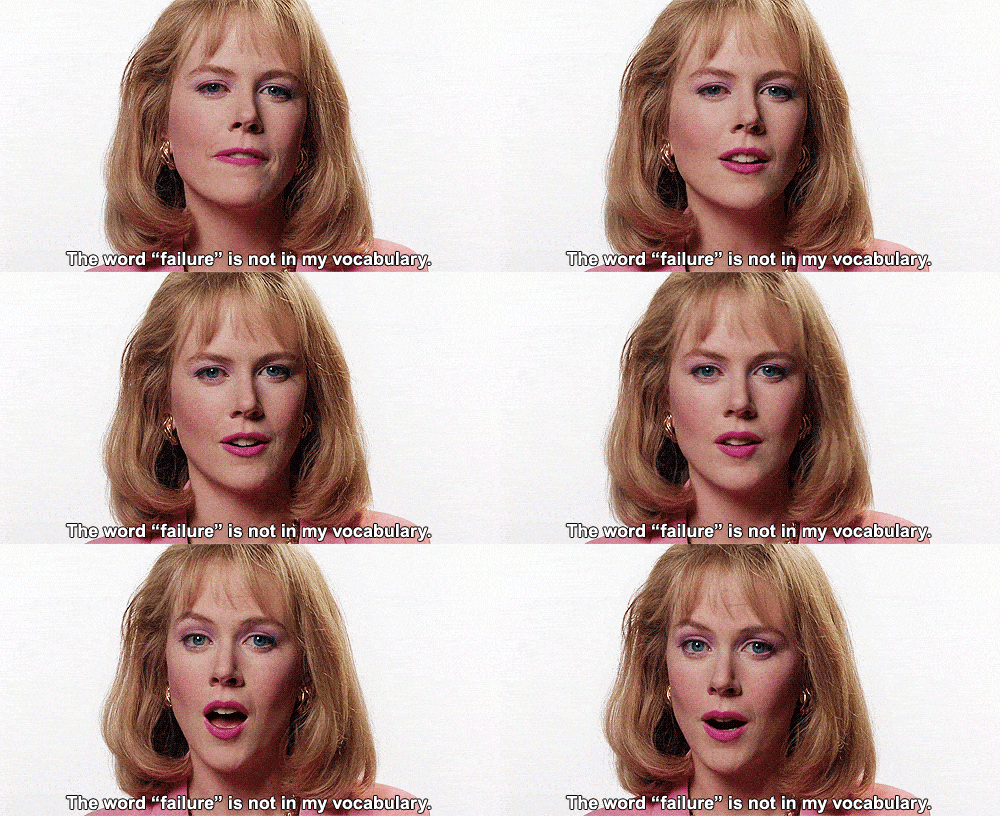 Instead of putting Goodfellas on the list, here’s another movie with Illeana Douglas, and she happens to play a figure skater. But that’s not why To Die For is recommended. I had initially planned on including the 2014 documentary Captivated: The Trials of Pamela Smart, because Pamela Smart reminds me of Harding in her interviews, maintaining innocence in the case of her husband’s murder and criticizing the media and its consumers’ manner of assuming guilt in stories like hers. She’s also the inspiration for Nicole Kidman’s character here.
While the true-crime story was already depicted in the TV movie Murder in New Hampshire and inspired an episode of Law & Order, Smart’s case was also heavily fictionalized in Joynce Maynard’s novel “To Die For,” which was adapted into this Gus Van Sant movie. Kidman brilliantly plays an aspiring broadcast journalist who manages to manipulate some teen interns (Joaquin Phoenix, Casey Affleck, and Alison Folland), one of whom she’s having an affair with, to kill her husband (Matt Dillon). The movie similarly features faux-doc interviews, and Gillespie has admitted to looking at To Die For in prep for the Harding biopic. To Vice:
“They use interviews to retell the story, but it’s very linear and everyone’s telling the same story. This film contains contradictory versions of what’s happening, and there’s a very dark side to this story too: the domestic violence, and the emotional and violent upbringing she had.”
But to Film Journal International, he also acknowledged how it gave way to the Scorsese influence:
“I hadn’t read a script in this format before. I tried to find references, and the best I could do was ‘To Die For’—and even that film is much more subdued. But the best reference I could find in terms of some rapid-fire scenes was ‘Goodfellas’—just for sections—but this was our whole film.”
So, yes, all the comparisons to Goodfellas are justified, and it’s worth pointing out that Scorsese followed his own mold somewhat for The Wolf of Wall Street (actually his 1964 short It’s Not Just You, Murray! started it all), which is the movie that gave Robbie her breakout role.
Tabloid (2010)
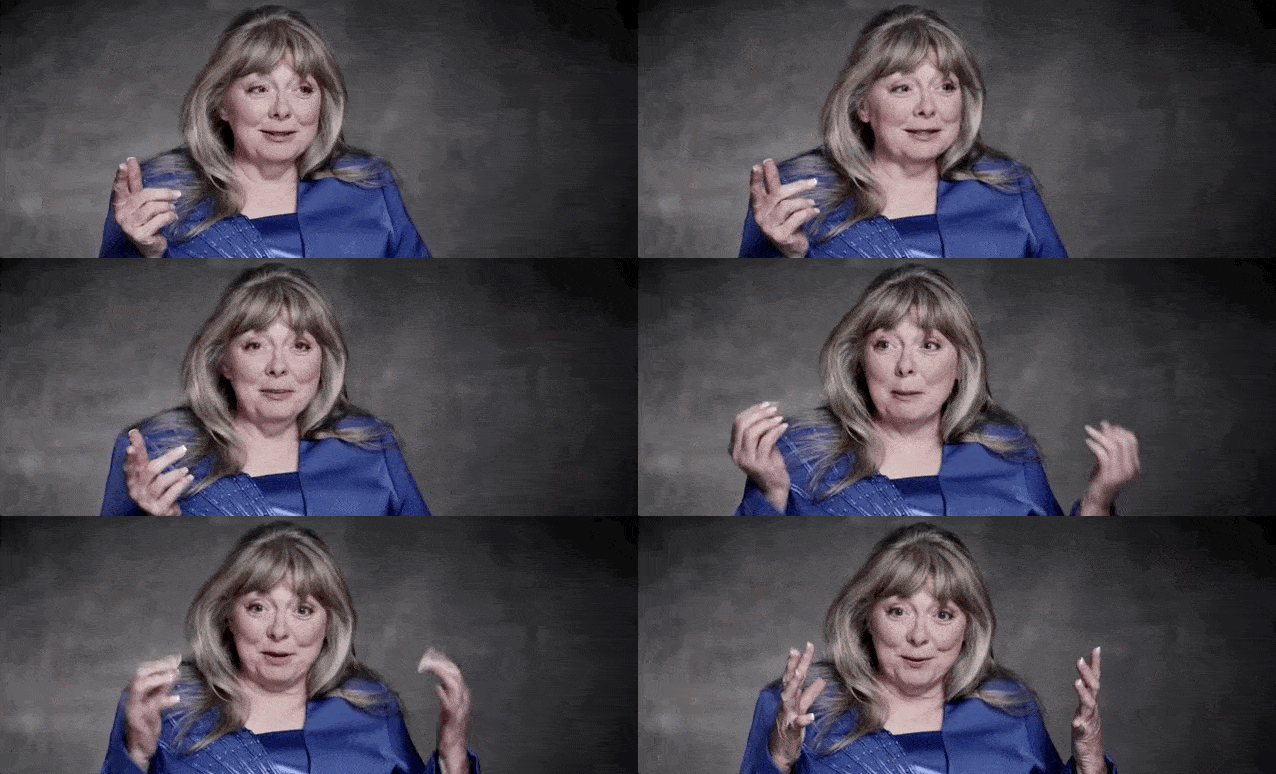 In my review of Captivated, which I do still also recommend because it’s one of the best true-crime docs in years, I compare Smart not only to Harding but also to Joyce McKinney, subject of this Errol Morris documentary recounting the sensational tale of her kidnapping and raping an ex-boyfriend in 1977. Morris also made the greatest true-crime doc of all time, The Thin Blue Line, which like I, Tonya, Captivated, and to some degree Tabloid, deals with how perspectives filter events.
McKinney wound up unsuccessfully suing Morris over her portrayal in the documentary, partly because she loves attention, but she also took understandable offense — even if complacently encouraged by her own apparent narcissism — at the tone of the film allowing for so much mockery of her character and side of the story. And it wasn’t just Morris whom she tried to reprimand. At one screening of the film I attended, McKinney appeared at the end and berated the whole audience for laughing at her.
I was reminded of that incident during the part of I, Tonya where Robbie-as-Harding scolds viewers in the audience for being part of the problem, mainly when it all went down but also now as we’re amusedly watching the film. “Then I was a punch line,” she says. “It was like being abused all over again. Only this time it was by you. All of you. You’re all my attackers too.”
The Price of Gold (2014)
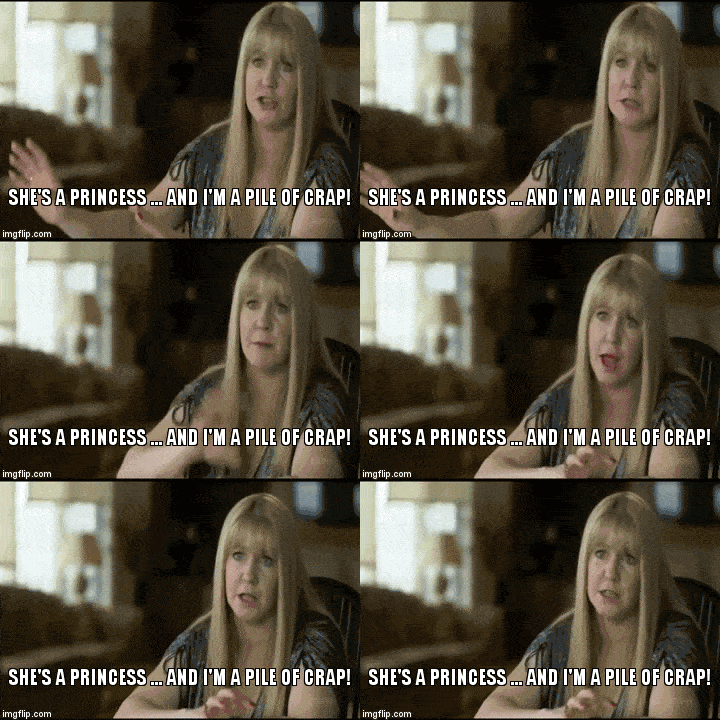 Finally, here’s the doc option for Harding’s story. Made as an installment of ESPN’s 30 for 30 series and directed by Oscar-nominated filmmaker Nanette Burstein, The Price of Gold took the occasion of the 20th anniversary of the scandal to revisit the whole story, with particular allowance for Harding herself to defend her side.
Like I, Tonya, the documentary empathetically presents the events as a tragedy for the disgraced skater, with Harding coming across as the real victim more so than Nancy Kerrigan. Not that it totally sides with Harding or makes a case for her absolute, if any, innocence in the crime, but it gives the woman enough of a platform for her to speak for herself (sometimes without it helping her) and focuses more on the complexity of her part in what the media had run as a simple but sensational tale of an athletic rivalry.
In some ways, I, Tonya seems like a dramatic remake of the documentary. Or they’re at least complimentary, similar to the pairing of the limited series The People v. O.J. Simpson: American Crime Story and the lengthy Oscar-winning 30 for 30 installment O.J.: Made in America. All together, they make for a great quadruple feature of 1994-set true-crime stories explored to their fullest.
Bonus: Sharp Edges (1986)
I’ve already mentioned it above, but I would like to recommend this early Harding documentary, but alas it’s not actually available in full right now. Its director, Sandra Luckow, is trying to find a distributor for the film, which has been mined for footage for other docs and news stories but rarely seen in its entirety. For now, here’s a Facebook post stating the goal and sharing a recent ABC news special featuring some clips:
The article Watch ‘I, Tonya,’ Then Watch These Movies appeared first on Film School Rejects.


0 comments:
Post a Comment