Welcome to The Noirvember Files, a new series dropping the spotlight on essential film noir selections. The titles celebrated here exemplify the style and substance of cinema’s grimiest, most-relatable underbelly. In this entry, we’re listening to the music of film noir and specifically sticking our ears out for Miklós Rózsa’s Double Indemnity score.
For a Mount Rushmore of classic movie score composers, the film noir movement is one of the first places to look. Max Steiner, Bernard Herrmann, Miklós Rózsa, Erich Wolfgang Korngold, Roy Webb, Leigh Harline, Adolph Deutsch, David Raksin — they all dipped their toes into the genre and produced incredible music that fashioned the distinctive sound of noir. Even famed jazz icon Miles Davis got in on the act, characterizing the “lonely trumpet” that would inform neo-noir pictures for decades.
But what is the film noir sound?
Film noir is a retrospective term; these films were thought of at the time as crime pictures or melodramas, with the connective tissue coming from their sense of post-war cynicism, itself inspired by the crime fiction that arose from America’s Great Depression. Matching the harsh and shadowy monochrome aesthetic of the genre are instruments that sound like weapons: the staccato gunfire of the brass, stabbing high strings, and a constant foreboding atmosphere that looms over every one of these pictures. The films are bleak, but the music is bleaker.
For example, Max Steiner opens The Big Sleep (1946) with a juxtaposition of fierce brass and seductive high strings, instantly stating that Humphrey Bogart’s Phillip Marlowe needs to have his wits about him or the next victim in his case will be him. Nicholas Ray’s They Live By Night (1948) begins with a sensuous scene with the story’s young lovers, which Leigh Harline scores with gorgeous romantic strings. But the cue turns on a knife-edge as the title card appears, with a serrated fanfare that foretells their tragic end. Film noir’s music is uncompromisingly brutal, no matter what the situation.
Perhaps this is why the music of Billy Wilder’s Double Indemnity (1944) is so unique. Right from the outset, Miklós Rózsa‘s score refuses to make everything neat and tidy for the audience; unsurprisingly, Rózsa became a noir icon, also scoring classics such as Wilder’s The Lost Weekend (1945) and Robert Siodmak’s The Killers (1946). The 1950s radio and television show Dragnet later stole Rózsa’s music for its theme, fittingly as Dragnet itself was a byproduct of film noir. And Rózsa mentored Jerry Goldsmith, who wrote a masterful period score for Roman Polanski’s 1974 neo-noir Chinatown.
Rózsa’s theme for Double Indemnity accompanies Fred MacMurray‘s hobbling Walter Neff in the titles with an angular brass phrase that feels purposeful yet nevertheless murky, the truth of what the picture contains hidden in the fog and the audience further distracted by horns and trombones in the higher registers. What follows is chaos, with a crazed orchestral display for a bustling Los Angeles. However, Rózsa’s furious tones are also scoring the turmoil in Neff’s heart. The film begins in medias res as we see Neff enter his office to record his confession. What Rózsa does here is particularly brilliant, with the audience knowing they’re going to hear something thrilling but the mysterious score underlining that they have no idea what’s coming.
Rózsa subsequently adds a fast-paced motif for strings to represent Neff’s flashbacks that additionally gives the narrative a sense of propulsion. A third romantic theme is introduced in a stunning flourish of strings as Barbara Stanwyck‘s Phyllis Dietrichson appears. There’s a subversion here where Rózsa underplays the immediate attraction between the pair, mostly from Neff’s naive point of view. Gazing at her like King Kong at Fay Wray, he’s instantly in love, and while Rózsa and Wilder make Neff appear like he’s in control with the return of the string motif, we know differently.
The score plays with expectations again when the romantic phrases return while Walter and Phyllis talk about murdering her husband. There’s a hint of the title theme as she leaves, just suggesting the potential consequences. Rózsa’s strings get more and more heightened as their plot comes closer to fruition, with the score for Mr. Dietrichson’s death spectacularly effective. The main theme again hangs over the pair as they enter their car with Neff hiding in the backseat, and the foreboding brass climbs in tempo and scale to a dramatic conclusion as Neff strangles him. As the camera focuses on Phyllis smiling, Rózsa’s brass section roars over Neff’s unseen violence. Chilling.
The most devastating scene is the final meeting between Neff and Phyllis, which musically bookends their relationship. Rózsa digs into his romantic theme here, the sumptuous strings intensely blossoming as they embrace, and it’s a real Hollywood ending — at least until it cuts off as he shoots her. A beautiful solo violin scores Neff’s collapse, and the main title reappears as he lights a cigarette while waiting to die, the brass and strings providing a dark musical soliloquy.
It’s no surprise that experts and film buffs alike refer to Double Indemnity as the quintessential classic film noir. A great deal of that comes down to Rózsa’s score. Like the film, it plays against type, supplying a thematic spine that underlines the characters’ motivations and emotions without being obvious, subsequently having a great influence on Hollywood. It’s also a great example of film music, with that lumbering theme an exemplar of the classic Hollywood age, making you think that if only Walter Neff listened to it, he might have lived — if only to face the consequences.
The Mandalorian Explained is our ongoing series that keeps an eye on Lucasfilm’s saga about the Galaxy’s most dangerous single dad. In this entry, we look at what went down in The Mandalorian Chapter 13 — the fifth episode of Season 2 — and contemplate its extensive revelations. Yes, there be spoilers here.
There are many gifts to Star Wars fans in this week’s episode of The Mandalorian, but none greater than the name-dropping of Grogu. Yes, yes, yes, we can finally stop referring to the child at the center of the story as “Baby Yoda.” He’s not a clone (well, most likely), and he has a tragic origin linked to the Imperial rise and the eradication of the Jedi.
Chapter 13, entitled mischievously “The Jedi,” does not eek its information slowly. Its writer and director, Dave Filoni, is here to party. The one-time showrunner of Star Wars: The Clone Wars and Star Wars: Rebels finally gets to usher his most cherished character into the glorious realm of live-action, and he does so within the first few frames of this chapter.
Ahsoka Tano (Rosario Dawson) rips through the opening scene slashing through a sorry lot of henchmen. We find her just where Bo-Katan Kryze (Katee Sackhoff) told Mando Din Djarin (Pedro Pascal) she would be, on the forest planet of Corvus. She’s on a mission herself, freeing a persecuted village from the tyrannical rule of Magistrate Morgan Elsbeth (Diana Lee Inosanto) and prying the whereabouts of an old enemy from the gangster’s twisted brain.
The Magistrate is no simple mark, and despite Tano’s tremendous skill, she’s unable to get the job done on her own. Enter: Mando. After a quick tour through town and a chat with the Magistrate, Mando seemingly takes a job to hunt down the duel lightsaber-wielding pest who hides in the woods. If he does so, the Magistrate will give Mando her impressively pointy staff made from Beskar steel.
Mando and Ahsoka have a Marvel meet-cute, where introductions cannot occur without a slight tussle first. He calls out her name and mentions Bo-Katan. Ahsoka takes a beat to think, spots our favorite li’l hungry goblin kiddo, and lowers her blades.
The child and Ahsoka share a moment of solitude. They commune through the Force. Words are not spoken, but information is exchanged between them.
Tano relays the news to Mando. The kid is Grogu, a youngling from the Jedi Temple on Coruscant, the central city-planet where all your favorite senate hearings were held during the prequels. After the Empire rose to power, Grogu was hidden away. During the aftermath of The Clone Wars, someone stole Grogu from the temple. The child’s thoughts are shadowed around the event, as his memory is too dark in places.
Mando implores Tano to take the Child. He belongs with his kind; he belongs with the Jedi. Tano tells him that the Jedi fell a long time ago, but she does not mention how she turned her back on their order during The Clone Wars’ final days. She’s no Jedi.
Many years ago, Tano was accused of a crime by the Jedi. She saw how their fear could infect their judgment. She knew their actions during The Clone Wars led them down a dark path they could not escape. Of course, Tano did not realize that even her Master Anakin Skywalker could succumb to the worst fears imaginable and damn the galaxy with his will.
Knowing the fate of Darth Vader, Tano is reluctant to train Grogu in the ways of the Force. She tells Mando that it’s better to wait for these powers to fade.
Mando says he will help Tano take down the Magistrate if she raises the kid. She lets him think she’ll follow through on this promise, but we know Din Djarin is not getting rid of Grogu any time soon. The Mandalorian is the saga of a father and son, now.
Grogu is a kid who had his family stolen from him. Mando is a kid with the same backstory. He’s become more than a protector over these last two seasons. We see the love he has for Grogu in the tiny gestures he offers, the way he cocks his head toward the kid, and in the manner, he carries Grogu by his side. Tano tells him at the climax, “You’re like a father to him.” We know it’s true, and it’s looking like Mando is coming around to that way of thinking as well.
Tano and Mando obliterate the goons who rule Corvus. The action is mighty and swift. While Mando frees the imprisoned citizens from their electro stocks outside the Magistrate’s gate and squares off with a gruff mercenary (Michael Biehn), Tano clashes with the Magistrate. Her Beskar staff easily stands against Tano’s two lightsabers, but the Magistrate cannot match Tano’s ferocity.
With her throat inches away from being slit, the Magistrate reveals the location of her master, Grand Admiral Thrawn. Whoa, whoa, whoa. As if witnessing Ahsoka Tano in action, and learning the name of Grogu was not already enough, The Mandalorian Chapter 13 re-introduces the most feared Imperial officer in the galaxy!?
The revelation is practically a death warrant for Moff Gideon (Giancarlo Esposito). Think about it for a second. The moment the Darksaber-carrying baddie arrived on the scene also meant the annihilation of Werner Herzog‘s more-than-slightly intimidating, although nameless client. Gideon suddenly appears to be merely this season’s boss battle, with Grand Admiral Thrawn back on the board.
Thrawn is probably a new name to those who’ve never explored the Star Wars Expanded Universe. He originally appeared in author Timothy Zahn‘s trilogy of novels that began with Heir to the Empire. Written in the time between Return of the Jedi and The Phantom Menace, Zahn’s books were a life preserver for the fandom. While they have since been removed from the canon – thanks to Disney – the books’ big bad was readmitted via some new Zahn novels and the Star Wars: Rebels animated series.
Thrawn is a blue-faced Chiss, a regal military genius who commanded the Imperial Navy and answered only to the Emperor. The key to his many victories was a total understanding of his enemies. He fetishized his prey, obsessing over their culture. For Thrawn, there is no greater pleasure than consuming a species’ history before obliterating them from reality.
In the Rebels season finale, series hero Ezra Bridger confronts Thrawn on his Star Destroyer bridge. He defeats the Imperial scum by summoning friendly Force-creatures known as Purrgil. These massive space whales tear through the ship’s hull, exposing the combatants to space, but Bridger forms a Force bubble around himself and Thrawn. The whales drag them into hyperspace where they are presumed lost.
Ahsoka Tano swears a pact, along with that series’ Mandalorian badass Sabine Wren, to spend her days hunting for Ezra Bridger. If Thrawn made it out of that weirdo space whale hyperspace, then it stands to reason that Bridger did as well. Tano is less concerned with striking down an old enemy than she is in relocating an ally.
Chapter 13 concludes with Tano refusing to train Grogu. She will not make the same mistakes committed by Obi-Wan Kenobi. She will not raise another Vader.
Tano does not squash Grogu’s Jedi possibility completely. She instructs Mando to take the child Tython, where he’ll find the ruins of another Jedi Temple. If Mando places Grogu on “the seeing stone” at the top of the mountain, and he reaches out with the Force, there’s a chance that a proper Jedi might sense his presence and come calling.
With no other options, Mando and Grogu, father and son, set off on their next step.
The Mandalorian Chapter 13 gives more than a sense of the great many battles occurring on the fringes of this series. While Mando and Grogu trek the stars, Bo-Katan fights the leftover remnants of the Empire so she may restore her people’s pride. Ahsoka Tano desperately fights to find a friend, and Moff Gideon and Grand Admiral Thrawn thirst to make their scraps whole.
It’s a lot for a show to put out there, and one could easily see The Mandalorian splintering into several spin-off programs. However, Star Wars‘ grand appeal is its vast canvas. From A New Hope forward, the sense of an unseen epic has always been there. It’s what Luke Skywalker imagined as he stared intently into the two setting suns of Tatooine.
There are no sidelines. Get busy living, or get busy dying. Join the fight. It wages without you.
Welcome to The Queue — your daily distraction of curated video content sourced from across the web. Today, we’re watching a video about the beauty and historical importance of the 1947 film Black Narcissus.
There’s a moment in the third act of Black Narcissus when the charming civil servant Mr. Dean (David Farrar) attempts to comfort Sister Clodagh (Deborah Kerr), who feels as though she’s losing control of both her convent and herself. Nuns are leaving, a child has died, and for the first time in years, Sister Clodagh’s past has returned to mock and tempt her. Mr. Dean leans in close (too close) and tries to put things in perspective: “I told you it was no place to put a nunnery. There’s something in the atmosphere that makes everything seem exaggerated. Don’t you understand?”
How easy to blame the climate when it’s rendered as dramatically as this. How could these nuns contend with W. Percy Day‘s monolithic matte paintings that re-imagine mountains as monoliths and cliff sides as the edge of the world? How could they defend themselves from the otherworldly aspect of Technicolor? For all its slow-simmering psychodrama, the cinematic gait of Black Narcissus is indeed an exaggerated one. And certainly no place for a convent.
The 1947 film—written, produced, and directed by Michael Powell and Emeric Pressburger—concerns five Anglican nuns sent to establish a convent in a remote corner of the Himalayas. Steadily the harsh climate, unfamiliar culture, and encroaching cabin fever (cloister fever?) take their toll…with tragic results.
With a celebratory spirit, the video essay below unpacks what is undoubtedly Powell and Pressburger’s darkest film. The essay contextualizes the directors’ partnership and shared obsessions, many of which crept into the thematic landscape of Black Narcissus.
Watch “1947: Black Narcissus – Truth, Beauty, and the Partnership of Powell and Pressburger”:
Who made this?
This video is by One Hundred Years of Cinema, a video essay channel producing thoughtful deep dives on just that: a century of cinema. Each video in the series examines a different film from a different year, from the early experiments of the silent era to the tentpole franchises of today. You can subscribe to their YouTube channel here.
Media doesn’t have the best track record with Native representation. Many classic films feature white actors in red face, modern narratives rely on the white savior trope, and violence against Indigenous women has been normalized throughout cinema history.
Thankfully, a renaissance is happening within the film industry and Native creatives everywhere are getting the chance to reclaim their stories. Here are just nine of the many talented filmmakers from Indian Country to keep track of as they explore the right to storytelling and authenticity.
Sterlin Harjo (Seminole-Muscogee)
If you’ve never been to Oklahoma, it’s okay, just watch one of Sterlin Harjo’s films. Each showcases the beauty and Native diversity that makes up the former Indian Territory. His directorial debut, Goodnight Irene, is a short film that looks at complicated issues of Native existence and generational difference. These topics are subtly explored as three characters interact in an Indian Health Services waiting room. Since then, Harjo has been unstoppable as he continues to tackle the meaning of Native experience in Oklahoma.
His newest release is a documentary, Love and Fury, which follows Native musicians from various backgrounds. His director’s note about the film states, “Native art has been shackled to history by a false vision of what Native people are through the settler gaze of our current reality. I wanted to make something bold and in your face, directly putting up a finger to the shackles of the art world and historic representation of our people.” The documentary is currently making its festival rounds.
Just this past September, Harjo filmed the pilot to a new series, Reservation Dogs, in Okmulgee, Oklahoma. The new show utilizes Native creatives in front of and behind the camera in a new way, showing Indigenous youth just being teenagers. While Harjo’s experience growing up in Oklahoma will play a huge part in the series, his friend Taika Waititi is also involved with the project, bringing some touches from his Māori upbringing.
Erica Tremblay (Seneca-Cayuga)
Erica Tremblay’s short film Little Chief is a small but powerful piece of cinema. The script was submitted, chosen, workshopped, and created through the Sundance Indigenous Filmmaker’s Lab before debuting at the Sundance Film Festival this past January. Little Chief is still making festival rounds and has screened at almost forty festivals internationally, including AFI Fest
In Little Chief, Tremblay shows a moment in the life of Sharon (Lily Gladstone), a teacher who has to cope with her own everyday demons while helping a specific student, Bear (Julian Ballentyne), face his own. This glimpse into the life of the characters allows the audience to see the beauty and complexity of community that exists within the Seneca-Cayuga Nation of Oklahoma. The setting is where Tremblay grew up, and her fondness for her people, especially matriarchs, is evident.
What is next for this blossoming filmmaker? Tremblay recently announced her feature script entitled Fancy Dance was selected for the Sundance Indigenous Intensive. Fancy Dance is a twist on the road trip story as a young aunt kidnaps her niece from a non-Native foster home in hopes of keeping what’s left of the family together.
Kyle Bell (Creek-Thlopthlocco Tribal Town)
In 2014, Kyle Bell bought a camera. Now, he is being mentored by cinema legend Spike Lee. How did Bell jumpstart his filmmaking career? Through dedication and drive.
Just as this young filmmaker was learning the ins and outs of making movies, the protests against the Dakota Access Pipeline on the Standing Rock Sioux Reservation were gaining traction. Bell captured moments from his stay at Standing Rock and created Defend the Sacred, a short documentary that showcases moments at the NoDAPL demonstrations.
Bell continued to work in capturing real life by working with FireThief Productions on Osiyo, Voices of the Cherokee People, a documentary-style television show. With Osiyo, Bell was awarded multiple honors for his short documentary focused on the Cherokee-Kiowa NCAA basketball player Lindy Waters III.
Bell’s love for basketball is also featured in his yet to be released short film Spirits. This project was selected for the Sundance Native Filmmaker Lab and tells the story of a young Creek kid who has to choose between staying home with his family and chasing his dream of playing college ball. Bell’s work on Spirits impressed Lee and the two continue to bond over their love for the sport of basketball.
Alethea Arnaquq-Baril (Inuit)
According to her Twitter bio, Alethea Arnaquq-Baril is a “documentary filmmaker, Inuit traditional tattoo enthusiast,” and “Inuit seal hunting activist.” This simply sums up her work, however, while the intricacies that make up each of these identities are intricate and layered.
Arnaquq-Baril often takes from her own experiences, even becoming a character in her own documentaries, to show the complexities that make up her cultural traditions. Many customs for various Native groups have been lost through assimilation or shame. In her 2011 filmTunniit: Retracing the Lines of Inuit Tattoos, the director explores the history of traditional Inuit tattooing while debating whether to reclaim this action for herself.
Angry Inuk, her 2016 project, tackles the controversial topic of seal hunting. Many animal rights groups have attacked Alaska Natives for decades, stating that their ancestral customs are inhumane. Arnaquq-Baril humanizes the act by showing the community, land, and the ways of life that are often left out of the rhetoric surrounding Inuit seal hunting.
Elle-Máijá Tailfeathers (Blackfoot-Sami)
Actor, director, and writer Elle-Máijá Tailfeathers is comfortable anywhere on set. Her most-known work is the 2016 film The Body Remembers When the World Broke Open, which she stars in as well as co-directed and co-wrote with Kathleen Hepburn. Basically, Tailfeathers is all about collaboration.
After studying acting in Vancouver, Tailfeathers decided to return to school to study the art of cinema. The first project she wrote and directed was Bloodland in 2011. This short experimental film is a graphic depiction that shows the parallels of the extractive fossil fuel industry on the land and body. Tailfeathers has also dabbled in documentary filmmaking, releasing c’sna?m: The city before the city in 2017. The themes of colonial damage are constant in the works that she creates.
Tailfeathers also balances her filmmaking with her on-screen performances. As mentioned, she acted alongside newcomer Violet Nelson in The Body Remembers When the World Broke Open and was one of the female characters in Jeff Barnaby’s zombie horror film, Blood Quantum. Tailfeathers also worked on Danis Goulet’s newest project, Night Raiders.
Danis Goulet (Cree-Métis)
It is common to hear Indigenous communities mention the post-apocalyptic world that already surrounds them. Forced assimilation, removal, separation, and other consequences of colonization are just some of the awful experiences that generations of Native families have had to endure. Danis Goulet takes this to the next level by exploring Native science fiction.
Her short Wakening breaks boundaries, creating a new subgenre of Indigenous science fiction for the screen. Wesakechak (Sarah Podemski) attempts to survive in the midst of a war zone setting. She runs into a decrepit movie theater filled with darkness and death. Inside, she finds the Weetigo creature she hopes to utilize against the militarized force that attacks outside.
Goulet’s next project is a feature-length film entitled Night Raiders, which is in its final stages of post-production. This debut will also explore Indigenous science fiction themes and is set to star Amanda Plummer and reconnect the two leads from The Body Remembers When the World Broke Open: Elle-Máijá Tailfeathers and Violet Nelson. As of now, Night Raiders is rumored to be released in early 2021.
Sydney Freeland (Navajo)
Sydney Freeland is another creative who got their start through the Sundance Native Film Lab. In fact, she was motivated by the lack of authentic Native representation in film and media and finally picked up a camera when she was twenty-four years old. Her first feature, Drunktown’s Finest, in 2014, tells the story of three young Navajo characters who are trying to escape the reservation with different emotional baggage.
After that, Freeland made the Netflix original film Deidra & Laney Rob a Train and directed the dramatic web series Her Story, which follows two transgender characters in their day to day life. In an interview with High Country News, Freeland stated that her identity as a Native American as well as transgender is what attracts her to projects that focus on marginalized characters.
Recent news states Freeland’s next endeavor will be with Ava Duvernay: a pilot for a Native family drama entitled Sovereign, which has been greenlit by NBC. If picked up, this will become the first broadcast television show to focus on Native Americans.
Tracey Deer (Mohawk)
Tracey Deer’s work surrounds the topic of identity, specifically when it relates to her own Mohawk community. Her early work focused on reality through documentary and includes her 2005 film Mohawk Girls, which was later turned into a scripted television series. Her other nonfiction titles include Kanien’keha:ka: Living the Language and Club Native, both of which break down different aspects of Mohawk existence and resilience.
Deer made her fictional feature film debut with Beans at this year’s Toronto International Film Festival. This coming of age moment during the Oka Crisis of 1990 is based on the filmmaker’s own experiences. According to her website, Deer was twelve years old when the Oka Crisis happened and the strong emotions from that event have fueled her passion to bridge the gap between Indigenous and non-Indigenous people.
Beans was a hit at TIFF and was the second runner-up for the People’s Choice Award. Deer was also presented with the special honor of the TIFF Emerging Talent Award. Joana Vicente of the festival stated, “Tracey is an authentic, leading Indigenous voice globally and one the industry should watch closely.”
Jeff Barnaby (Mi’gMaq)
Rhymes for Young Ghouls, Jeff Barnaby’s 2013 feature release, changed the Native filmmaking landscape. It follows Aila (Kawennáhere Devery Jacobs), a fully developed badass who is ready to beat down the fences that continued colonization has attempted to build around her. Jacobs was nominated for a Canadian Screen Award for her performance, and Barnaby proved his skills with a camera and a script.
Barnaby’s most recent film puts an Indigenous twist on the zombie film. Blood Quantum made its debut during Midnight Madness at the 2019 Toronto International Film Festival and was made widely available via Shudder earlier this year during the COVID-19 outbreak. The eerie parallels between what’s been happening all around the world and what unfolds on screen make Blood Quantum a perfect watch for any and all horror fans. Plus, the cast includes Michael Greyeyes, Elle-Máijá Tailfeathers, and Kawennáhere Devery Jacobs which should be motivation for everyone to sit through the entire runtime.
Although little is known about what Barnaby’s got up his sleeve for his next project, it’s sure to be a visual masterpiece as well as a commentary on modern colonial existence. His vision as well as his storytelling is evident in these two films. Blood Quantum is not the last we have heard from Jeff Barnaby.
Yorgos Lanthimos has a thing about identity. From his experimental underground beginnings to the Oscar-nominated The Favourite, it’s the defining theme of his work — less conspicuous, maybe, than the fish-eye cinematography and deadpan line readings characteristic of his films, but no less quintessential a hallmark.
In Kinetta and Alps, Lanthimos explores the relationship between actor and role to ask how much of who we are can be reduced to rote performance, while breakthroughs like Dogtooth and The Lobster probe the repressive flattening of identity (and the resistance it inspires) in authoritarian societies. In The Killing of a Sacred Deer and The Favourite, too, there’s a dystopian edge to the subject, as the quest for an identity is reduced to a series of cold transactions, with characters jostling for relevancy using passionless handjobs and household chores as bargaining chips.
Nimic, Lanthimos’ latest short film, stretches its director’s favorite theme — and the absurdism that colors all of his work — to its abstract extremes. Matt Dillon, the star of several recent boundary-pushing auteurist movies, continues that foray into the avant-garde with a lead role as a professional cellist whose wife, children, and career are stolen from him by an impersonator. But rather than make use of prosthetics, lookalikes, or visual effects to create Dillon’s usurper, Lanthimos opts for the most psychologically jarring approach, casting the wholly dissimilar Daphne Patakia instead.
It’s a decidedly eccentric casting choice, but one that’s wholly in keeping with Lanthimos’ steadily widening estrangement from rationality. Where the surreality of early works like Dogtooth and Alps was always offset by a rational explanation — we can accept that the imprisoned children in the former movie think a shotgun is “a beautiful white bird,” for example, because we’re explicitly shown that that’s what their dictatorial father teaches them to think — Lanthimos’ more recent films have grown audaciously, unapologetically enigmatic in their logic. Disregarding The Favourite (which is tied down to historical fact), he has increasingly embraced the surreality at the heart of his movies, relocating his narratives from the realm of the reasonable to inscrutable universes in which teenage boys have the power to cast karmic curses and governments can turn humans into animals at their whim.
If you’ve seen The Lobster or The Killing of a Sacred Deer, then, the idea that someone who looks like Daphne Patakia could successfully pose as someone who looks like Matt Dillon — despite the glaring evidence indicating otherwise — isn’t too big a pill to swallow. As with those films, the “how” in Nimic is immaterial; the movie has all the logistical haze of an ancient myth.
Just as in The Killing of a Sacred Deer, those murky mechanics have a tonal purpose: they heighten the horror. When Dillon’s character (“Father”) first meets the mimic, he asks her for the time from across a subway car, and, during an uneasily long pause, she seems to light up, as if the question has triggered for the first time some ancient code written deep within her. She answers, but it’s only to obliviously echo his words back at him: “Excuse me… do you have the time?”
Suddenly, all the usual anonymity of public transport is terrifyingly dissipated, with Patakia’s mimic wordlessly absorbing and then duplicating all the facts of Father’s life as she follows him home (right down to materialising an identical copy of his house key in her coat pocket). Almost instantaneously, the mimic’s unblinking, dilated eyes and mechanical smile go from innocuously blank to bristling with malevolence.
Lanthimos uses all of the tools at his disposal to amp up the disorientation. Cinematographer Diego García’s camera takes a complicit role in Nimic‘s gaslighting assault on reality, shooting duplicate frames of the original and the copy as they try to convince Dillon’s character’s wife and kids that they are the real Father. Similarly discordant is the score, made up of existing music by Lanthimos favorites Benjamin Britten and pioneering experimental composer Luc Ferrari, who, like the director, tinkers with mundane elements to produce an unsettling, otherworldly effect in his work. Echoing Nimic’s sparse dialogue, Ferrari’s music is full of ellipses, and each musical pause heightens the eeriness as much as its rumbles and zings do.
Nimic isn’t one-note, however. It embraces the latent physical humor in its absurd central conceit, as in a scene where the musically untrained mimic’s screechy cello-playing is met with sincerely rapturous applause at a concert. In the vein of Lanthimos’ characters elsewhere, Dillon is largely sedate, but Patakia bubbles with the unpredictability of a comic. Like the film’s title, there’s something wryly off-kilter about her, as if she’s a creature who’s just landed on Earth and is trying their best to remember what their interplanetary travel guide said about “local etiquette.”
Her casting is both a farce and a provocation — it’s Lanthimos wielding absurdity and then subverting it to interrogate his favorite theme again. Nimic uses its eleven-minute runtime to weave modern anxieties about identity theft with the timeless, lurking suspicion that we’re all expendable. The latter point recalls prior works, and in that sense, the short feels like a soupy reduction of the obsessions and idiosyncrasies that have defined Lanthimos’ career so far. It bleakly develops Kinetta and Alps’ driving question, while also uniting The Lobster’s coldly transactional view of relationships with Dogtooth’s view of the family as the most devastating site for dystopia. As it does in The Lobster, The Favourite, and The Killing of a Sacred Deer, an ominous aura shrouds the film, just as Nimic also explores insecurities about personal inadequacy through the shared Lanthimosian motif of life-threatening ultimatums.
Nimic still feels like an artistic evolution for Lanthimos, though, largely because he has continued to loosen the reins on his actors (flexibility first trialed in The Favourite), allowing them greater expressive freedom than was allowed by the restrictive monotone of previous films. In eliminating some of the dissonances between real-world human behavior and that of his movies, Lanthimos opens up a new facet in his work, which he uses here to suffuse the film with a more immediate sense of horror. While we can bet that future movies will continue his mind-bending journey of grappling with identity, the increased flexibility and daring on display in Nimic indicates an excitingly unpredictable future ahead for its director.
Welcome to Filmographies, a biweekly column for completists. Every edition brings a working actor’s resumé into focus as we learn about what makes them so compelling. In this entry, we spotlight the filmography of Rahul Kohli.
Genre fans would be so lucky if Rahul Kohli should regularly grace our screens. For the past five years, the hilarious, heartful actor has steadily become a favored performer in various science-fiction, action, and horror vehicles — with an admirable rising profile that ought to usher in bigger and better roles in the future.
Before Kohli garnered his first starring role in iZombie in 2015, his screen credits were minimal and remain relatively elusive to track down. He features in several short films made between 2007 and 2015 — The Vacancy, Alone Together, I’ll Be Home Soon, and Antidepressant — but these are tough to find beyond trailers and the odd defunct MySpace page. That said, the crowdfundedI’ll Be Home Soon did premiere at film festivals in 2014.
Kohli was slowly emerging into the TV scene around the same time, popping up in the British medical drama Holby City as well as the tenured soap opera EastEnders for an episode apiece.
iZombie (2015-2019)
Thankfully, Kohli’s grind within the entertainment industry finally paid off once he booked iZombie. The disarmingly funny, heartfelt, and outright ingenious brainchild of Veronica Mars alumni Rob Thomas and Diane Ruggiero-Wright ran for five seasons on The CW. But make no mistake, it still holds as one of the network’s most consistently engaging offerings.
While a plethora of procedural crime dramas, comic book adaptations, and zombie-themed media certainly exist, the show comprises a particular cocktail that highlights the most entertaining elements of these subgenres. iZombie, which is based on Chris Roberson and Michael Allred’s eponymous DC Vertigo comic, tracks protagonist Liv Moore (Rose McIver) after she transforms into a zombie during a disastrous boat party. A subsequent never-ending hankering to eat brains compels her to switch jobs from medical resident to coroner’s assistant to gain access to a free-flowing supply of the stuff.
The side effects of Liv’s brain consumption — after which she assumes the traits and memories of their original owners, resulting in randomly-triggered visions — outweigh the consequences of any abstinence. The eventual loss of her own mental faculties for good. Being a zombie undoubtedly leaves much of Liv’s personal life in shambles. Yet, she tries to use her newfound powers for justice, harnessing her visions to solve murder cases that turn up on her operating table.
The ins and outs of iZombie’s supernatural lore are further expanded upon once we meet Kohli’s character, Dr. Ravi Chakrabarti — head medical examiner and Liv’s boss. In the pilot, he keenly observes her secret cravings for ingesting people and is the first to correctly guess the status of her condition. Ravi, an ex-employee of the CDC, expresses a deep interest in science. This, coupled with his general big nerd energy, then encourages him to help Liv find a cure for zombieism.
Ravi is such an ideal first role for any actor. The character is but one part of a larger ensemble, but he memorably stands out beyond an immediate impression of comic relief. Particularly during iZombie’s first couple of seasons, Ravi’s tongue-in-cheek sensibilities really steal the show — the zeal with which Kohli delivers pop culture references can inspire full-on belly laughs.
Additionally, Ravi’s indisputable moral compass calls for a good grasp on a more sobering range of emotions for Kohli, which he delivers gracefully and with solid impact. We easily recognize his good humor, as well as the love and care he has for Liv and other people in her inner circle with whom he eventually becomes closely acquainted.
Kohli’s amiable chemistry with a very charismatic McIver is especially notable for its palpable and natural qualities. The friendship between Liv and Ravi adds particular dramatic weight to iZombie’s increasingly bleak narrative over the course of every season. The stability of their character dynamics becomes the fulcrum of the show as they constantly rely on each other outside of work and — for a time, at least — fight to contain the apocalyptic spread by themselves. Ravi’s earnest exuberance and kind-hearted nature make him the perfect confidante, ally, and crime-solving buddy.
Supergirl (2015-)
Besides Kohli’s regular gig in iZombie, he makes more sparing, if equally indelible mainstream TV appearances. His brief stint playing scientist and entrepreneur Jack Spheer in the second season of The CW’s Supergirl delightfully fits into the series’ empowering and emotional blueprint.
As Jack, Kohli portrays the ex-boyfriend of Lena Luthor (Katie McGrath). He abruptly turns up on the turf of Kara Danvers / Supergirl (Melissa Benoist) in National City, promoting purportedly revolutionary nanobot technology that crisply heals wounds instantaneously. Such miraculous advancements are too good to be true, though, and there are dark secrets behind the curtain of Jack’s medical breakthrough.
Kohli gets to tap into his more stoic side in Supergirl as he tackles this familiar trope of the dashing, charming, and wounded ex-lover. He is magnetic while depicting the character’s restrained emotionality. Kohli’s suaveness has an air of mystery about it, lending credence to both Jack’s slimy potential and the moments of sincerity that he shares with Lena. Unfortunately, with just one full Supergirl episode and a minor re-emergence in flashback sequences a couple of seasons later, Jack is frustratingly transient on the whole.
Gangsters Gamblers Geezers (2016)
Kohli’s feature film résumé is noticeably thin in contrast to his burgeoning TV slate, leaving room for a bigger selection of characters for him to explore on the big screen. For now — of the two in his filmography — let’s just say that the British movie Gangsters Gamblers Geezers could be better.
It tells a personal odyssey of the stoner comedy variety, wherein its dopey main characters find themselves in hot water with a slew of caricatured villains after losing all their money. Kohli basically only cameos in this — playing the judgemental older brother of one of the leads — and although his performance is solid, the unfocused narrative and niche jokes of the film are collectively tough to digest, overall.
Happy Anniversary (2018)
Jared Stern’s romantic-comedy Happy Anniversary has its own set of awkward moments, but they actually contribute to the overall arcs of the film’s protagonists. Mostly a two-hander between Ben Schwartz and Noël Wells, the movie tells the tale of a long-standing couple that harbors many unresolved personal issues, all of which threaten the strength and future of their relationship.
Kohli steps into the supporting role of Ed — the sarcastic best friend and business partner of Schwartz’s character, Sam. Ed feels reasonably typical for a movie like Happy Anniversary. Given that even though his views about virtually anything are contrarian to those of his pal, they mostly serve to benefit Sam. Case in point: he first appears irately cursing out Wells’ leading lady, Mollie, after he discovers that she wants to take a break from her three-year relationship with Sam, complaining that her lack of commitment is less than he deserves.
That said, as foul-mouthed, grumpy, and unreasonable as the character can be, he clearly cares about his friend’s well-being. At times, Ed even showcases a softer, more insecure side when his own messy romance is hinted at. Whether or not he is expressly likable doesn’t mean that we as the audience won’t get where he’s coming from. Kohli is as impassioned and earnest as he is droll, making Ed more well-rounded than the character initially seems.
Rage 2 (2019) and Gears 5 (2020)
In recent years, Kohli’s distinctively expressive English accent has been put to good use in voice-acting ventures. They have been an applaudable avenue for him to explore a diverse assortment of characters. Some of these gigs have a cross-media appeal as well. For instance, Kohli features in the first-person shooter video game Rage 2 and third-person shooter vehicle Gears 5. The below snippet of his gruff character from the latter project aptly captures the actor’s hot-headed, impulsive side.
Harley Quinn (2019-2020)
DC Universe’s adult animation effort Harley Quinn is my favorite of all of Kohli’s voice work thus far. The series follows the travails and shenanigans of the iconic DC baddie as she attempts to break away from her toxic relationship with the Joker and make a name for herself as Gotham City’s next villainous kingpin. Harley’s mishaps on her path of infamy pit her against the Legion of Doom, where Kohli shows up on occasion voicing Dr. Jonathan Crane / Scarecrow.
The role of Scarecrow is frankly very minor in the grand scheme of Harley Quinn, but the gusto with which Kohli sinks his teeth into playing the closest thing to an all-out villain is very fun to witness. The show covers a spectrum of debauchery from all of its bad guys, which lends a delightfully chaotic flavor to the proceedings that Kohli gets to delve into. His Scarecrow exhibits certain characteristics that are recognizable in his other comedic characters, such as his signature awkward humor. Yet, the anticipation that he could be a legitimate danger to Harley at a moment’s notice adds to the thrill of the series.
The Rocketeer (2020)
Disney Junior’s animated superhero show The Rocketeer is the most family-friendly of G-rated affairs. The series centers on a little girl who leads a double life as the eponymous jet-pack wearing superhero and employs Kohli’s vocal chops as the enthusiastic father of the protagonist’s best friend. Obviously, a show like this embraces vibrant simplicity in its storylines and subjects, but it does provide him with his most buoyant role to date.
The Haunting of Bly Manor (2020)
The Haunting of Bly Manor — the second season of Mike Flanagan’s Netflix anthology show — is admittedly my personal impetus for going back and rediscovering Kohli’s work. Being once familiar with iZombie many moons ago and having loved such a feel-good show at the time was one thing. However, seeing Kohli commit to a story that seamlessly blends into the immersive vibe of the Haunting series is akin to witnessing him in a new dramatic territory.
Flanagan’s takes on classic stories withinthe horror genre tend to involve the common thematic thread of family, and The Haunting of Bly Manor — taking inspiration from Henry James’ literary works, including “The Turn of the Screw” — is no different. The nine-part series centers on a group of individuals from disparate walks of life who are drawn to the house of the same name with a supposedly straightforward purpose: to look after Bly Manor’s grounds and take care of the children who live there.
Kohli portrays Owen Sharma, the cook of the residence whose penchant for puns brings good-natured banter and mirth to the daily lives of Bly’s maladjusted inhabitants. Although he doesn’t board at the manor — opting instead to return to his own home every evening to care for his terminally ill mother — Owen develops an exceptionally close bond with the kids and the other caretakers, especially the housekeeper Hannah Grose (T’Nia Miller).
Besides creepy ghosts and a hair-raising atmosphere, significant and enduring interpersonal relationships such as the one shared between Owen and Hannah represent the true narrative crux of The Haunting of Bly Manor. The love that these characters experience with one another in platonic, familial, and romantic ways renews their zest for life.
For Kohli’s part, he exudes a wealth of sweetness, generosity, and open-heartedness in the series. While such characteristics are evident in some of his earlier roles, Owen’s much purer witticisms are uniquely and powerfully driven by the sting of loss.
Be it the promise of prestige he leaves behind in France or the looming death of a family member, Owen’s loving gestures and gentle teasing easily tugs at our heartstrings. His presence in the series is as comforting as an embrace, not least of all because he repeatedly makes the heartiest dishes in Bly’s gorgeous kitchen. Owen is a critical addition in a show that is so intensely driven by emotional turmoil and release — that brutally taps into the traumas that haunt every character beyond Bly’s borders — and Kohli’s expressiveness is an invaluable asset.
Despite a presently limited selection in his filmography, Kohli’s cross-platform résumé makes me extremely curious about his potential to leap into bigger projects on the big and small screen. As far as his upcoming projects are concerned, he will reunite with Flanagan on Netflix’s Midnight Mass, which definitely continues to enrich his horror repertoire.
I also hope that more substantial film work will come Kohli’s way in the near future — the kind that will exercise his dramatic skill in the same way The Haunting of Bly Manor does. Avid fan bases are no stranger to Kohli, given that he regularly returns to the world of gaming and superheroes over the years. Still, it is time for an even bigger audience to recognize his immense talents.
Streaming might be the future, but physical media is still the present. It’s also awesome, depending on the title, the label, and the release, so each week we take a look at the new Blu-rays and DVDs making their way into the world. Welcome to this week in Home Video for November 24th, 2020!
This week’s home video selection includes the complete Buck Rogers, the sequel to a beloved zombie tale from South Korea, Mad Max in 4K, and more. Check out our picks below.
Pick of the Week
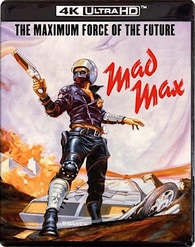
Mad Max [KL Studio Classics, 4K UltraHD]
What is it? George Miller’s classic franchise starter.
Why see it? It’s rare for a film franchise to retain the same director over decades and multiple films, but George Miller is that rarity. From the recent action masterpiece Mad Max: Fury Road, all the way back to 1979’s Mad Max, Miller has been running the show across four films — and three of them are brilliant slices of apocalyptic action! (Sorry Beyond Thunderdome fans…) This first entry is the lowest budgeted and therefore smallest, but it remains a thrilling piece of exploitation fare with eccentric characters, big stunts, and plenty of carnage. Kino’s new 4K release captures the mayhem in all of its detail and glory, and while the film’s soft focus cinematography remains there’s a new clarity and sheen to it all. The original mono Australian audio track is included as well as a 5.1 surround mix and the “American” dubbed version. Add in the smart choice of cover art, and this becomes a must own for action fans.
[Extras: Commentary, interviews, featurettes]
The Best
Buck Rogers – The Complete Collection [KL Studio Classics]
What is it? The 25th century has never been more fun.
Why see it? This late 70s/early 80s series only ran for two seasons, but it managed to deliver plenty of memorable thrills and some fun entertainment. This collection includes both seasons as well as the theatrical feature, and while the show never got the love of some other sci-fi/adventure series, it remains a fun one for those of us who dug its action ethos set amongst the stars, science fiction, and some cool alien encounters. For my money, it also features one of the spookier episodes of a television show — season one’s “Space Vampire” episode remains creepy as hell!
[Extras: Commentaries, interviews]
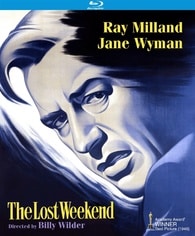
The Lost Weekend [KL Studio Classics]
What is it? An alcoholic realizes he’s an alcoholic.
Why see it? Billy Wilder’s a filmmaker who dabbled wonderfully in multiple genres, and while he went on to direct some classic romps his earlier work was often far more serious and grounded. This tale of an alcoholic man (Ray Milland, in his finest performance) telling his own story on his way to a possible end is a sad, captivating story with few glimmers of hope along the way. It’s far from glamorous, but it’s powerfully affecting. This US Blu lacks the epic interview with Wilder available on the UK’s release from Eureka, but it’s still a fantastic release in its own right with a stellar remaster.
[Extras: New 4K master, commentary, radio adaptation]
The Rest
Buddy Games
What is it? A group of friends reunite for a stupid Olympics.
Why see it? There’s a pretty fun cast here — Olivia Munn, Dax Shepard, James Roday, Josh Duhamel, okay look I said fun not crazy great — but the writing is so especially sophomoric that none of it actually manages to be funny. To be sure, part of its point is to mock grown men behaving like children, but the film also wants to embrace it making for a muddled theme to go with the broad comedy. Watch it if the cast appeals, but don’t expect a new Hangover.
[Extras: Featurettes]
Iron Mask
What is it? The classic tale gets an almost unrecognizable makeover.
Why see it? While this film takes on some aspects of Alexandre Dumas’ familiar character, it’s actually a sequel to 2014’s Forbidden Kingdom and sees the return of Jason Flemyng. That may or may not be a good thing depending on your taste for excessive CG, dubbing, and “big” performances, but at least this time we get supporting help from Jackie Chan and Arnold Schwarzenegger — the latter of whom makes sure to remind characters to exercise. It’s silly.
[Extras: None]
The Jewish Soul: Ten Classics of Yiddish Cinema
What is it? A 5-disc set of ten feature films important to Yiddish culture.
Why see it? The films range from 1937 to 1950 in their releases, and they’re even more varied in content with comedy, drama, the supernatural, and more all finding representation here. It’s an important release on the historical front, and Kino’s (and Lobster’s) restorations improve on old, damaged source materials. The films vary in more than just physical presentation meaning some will likely be more rewatchable than others, with The Dybbuk being my choice of the bunch, so your mileage may vary.
What is it? Years after the zombie outbreak, heists are the new jam.
Why see it? This follow up to Train to Busan lacks the original’s tension, terror, and suspense, but it rarely tries to compete on those fronts. Instead, the film is more of a CG-heavy heist film that feels familiar to post-apocalyptic movie fans while finding some new thrills of its own. It’s a sharp-looking romp, even more so in 4K, and the energy remains high throughout. It’s more about the cheese than the terror this time around, but it’s an entertaining ride.
[Extras: Featurette, interviews]
Also out this week:
Ava, Babylon Berlin – Season 3, Cemetery of Terror [Vinegar Syndrome], Deadly Games [Vinegar Syndrome], Essential Fellini [Criterion Collection], He Came From the Swamp [Arrow Video], The Irishman [Criterion Collection], The Killing Floor, Rest in Pieces [Vinegar Syndrome], Riders of Death Valley, Whodunit? [Vinegar Syndrome]
Ending Explainedis a recurring series in which we explore the finales, secrets, and themes of interesting movies and shows, both new and old. This time, in preparation for David Fincher’s upcoming Mank, we return to the Citizen Kane ending and discuss how one word can summarize a man’s existence.
Few human beings have received as vicious and delightful an “F you” as William Randolph Hearst did when Citizen Kane erupted upon the Earth. The film is a masterpiece on many fronts. It’s a technical achievement, a go-to education in deep focus, extreme close-ups, overlapping dialogue, and rear projection. Wunderkind Orson Welles relishes in the mashing of genres, injecting CitizenKane with flashes of gothic horror as well as surrealism and comical melodrama. Yet, at the end of the day, the de facto greatest movie of all time is a hit piece, designed to tear down the media tycoon by screenwriter Herman J. Mankiewicz and sealed with a kiss by Welles.
What spurned such boiling vitriol from Citizen Kane‘s creators? David Fincher’s new Netflix movie Mank attempts to explain the noxious contempt the screenwriter nurtured for Hearst after being cruelly excised from the billionaire’s societal circle. The tale is torrid and stuffed with incredible acts of human audacity, but it’s also easily discernable after a close reading of Citizen Kane‘s ending. Mankiewicz was not subtle; every ounce of his venom is brutally splashed upon the audience during the film’s final moments.
Rich men are bastards, and “Get Out of Hell, Free” cards cannot be bought.
Even if you’ve never seen the film, you probably know the ending of Citizen Kane. Rosebud, it’s his sled. The final word uttered by the dead man at the center of the story refers to his castaway childhood toy, a hunk of junk buried in a mountain of riches. The film’s last batch of shots depicts Rosebud’s cremation and skyward ascendence via smoke and ash through Castle Kane’s chimney.
For much of the film’s runtime, reporter Jerry Thompson (William Alland) consults various significant figures throughout Charles Foster Kane’s life. No one can explain “Rosebud” to him. Not Kane’s second ex-wife (Dorothy Comingore), not his former best friend (Joseph Cotten), and not his ex-employee (Everett Sloane).
That’s a lot of exes. Kane was good at many things, but no one surpassed his ability to collect exes. All that entered his social bubble came pre-packaged with an expiration date, whether they knew it or not.
Toward the end of the film, Thompson stands with other reporters amongst Kane’s massive assembly of priceless trinkets. The man is dead. The statues, knickknacks, and baubles he collected over his lifetime must now be sorted and redistributed. It’s a task seen as exhausting rather than wonderous.
The Ark of the Covenant could be amidst these gems, and it would be easily missed by the workers charged with their disposal. Amassed together, the artifacts are meaningless. What’s one more armless Venus when propped against a dozen others?
Thompson’s colleagues inquire about his success in uncovering the truth behind “Rosebud.” The reporter sighs and shakes his head. “I don’t think any word can explain a man’s life,” he says.
The camera digs within the towering crates. It swoops over the servents in the darkest pits of Kane’s dungeon as they hurl the endless stream of useless leftovers into the incinerator. A sled is picked from the pile and chucked inside, and the camera stays with it. As its paint bubbles into nothingness and the flames transform the sled’s particles from solid to gas, we read its name painted lovingly on its surface: “Rosebud.”
On the outside of Kane’s castle, his manufactured Xanadu, we gaze north. The sled mingles with the rest of the garbage, expelled into the atmosphere in a steady black smoke stream. The camera pans down on the perimeter fence and the “No Trespassing” warning strapped to it.
Kane, like his fortress, admitted no one. His hurt was his. Alone. For all his wealth, power, and fame, at this moment, Charles Foster Kane is reduced to a child crying for the innocence stolen from him.
The last time we, the audience, saw the sled in the film, a child Charlie raced it down the hill outside his home. While he gallivanted in the background, his parents signed away his guardianship to the banker Walter Parks Thatcher (George Coulouris). After gold was discovered on their property, Kane’s mother (Agnes Moorehead) believed a trust and a sugar daddy would provide a superior life than the one she could supply.
Charlie proved to be savagely ambitious, using that gifted opulence as a springboard into economic and political dominance. In the process, Charlie metamorphosed into Charles Foster Kane, the tyrannical, abusive, and lonely old man who wanted for nothing but the childhood that would never return.
The most powerful man in the world’s last word is Mankiewicz calling Kane, his William Randolph Hearst voodoo doll, a putz. Congratulations, jackass. You crawled your way to the top, but you’re just like any dope whining “Mommy” as the shadows fall. In the race to slam your enemies, you alienated your family and your friends. You’re hated, and when you’re hated, you’re nothing.
As far as insults go, Citizen Kane‘s ending cuts deep. Hearst banned any mention of the film from his laundry list of newspapers, and he commanded his journalists to smear Welles in one article after another. Thanks to Welles blathering about the incident himself, rumors circulated that Hearst attempted to trap the director in a hotel tryst with a fourteen-year-old girl hidden away in his closet. A warning from a police detective averted the scandal from occurring.
Welles used Hearst’s fury over Citizen Kane to help promote the film. He set up several preview screenings under the guise of artistic integrity, claiming all creative expression was under attack. These early showings garnered early critical acclaim, boosting distributor RKO’s confidence in the picture after it started to wane due to Hearst’s attacks.
To call Welles victorious in this endeavor would be misleading, however. Hearst did not halt RKO from releasing Citizen Kane, but he did manage to convince many movie theaters to ban the picture. The box office was decent. Kane ranked as the sixth highest-grossing picture of 1941, but there is no doubt that the film would have scored a much larger total without Hearst’s interference.
Of course, given the poison toward the media mogul pumped into the ending of Citizen Kane, zero interference was never possible. Herman J. Mankiewicz achieved revenge on Hearst. The tycoon cannot be mentioned without the film, and the film cannot be mentioned without the tycoon. The two are forever linked. To gaze upon Hearst’s face is to hear the word, “Rosebud” and witness a chump exposed.
“Oh my gosh, that’s so weird!” my son would shout at the screen literally every two minutes. Don’t worry, we were watching a screener of DreamWorks Animation’s The Croods: A New Age at home. Not that I like there to be talking during the movie even in my own living room, but his reaction was valid. This movie is nuts. Or, more appropriate since the fruit is integral to the plot: this movie is bananas. So bananas that it’s difficult not to react boisterously with nonstop laughter and uncontrollable verbal expressions of amazement. I actually would have loved to have experienced the animated sequel in a theater with my kids, surrounded by other children. But we’re still avoiding cinemas at the moment (as are apparently many of you). At least I got the next best thing: my children are rarely as attentive, amused, and in awe with a new movie watched at home as they were with The Croods: A New Age.
I was also surprised by my own enjoyment of the film itself. I caught up with the Oscar-nominated 2013 original earlier in the day and was not too impressed (I’ve also never seen the Netflix animated series Dawn of the Croods). The Croods is a prehistoric migration story seemingly stolen from any of the Ice Age movies (I guess the one where the granny sloth shows up) only done with cave people characters and even less interest in authenticity. It’s fine but familiar. The follow-up, which spent many years in development before production was canceled then later resumed, and then ultimately finished remotely by the crew during the COVID-19 pandemic, has a more interesting plot, more vibrant visuals, and a much funnier script. With the first film, I didn’t really understand why all the creatures encountered by the titular family had to be so strange. I’m still not sure about that choice here, but at least it’s embraced more imaginatively in the sequel.
The hybrid mutations of these movies’ flora and fauna also contrast more acutely with the human characters once the story arrives at a large, single-family enclave. The Croods is indeed a crude clan, in manner and design, so their encounterings of Wuzzle-like mashups in the wild, such as the kangadillo and the mousephant, are an odd but increasingly ordinary part of their fantastical alternate-evolution universe. When the cave dwellers arrive at the farm and treehouse Shangri-la of the Betterman family, though, everything becomes further askew. The Betterman bunch consist of more modern-looking characters, and they have a more advanced and cleaner lifestyle including elevators, showers (with a hint of vanilla), and flush toilets — all rather rudimentary in their engineering, of course, but still a step above Flintstones-style conveniences.
In this walled paradise of safe, civilized, and bountiful living — which, of course, isn’t beloved by all of the Croods, namely the old-fashioned patriarch Grug (voiced by Nicolas Cage) — the fruits and vegetables and livestock are still as surreal as can be, from the giant, candy-colored fruits to the crocopigs and chicken seals. The Bettermans have agriculture and domestication, but they look the most ridiculous by being so manicured and sophisticated amidst the outlandish worldbuilding. Also sticking out like a sore thumb are those aforementioned bananas. They’re just bananas. Not bananostriches or bananapples or anything else so wacky. Yet bananas are symbolic of comedy, whether it’s in their slapstick-prone peels or phallic shape or the funny sound of their name, so there’s an irony to them being so plain and literal here. There’s also a predictibility to their purpose in the narrative.
As with any animated feature sequel involving a utopian location that the main characters stumble upon or are brought to, the Bettermans are not as perfect as they seem and their oasis is not as ideal as it looks. The conflict is not so black and white as the clash of polished versus unpolished could lazily be, athough I’m guessing there will be plenty who see this as a timely affair about oppositing sociopolitical bubbles finding it difficult to live together and get along. At its center, the story concerns the simple romantic scenario of the orphaned Guy (Ryan Reynolds) having been the love interest of Crood daughter Eep (Emma Stone) but now wanted by the Betterman parents (Peter Dinklage and vocal performance standout Leslie Mann) as a more fitting match for their daughter, Dawn (Kelly Marie Tran). But there’s not enough there for the movie to lean on alone.
The third act of The Croods: A New Age takes a wide turn toward an expected direction of plot, but the foundation of the storytelling is the only thing that’s familiar in this section of the movie. There are more wildly absurd creatures, some surprisingly literally hair-raising developments, and a focus on the female characters as feminist warriors (the men also wind up with their own, hilariously suggestive affinity). The action is ramped up, and so is the silliness. There’s something for everyone, too. My son couldn’t stop laughing at the monkeys that communicate by punching, my daughter fell into a fit of giggles at everything going on with the women, especially when hair was in play, and I continued to appreciate the whimsical and well-executed humor. There’s nothing particularly highbrow in the comedy, but much of it works on a level that’s over the kids’ heads.
Most of the movie, though, works on a broad concept of craziness, with seemingly random and anarchic but certainly precise situations and montages that play as totally bonkers to especially young viewers. And is particularly effective when they’re high, as in hopped up on candy and sugar sodas from the concession stand (I assume the adults may also benefit from a different sort of high, as well), and feeding off the energy of a crowd similarly tweaked-out on sweets. But The Croods: A New Age is evidently still plenty potent in its ability to stun its target audience with its nonsense and jolt them into a state of perpetual laughter as response to such consistent kookiness. It’s more than just a diversion of colorful garbage to throw on in the afternoon. It is a weird movie, sometimes just for weirdsake but also for an engaging entertainment experience wherever it is you’re watching.
Welcome to The Queue — your daily distraction of curated video content sourced from across the web. Today, we’re watching a video that contextualizes the importance of ‘Persona’ in the career of Ingmar Bergman.
Cinema in the 1960s was a rug pull. A combination of factors, chiefly counterculture movements and post-war disillusionment, prompted filmmakers to push against convention. The result was an international movement that began to experiment with the accepted rules of cinematic grammar.
Reckoning with the economic and moral upheaval of World War II, Italian Neorealists filmed on-location and foregrounded non-professional actors. French New Wave directors like Jean-Luc Godard and Éric Rohmer intentionally pushed against expectations of invisible filmmaking. And in Hollywood, Westerns began to criticize their own narratives of hero-worship and pivot to a morally ambiguous territory.
And then there’s Swedish auteur Ingmar Bergman, whose own shift would take the shape of 1966’s Persona, a film that is at once confounding and one of Bergman’s most intimate projects. The film follows two women, a young nurse named Alma (Bibi Andersson) and Elizabet (Liv Ullmann), the mute actress in her care. As the pair spend more and more time together, the line between the genuine and the affected begins to blur and their personalities begin to collapse.
As the video essay below details, before Persona, Bergman was primarily known for weighty existential dramas that generally adhered to traditional storytelling techniques. Like many of its boundary-pushing peers, Persona intentionally draws attention to the art of filmmaking itself. The result is a dichotomous and ultimately uncanny viewing experience; a naturalism, fractured by the artificiality of cinema.
This video essay comes courtesy of The Discarded Image, a video series created by Julian Palmer that deconstructs film. The series began with a deconstruction of how Steven Spielberg creates suspense with the beach scene in Jaws. It has steadily grown from there. You can check out The Discarded Image’s video essays here.





 Mad Max [KL Studio Classics, 4K UltraHD]
 Buck Rogers – The Complete Collection [KL Studio Classics]
 The Lost Weekend [KL Studio Classics]


