The film industry in one place - Articles, Reviews, trailers and hype!

Friday, 28 June 2019

New UK Trailer for 'The Informer' Starring Joel Kinnaman Undercover

The Informer UK Trailer

"I'm just trying to get home…" Warner Bros UK has unveiled a new, shorter 60-second trailer for the crime thriller The Informer, formerly known as Three Seconds. This was originally set for release in March (we ran a trailer last year) but then it got pushed back until August this summer, and is now being prepped for release soon. Not sure anyone even cares anymore. The film is about an ex-con who goes undercover and intentionally gets himself incarcerated again in order to infiltrate the mob at a maximum security prison. The film stars Joel Kinnaman as Pete Koslow, who gets "caught in the middle of dangerous people with their own priorities." The action thriller also co-stars Rosamund Pike, Clive Owen, Common, Ana de Armas, Sam Spruell, Ruth Bradley, Martin McCann, and Jenna Willis. It's odd they reveal so much in such a short trailer, but they're trying hard to get people interested in this again. Not sure it will help any.

Here's the new UK trailer (+ US poster) for Andrea Di Stefano's The Informer, direct from YouTube:

The Informer Movie

You can still watch the original US trailer for Di Stefano's The Informer here, to see even more footage.

Ex-Special Ops Pete Koslow's (Joel Kinnaman) world is turned upside-down when hei s jailed after a fight to protect his wife (Ana de Armas). He's given a chance for early release by becoming an informant for the FBI and using his covert skills in an operation to take down The General, the most powerful crime boss in New York. But when the sting meant to finally earn his freedom results in the death of an undercover cop, Koslow finds himself caught in the crossfire between the mob and the FBI. The General insists Koslow takes the heat and sends him back to prison to spearhead a drug operation from inside, and the FBI affirms that going back to jail to do The General's bidding is the only way for him to keep his deal alive. Caught in a world of impossible choices, Koslow must return to prison, where he formulates a plan to escape the clutches of three of New York City's most powerful organizations –the mob, the NYPD and the FBI –in order to save himself and his family. The Informer is directed by Italian actor-turned-filmmaker Andrea Di Stefano, making his second feature film after Escobar: Paradise Lost in 2014 previously. The screenplay is written by Matt Cook, adapted from the novel by Börge Hellström and Anders Roslund. Aviron will release Di Stefano's The Informer in theaters starting August 16th coming up this summer. Who's in?

Casper Van Dien & Brianne Davis in Yacht Thriller 'Dead Water' Trailer

Dead Water Trailer

"Spooky, isn't it…? Out here, all alone…" Saban Films has revealed the trailer for this indie horror-thriller titled Dead Water, yet another thriller-on-a-boat movie (there seem to be more and more of these boat films these days - see also: Disappearance or Vampyrz on a Boat). When a relaxing getaway turns deadly, a former Marine must risk his life once again to save his wife and best friend from a modern day pirate; all the while trying to hold himself together as he faces the ghosts of the war he left behind. Casper Van Dien (of Starship Troopers fame) stars with Brianne Davis, Griff Furst, and Judd Nelson. This really doesn't look that good, but Casper Van Dien is still awesome - and that shot of him looking pissed is cool. Jump in.

Here's the first official trailer (+ poster) for Chris Helton's Dead Water, direct from YouTube:

Dead Water Poster

John (Van Dien) invites his buddy David "Coop" Cooper and his attractive wife Vivian onto his new yacht, encouraging the couple to relax and get away from it all. They embark on a sea journey on John’s yacht, The Bella which, becomes the stage for a deadly game that puts friendships and lifetime love to the test. As the ship treks farther into the open horizon, they become more isolated; an unexpected mechanical malfunction leaves the yacht dead in the water, so they decide to launch a mission to seek help. But they're found by a modern day pirate (Nelson) and it becomes a fight for survival in the dead open water. Dead Water is directed by filmmaker Chris Helton, a producer making his directorial debut. The screenplay is by Jason Usry. Saban will release Helton's Dead Water in select US theaters + on VOD starting July 26th.

Discovering the Self Through Song in ‘Hedwig and the Angry Inch’

In John Cameron Mitchell’s landmark musical Hedwig and the Angry Inch, song is its central character’s window into herself. With powerful beats of deconstructing binaries, understanding yourself on your own terms, and searching for the love that makes us feel whole again, Mitchell’s tale of the “internationally ignored” punk diva – a character he created and performed starting in the 1990s – still resonates after nearly 20 years; the film adaptation has since retained cult status, and now lives on in a restored Criterion release.

Really, to discuss Hedwig is to discuss what makes a great movie musical, considering that it is one. With its array of surreal pop-punk musical numbers, co-written by Stephen Trask, the film’s songs and visuals combine into something wholly unique and exciting: an expression of Mitchell’s particular artistic vision that transcends language itself.

Screen Shot At Am

Movie musicals are founded on the idea of spotlighting characters who have something so overpowering to say that, hell or high water, they just have to sing about it. In these situations, music is the only thing that can come close to expressing the otherwise inexpressible; as our own Matthew Monagle writes, singing is an “unfiltered expression of [a character’s] inner monologue,” giving way to some of their most genuine moments on screen.

Hedwig’s musical numbers certainly deliver on that level, considering that they give voice to a such a singular character who has so much to say through her music. Borne from Mitchell’s own thoughts about sexuality and love before the words to express those ideas became more commonplace, Hedwig comes to understand her own layered identity through a series of original power ballads and headbangers; from “Wig in a Box” to “Midnight Radio,” these sequences act as signposts on her quest for achieving fulfillment as a genderqueer artist, and as a person living in a divided world.

These feelings especially come to the forefront in “Origin of Love,” the film’s core ballad. Based on a myth from Plato’s Symposium, the song tells its own origin story of humanity, professing our beginnings as four-legged creatures with two faces until we were split right down the middle by a higher power. To Mitchell, love is something that people inherently desire in order to feel complete, and so we spend the rest of our lives trying to find our missing half; the song that expresses those ideas is one that he says he’ll “keep singing till I croak.”

“Origin of Love” is thus the film’s most personal song and is just as informed by Hedwig’s own history and desires. Growing up as a “slip of a girlyboy” in East Berlin, a botched sex change operation left her similarly caught between poles, lost between the idea of single and lover, man and woman, East and West, bridge and wall (Mitchell refers to this idea as “the binarchy”). Indeed, there’s a vulnerability to her singing about those dualities directly to the viewer, looking right into the camera and telling us how she understands her pain through her idea of creation. How can you search for your missing half if you exist outside of the binary?

The pain down in your soul was the same
as the one down in mine.
That’s the pain
that cuts a straight line down through the heart.
We call it love.

On the surface, it’s easy to view this film as an adaptation ripped from the stage; many numbers see Hedwig and her band on makeshift platforms in Backwater Inn chain restaurants, following her ex-lover Tommy Gnosis (Michael Pitt) as he tours the US with her stolen songs. But Hedwig‘s musical sequences also never fall into the trap of standard concert-movie fare. Here, Mitchell still creates moments that feel distinctly cinematic, using the likes of split screens, 360-degree camera rotations, animatics, and even a follow-the-bouncing-ball-style singalong to help his character’s songs feel all the more alive.

A set of recurring animation sequences from Emily Hubley especially add that pure cinema power to Hedwig’s personal expressions. Most importantly, they come to visualize the ideas that Hedwig sings about in “Origin of Love.” As a series of evolving creatures scuttle about the screen, morphing into one another in abstract shapes and combinations, they breathe life into Hedwig’s lyrics in a way that only film can show us. Really, while the stage carries its own kind of power, it’s the moving image that makes these “lonely two-legged creatures” manifest before our eyes.

Screen Shot At Am

The mirroring of Hedwig’s music and the animatics around her, in turn, brings us to an emotional understanding of her journey. In fact, we see this journey take place right on Hedwig’s body. A tattoo on her hip matches Hubley’s drawings, showing two jagged halves of a face separated from one another. It’s a visual tie that emphasizes “Origin of Love” as the heart of the soundtrack and of the character herself.

This visual is later returned to in the film’s ethereal finale. After confronting Tommy in a void-like concert venue, Hedwig delivers one final ballad, stripped of her usual drag persona. Once her song comes to a close, another animatic emerges onscreen, and we witness the tattoo on her hip morphing into a complete face, the two halves finally made whole. “Origin of Love” then reprises one last time as she staggers, naked, through a darkened alley, into the flickering glow of a streetlamp.

The details of this moment can be interpreted in a number of ways, but it all still points to an acceptance of the self, becoming a “beautiful gender of one,” as Mitchell often states. The scene embraces ambiguity while still delivering an emotional truth, merging the visual and the musical to communicate something without the need for spoken words; somehow, we know that Hedwig has triumphed in her quest, and that even when she leaves the glow of that light, she’s found the love that she’s been searching for in herself.

In the end, this combination of movie musical conventions is what makes Hedwig’s story such an emotional and enduring thing to witness. From the personal power of her songs themselves to the distinctive sequences that visualize them, Hedwig’s journey towards self-acceptance is all pure cinema, and magic from wig to boot.

The post Discovering the Self Through Song in ‘Hedwig and the Angry Inch’ appeared first on Film School Rejects.

2019 Has Been a Year of Great Series Finales. No, Really.

If you’ve seen even a fraction of the monumental amount of press coverage for HBO juggernaut Game of Thrones’ final season, you may be convinced that good TV endings no longer exist, that in the era of instant gratification, no series finale can please everyone. Critics and fans of the show publicly went through the five stages of grief in response to David Benioff and D.B. Weiss’ controversial ending to George R.R. Martin’s epic saga, and with a month of hindsight, 2019 seems all but doomed to be remembered for the ending we didn’t get.

But that would be a shame. Thrones aside, this year has already brought us more satisfying conclusions to small-screen stories we love than any other in recent memory. We’ve been gifted with some truly stunning endings, from Fleabag to You’re the Worst, Catastrophe to Crazy Ex-Girlfriend, Broad City to Veep, plus A Series of Unfortunate Events — hell, we even got a Deadwood movie!

In real life, closure rarely comes as neatly or wonderfully as it does in storytelling, and this year has reflected that, too, with great but suddenly axed shows like Santa Clarita Diet, A.P. Bio, Speechless, and One Day At A Time failing to end on their own terms. Overall, though, the number of excellent series endcaps already available in 2019 should be enough to rinse away the bad taste of Game of Thrones’ poorly received final episode.

A perfect finale is subjective. For shows that evolve in tone and include a wide cast of characters, it’s often tough to strike a balance between each element. Luckily, each of the fantastic finales above exemplifies one or more traits of a classic final chapter. Game of Thrones may be the new cultural equivalent to Lost (an ending I actually loved, by the way), but which of these will be remembered as this generation’s M*A*S*H or Six Feet Under or E.R.? Only time will tell, but for now, we can take a look at what they did right. Spoilers ahead.

Great finales bring the right amount of closure

Daniel Handler’s darkly imaginative children’s book series A Series of Unfortunate Events finally aired its conclusion on screen for the first time this year, after a franchise-starting film failed to take off in 2004. Fans finally got it at the opportune time, though, as Netflix’s reimagining of the eccentric tale, which follows three unlucky orphans as they attempt to evade evil adults and uncover the secrets of their parents’ deaths, is rife with timely political satire and blueprints for the ways in which collaboration, imagination, and knowledge can fight tyranny.

The final episode, “The End,” is set on a cult-like island and looks like a biblical parable, but its lessons aren’t so simple. There’s food for thought here about the inherent tragedy of believing in heroes and villains, as well as the lengths to which one must go to survive in an unjust society. But above all else, “The End” give us the closure that the book series didn’t. Book-lovers who have dealt with over a decade of ambiguity will finally learn what’s in the sugar bowl and see Lemony Snicket’s (Patrick Warburton) connection to the children made clear, while newcomers to the series will still appreciate the series’ consistent commitment to bold narrative choices.

Great finales know how to put a spin on the familiar

Throughout its five-season run, Broad City became known as a beacon — or maybe, given the dearth of similar content when the series started, a life raft — of representation for messy, broke twentysomething urban women who make their own kind of cool. So the series’ final moments, during which a pan out from a city street accompanied by Lizzo’s “Juice” reveals multiple duos deep in the midst of discussion, feel like a gift and an acknowledgment from series creators Abbi Jacobson and Ilana Glazer.

Each of these people is the protagonist of their own epic story, one that’s capable of being as fun and bizarre and hilarious as Abbi and Ilana’s, which means that all of us are, too. This shot follows a scene during which the two friends video chat from different states, a comforting, familiar moment that is offset by the real, substantive change — Abbi moving out of state — that also drives the finale forward. The episode, “Broad City,” juggles this mix of new and old and beloved and nerve-wracking unfamiliar well and does so in a way that satisfies both fans and the natural story progression.

Great finales are still able to surprise us

Forget the fate of King’s Landing; no storyline this year has taken a more surprising turn than that of Veep. HBO’s political satire seemingly had nowhere to go after the Trump administration made its bumbling White House staff look competent by comparison. The show’s approach in its final season was to get meaner than ever before, making Jonah (Timothy Simons) a fear-mongering Islamaphobe who’s embraced the idea that ignorance is the path to power, and setting up Amy (Anna Chlumsky) as his very own Kellyanne Conway.

The finale, “Veep,” does everything in its power to make Selina (Julia Louis-Dreyfus) less redeemable than ever as she makes deals to ban gay marriage, make Gary (Tony Hale) take the fall for her campaign’s criminal activities, and choose Jonah as her VP. We shouldn’t have expected anything hopeful out of Veep, one of the most biting American satires that exist, and yet the depths to which most characters sank were still surprising and impactful.

On the other end of the storytelling spectrum, there’s Crazy Ex-Girlfriend, a series that evolved with its characters, tackled important topics, and ended in a place of positivity and connection, yet still managed to surprise to the end. Although some aspects of the series finale, “I’m In Love,” were to be expected — characters coupling up, a time jump — the Rachel Bloom-led series took a leap by finally externalizing the songs that Rebecca has imagined for four seasons. She tells Paula (Donna Lynne Champlin) about them and, a year later, performs one of her songs in public for the first time. The switch from musical reality to actual reality is a familiar concept for fans of musicals, yet Crazy Ex-Girlfriend presented Rebecca’s songs as an interior part of her for so long that the decision to bring them out of he, to reveal that songwriting is Rebecca’s true love, managed to surprise in a lovely way.

Great finales are consistent in their excellence

Deadwood: The Movie, a finale that came 13 years after David Milch’s masterpiece Western series left us hanging, is so consistently excellent that if any scene in it were its last, it would still be great. Case closed.

Great finales put the story above the fans

For lots of people, a perfect ending makes them feel good. A perfect ending rewards decent characters and not bad people. A perfect ending is devoid of ambiguity and explains what needs explaining. For storytellers and artists, there is rarely anything more boring than this type of perfect ending.

Rob Delaney and Sharon Horgan’s series Catastrophe knows this, as does Stephen Falk’s You’re the Worst and Phoebe Waller-Bridge’s Fleabag. All three brutally honest comedy-dramas follow thorny, deeply imperfect protagonists, and all three provided endings that thoroughly wrecked their fans this year. Each series deals with the idea of love — who deserves it, how you practice it, and if it even matters. The three stories each come to slightly different conclusions on the particulars, but each is convincing in its take.

Although Fleabag is already being rightfully heralded as a modern classic — click through for more on that finaleYou’re the Worst is the 2019 finale that I’d love to see studied someday. The episode, titled “Pancakes,” sees Gretchen (Aya Cash) and Jimmy (Chris Geere), a couple that has been pulled apart by depression and selfishness and cynicism many times before, ditch their own wedding to go out for pancakes. They make a vow to wake up every day and choose one another until, maybe, the day comes that they don’t want to.

An interlude, accompanied by The Mountain Goats’ “No Children,” shows the next few years of their life together, which, hint, does feature children. Then it cuts back to the diner, where Gretchen turns to Jimmy. “Hey,” she says, “You know there’s always a possibility that someday I might leave my phone and keys at home and step in front of a train. You know that, right?” Jimmy looks at her for a moment, loving and somber, then says, “Yeah, but I’ll move on really quickly. Like, record-setting.” Gretchen says okay, they both breathe a laugh, then they dig into their pancakes. The moment is jarring and dark and real and, within context, it’s perfect.

It’s hard to pinpoint what makes an ending great, but let’s try one more qualifier: the best series finales I’ve ever seen each have a moment of truth so profound that the characters may as well be reaching through the screen to shake us awake and remind us that we’re alive. These moments, more than any measurable quality, linger with us long after the screen fades to black.

The post 2019 Has Been a Year of Great Series Finales. No, Really. appeared first on Film School Rejects.

High Kicks, Sad Sacks, and Magic Snakes: The New York Asian Film Festival

Iron Monkey
The 18th New York Asian Film Festival kicks off this weekend with another eclectic roundup of films from East and Southeast Asia. The premier showcase for Asian film in North America, the NYAFF focuses on the three main production centers, Japan, China/Hong Kong/Taiwan, and Korea, while also showcasing films from the Philippines, Vietnam, and Malaysia. Most of the films are new releases, by a healthy mix of heretofore unknown filmmakers and established auteurs, and they range from international festival-type art-house films to glossy genre pictures. This year features as well a number of films that have already seen release in North American multiplexes, albeit in limited runs in major cities. This could either be a by-product of the increasing number, variety, and quality of such releases, or a result of the increasingly opaque and throttling censorship situation in Mainland China.  
The festival begins on the same day that Derek Tsang’s Better Days, the follow-up to his excellent and highly-acclaimed 2017 debut Soul Mate, was to have been released both in China and in North America. But on Monday it was announced that the film’s release has been cancelled (“post-poned”), just as its appearance at this year’s Berlin Film Festival had been canceled. At the same time, the film that was to open the Shanghai Film Festival, a much-anticipated World War II epic called The Eight Hundred (by Mr. Six director Guan Hu), had its release canceled as well. Strange things are afoot in Chinese cinema, and it is looking increasingly like the last few years may have been an aberration, a minor and now ended Golden Age when all variety of mainstream Chinese films were released simultaneously at home and the West while the country’s more esoteric filmmakers were becoming increasingly dominant on the international art house circuit (as 2018, where Ash is Purest White and Long Day’s Journey Into Night drew raves). Or official state policy could shift again in the coming months. I wouldn’t to dare predict the actions of the Chinese Communist Party.  
This is my third year covering the NYAFF, and while there was only one previously released film in last year’s lineup, there were, by my count, four in 2017 (not counting films related to individuals being honored by the festival), which is about the same number as this year. So maybe it’s just a coincidence, maybe last year was the oddball. Regardless, this year’s lineup has plenty of gems, headlined by a trio of films by this year’s Star Asia Lifetime Achievement Award winner, Yuen Woo-ping. 
One of the three films in the Yuen tribute is his latest, Master Z: Ip Man Legacy, which I covered here just a few months ago. The other two are older films, arguably his two best. I wrote about 1982’s The Miracle Fighters here last year, when Yuen and Tsui Hark were supposed to have remade it as The Thousand Faces of Dunjia (in fact that film is nothing like the “original”). It’s the best showcase for Yuen and his brothers’ vaudevillian approach to martial arts acrobatics. With a bottomless well of practical stunts and special effects, I continue to believe it’s the closest thing we’ve yet seen to a Jean Cocteau kung fu movie. The third Yuen film is a 35mm presentation of Iron Monkey, among the finest films of 1993, the high-water mark year in what was the last true peak of martial arts cinema.
Spinning off the success of Tsui Hark’s Once Upon a Time in China series (on which Yuen worked as an action coordinator), in which Jet Li played real-life folk hero Wong Fei-Hung as he battled the forces of Western Imperialism and Eastern Superstition as a kind of avatar of Sun Yat-sen style rational nationalism, Iron Monkey serves as a prequel. We meet Wong as a child, played by thirteen-year-old wushu champion Angie Tsang, as he and his father, Wong Kei-ying, played by Donnie Yen, visit a town and become embroiled in what is essentially the plot of an old Zorro episode. A masked bandit named Iron Monkey is stealing from the corrupt ministers and gangsters who rule the town and distributing the loot to the poor and needy. The Wongs get caught up in the government crackdown (because Kei-ying can fight he’s considered a potential Iron Monkey) while befriending the local doctor (Yu Rongguang), who is in fact the eponymous hero. Brisk and tightly plotted, with tons of great fights and just the right amount of humor and melodrama, Iron Monkey is Yuen’s most accomplished film. It is the one where his cavalier disregard for coherence in acting and plotting is least felt, along with two other films he made right around the same time, 1993’s The Tai Chi Master, with Jet Li, and 1994’s Wing Chun, with Michelle Yeoh. Iron Monkey was eventually released in the early 2000s by Miramax, in an attempt to capitalize on the success of Crouching Tiger, Hidden Dragon (which Yuen had choreographed). But in doing so they edited it for tone and speed to fit more conventional American ideas of “realism,” altered the subtitles to depoliticize it, and re-recorded the score to match the style of Tan Dun’s Crouching Tiger music, in the process eliminating Iron Monkey’s use of the iconic Wong Fei-hung theme, divorcing the film from its intended context as part of a larger heroic story. Here’s hoping the print the NYAFF will be showing is of the original release and not the Miramaxed butchering.
See You Tomorrow
Not quite an archival presentation, but not really a new film either, the NYAFF is playing See You Tomorrow, the film co-written and produced by Wong Kar-wai that was originally released around Christmas in 2016. Based on a story by Zhang Jiajia, who also directed, Tony Leung Chiu-wai plays a Ferryman, basically a bartender who helps people get over their romantic disasters. Strongly reminiscent of the structure of Wong’s own My Blueberry Nights, the film follows three primary characters in their struggles to resolve issues from their past (key events from which all occurred ten years prior). Leung has lost himself in drink for years, and although he was in love once, it has ended for some reason. His friend, played by Leung’s Chungking Express co-star Takeshi Kaneshiro, is in love with the baker next door who has amnesia: not only has she forgotten him, she’s forgotten how to cook. Their neighbor, a radio DJ played by Angelababy, moons over a broken-down pop singer (Eason Chan) who is himself suffering through a disastrous break-up. Wong and Zhang hide the conventionality of the screenplay behind a lot of whiz-bang filmmaking: garish colors, goofy slapstick and superhuman alcohol consumption. In individual moments, the film looks fantastic (the cinematography is by Peter Pau, who shot Crouching Tiger and helped shoot The Killer and The Bride with White Hair, and Cao Yu, who won cinematography Golden Horse Awards for both City of Life and Death and Kekexili: Mountain Patrol), but after two hours it all blends together in a lurid blur of orange. See You Tomorrow is in fact probably the orangest movie ever made. The stars make it watchable though, I can’t imagine a truly unpleasant Tony Leung experience— even if watching him and Kaneshiro goof around being guys while mooning over gorgeous women half their age is a bit trying. 
Somewhat surprisingly, White Snake is even more impressive looking than See You Tomorrow. Chinese animation hasn’t accomplished much of note in recent years, though their mainstream blockbusters have grown increasingly cartoonish as cheap CGI has become widely available. Occasionally this has yielded good results (Tsui Hark’s Journey to the West: Demons Strike Back and Detective Dee and the Four Heavenly Kings, Soi Cheang’s Monkey King series), but more often the effects are as bland and frictionless as the movies they are meant to embellish. White Snake though, being fully a cartoon, shows as much imagination in the creation of stunning vistas and romantic moments as anything to have come out of China in recent years, certainly more than any of the Hollywood animated films my kids have dragged me to recently. 
It’s a kind of prequel to the White Snake legend, which is probably best known to Western audiences as the source story for Tsui Hark’s Green Snake. But where Tsui used the story as a means to critique religious hypocrisy and human selfishness, directors Amp Wong and Ji Zhao play it straight, fitting it into a kind of Disneyfied princess on the run story. In fact, aside from showing a bit too much skin and having a decided lack of songs, White Snake might as well be a Disney product. There’s even a talking dog used as comic relief. Recalling the world of the Monster Hunt movies, White Snake features a war between the world of demons and the world of humans, where one of the Emperor’s chief ministers is hunting demons (snake demons specifically) in order to enhance his own dark magical powers (in order to win favor with said Emperor). The White Snake loses her memory in an assassination attempt on this minister, and is rescued by a human who, naturally enough, falls in love with her and helps her on her quest to regain her memory and kill the bad guys. It’s standard fairy tale romance stuff, but done with enough verve and belief that old clichés can be forgiven. It’s not Tsui Hark, but it might be a kids version of House of Flying Daggers.
The Crossing
The best of the new Chinese language films I’ve seen from this year’s festival though is The Crossing, the debut feature by Bai Xue. A 16 year old high school student named Peipei (Huang Yao) goes to school in Hong Kong but lives across the border in Shenzhen. Trying to earn money to go to Japan with her best friend, she hooks up with a gang of iPhone smugglers, her dual ID and regular border crossing making her an ideal courier. A slow-burning character study, Bai takes her time establishing Peipei’s world, teasing out the complications of her home life and family history, building her sense of isolation from her parents and her wealthier peers, such that her bad decisions (like joining a criminal gang) seem almost a reasonable escape. Peipei joins Bad Genius’s rebel test-taking cheat and Angels Wear White’s reluctant witness as fascinating young women striking out at conventional society with cool, calculating dispassion. The Crossing looks terrific, with crisp scenes of urban nightscapes recalling the glory days of Hong Kong cinema. It’s a 21st century School on Fire: all the issues are the same, but the fire is all sublimated now, burning under the surface of a relatively prosperous normalcy.
The Crossing is one of the NYAFF films which saw a North American release earlier this year, though I missed it when it played a few months ago. A couple others I’ve written about here and elsewhere. Pang Ho-cheung’s Missbehavior, an urban comedy that was one of the highlights of this year’s New Year’s slate returns, along with Savage, a thriller set in a snowy wilderness that isn’t particularly good at all. The Vietnamese film Furie, though, is probably the best action film of the year so far (apologies to John Wick fans). Its star, Veronica Ngô, will be at the festival to receive the Daniel A. Craft Award for Excellence in Action Cinema and it is well-deserved. Her performance as a woman relentlessly chasing after the traffickers who kidnapped her daughter is a star-making one if ever there was, and her fights, filmed with precision and creativity by director Lê Văn Kiệt, are excellent. It’s put Vietnam on the map as an exciting new territory for action cinema, as Tony Jaa’s Ong-Bak did for Thailand and Iko Uwais and Yayan Ruhian did for Indonesia with The Raid.
But that’s not all we’ve seen from Vietnamese cinema this year. While Furie became the first Vietnamese film to get distribution in the U.S. (depending on how you classify the films of Trần Anh Hùng), The Third Wife, by Ash Mayfair, will be making its way around the art house circuit this summer after appearing at a number of film festivals over the past year. The NYAFF also has Song Lang (aka The Tap Box), from director Leon Le. A melancholy drama about a debt collector who strikes up a friendship with a cai luong performer, it’s long on  atmosphere of the lush, Wongian variety. The performance scenes are the main draw, cai luong being a kind of early 20th century Vietnamese folk opera, kind of like the Chinese huangmei operas familiar from the films of Li Han-hsiang, though markedly more Western in singing style. If the relationship between the two men (on the surface at least wholly Platonic) hints at Farewell, My Concubine, the way the film flits breathlessly between hard-boiled gangster life and lush romanticism recalls Johnnie To’s The Odd One Dies or Pen-Ek Ratanaruang’s Last Life in the Universe. It’s also the only film I know of where romance is stirred by playing Contra (though it should be noted that King of Fighters is central to one of See You Tomorrow’s romances). 
Jam
Finally, I caught three films from Japan. Mr. Long, the 2017 film from mononymous director Sabu was one of the low-key gems from that year’s Seattle International Film Festival and is playing at this year’s NYAFF alongside Sabu’s 2018 film Jam (Sabu himself will be in town for the festival). Mr. Long is the significantly better work. Chang Chen plays a Taiwanese gangster who gets double-crossed in Japan and holes up in a run-down neighborhood. There he eventually befriends some locals with his exceptional noodle-making skills and general coolness, and a kind of makeshift community forms around him. It’s basically an off-beat yakuza-and-ramen riff on The Outlaw Josey Wales, helped immensely by Chang’s charisma, evident even when playing a deadpan menace. The rest of the performances are less inspired, and a flashback that needlessly interconnects some key characters seems especially out of place.
But that kind of interconnection is the whole point of Jam, one of those movies that starts with a seemingly inexplicable event and then cuts back to a few days before to follow all the individual plot strands as they come together in wildly improbable fashion that might mean something, depending on how you value the metaphysics of coincidence. The three men at the center of Jam include: an enka singer (enka is a kind of love balladry that seems quite indistinguishable from lounge singing to my ears) whose audience consists entirely of middle-aged women, one of whom is a nut who kidnaps him Misery-style; an ex-con who never talks and who is hell-bent on tracking down all his old comrades and wailing on them with a hammer while also pushing his aged mother across town in a wheelchair; and a nice young man who is told by a spirit that if he does three good deeds a day for a certain amount of time, his girlfriend (in a coma since she was shot) will wake up. All three guys are weighed down by the women in their lives, and only the wackiest of chance encounters will bring them any hope of escape. It’s occasionally funny and the plotting is undeniably competent, if uninspired, but the whole thing leaves an unpleasant taste. It’s just a worse version of a story we’ve seen too many times before. 
Nobuhiro Yamashita is now almost fifteen years removed from Linda Linda Linda, doubtless the greatest high school film of the century thus far. He remains a regular on the festival circuit, though none of his recent works have generated anything like the excitement of that masterwork. I’ve seen three of his last four films,  La La La at Rock Bottom, Over the Fence, and this year’s NYAFF entry Hard-Core, and all are about sad sack men who don’t properly no how to deal with the worlds in which they find themselves. And each one has been worse than the one before it. La La La was saved, as its hero is, by music, while Over the Fence found escape in carpentry, baseball, and a terrific pair of performances from Joe Odagiri and Yû Aoi. But Hard-Core is simply lost in itself, its collection of losers as charmless and uninteresting as the film’s forced whimsicality. Takayuki Yamada plays the lead, a lonely and honest man who is so certain of his own righteousness that he can only react with violence when others fail to meet his standards. The film’s opening moments are its best, with Yamada drinking in a bar being proud of himself for not hitting on the only woman there, then exploding into rage when another group comes in and enlists her in their drunken revelry. From there it descends into the maudlin and dull, as Yamada and his best friend join an old man digging for treasure and find a robot. They all hang out together looking sad and try to deal with the corruption of their bosses and Yamada’s businessman brother, but our world ultimately proves too impure for them. The longer I’ve sat with it, the less I’ve liked it, whereas every other Yamashita movie has grown on me with time.  
This is only a brief sample of this year’s NYAFF. There were a number of movies I simply haven’t had time to catch up with yet, foremost among them is probably Peema Tseden’s Jinpa, which, like his 2015 film Tharlo, is I’m sure a very fine film that I just haven’t made the time to see. I was also curious about a couple of genre films: Dare to Stop Us, a Japanese comedy about a woman director working in the world of Koji Wakamatsu pink films; and The Fatal Raid, what appears to be a throwback to that most Hong Kong of genres, the Girls with Guns action film, from director Jacky Lee. There’s a lot more out there besides. See ‘em while you can.

Official Trailer for Gas Station Thriller 'Burn' Starring Josh Hutcherson

Burn Trailer

"Let's get out of here while we still can – together." Momentum Pictures has unveiled an official trailer for a contained thriller tilted just Burn, set entirely at a gas station one night. It's the feature directorial debut of USC graduate Mike Gan, telling the story of a misguided crook who tries to rob the gas station. But he gets more than he bargained for when the employee fights back, scolding him with a pot of hot coffee then tying him up to a chair. The two gas station workers then try to connect with the robber before the cops arrive. And then what? Starring Josh Hutcherson as Billy, with Suki Waterhouse, Tilda Cobham-Hervey, Harry Shum Jr., Shiloh Fernandez, Wayne Pyle, John D. Hickman, Rob Figueroa, and James Devoti. This seems like a concept for Gan to showcase his talent, and it looks like it has some clever twists.

Here's the first official trailer (+ poster) for Mike Gan's Burn, direct from Momentum's YouTube:

Dead Water Poster

Burn is a contained thriller following a lonely female gas station attendant who must face a desperate man who tries to rob the store. When the heist goes wrong, she takes the opportunity to make a connection with the man. Burn is both written and directed by Chinese-American filmmaker Mike Gan, making his feature directorial debut after a few short films previously. Gan graduated from the USC School of Cinematic Arts. Produced by Jordan Beckerman, Sukee Chew, Ash Christian, Jordan Yale Levine, Russ Posternak, and Michael J. Rothstein. This hasn't premiered at any film festivals or elsewhere as far as we know. Momentum Pictures will release Gan's Burn in select US theaters + on VOD starting August 23rd later in the summer.

Thursday, 27 June 2019

Ella-Rae Smith in New Trailer for Sci-Fi Adventure '2 Hours' or '2:Hrs'

2 Hours Trailer

"Can you save my life?" 4Digital Media has debuted an official US trailer for a "family adventure" movie titled 2 Hours, also known as 2:Hrs. The plot is a bit odd: three school friends ditch classes, and somehow stumble into the lab of a mad scientist lady. There they discover her latest invention, The Vitalitron, which predicts the time of death of any living creature. Tim discovers he only has two hours left to live, so he and his mates create a bucket list that will cram a lifetime into the next two hours. Anyone want to bet that he doesn't die at the end of two hours, but learns a few lessons along the way? What an original idea. Starring Harry Jarvis, Ella-Rae Smith (seen in "Clique", "Into the Badlands", The Commuter), Alhaji Fofana, Keith Allen, Siobhan Redmond, Seann Walsh, Marek Larwood, and Kirsty Dillon. It looks pretty bad - almost made-for-TV bad, but that's why it's being dumped direct-to-VOD here in the US this summer.

Here's the official trailer (+ poster) for D. James Newton's 2 Hours or 2:Hrs, direct from YouTube:

2 Hours Poster

Teenage slacker, Tim Edge (Harry Jarvis) gets more than he bargained for when he convinces his two best friends (Ella-Rae Smith & Alhaji Fofana) to skip a school trip. After stumbling into the laboratory of mad scientist "Lena Eidelhorn" (Siobhan Redmond) they learn of The Vitalitron, Lena’s latest invention which predicts the time of death of any living creature. An unwitting subject in Lena’s experiment, Tim discovers he only has two hours left to live. Without time on his side, Tim and his mates create a bucket list that will cram a lifetime into the next two hours. 2 Hours is directed by English filmmaker D. James Newton, making his feature directorial debut with this film. The screenplay is written by Roland Moore. This already opened in cinemas in the UK last summer. 4Digital Media will release Newton's 2 Hours direct-to-VOD in the US starting August 6th, 2019 coming up this summer. Anyone want to see this film? Worth a watch?

The 25 Best TV Shows of 2019 So Far

Usually, Valerie Ettenhofer and I do the Midyear TV Report together, but this year we’re doing things a little differently, and a little more democratically. We polled the entire FSR team on their favorite shows, we crunched the numbers, and we came up with a list that represents the whole tv landscape… or at least 25 parts of it.

And those 25 parts feature not just the best stories, but also the stories we need to hear the most. There are frightening and heart-wrenching and challenging shows on this list, to be sure. Some of them are right at the top. But many more are bright and warm and filled with love in all its forms — love among friends, love within families, love between couples, and love for the world.

Our #1 pick is a self-described love story, with a main character whose love has been displaced and left her lost. “I don’t know what to do with it,” she says. “With all the love I felt for her. I don’t know where to put it now.” It’s a loss everyone has felt, even if they couldn’t find the words.

At least on our end, we’re putting it in TV.

Made with science and magic and lots of Excel algorithms, here’s the FSR team’s definitive ranking of the best TV the first half of 2019 had to offer.


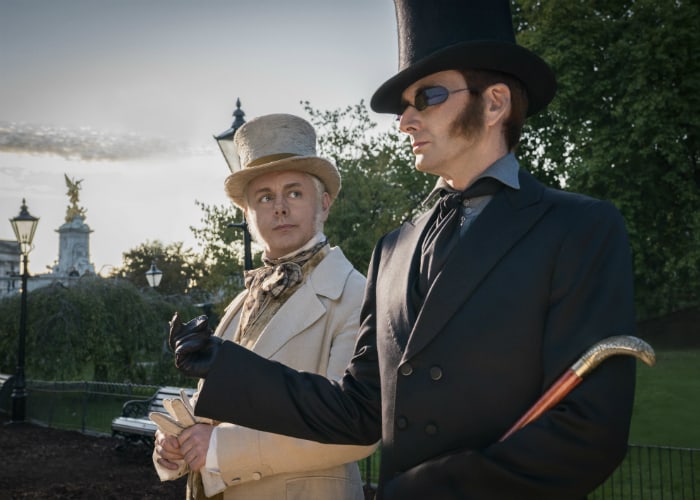
25. Good Omens

Good Omens Tennant and Sheen

It’s been nearly thirty years since the publication of Good Omens, the beloved account of the endtimes co-authored by Neil Gaiman and the late, great Terry Pratchett. And now, with Gaiman himself at the helm, the novel has finally come to the screen in an adaptation that’s remarkable for being what so few things are: utterly true to its source material. And best of all is the unmatched chemistry between David Tennant and Michael Sheen as Crowley and Aziraphale, a demon and angel who love Earth and each other and would rather not do the whole apocalypse thing, thank you very much. While the show occasionally glosses over some details or dwells on others, on the whole it’s a delight. Book lovers will be thrilled and, most importantly, Terry Pratchett would surely have been proud. (Liz Baessler)


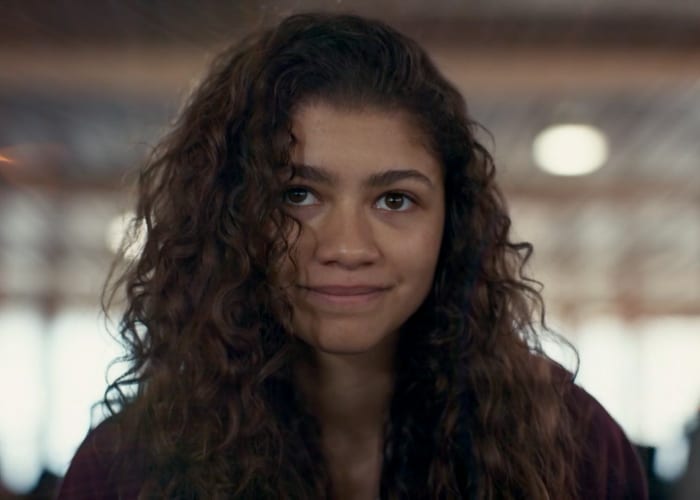
24. Euphoria

Euphoria

It’s been a particularly anxious and apocalyptic year for storytelling in both movies and TV, and yet nothing could have prepared audiences for the loud and seismic arrival of Euphoria. Deceptively billed by the headlines as an explicit but empty flash in the pan that is the teen genre, the show is instead a visceral and empathetic portrayal of modern teenage life, with a heady tone that suggests desperate times create desperate young souls. Viewers might be turned off by its lightning-speed pace and bleak atmosphere, but this is the first teen drama that refuses to settle for a simple, nostalgic retreat to the awkwardness of high school, instead fueled by a clear intent to capture the current realities of a generation raised on Internet cynicism and Pornhub. And based off its first four episodes, these kids are too busy chasing highs and navigating thrilling situations to simply wallow in despair. When a show opens in utero, follows almost a dozen different characters, and has a mid-season climax shot in long takes at a giant carnival, you know you’re dealing with a new breed of coming-of-age TV. (Fernando Andrés)


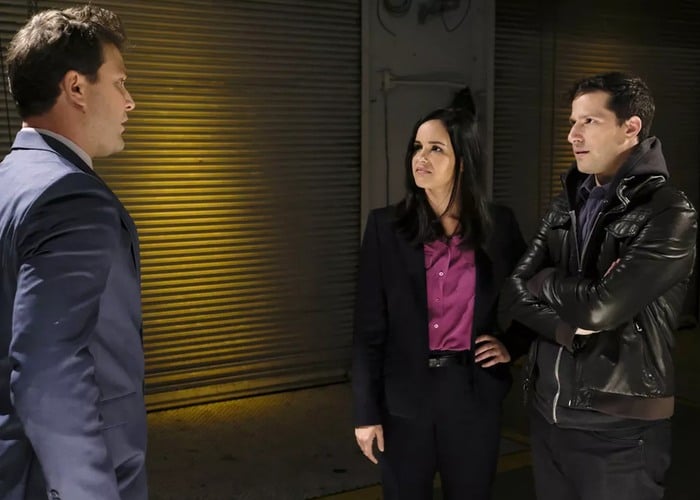
23. Brooklyn Nine-Nine

Brooklyn He Said She Said

It can be a cruel, depressing world out there, and when you’re feeling down there’s nothing quite like the Dan Goor/Michael Schur brand of “nicecore” comedy to take the edge off — which is why last year’s news of Fox’s cancellation of their beloved police sitcom inspired outrage across the internet. Luckily, NBC came to the rescue. While season 6 might have been a little shorter than its predecessors, Brooklyn Nine-Nine remained the same hilarious, wholesome content viewers know and love, no worse for wear after its move. Chelsea Peretti’s departure marked the first exit of a principal cast member, and while Gina will never be replaced, the rest of the 99th Precinct kept going strong throughout the season with a little help from an excellent slate of guest stars including Lin-Manuel Miranda and Sean Astin. Not every sitcom can stay funny after six years, but as the latest season came to an end with more than a few hints towards what’s to come, all signs point to Brooklyn Nine-Nine remaining one of the most consistently enjoyable, warm-hearted sitcoms on television. (Ciara Wardlow)


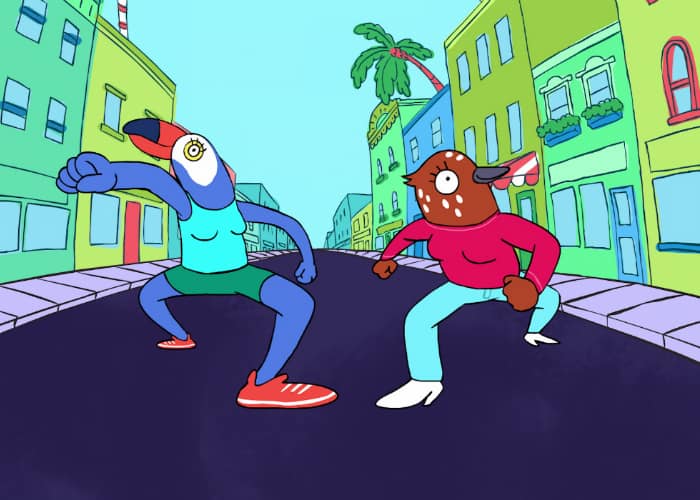
22. Tuca & Bertie

Tuca&bertie

The brainchild of BoJack Horseman producer and production designer Lisa Hanawalt, it’s tempting to approach as Tuca & Bertie as “female BoJack.” And it’s true that the show shares many of BoJack’s best qualities, namely an absurd but devastatingly frank examination of the human condition… with animals. But as distant as BoJack is with his tv career and Hollywoo mansion, the titular Tuca and Bertie (Tiffany Haddish and Ali Wong) are utterly relatable as they deal with anxiety, sobriety, career ambitions, and what it feels like, in seemingly minute but monumental ways, to be a young woman in a man’s world. I’ll admit that I don’t know what it’s like to watch this show not as an American woman in her thirties, but I’d go so far as to call it required viewing for everyone who isn’t. The show starts a little heavy on the kooky side, but stick with it — there are devastating and vital depths in store. (Liz Baessler)


21. One Day at a Time

One Day At A Time

We couldn’t save Netflix’s One Day At A Time reboot from cancellation, but I still believe that, on some level, One Day At A Time can save us. The multi-cam sitcom is a vivid mix of comforting throwbacks and clever subversions, with a big heart and boldly asserted moral compass. The series follows the Alvarez family; single mom and PTSD-suffering veteran Penelope (Justina Machado), hard-headed queer activist daughter Elena (Isabella Gomez), cool kid brother Alex (Marcel Ruiz), and spirited, traditional grandmother Lydia (Rita Moreno), along with their friends, neighbors, and love interests. As with other seasons, the third’s most memorable moments were teachable ones, like when Elena and her nonbinary partner reveal that they’ve been staying inside because of a threatening experience they had with homophobic strangers, or when reformed addict Schneider (Todd Grinnell) falls off the wagon in a big way. But it’s the smaller moments — casually spoken Spanish with no subtitles, universally embraced gender pronouns, and the like — that made ODAAT a truly progressive show, one that will always have a home in our hearts. (Valerie Ettenhofer)


Next Page

The post The 25 Best TV Shows of 2019 So Far appeared first on Film School Rejects.

Full-Length Trailer for Mads Brügger's Doc 'Cold Case Hammarskjöld'

Cold Case Hammarskjöld Trailer

"The villain of the story - he only wore white." Magnolia Pictures has released a new full-length official US trailer for the incredible documentary Cold Case Hammarskjöld, which premiered at the Sundance Film Festival earlier this year. This is the latest film from Danish filmmaker Mads Brügger, who is a bit of a kooky character (if you're not familiar with him), and he puts himself in the film quite a bit in addition to directing (and doing a large amount of research). In Cold Case Hammarskjöld, Mads decides to investigate the mysterious death of UN Secretary General Dag Hammarskjöld, who died in a plane crash in Africa in 1961. As he gets deeper into the investigation, he discovers something seriously frightening about a shadowy organization based in South Africa that seems to have orchestrated a biological attack as a means of control. I saw this film at Sundance and it's shocking and astonishing - read my full review. A must see documentary.

Here's the full-length US trailer for Mads Brügger's doc Cold Case Hammarskjöld, found on YouTube:

Cold Case Hammarskjöld Poster

You can also watch the original international trailer for Cold Case Hammarskjöld here, for more footage.

Danish director Mads Brügger and Swedish private investigator Göran Björkdahl are trying to solve the mysterious death of Dag Hammarskjöld. As their investigation closes in, they discover a crime far worse than killing the Secretary-General of the United Nations. Cold Case Hammarskjöld is directed by Danish doc filmmaker Mads Brügger, director of the doc films Kim Jong-Il's Comedy Club and The Ambassador previously, as well as many other TV projects and other doc work. This first premiered at the Sundance Film Festival in January (read our review), and just played at the True/False Film Festival. The doc opened in Denmark in February, and next opens in Sweden later this month. Magnolia Pictures will release Brügger's Cold Case Hammarskjöld in select US theaters starting August 16th late this summer. Don't miss this doc.

Copyright © Cinenus | Powered by Blogger

Design by Anders Noren | Blogger Theme by NewBloggerThemes.com