"What exactly is wrong with my bits?" "They're a little old, and a little white." Amazon Studios has debuted a second official trailer for the indie comedy Late Night, which premiered to rave reviews at the Sundance Film Festival earlier this year (here's my review). The first trailer launched a few months ago, and this new one comes with a poster. Written by, and starring, comedian Mindy Kaling, the film is about a female late night talk show host who realizes she's out of touch and out of date, so she hires a woman on her writing staff. But it doesn't go as planned, and then she discovers that she is as resistant to women as all the men. Emma Thompson also stars as Katherine, with a cast including John Lithgow, Ike Barinholtz, Hugh Dancy, Max Casella, Paul Walter Hauser, Denis O'Hare, Reid Scott, and Amy Ryan. Have a look.
Here's the second trailer (+ poster) for Nisha Ganatra's Late Night, direct from Amazon's YouTube:
You can rewatch the first official trailer for Nisha Ganatra's Late Nighthere, to see even more footage.
Katherine Newbury (Thompson) is a pioneer and legendary host on the late-night talk-show circuit. When she's accused of being a "woman who hates women," she puts affirmative action on the to-do list, and—presto!—Molly (Kaling) is hired as the one woman in Katherine's all-male writers' room. But Molly might be too little too late, as the formidable Katherine also faces the reality of low ratings and a network that wants to replace her. Molly, wanting to prove that she's not simply a diversity hire who's disrupting the comfort of the brotherhood, is determined to help Katherine by revitalizing her show and career—and possibly effect even bigger change at the same time.Late Night is directed by Canadian filmmaker Nisha Ganatra, director of the films Chutney Popcorn, Fast Food High, and Wedding Bells previously, as well as plenty of TV work. The screenplay is written by Mindy Kaling. This premiered at the Sundance Film Festival earlier this year. Amazon will open Late Night in select theaters starting June 7th this summer. Thoughts?
"You're not going to talk to anybody about this, are you?" Cohen Media Group has debuted a brand new official trailer for their re-release of the classic romantic drama Quartet, set in Paris in the 1920s. This was the 11th feature film directed by James Ivory, adapted from Jean Rhys's 1928 autobiographical novel of the same name. It originally premiered at the 1981 Cannes Film Festival and opened in theaters later that year. The film has been restored and remastered for this re-release, and will play in a few theaters again starting soon. Marya, as played by Isabelle Adjani, finds herself penniless after her art dealer husband, Stephan, is convicted of theft. She accepts the hospitality of a strange couple, H.J. and Lois Heidler, as played by Alan Bates and Maggie Smith, who let her live in their house. The cast also includes Anthony Higgins, Sebastien Floche, and Suzanne Flon. As always, it's great to catch classics back on the big screen again.
Here's the new official trailer (+ poster) for the re-release of James Ivory's Quartet, from YouTube:
A twisted relationship between a wealthy English couple and a young woman they take in, plays out against a stunning recreation of the Golden Age of 1920s Paris, France. In adapting Jean Rhys's 1928 autobiographical novel, Merchant Ivory achieved an artistic breakthrough that remains one of the team's finest works. In one of her greatest performances, Isabelle Adjani plays the vulnerable but complicated West-Indian Marya, who, after her shady husband Stefan (Anthony Higgins) is imprisoned, finds shelter in the home of a manipulative and lecherous English art patron (Alan Bates) and his painter wife (Maggie Smith). The dynamic between this trio is set against Hemingway's "moveable feast" of café culture and extravagant nightlife, glitter and literati, beneath which lie traces of something sinister…Quartet is directed by iconic American filmmaker James Ivory, a year after he made Jane Austen in Manhattan. The film was first released in fall of 1981, after premiering at the Cannes Film Festival. Cohen Media will re-release Ivory's Quartet in select theaters starting on May 3rd this week. For more, visit the official website.
"Let's go find our family." Strand Releasing has debuted an official US trailer for the Egyptian indie drama Yomeddine, from Egyptian-Austrian filmmaker A.B. Shawky making his feature directorial debut. This little film premiered in-competition at the Cannes Film Festival last year, and it's a buddy road trip comedy from Egypt about a couple of misfits who venture out into the world hoping to find a bit of hospitality and maybe a family. Rady Gamal stars as Beshay, a man cured of leprosy who has never left the leper colony in the Egyptian desert where he has lived since childhood. The small cast includes Ahmed Abdelhafiz, Osama Abdallah, Mohamed Abdel Azim, and Shahira Fahmy. This soulful story is full of heart and joy, despite their circumstances, and it is indeed a "life-affirming" and "cheerful" film worthy of discovering.
Here's the official US trailer (+ poster) for A.B. Shawky's Yomeddine, direct from Strand's YouTube:
Beshay–a man cured of leprosy–has never left the leper colony in the Egyptian desert where he has lived since childhood. Following the death of his wife, he finally decides to go in search of his roots. With his meager possessions strapped to a donkey cart, he sets out. Quickly joined by Obama, the Nubian orphan he has taken under his wing, Beshay will cross Egypt and confront the world with all its sorrows, its hardships and moments of grace, in his quest for a family, a place to belong, a little bit of humanity…Yomeddine is both written & directed by Egyptian-Austrian filmmaker A.B. Shawky, making his feature directorial debut after a few other short films and industry work. This premiered at the Cannes Film Festival last year, and also played at the Mill Valley and Palm Springs Film Festivals. Strand Releasing will release Shawky's Yomeddine in select US theaters starting May 31st this month. For more, visit the official website.
Although the White Walkers might be the Big Bads of the series, the battle within ‘The Spoils of War’ remains the most thematically important one of the entire series. Game of Thrones at its best has always been about showing the audience shades of grey: the horror of the war in the Riverlands contrasted against Robb Stark’s victories there; the arcs of characters like the Hound and Jaime who perform seemingly unforgivable acts only to redeem themselves in the years that follow. The recent seasons’ focus on the war against the dead has allowed the show’s writers to move away from the moral complexity of their early-season story-lines in a streamlined and simplified fashion. Good versus evil. Living versus the dead.
This simplification has removed much of the nuance from the way that A Song of Ice and Fire presents war. In his first five novels, author George R.R. Martin, a conscientious objector during the Vietnam war, strikes out from the high fantasy template of faceless evil to instead focus upon the real-world morality of war. Although he is a passionate fan of genre icon J.R.R.Tolkien, Martin has frequently spoken about how his brand of fantasy is inherently different:
“The war that Tolkien wrote about was a war for the fate of civilization and the future of humanity, and that’s become the template. I’m not sure that it’s a good template, though. The Tolkien model led generations of fantasy writers to produce these endless series of dark lords and their evil minions who are all very ugly and wear black clothes. But the vast majority of wars throughout history are not like that. World War I is much more typical of the wars of history than World War II – the kind of war you look back afterward and say, “What the hell were we fighting for? Why did all these millions of people have to die? [. . .] Men are still capable of great heroism. But I don’t necessarily think there are heroes. That’s something that’s very much in my books: I believe in great characters. We’re all capable of doing great things, and of doing bad things. We have the angels and the demons inside of us, and our lives are a succession of choices.”
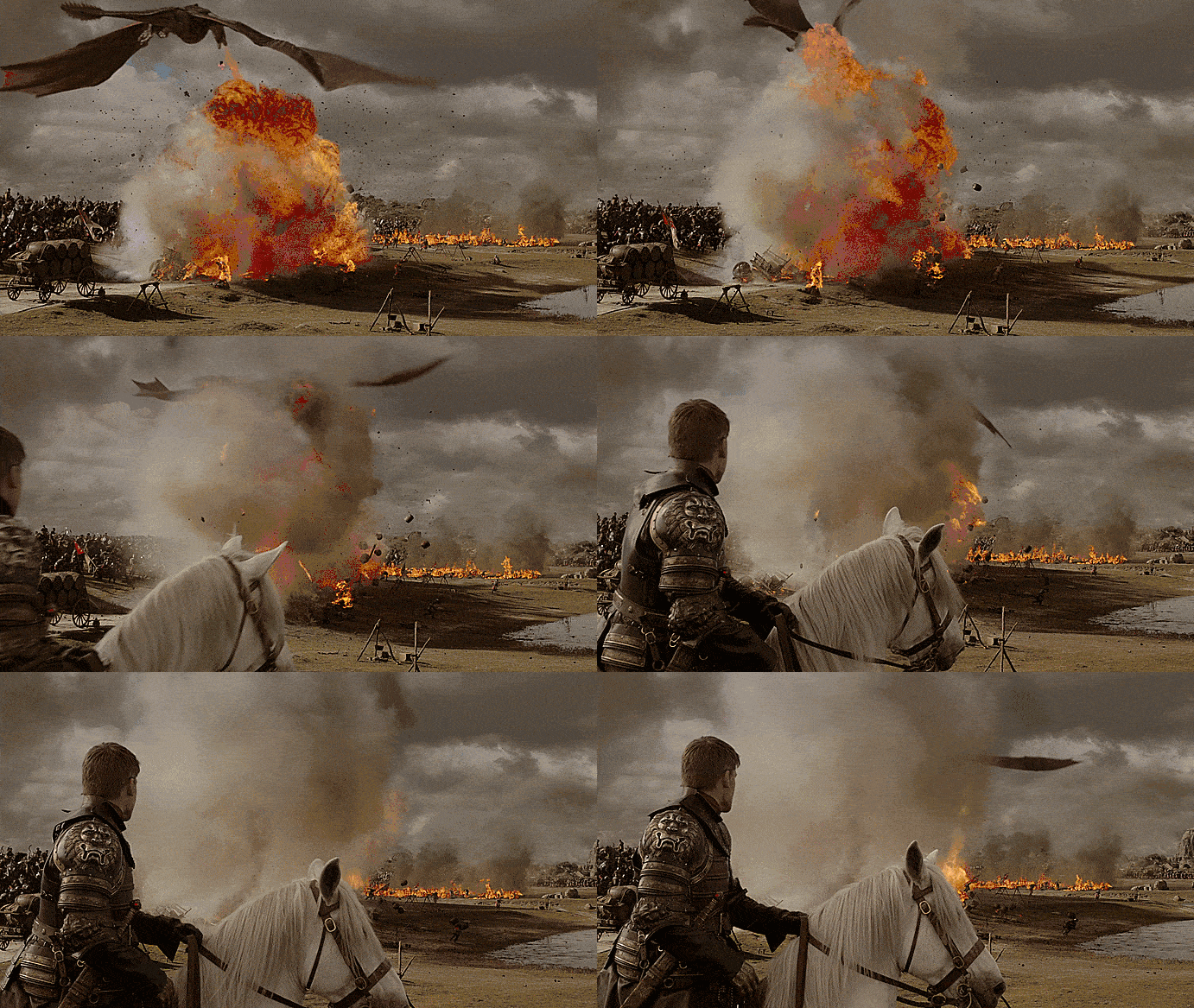
The ‘Spoils of War’ battle sequence is the last and best example of those shades of grey, as on some level, audiences are rooting for both sides equally. Jaime Lannister (Nicolaj Coster-Waldau) sees Daenerys Targaryen (Emilia Clarke) as a tyrant and the embodiment of her father’s cruelty and insanity. Daenerys sees Jaime as a traitorous villain who betrayed his oaths to her family and murdered her father.
The sequence opens in a fashion remarkably similar to a classic western. Filmed in Cáceres, Spain, nestled amongst green plains and looming buttes, the Lannister army is alerted to the incoming force by the cadence of hoof beats and the trills of Dothraki screamers. Although clearly inspired by the Mongols, Martin also cites Amerindian influences including “Alans, Sioux, Cheyenne, and various other Amerindian tribes… seasoned with a dash of pure fantasy.” The Lannisters immediately circle the wagons to defend their loot.
The charging Dothraki are terrifying for reasons well beyond their sheer numbers. Thrones horse-master Camilla Naprous brought in trick-riders who could stand up on their saddles and enhance the inhuman marvel of a horse-back horde. There is an excellent shot of a Dothraki screamer leaping over the Lannister spear-wall and landing directly into action. Their whooping cries as they approach the Lannister line are more than just a sound effect; they are intended to strike fear into their opponents and scare them into breaking formation. Jaime seems confident they can hold off the Dothraki, but then a new cry echoes across the plains — Daenerys arrives on dragonback, and it stops being a battle of equals and turns instead into a complete slaughter.
Director Matt Shakman took inspiration from season six’s “Battle of the Bastards” for the emotional core of the episode and in the choice of the right POV to follow through the battle. This is the first time that dragons have been unleashed on fellow protagonists, and Jaime sees it first-hand from the ground. Not only are the Lannisters out-manned and stuck defending a static position without the mobility of any cavalry, but they are also depleted from their recent victory at Highgarden and the subsequent march. On top of all that, they watch their world change as the equivalent of an F-18 fighter jet is introduced to a medieval battlefield. Seeing all of these men burning alive is Jaime’s worst fear as he’s brought face to face with a horror that he thought he had prevented by killing the Mad King.
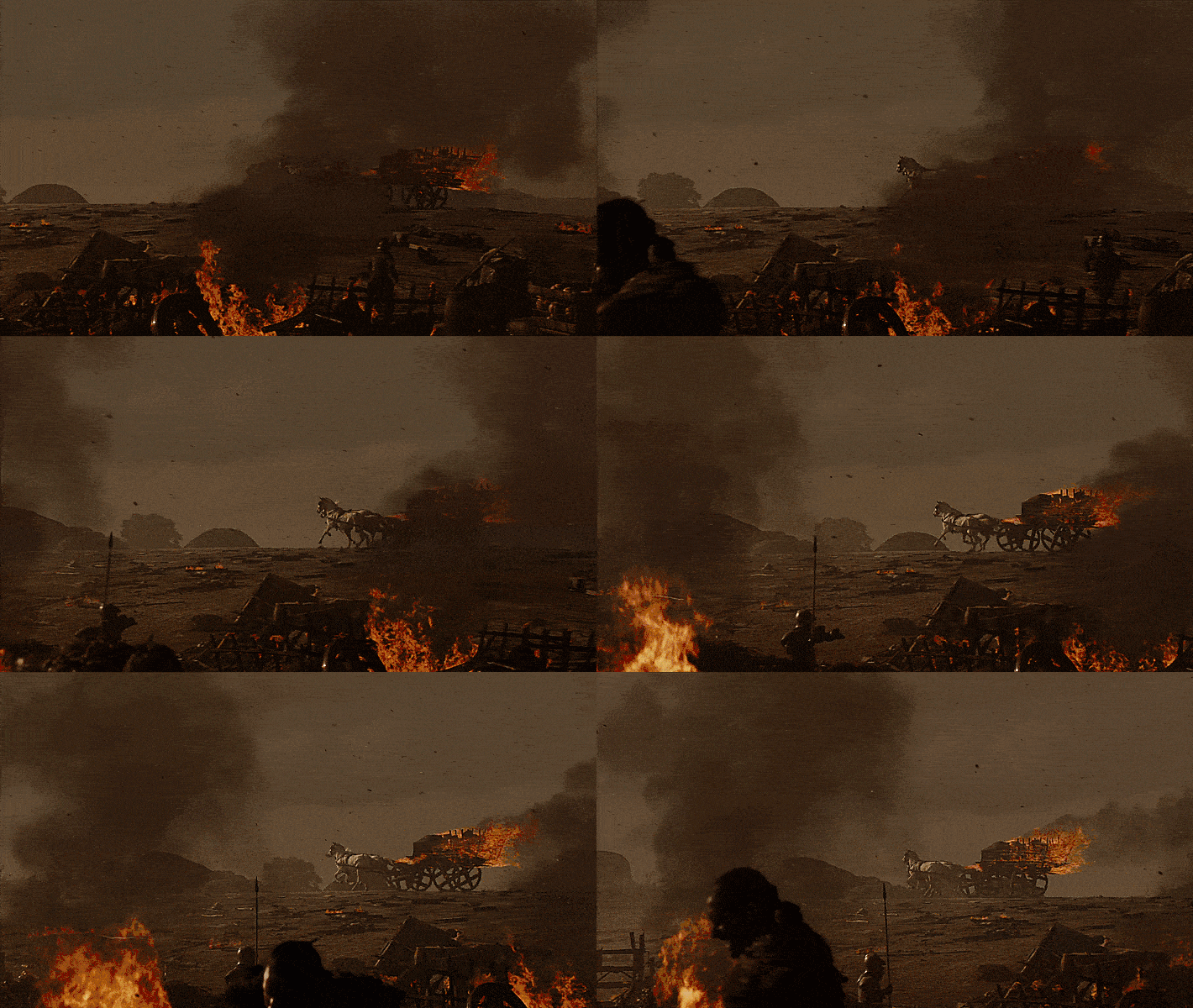
Unlike northern battles like Hardhome or the battle at Castle Black, this southern skirmish is resplendent in color. Bright green fields are reduced to ash; red and gold Lannister colors are consumed by dragon fire. Shakman used a variety of filming techniques to show the battle from all angles. It involves more dragonback scenes than the rest of the show combined and includes elaborate dragon points-of-view and high-speed shots (including cameras moving up to 70 mph). Shakman took inspiration from helicopter shots in Apocalypse Now showing air attacks before cutting to the ground where the villagers are being consumed by napalm. To make the ground sequences here feel visceral and real, Thrones set a filming record in this episode by having the most stunt people on fire with twenty at one time and a total of 73 for the whole sequence.
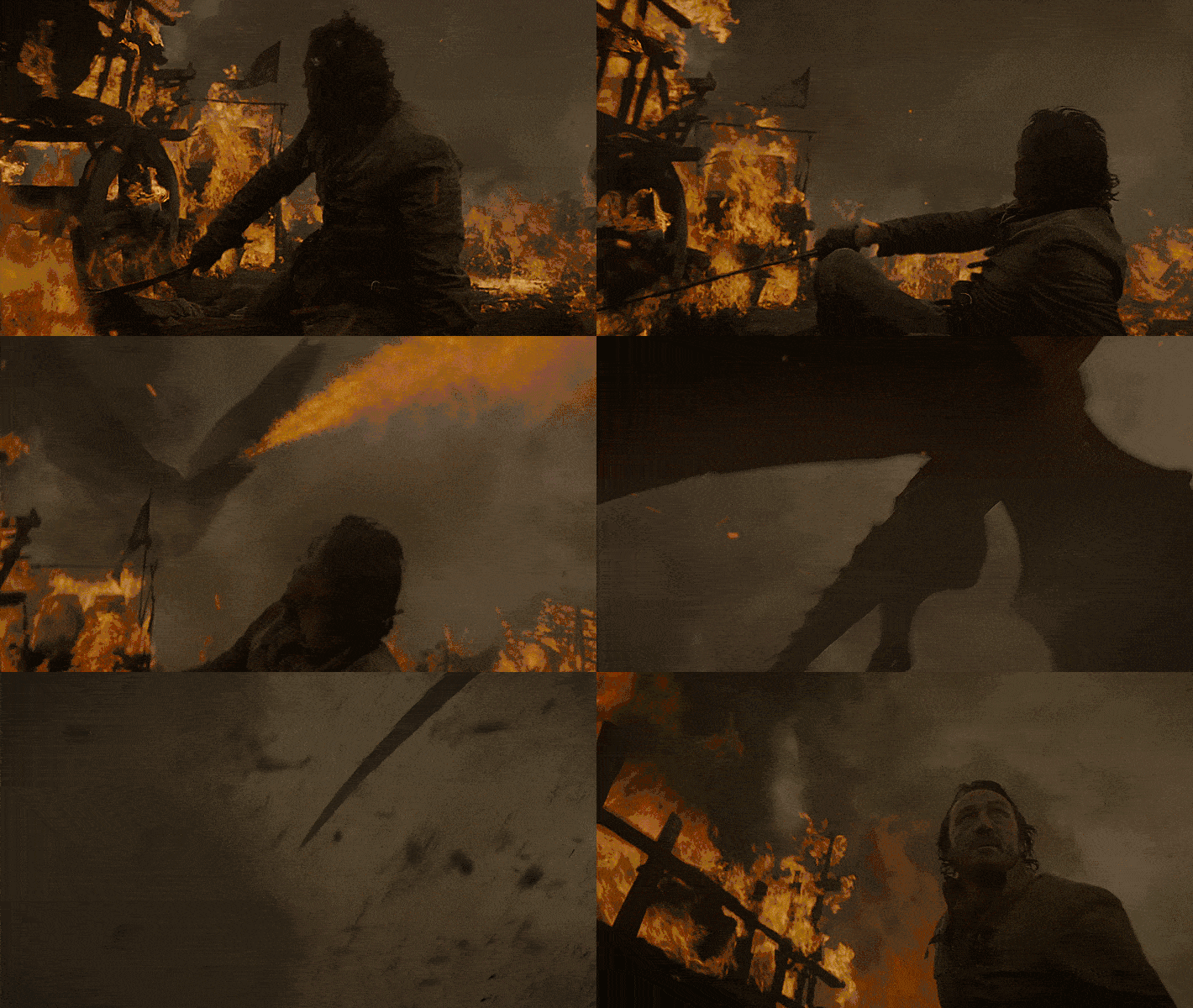
Although Jaime is the main point-of-view for this battle, Shakman took some asides into other character perspectives throughout the sequence. A long shot (actually three spliced together) follows Bronn (JeromeFlynn) through the ashen chaos of the battle. This sequence provides a stark contrast from the high and far shots of Drogon incinerating Lannisters to the confusion on the ground. Game of Thrones does best when it gives these contrasts between the glory of war and the cost that it extracts from those involved in it. This is something that Daenerys has struggled with throughout the series: whether she wants to be a conqueror or a conciliator, whether she wants to be a Queen or an avenging dragon.
Tyrion (Peter Dinklage) watches the battle from a nearby hilltop and acts as a stand-in for the perspective of the audience. A lot of common-folk die horrible deaths in this war between the high lords. Tyrion watches as many of the men that he commanded at the Blackwater (and may have known from his childhood at Casterly Rock) are horrifically slaughtered. He watches a Queen that he believes in plummeting towards the ground on an injured dragon, and the brother he loves charging headfirst into dragon fire. Despite all this horror, it’s supposedly a victory for him. His internal conflict exemplifies the war themes that have permeated Game of Thrones from the beginning. Rather than being a battle between good and evil, it is simply two different sides with each composed of humanity’s dual nature.
The futurist envisioned the end of humanity, and the dread it sparked tore apart The Avengers. Tony Stark (Robert Downey Jr.) poked his head through a portal, stared down an alien armada, and knew that their invasion was merely a testing of the waters. In Avengers: Age of Ultron, Stark told Steve Rogers (Chris Evans) that busting HYDRA goons was little more than a distraction from the ultimate enemy plotting and scheming above. The owners of the space dragons were the endgame, and when Rogers dared to question his creation of the murder-bot he built as an armor around the world, Stark spit contempt at his teammate.
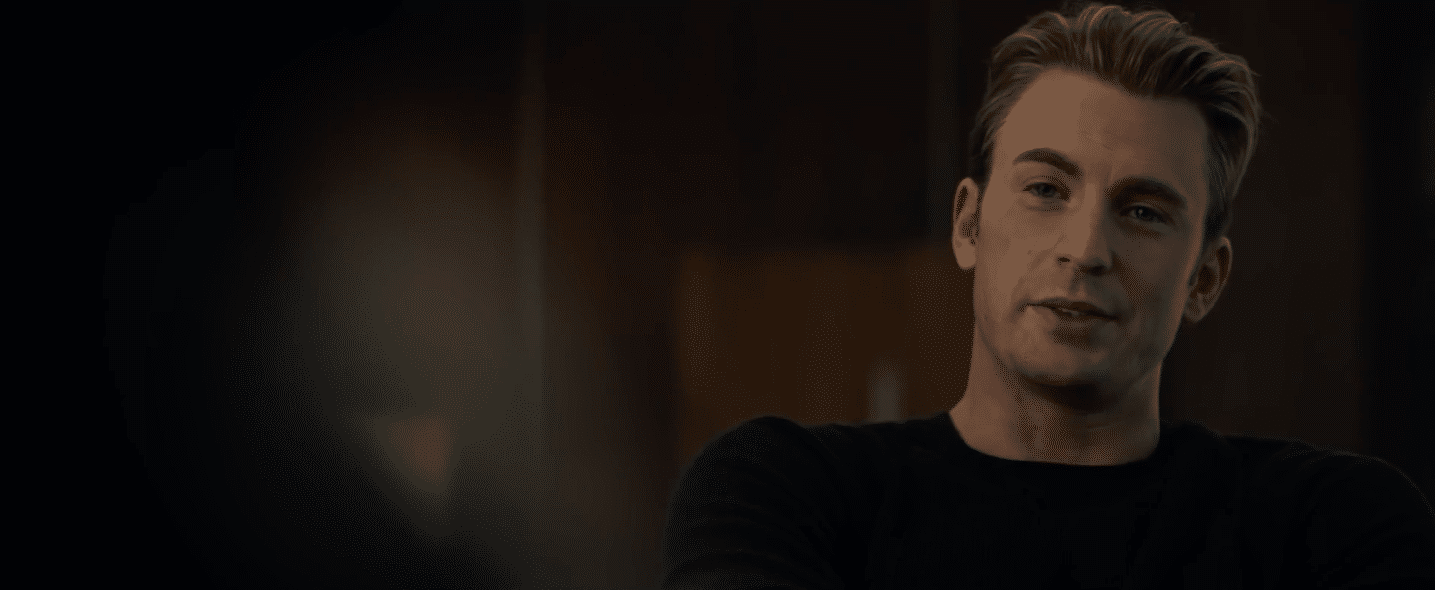
“How are you guys planning on beating that?” he asked. Rogers responded without missing a beat, “Together.” Stark volleyed back, “You’ll lose.” Rogers had the noble comeback at the ready, “Then we’ll do that together, too.” Cap is just living that “until the end of the line” mentality that kept him grounded after sacrificing his personal life for one of service. What’s worked for him so far should work for him in every situation.
Watching comic book superheroes narrowly escape defeat movie after movie makes it easy for an audience to position itself behind Rogers’ righteous belief in self. Success breeds success, and The Avengers never met a Titan they couldn’t topple. Until Thanos (Josh Brolin) finally freed himself from his captain’s chair, collected six magical MacGuffins, and erased half the population of the universe with one cacophonous snap. Avengers: Infinity Warbroke its heroes, leaving them to stew in regret.
Captain America is a man of conviction, but going into Avengers: Endgame, he can no longer afford basic ideology. Square-jawed swagger is meaningless to the billions ripped from existence. Unity trumped by desperation. There is no virtue in defeat. Victory over tyranny is the objective. With their backs against the wall, principles are easy to discount. “Whatever it takes.”
↓Avengers: Endgame Spoilers Below↓
The return of Captain Marvel (Brie Larson) brings hope to the hopeless. Point her in the direction of Thanos, and she’ll accomplish what they could not: snatch the Infinity Stones, snap back with their own fingers. The only problem? Thanos understands the temptation of omnipotence. With his mission accomplished, he used the Stones to destroy the Stones. Thor answers this logic with a thwack from Stormbreaker, lobbing the Titan’s severed head across the room. The action is a hollow gesture. Vengeance only underscores their sour failure to prevent a catastrophic amount of death.
Five. Years. Later.
You gotta move on. Or at least that’s what Steve Rogers tells those that gather for his VA therapy sessions. He uses his own experience as the man out of time to explain away the atrocity of Thanos. Our loved ones are gone. There is no bringing them back. If we reject the life that’s left, then we’re betraying their loss. Brave baby steps will carry us through this moment of misery. Trust me.
We can’t, though. Rogers doesn’t believe a word he’s shoveling. He wants to help his remaining neighbors. He needs to, but as he tells Natasha as she cries over her peanut butter sandwich, “Some people move on, but not us.” Rogers questions if there is still a job left for The Avengers since their defeat in Wakanda, but it’s more of a test than an actual question. He wants to hear that Natasha is still in the game. There is no life beyond the mission.
Ding. Dong. Ant-Man (Paul Rudd) suddenly pops out of the Quantum Realm with fantasies of time travel, and for a pair of one-time heroes grasping for reasons to keep on living, lunacy is about as concrete as anything else. What’s to debate in a world where Microverses exist next to raccoons with email accounts? Absurdity is their kingdom, and Marvel Studios succeeds where wannabes fail because they encourage their protagonists to pursue the ridiculous unashamedly. No fashionable black leather here, remember. The Avengers proudly adorn themselves in the star-spangled.
Time travel is a cheat, but it’s one that comes with a set of rules that prevents The Avengers from simply hopping back to Titan to snuff out baby Thanos in his crib. Sorry, Rhodey. If you go backward in time that still represents your future. Removing a person or object doesn’t halt what happened in your past, but it does create a series of alternate timelines (i.e., a multiverse). The Avengers cannot undo their failure, but as long as they promise to return the Infinity Stones to the moment in which they stole them, they can use them to at least resurrect the dusted.
There is a danger, but our faith in the foresight of Doctor Strange (Benedict Cumberbatch) allows us to kick back and enjoy the second act of Endgame in which The Avengers revisit their past adventures. These are the most playful moments of the film, and it is an enormous relief after the dour first part in which the team contemplates their Infinity War debacle. Tony Stark chastising America’s Ass squished into Steve Rogers’ Phase One uniform is a friendly jab indicating how far our heroes have traveled over the last decade regarding style as well as temperament. Look at how adorable and golly-gee-whiz they all were; striking a gotcha pose as they collect Loki (Tom Hiddleston) for his The Dark World dungeon.
There are many chuckles to be had in the past, but each one carries a sting. The Avengers were Earth’s Mightiest Heroes, and they were not enough. Captain America has to beat his younger self unconscious to right his wrongs. “I can do this all day,” says 2012 Cap. “Yeah, yeah,” responds our Cap. Optimism and confidence carried The Avengers only so far. Endgame drags them to their darkest depths, lays Mjölnir on their chest, and dares them to be worthy.
Pushing themselves off the floor is what Marvel characters do best. Infinity War spent its time positioning Thor (Chris Hemsworth) as a righteous servant of vengeance after Thanos slaughtered the remnants of Asgard and then had the audacity to mock his entire subplot by revealing Stormbreaker as an impotent instrument in his hateful hands. The Mad Titan’s victory devastated every Avenger, but the trauma experienced by Thor sent him into a shame spiral no Asgardian had previously known. Odinson locks himself away, punishing his physique with carbs. To be seen by Banner (Mark Ruffalo) and Rocket (Bradley Cooper) is an agony he cannot bear but one he believes he deserves.
While Rogers refuses his chance to connect with Peggy Carter (Hayley Atwell) during his last-ditch 1970 Tesseract heist, Thor is caught snooping around The Dark World timeline by his mother Frigga (Rene Russo). Given the opportunity to see her on the day of her death, Thor unloads all his sins upon her. He bares himself raw for the first time in the franchise. He was meant to be more than this tub of melted ice cream.
Thor calls himself an idiot and a failure, and his mother listens. When there is a gap in his self-loathing, Frigga swoops in to define the journey of The Avengers. “Everyone fails at who they’re supposed to be,” she says. “The measure of a person, a hero, is how they succeed at being who they are.” You do you. This acceptance is a rush of relief, but the final validation comes when Thor reaches for Mjölnir, and the mighty hammer flies into his hand. After everything, El Duderino is still worthy.
Baked into Rogers’ self-worth is the icy sacrifice he made back in 1942. That’s why, when given a chance for a friendly reunion with Peggy in 1970, he cannot permit himself resolution a la Thor and Frigga or Tony and Papa Howard. He made his choice, and he has to live with it. Then again…
They’re already cheating, and it’s time to listen to his own advice. Banner learned that to find peace he had to mix his most hated aspects of himself with the most lauded. Hulk is not a monster to be ignored but loved. Owning your failures is the key to not just heroism but survival. Acknowledging the red on your ledger and not letting your worst mistakes be your ultimate designation is the Endgame.
Whatever it takes? Failure and continuation in the face of it. Natasha and Tony lose their lives in the battle to snap their Infinity fingers. In witnessing somebody else’s sacrifice for a change, Rogers adheres to the rehearsed speech given during his VA meetings. He moves on. He finally finds the emotional closure he denied himself back in ’42 and ’70. To do anything else would be a betrayal to the comrades that died. He’s here, so he must live.
What Avengers: Endgame Contributes to the MCU:
Time Travel – It’s always dangerous to introduce the concept of time travel in a continuing franchise of movies. Thankfully, the gobbledygook mechanics assigned to the device should prevent temporal tampering in the future. One cannot simply go backward and fix mistakes. They happened. If you fidget with the past, all you’ll be creating is an alternate timeline. Hmmmm…
The Multiverse – That’s no good. Sure, sure, sure, Captain America went back and returned the Infinity Stones to the points in time in which they stole them, and that should make everything right as rain. Naw. The 2012 Loki got a hold of The Tesseract and vanished into his own Disney+ series. That’s one new timeline. Captain America reuniting with Peggy creates one as well. What the heck happened to her previous husband and children? And frankly, there is no way that Cap could return all the stones unnoticed, so each Time Heist sequence causes a new reality despite Banner’s promises to the Ancient One. As a comic book fan, I hope they go nuts with the Multiverse idea. I want to see more Avenger vs. Avenger fights.
Morgan H. Stark – As one of the lucky ones post-Snap, Tony and Pepper had a wonderful five years together as parents to this beautiful daughter. Who knows what the future holds for Morgan, but her possibilities are endless thanks to her father’s one-in-14-million sacrifice.
The Asgardians of the Galaxy – Thor does not find the total emotional salvation appreciated by Old Man Steve Rogers. To uncover his purpose, he joins the Guardians of the Galaxy and will contribute greatly to their adventures while also being a colossal pain in Star-Lord’s neck. Cannot wait.
Namor The Sub-Mariner – During an Avengers HQ briefing, Okoye mentions a powerful earthquake that occurred beneath the ocean off the coast of Africa. Could this be an allusion to the fabled city of Atlantis and a hint of the coming origin of Namor the Sub-Mariner a.k.a. Marvel’s Aquaman? I sure hope so. In the comics, Namor is a vicious thorn in the side of Black Panther. Their dynamic could fill that love/hate relationship missing from The Avengers now that Tony and Steve have left us.
What Avengers: Endgame Withholds from the MCU:
Thanos – The inevitability of the Mad Titan amounted to nothing more than dust in the wind.
Tony Stark – “I am Iron Man.” How glorious to hear Stark’s climactic declaration of ego from the first film transformed into his final heroic statement solidifying the survival of all sentient life, but most importantly, the one that belongs to his daughter Morgan.
Black Widow – Is this the end of Natasha? We know Scarlett Johansson will return in a solo film, but will that be a prequel or did she somehow make her way out of Soul World? I’m not ready to say goodbye.
The Infinity Stones – No more magical MacGuffins, right? Or at least, not this particular variety. That feels like a good bet for a little while anyway. However, Adam Warlock’s promised appearance in Guardians of the Galaxy Vol. 3 might also mean a return of the Soul Stone.
Further Reading:
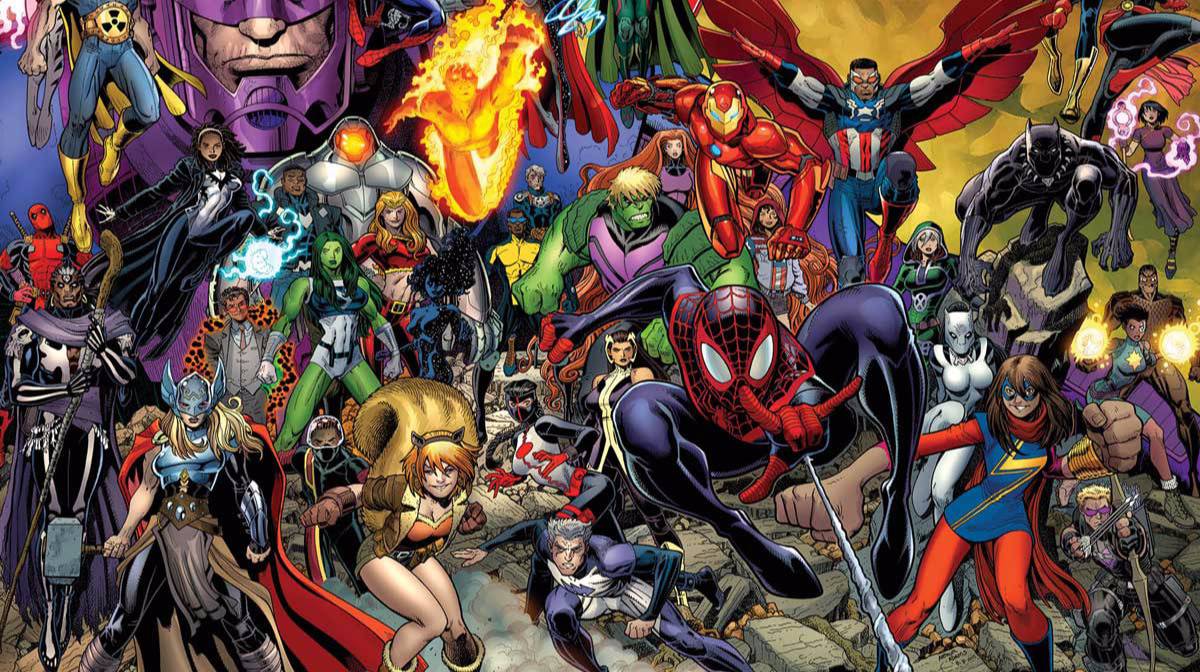
All New, All Different Avengers by Mark Waid – This take on Earth’s Mightiest Heroes does not quite look like the one from the Marvel Cinematic Universe. Yes, Iron Man, Captain America, The Vision, and Thor are all involved, but they don’t cover the usual faces. Well, Tony Stark is there, but Jane Foster is wielding Mjölnir, Sam Wilson carries the shield, and The Vision is…uh…recovering from some domestic horror. Also on the roster are teenage adventurers Miles Morales, Kamala Khan, and Nova. Besides shaking up the team, Mark Waid plays with superhero genre conventions by fully embracing some cosmic timey wimey shinanigans. For anyone looking to keep that Time Heist high going, All New, All Different Avengers will fulfill your needs.
Read more from our series on the Marvel Cinematic Universe:
The term “fan service” has long been associated with negative criticism — the idea that a creator has no new ideas to bring to the table, instead choosing to fall back on easy winks and nods. While it has its origins in anime fandom, “fan service” has been used in discussions of almost every modern franchise, almost always with a negative connotation. But recently, two of pop culture’s biggest juggernauts, the Marvel Cinematic Universe and Game of Thrones, have raised the question, “What if fan service was a good thing?”
According to Wikipedia, the definition of fan service is “material in a work of fiction or in a fictional series which is intentionally added to please the audience.” Something that, on paper, doesn’t sound inherently bad, does it? When you’ve invested years of your life in a particular story, is it really too much to ask for an acknowledgment or two along the way? A satisfying conclusion, perhaps? Well, it’s something of a double-edged sword.
The Lord of the Rings: The Return of the King, for example, has more sappy endings and crowd-pleasing moments than I’d care to count, but every one of them is 100 percent earned and all work for the story being told. Éowyn saying “I am no man” as she stabs the Witch-king of Angmar right in the face is pure, cheer-inducing fan service, but don’t even try and tell me you don’t whoop to the high heavens at that moment. It’s satisfying because of the character arc that leads her there, a point that many stories miss when employing fan service.
On the other side, you have a movie like Rogue One: A Star Wars Story, which has cheap walk-on cameos from A New Hope background characters and bizarre CGI resurrections of deceased actors. Neither of which came out of anything in the story — Cornelius Evazan and Ponda Baba (these guys) are more distracting than anything else, while Tarkin’s role could have been fulfilled by Ben Mendelsohn’s charming but underutilized Director Krennic — and as a result, feel hollow. Especially when the film was the series’ big chance to break away from familiar characters.
But for Avengers: Endgame and Game of Thrones‘ final season, this is the end of an era. One last blowout before fans say goodbye to many of these characters for good. It would seem likely, then, that both would dole out a healthy dose of fan service as they go full steam towards the end. In the words of Thanos, “Dread it, run from it, destiny still arrives.” But, like TheLord of the Rings before them, both properties have woven well-earned fan service into their narratives to reward long-time viewers and bring their stories to a close (as much of a close as the neverending MCU can be brought to, anyway).
Spoilers for Avengers: Endgame and “The Long Night” episode of Game of Thrones below.
Endgame, which features characters whose actors’ contracts have come to an end, delighted audiences this past weekend with a greatest hits victory lap. The film’s second act zips all over the MCU’s timeline in a spectacular “time heist” that takes us on a gloriously self-indulgent trip down memory lane. Seeing our heroes revisit some of the highlights of the franchise, from The Avengers to Guardians of the Galaxy to um… Thor: The Dark World (there’s actually a lot of great character work done with Marvel’s weakest entry), is an absolute blast and an example of well-earned, well-executed fan service.
This isn’t Justice League or The Mummy throwing everything at the wall to see what sticks, it’s a series that knows how to play to its strengths and give the audience one hell of a last ride. Superman showing up at the last minute to fight Steppenwolf might sound exciting, but the moment is never earned in the way that, say, Steve Rogers lifting Thor’s hammer is. Likewise, the villain reveals in Star Trek: Into Darkness and Spectre are utterly meaningless in the context of both rebooted series because the legwork hasn’t been done to establish why Khan and Blofeld are important outside of franchise recognition. But the Red Skull and Alexander Pierce can show up for brief cameos in Endgame and audiences will know exactly why they’re significant.
Meanwhile, on Game ofThrones, fan service has lead to one of the show’s best episodes to date, the stunning “A Knight of the Seven Kingdoms.” The episode largely consists of characters sitting in rooms, talking and preparing for their imminent deaths. But the thing is, we’ve grown to love those characters over seven seasons and will treasure any last opportunity we can get to spend time with them. We love seeing Jaime Lannister give his old friend Brienne of Tarth a Knighthood while our other faves tell stories around the fire, we (read: I) love seeing the Nights Watch boys have a mini-reunion, and we (mostly) loved Arya Stark’s big sex scene with Gendry.
But, ever the double-edged sword, fan service also gave us mixed results in this week’s “The Long Night,” which sees the Night King’s forces descend upon Winterfell. Now I’m not here to wade into the exhausting debate over the episode’s merits, but its relationship to fan service is a complicated one. What the episode does highlight is Thrones‘ unwillingness to be brutal, to embrace the mean streak that made it so popular in the first place. By giving almost all the fan favorites such thick plot armor, the episode fails to really strike a devastating blow in the fight between the living and the dead. But there is one bit of fan service that absolutely works.
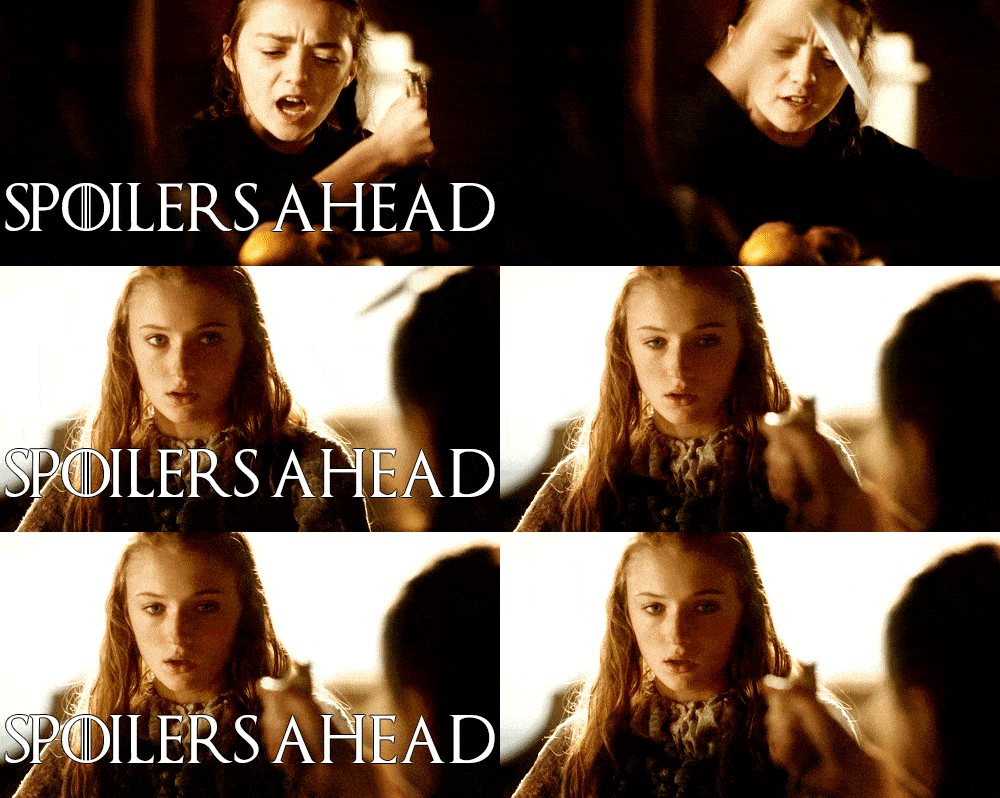
Arya’s win over the Night King (which you can read more about here and here) is extremely satisfying, despite the circumstances around it lacking. Not only was the moment foreshadowed by Melissandre all the way back in Season 3, but the same bit of fancy knife work was also shown to be a part of her skill set when she fought Brienne last season. After years of Arya being underestimated, years of training scenes where she’s told she’s not good enough, her triumphant victory over the dead was one worth cheering for.
So while even the best of them can slip up, it’s important to remember just how enjoyable a well-done bit of fan service can be. Longterm storytelling requires a lot of investment on the part of the audience member, and we shouldn’t deny the effectiveness of an acknowledgment of that. But that also means being wary when it comes to stories that use it for a cheap laugh or easy sequel bait. To go back to Thanos, it’s all about striking the perfect balance.
The battle of Helm’s Deep is the first major battle in the War of the Ring and serves as the climax for the second part of the quintessential fantasy trilogy: The Lord of the Rings: The Two Towers. It ends in victory for Mankind, but that victory was far from assured. As the heroes slog through rain and mud against an otherworldly foe, so did the cast and crew slog through months of difficult night shoots to finish this cinematic masterpiece. The result of their effort is one of the greatest battles in cinematic history.
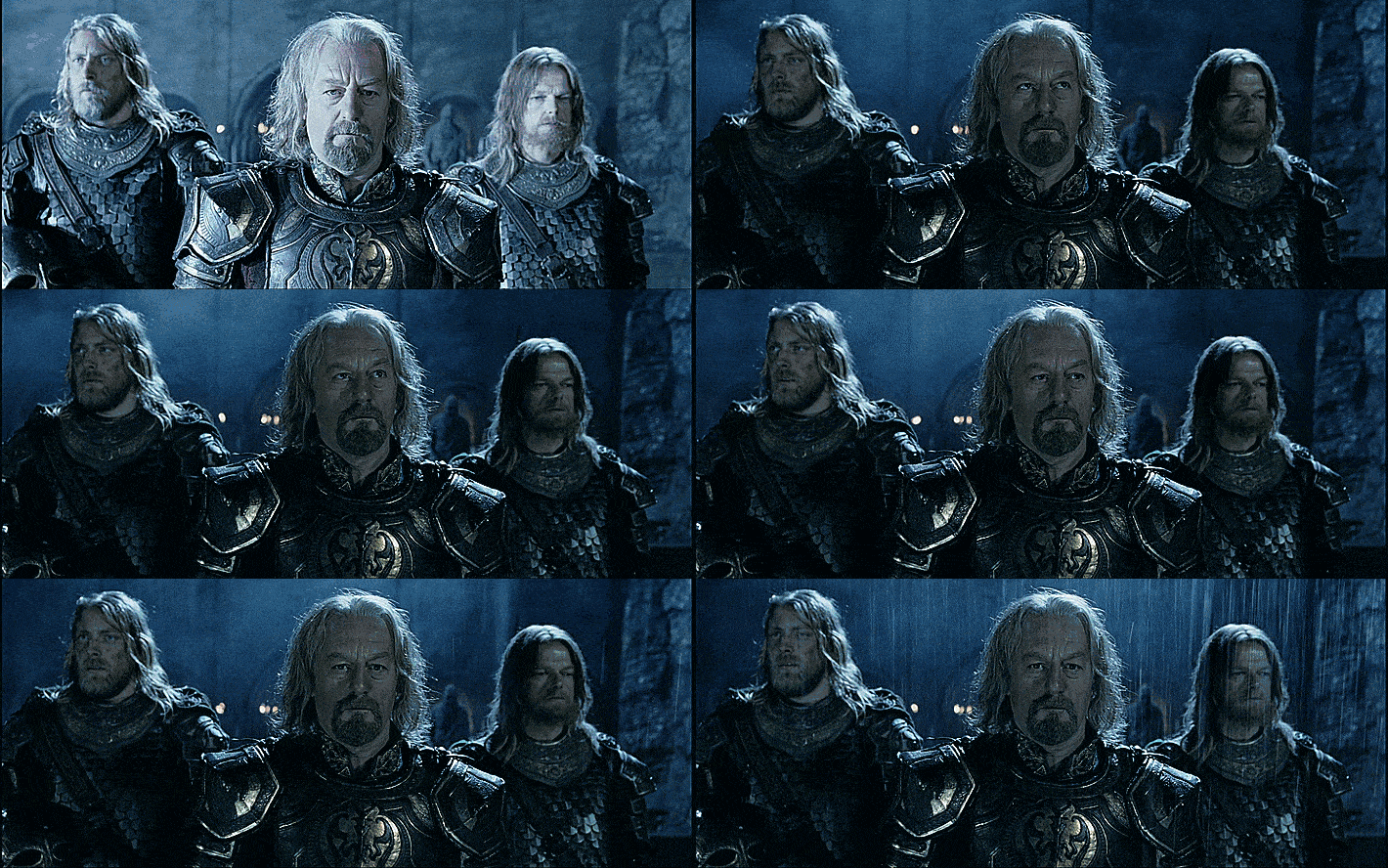
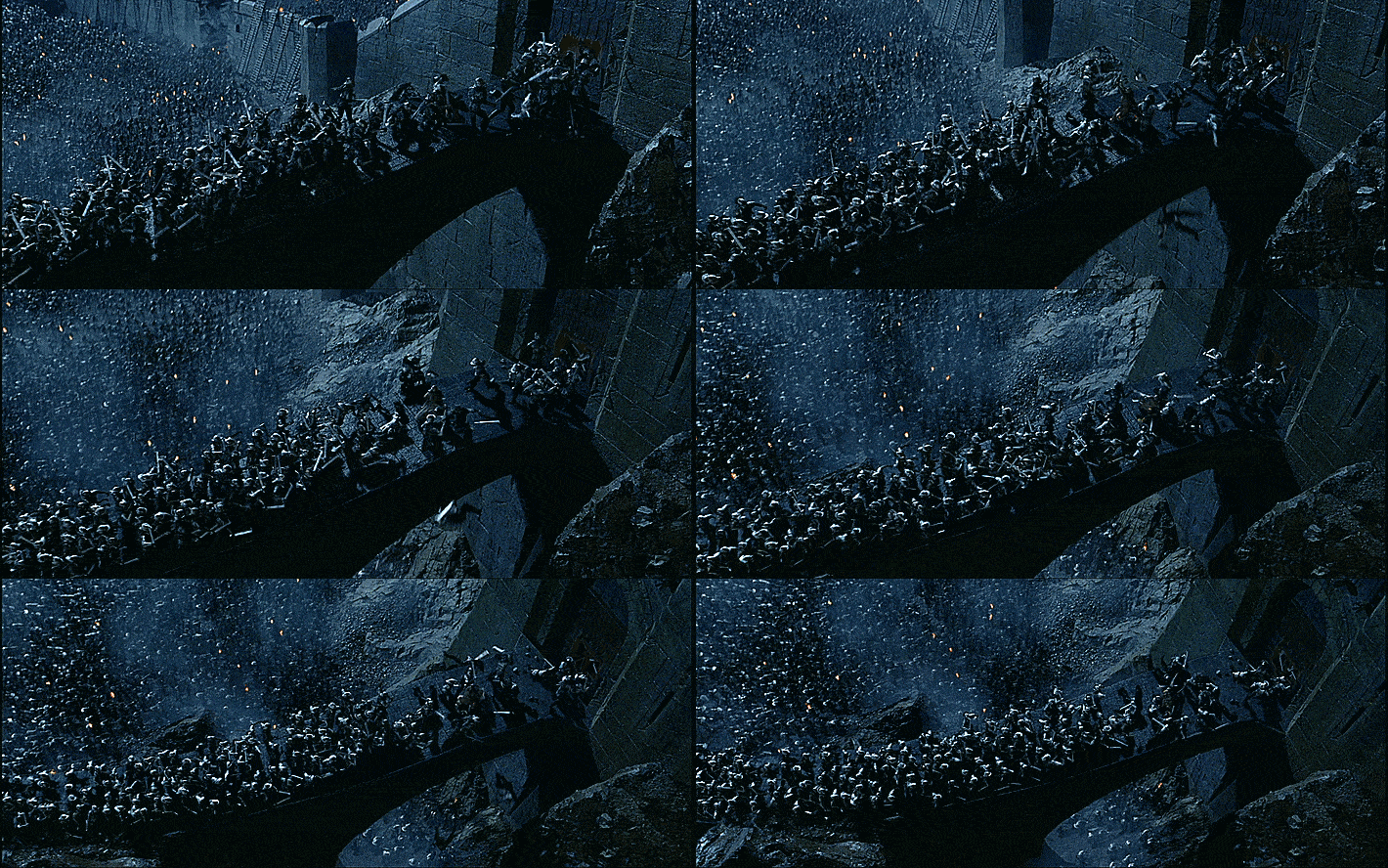
After the burning of the Westfold, Théoden King (Bernard Hill) takes his people to the stronghold of Helm’s Deep. It is nested within a steep canyon, meaning that the enemy can only attack them head-on. Théoden seems confident that this will be enough to protect his people and he boasts that the Deeping Wall has never been breached. But when Aragorn (Viggo Mortensen) brings news that 10,000 of Saruman’s Uruk-hai are en route to eradicate Rohan’s people, the King begins to despair. Throughout the battle, the defenders must fight against that hopelessness as they are forced to retreat again and again in the face of overwhelming odds.
Taking place almost entirely at night and in the rain, the sheer scale of this battle sequence was unheard of in film at the time. Filming it was entirely another kind of struggle. It took three and a half months of freezing night shoots to finish the sequence. On nights when there was no precipitation, gallons of water was rained down upon the cast. To keep the scene intelligible, a misty blueish backlight was used, ostensibly emulating the light of the moon. As a result, the action and actors expressions remained remarkably clear in the dark (looking at YOU, Game of Thrones).
Seventeen years later, the effects of this battle hold up surprisingly well. This is partly due to the sheer number of practical effects used. The Uruk-hai were created from makeup and prosthetics rather than mocap and CGI. As a result, they look as good now as they did at the turn of the millennium. Multiple sets were used to film this battle: a scale fortress built in a disused quarry and two smaller scale models (1/4 scale and 1/85 scale) for distance shots. The Two Towers swept the first annual awards from the Visual Effects Society, claiming two-thirds of the awards it qualified for.
MASSIVE (Multiple Agent Simulation System in Virtual Environment) is a software that was developed specifically for the Lord of the Rings trilogy to handle the massive crowds needed for these battle scenes. It has been used ever since in a variety of films and television including 300, Buffy the Vampire Slayer (in the finale episode, “Chosen”), and the Hobbit films. This software used a kind of AI to determine how each member of the crowds needed to move. “When these characters are in groups they need to ‘see’ and ‘hear’ what’s around them,” said visual effects supervisor Jim Rygiel, “MASSIVE has both artificial sight and hearing to aid in that process.”
In J.R.R. Tolkien’s novel, the Battle of the Hornburg (called the Battle of Helm’s Deep in the film) is not nearly as large in scale as Peter Jackson’s adaptation. It serves as one of several battles that lead up to the final climax at the Battle of Pelennor Fields. However, Jackson made a choice to beef it up as the climax of TheTwo Towers, which helps the film exist as a standalone storyline. This battle has a full narrative arc within itself indicative of the themes of the overall series narrative. Clocking in at 39 minutes long, it is almost a movie within a movie.
Despite his changes, Jackson stayed true to the core message from Tolkien’s series. Théoden spends the battle on the brink of despair, first putting up a brave face for his troops, but slowly succumbing as his people are forced to retreat again and again. Serving as a microcosm of the entire series, the protagonists here stand face to face with overwhelming evil. Against an army of 10,000 bloodthirsty Uruk-hai, beaten down by darkness and rain, they face extinction as a nation and as a race.
Spoken by Bernard Hill in Lord of the Rings: The Two Towers:
“Where is the horse and the rider?
Where is the horn that was blowing?
They have passed like rain on the mountains,
like wind in the meadow.
The days have gone down in the West,
behind the hills… into Shadow.
How did it come to this?”
Throughout the battle, these moments of despair are belied by small victories. The arrival of an army of elves from Lothlórien nearly doubles the defensive force. Gimli (John Rhys-Davies) and Aragorn manage to fight off the Uruk-hai long enough for the gate to be reinforced. Despite these moments of triumph, they find themselves barred in a falling keep as the sun begins to rise.
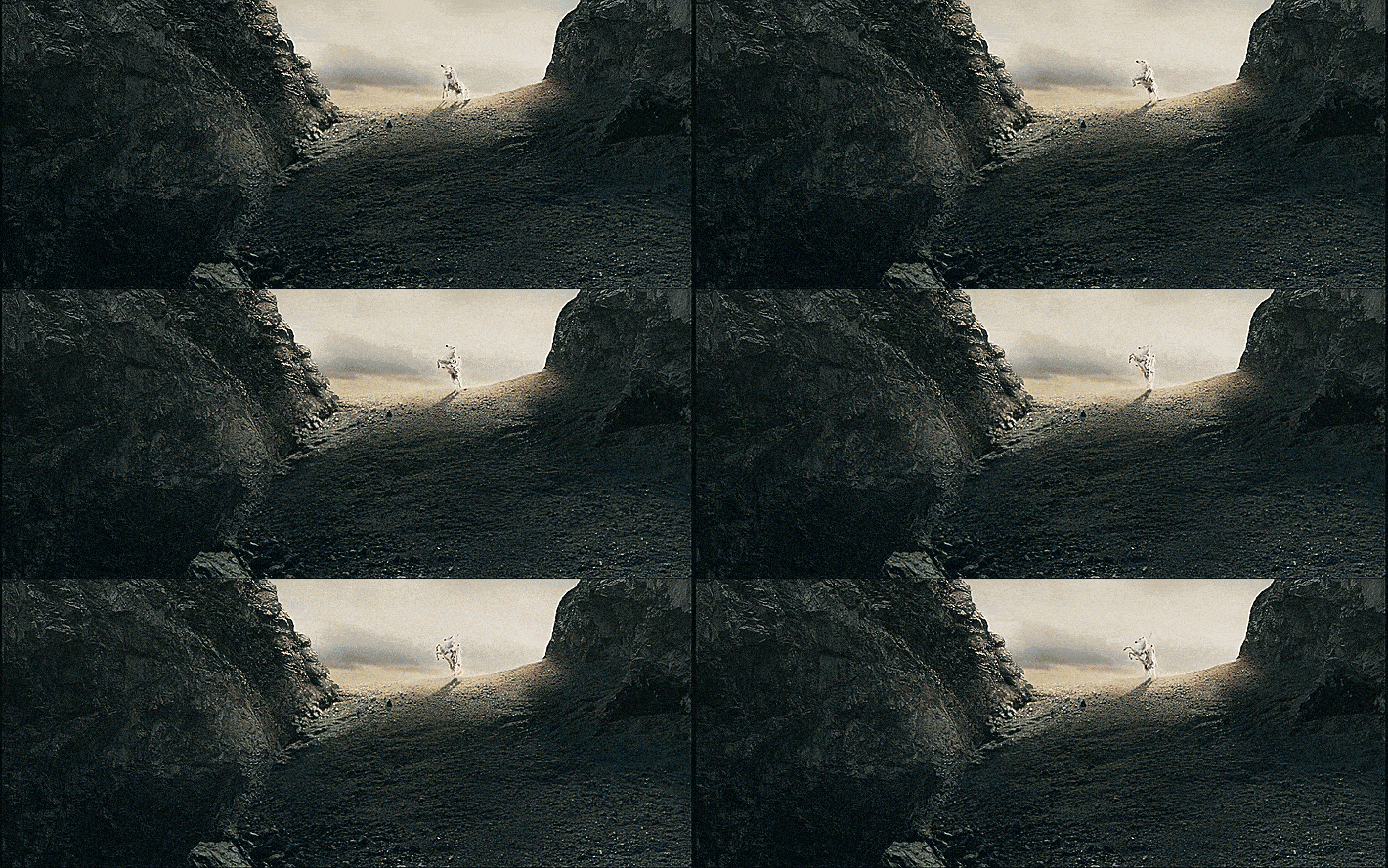
This battle serves as a lesson in leadership for both kingly figures present –Théoden chides Aragorn for fear-mongering about their chances before the battle, and later in their hour of darkness, Aragorn reminds him of what they stand for. The battle is a message about moral conviction standing in the face of reckless hate, and it serves to strengthen them for the rest of the campaign against Sauron. As the sun rises, Aragorn and Théoden decide to ride out in a final stand against the forces of Saruman. Providing one of the most iconic visuals of the entire series, Gandalf (Ian McKellan) arrives with promised reinforcements as the sun crests over the rise. They seem to ride the sunlight down unto the forces of darkness, putting the Uruk-hai to rout.
The Battle of Helm’s Deep remains one of the best fantasy battles in film history. Visually stunning, it has held up well to the test of time. Although it sounds like filming the sequence was an ordeal, the passion with which the cast and crew followed through with the battle shows in its emotional resonance and attention to detail. It serves as a worthy climax to the second chapter of Tolkien’s TheLord of the Rings trilogy and sets up the characters for the rest of the War of the Ring.
Well, well, Winterfell that was a doozy of time wasn’t it?
Believe it or not,we got some things right. Melisandre showed up. Not with knights of Volantis like we thought but with the fire equivalent of that river prayer Arwen does inFellowship of the Ring.If a side-by-side doesn’t already exist by the time this article hits, give it a week or so. We were also right about the crypts being a deathtrap but a child could have told you that a graveyard is just about the worst place to hunker down during a zombie apocalypse. No notable family members made any undead cameos, though perhaps that’s to be expected what with the lack of freshness. Which is to say nothing of the logistics of Ned’s head bereft from his shoulders. We hoped that Ghost would have a larger role to play but alas, more bit parts for our fluffy albino boy. But at least he lived! (He’s in the episode 4 promo for a hot sec.)
As far as death, we can confirm the fate of Theon “die doing a heroism” Greyjoy. Rest in peace, problematic-but-trying-very-hard salt brother. We also called Beric kicking the bucket, though we admittedly did not foresee the “save Arya at all costs” circumstances. Wedidsee that his sacrifice would have something to do against winning against the Night King, we just didn’t predict Arya doing a Hail Mary would end up being the thing to do the trick.
We thought Grey Worm, Tormund, Bran, and Podrick would kick it but with no evidence to the contrary, they seem to be fine. On the flip side, our predicted plot armor held up for Arya, Gendry, Sandor, and Sansa. And finally, neither Jorah’s new Valyrian blade nor Arya’s tricky spear did some damage but not in any particular plot significant ways. As mentioned, Arya did end up being the MVP, but she did the deed with that Valyrian steel dagger that’s been traveling around Westeros since it nearly killed Bran in season 1 instead.
But, anywho, we’re back at it again with our tinfoil hats to bring you our best guesses for what’s up next for Westeros.
THE NIGHT IS DARK AND FULL OF SPOILERS IF WE’VE DONE OUR JOBS WELL.
Not In Winterfell
Cersei will have pulled some shenanigans while all this Northern stuff’s been poppin’ off
Wine mom looks particularly smug during the promo and she has good reason. We’ve had our backs to King’s Landing for the last two episodes, meaning she’s hadplenty of timeto get up to no good. Surely she hasn’t just been making fun of Euron and sipping Dornish red this whole time (but seriously though, is she pregnant or not?). Two episodes would give her plenty of time to lay the groundwork for “If I Lose I’m Taking You All Down With Me” aka Cersei going full Mad King and lighting up King’s Landing with subterranean wildfire.
Yara will deal with the Iron Islands
Named characters might not have fared as poorly as many feared in the Battle for the Dawn, but Daenerys’ army has beensignificantlyreduced. Reinforcements are needed, and considering last we saw of Yara she was headed to the Iron Islands to sort some shit out, we’re anticipating at least a brief scene or two in Pyke in which she sorts said shit out, because episode 5 will be another Miguel Sapochnik special, meaning the Winterfell crowd need some reinforcements ASAP. We’re not saying Yara’s their only hope, only, yeah, we pretty much are.
Back in Winterfell
Gendry’s parentage will come into play
So, based on the promo for episode 71, there is more Gendrya content ahead, which means it’s going to gain more plot relevance. Our money is on Gendry’s Baratheon status becoming common knowledge shortly after his relationship with Arya goes public—and on Bran being the one to spill the beans. That does, after all, appear to be the Three-Eyed Raven’s main purpose in life—less memory-holder of Westeros than all-knowing gossip column (Hedda Hopper’s ghost isso jealous). Maybe that’s where he went during his long greenseeing trip last episode; watching someone, somewhere, get lucky. In any case, regarding Gendrya, we’re predicting Sansa being supportive (unless she learns exactly what they did on top of her beloved food stores, but we digress), Jon beingshook, Sandor being like “I could have told you that like 5 years ago,” and Davos shipping it like FedEx. In terms of Gendry being a Baratheon, we are predicting Daenerysnottaking it well. Especially considering her biggest fan Jorah is dead, her lover Jon Snow is now also a competitor for the Iron Throne, and her father’s killer Jaime Lannister managed to survive and is still residing under the same roof as she is. That said, Arya now has serious clout thanks to the whole “I just saved the world” thing, so Gendry should be fine. For now.
Now that Jon doesn’t have a “Battle for Winterfell” to run away from his problems, Daenerys will successfully confront him about his claim, and his being her nephew
Jon would rather deal with an undead horde than his personal life. Unfortunately for Jon, the zombies have vanished (literally) which means he has to face his greatest fear: uncomfy conversations. He’s like the dad driving the minivan who gets overwhelmed when people yell at him. If we’re being honest, there’s more of a chance of Daenerys airing her fears about Jon being a throne-competitor than them remarking on their accidental incest. Or hey, who knows, maybe Jon will avoid drama for an episode and get to take a nap.
Couples will debrief – a.k.a. The “you made it!” to ep. 69’s “we might not make it”
There are apology tours, reunion tours, and couple check in tours. We have a sneaking suspicion every pair is going to get some time in the sun next week, so get your bingo cards ready!
On that note: Jamie and Brienne. It’s time.
All right, you two stop dragging your feet. Jamie’s got to die a hero’s death in a couple of episodes so we need him to achieve full-blown redemption status by having sex with someone who is not his twin sister. You know. That classic good guy milestone. (Seriously though Jaime, just go ask Arya for advice. Or Podrick. We get that you’re bad at this but there are resources available to you. Use them).
Some people need to talk (who haven’t yet)
Arya and Daenerys: These two have yet to actually have a conversation, and especially now that Arya just saved the world it feels like Daenerys will likely realize that it might be worth her while to introduce herself to the other Stark sister.
Sandor and Sansa: The dynamic between Sandor and Sansa was too much of a season 2 fan favorite for the writersnotto have them talk, and considering episode 5 will be the second big battle, next week seems like the best time to do that.
My favorite film of all time may be James Brooks’ Broadcast News (1987), but John Carpenter remains my favorite director. He’s made more “perfect”movies in my eyes than any other filmmaker thanks to a ten-film streak of brilliance from Assault on Precinct 13 (1976) to They Live (1988), and then he delivered one last gem with 1994’s In the Mouth of Madness. Eleven fantastic and highly memorable films is eleven more than most directors manage… and then he went out on top and stopped making movies all together.
Okay, he didn’t actually stop.
Ghosts of Mars (2001) is his second last film — the last being The Ward (2010) — and it’s something of a sci-fi/horror riff on two of his earlier classics, Assault on Precinct 13 and Escape from New York (1981). The script actually started as a second sequel to the latter, but after the understandable failure of Escape from L.A. (1996) he couldn’t get Paramount interested. Rather than trash the script he just changed Snake Plissken to Desolation Williams… and Escape from Mars to Ghosts of Mars.
It’s new (again) to Blu-ray, and a re-watch confirms that I still don’t like it. I am, however, a sucker for a Carpenter commentary. So keep reading to see what I heard on the commentary for…
Ghosts of Mars (2001)
Commentators: John Carpenter (director/co-writer), Natasha Henstridge (actor)
1. Henstridge joined the production just one week before filming began. Courtney Love had dropped out over a broken ankle… or as Carpenter says, “She just didn’t work out.”
2. The opening features a model train they “tried to make look less like a model but it still looks just like a model.” It apparently fooled Henstridge though.
3. Liam Waite co-stars in the film and is the one who first suggested Henstridge for the role. They were engaged at the time, married six years later, and separated eight years after that.
4. The two banter and trade insults, but Carpenter begrudgingly acknowledges that “it’s impossible to find a bad angle” on Henstridge. “I tried.”
5. The film teases an attraction between Ballard (Henstridge) and Braddock (Pam Grier) but does nothing with it. “We didn’t make too much of this… but the idea was that in the future, the future society is perhaps,” starts Carpenter. “Matriarchal,” finishes Henstridge, “so therefore there’d be a lot more homosexuality.” “There you go,” adds Carpenter. “What?” says Rob. Grier apparently wasn’t very excited about that.
6. She recalls being “out of shape and out of breath” during production, and Carpenter adds that he was told she refused to work out with the stunt coordinator.
7. Henstridge describes herself as an “intuitive-based” actor, and Carpenter agrees adding that Kurt Russell is the same way.
8. They had to shut down production for a week when Henstridge fell ill from exhaustion. Carpenter suggests it might have been due to filming in a gypsum mine, but she thinks having filmed two movies back to back and then joining this one with no break was the culprit.
9. Carpenter’s original script had the action play out in a more traditional linear fashion, but he thought it felt too familiar and changed it around via flashbacks.
10. Carpenter hopes someday that Henstridge directs a film and casts him in it. “I would love to get a little revenge for what you put me though,” he says.
11. He says she downplayed some of the flashback framing sequences, and she replies that he should have directed her better. “There was a basketball game on television and I wanted to get out of there,” he explains.
12. Carpenter points out her “cab door ears,” but she refuses to let him make her feel bad about her appearance.
13. One of the reasons he wanted to set the film in a matriarchy was because he didn’t want to have his female action heroes have to prove themselves before people took them seriously. It’s just understood that they’re bad-ass.
14. The possessed miners who’ve shifted from blue-collar workers to leather-clad and pierced Hot Topic shoppers were played by extras in New Mexico, and Carpenter says “they’re not the most stable people” before adding that they were great. “We cut out all the scenes where they were laughing.”
15. A microphone dipped into the shot at 38:41 of Ballard and Whitlock (Joanna Cassidy) talking, and they had to remove it digitally.
16. They had a single argument turned fight during filming. Carpenter recalls she was being stubborn about some aspect of her performance during the train scene, “and for some reason that irritated me at that moment, and then… you walked off.”
17. She recalls that the cast hated filming the scene at 53:50 where they all run up to the train platform because he made them do it dozens of times. “Did you curse me behind my back?” asks Carpenter. “Basically,” replies Henstridge.
18. “The beautiful people! The beautiful people!” sings Henstridge as Big Daddy Mars (Richard Cetrone) approaches the jail at 58:24. She’s referencing Marilyn Manson, and while neither of them say his name Carpenter says “You think so? People are mentioning it seems to look like him. I suppose he does.”
19. Henstridge is no fan of exposition scenes including the ones she was saddled with here, and Carpenter wonders how else to get the information across. “You just hope that the director and the writer come up with ways of doing that without you having to do it with the supporting cast in particular,” she replies.
20. The film shot almost exclusively at night — even when they were back in L.A. filming on sets — and she asks him why. “I’m a night human being, and one of the things I’ve always hated is getting up in the morning.” He fought to stick to the night schedule in L.A. and had to eventually find a middle ground with the cast.
21. She still doesn’t understand why her character had to kiss Butler (Jason Statham). “Why not?” replies Carpenter.
22. Henstridge is crying at 1:04:55 when her character shouldn’t be, and it’s the shot where Carpenter and producer Sandy King realized she was sick or having a breakdown of some kind. That’s when they shut down the film for a week.
23. She asks what he was trying to say with the film by having Ballard cured of the possession by way of drugs. “I think probably you could say there’s an ambivalence and a duality in my feelings about drugs.”
24. Carpenter has enjoyed marijuana since the 60s, but he’s never done acid or mushrooms. Henstridge assumes it’s because he’s a control freak.
25. He wishes they could share the first-take audio from the POV shot at 1:16:12 of them driving through town while everything explodes and the extras are rushing at their rover. The left-side window broke when one of the extras thrust their weapon in, and Henstridge let loose a string of expletives.
26. Henstridge recalls that Carpenter would come to set every day and say that this was the biggest piece of shit he’d ever made. “It was really inspiring for all of us actors, John.” He claims it was a way to relax his cast and crew.
27. Carpenter loves how both Ice Cube and Henstridge add a small touch to their final frame — Cube looks directly into the camera as he passes, and Henstridge jerks her head while cocking her gun.
Best in Context-Free Commentary
“I’m sitting here today with the very beautiful, very talented, and the very annoying Natasha Henstridge.”
“If the women like you, you know you’re hot.”
“You’re just kind of a mess basically.”
“There’s the Cubester.”
“I was the only one taking serious drugs on the movie.”
“Why did you write us all so dumb, John?”
“You know what’s interesting about you? You write all this supernatural stuff and you don’t believe in a damn thing.”
What an odd commentary track. The best Carpenter commentaries are the ones that see him paired with Kurt Russell as the two get along extremely well and feed off of each other’s enthusiasm. His tracks with crew members aren’t nearly as much fun as they typically run a bit dry. This one sits somewhere in the middle for no other reason than the awkward banter between Carpenter and Henstridge. I assume it’s wholly playful and free of malice, but I also wouldn’t bet money on that. Either way, the commentary is still more entertaining than the movie. Yeah I said it!
"I would die for them." Dogwoof has debuted an official trailer for the documentary For the Birds, which played at AFI Docs + the Sheffield Documentary Festival last year. The film is about a woman named Kathy, whose love for birds has changed her life – she lives with 200 pet chickens, ducks, geese, and turkeys. The film begins by profiling her battle with local animal rescuers, but then shifts into focusing on her marriage to her husband Gary - and how her love for these birds has taken a toll on her marriage and her well-being. I'm a big, big fan of documentaries about animals and people who love them and care for them (also see: Buddy or The Biggest Little Farm), and this is right up my alley. Though I'm super nervous to see how this obsession has affected her so deeply, it looks a bit upsetting but still utterly compelling. Check it out below.
Here's the first official trailer (+ poster) for Richard Miron's doc For the Birds, direct from YouTube:
In Richard Miron's surprising and empathetic For the Birds, we follow an unusual woman named Kathy who lives with 200 pet chickens, ducks, geese and turkeys. What starts as a story seemingly about Kathy's battle with the local animal advocacy groups slowly transforms into an intimate drama about her relationship with her husband Gary, and the toll the birds have taken on their marriage and her well-being. Filmed over the course of five years, this sensitive tale about one woman's world breaking down—poignant and absorbing in equal measure—is ultimately one of hope about the possibility of regaining one’s life.For the Birds is directed by documentary filmmaker Richard Miron, making his first full-length film after another short doc previously, and other work as a doc editor, too. This premiered at the Sheffield Documentary Festival last year, and also played at AFI Docs. Dogwoof will release Miron's For the Birds in select US theaters starting May 31st coming up. For more info, visit the official website. Who's interested?