The film industry in one place - Articles, Reviews, trailers and hype!

Monday, 2 April 2018

Douglas Sirk at Universal-International, Part 1: The Studio

Douglas Sirk at Universal-International is a two-part overview by Blake Lucas. Part 2 will be published April 9, 2018. MUBI's series, In the Realm of Melodrama: A Douglas Sirk Retrospective, is showing April 2 - June 20, 2018 in the United Kingdom and many other countries.
It is often felt that in an ideal world, film directors—or artists of any kind—might carve out their own bodies of work, in freedom, without any interference, beholden to nothing but a personal vision that they labor to express.  In movies, it has often not worked that way, and in Hollywood in the years of the studio system especially, directors worked within conditions.  One of these was the studio itself, generally conceded to have its own style, and so many other defining aspects—genre preferences, contract players and craftsmen, contract producers with power of their own.  But a fair number of directors now widely considered among the very greatest were contracted either through most of their careers or for crucial periods at various studios, for example Raoul Walsh (Warner Bros.), Josef von Sternberg (Paramount), Henry King (Fox), Frank Capra (Columbia) and Vincente Minnelli (MGM), and their artistry thrived in the circumstances of these contracts.   The tenure of Douglas Sirk at what was then Universal-International is comparable but different in significant ways, with a special character all its own.  
The commonality of those other directors is that they were either at or near the beginning of their careers and established their reputations with studio nurturing or already had imposing reputations and were greatly valued when their contracts were initiated.  In 1950, after two decades of film directing, this was not the case with Sirk.  With the greater knowledge we now have of him, it is easy to appreciate the uncommonly cultured man (born Hans Detlef Sierck in Germany, of Danish parents, in 1900), conversant with all arts, music, drama and literature as well as cinema, and with his own conscious aesthetic and dramatic theory, who made a strong mark in German theatre in the 1920s and brought his innate gifts to cinema in the 1930s, though shadowed by Nazism that finally provoked his exile.  But in Hollywood, that reputation was little known, if at all, and whatever their merits, his 1940s American movies had not made him a major director in his adopted country’s eyes.  Universal, merged in 1946 with the smaller independent company, International, that had made only a handful of films, had liked one of those movies, A Scandal in Paris (coincidentally from that same year), and felt he could be a director of comedies for them, but the literary bent and irony of that film is not what they were looking for from Sirk.  It seems perhaps that they took him on without really knowing why. 
So he began there inauspiciously, and without high expectations on his part or theirs.  That has conditioned a long-held perception that Sirk somehow developed a personal style and became a master of melodrama against the grain of the studio ethos—he is seen as in some way isolated, as if he were somehow transcending filmmaking conditions rather than being stimulated to his full creativity within them.  It’s a view that is exacerbated by long held perceptions of the studio itself as crassly commercial, unworthy of any sustained critical attention on its own, though another view of it hopefully may now be emerging (as with other less reputable studios like Republic, currently celebrated at MoMA this year), and some Sirk critics, like Michael Stern in his book on the director, do take a positive view of Sirk coming to U-I in the 1950s as fortuitous and a direct stimulus to his full flowering as an artist.   It is this more celebratory view that is the premise of the present piece, in which I want to more deeply consider the full context of this special director/studio relationship. 
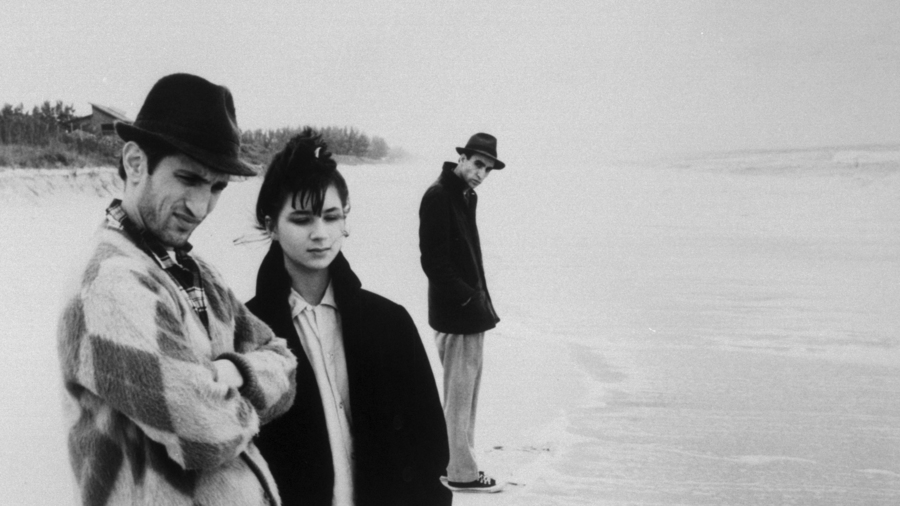
This means first considering Sirk and the studio separately and how their histories converge.  Briefly as to Sirk, as I’ve touched on this and it’s better known, the most important thing about his earlier films was a natural inclination toward melodrama that was always there.  In Germany, his Ibsen adaptation Pillars of Society (1935) goes decisively in this direction, as do his two excellent Zarah Leander movies, To New Shores (1937) and La Habanera (1938), but it’s especially true of Final Accord (1936)—extreme, improbable, and crucially inflected by the part of its story tied to music; this was perhaps the best of his movies before the 1950s and could have naturally paired on a double bill with Magnificent Obsession (1954), so much do they reflect the same sensibility.   Among the 40s ones, of three films with the great George Sanders, Summer Storm (1944) is based on Chekhov, so again there is a prestigious literary source, but it is again pushed to be melodrama and best appreciated that way.  Prejudices against “melodrama” as a genre in movies are partly tied to patronizing or openly derisive attitudes toward so-called “women’s pictures,” “soap operas” or “tearjerkers,” but in the interview book Sirk on Sirk by Jon Halliday, Sirk straightforwardly breaks it down into its original meaning—the Greek “melos” being music—so, music plus drama.  He is aesthetically grounded in that, and the heightening that comes with it also often inflects his work with the ambiguous religious elements that play so interestingly in his one independent feature of the 50s made before the U-I contract, The First Legion (1951), as well as the studio films as early as Thunder on the Hill (also 1951).
In Halliday, Sirk also says this about coming to Universal:  “…Of course, I had to go by the rules, avoid experiments, stick to family fare, have “happy endings,” and so on…Universal didn’t interfere with either my camerawork or my cutting—which meant a lot to me…” These statements are important, even profound, considered in relation to auteur theory and what it means to have truly creative conditions.  Given a choice between what Sirk describes and its alternative—no restrictions on the kind of movie that a director might make but ruthless control of the same director’s camerawork and cutting, what purposeful, serious director would not choose what Sirk evokes?  Control of mise en scène gives a director all they need to truly create, and to make whatever material is the starting point, whether promising or not, a vehicle for realizing their vision to the extent they will fully engage it.  It has been the story of so many movies, enough to be an axiom of cinema.
So in considering Universal—the place it became as Universal-International—I am not willing to disparage their ideas of the movies they chose to make; on the contrary, the genres they excelled in so often seem just right for the directors, the ones I admire most especially.
Universal had been around since silent days, and with an impressive history when everything is taken into account, one not easily dismissed.  Just to hit a few high points, John Ford began his career there with Harry Carey Westerns, as did Erich von Stroheim, also in silents.  In the 1930s the studio was home to John Stahl, who made some beautifully wrought melodramas, and to James Whale, widely revered especially for his horror movies (a special genre for the studio), and in the 1940s it was home base for Robert Siodmak, a defining figure for film noir.   It’s also true that Universal saw more than its share of reversals, coming close to bankruptcy more than once (Deanna Durbin, then Abbott and Costello, saving it), with a natural enough consequence of a number of management changes over time.
The Universal that merged with International had come to mostly concentrate on low-budget movies (there were always exceptions, of course) and the merger was initially intended to upgrade from that, so that any movie might pass at least as a programmer “A” rather than strictly a “B” (running times now were suppose to be at least 70 minutes), but the studio really only seems actively prestige-seeking in its first few years in the late 40s—a substantial number of its movies then were made by for the studio by independent production companies (Rampart, Diana, Wanger, Fairbanks, among them) with some ambition, though they shared the studio’s artisans and craftspeople with the more mainstream movies and so are reflective, in a positive way, of the evolving studio style; compare the credits of what is arguably the greatest U-I film of these years, the Old World romantic melodrama Letter from an Unknown Woman (1948, directed by Max Ophüls as a Rampart production) to any of the studio’s other films and this is evident from that example.  But these more prestigious movies were less successful commercially than the initiating post-merger studio productions, The Egg and I (Chester Erskine, 1947) and Buck Privates Come Home (Charles Barton, 1947), so it is not surprising that by 1950 they are virtually gone.  In the meantime, Leonard Goldstein, associate producer on The Egg and I, became the studio’s most prolific producer, spinning off Ma and Pa Kettle (Marjorie Main and Percy Kilbride) from that film into their own series among other things, and in 1950, Robert Arthur, producer of that Abbott & Costello hit, is also a major presence.  So the studio came into the 1950s with little artistic pretension but very confident about what would work for it in genres.  Westerns, characteristically strong, would be a mainstay—the first director Goldstein brought in with Black Bart (1948) was the gifted and still underrated George Sherman, and this was also the first U-I production in Technicolor—and comedies of all kinds, always with significant returns to service comedies after the success of the original Buck Privates (Arthur Lubin, 1941).  Abbott & Costello Meet Frankenstein (Barton, 1948) effectively jolted the traditional horror cycle to an end, but it would come back in another way, attuned to the times, with a brilliant cycle of science-fiction/horror films in the 1950s.  There were also fantasy and adventure films (the Arabian Nights genre, important in the 40s, was resurrected).  And there were always some melodramas—not necessarily audacious ones, usually more somber and characteristically in black and white as this decade began.
Even with internal changes, Universal-International lasted until the MCA takeover in the early 60s (the last U-I films were released in 1963), but the 1950s are definitive for it: it was then that it had its deepest identity, was fully productive and each of its genres fully evolved.  For the decade, there were 20 directors who I will call core directors, making 4 films or more under contracts of varying durations: Joseph Pevney (25 films), Douglas Sirk (21), George Sherman (19), Charles Lamont (16), Jack Arnold (15), Frederick de Cordova and Jesse Hibbs (11), Budd Boetticher (9), Jerry Hopper and Arthur Lubin (8), Abner Biberman, Nathan Juran and Harry Keller (7), Rudolph Maté (6), Richard Bartlett, Hugo Fregonese and Anthony Mann (5), Blake Edwards, Charles Haas and Kurt Neumann (4).  There were similarly 10 core producers, making 7 or more films:  Leonard Goldstein (40), Aaron Rosenberg (32), Howard Christie (30), Ross Hunter (21), William Alland, Robert Arthur and Albert J. Cohen (20), Ted Richmond (19), Albert Zugsmith (14) and Gordon Kay (7).  One of the important things about the core directors and producers were relationships and partnerships formed among them, which could help a director’s career move in a positive direction, as well as play a role in the evolution of genres.
I don’t propose any challenge to auteurist hierarchy in my view of these directors. I consider Sirk U-I’s very best director, and arguably the greatest the studio ever had under a contract that lasted as long as his, the full decade.  The one other who I consider to be top tier and comparably great is Mann, but his contribution, though an outstanding one that includes three key Westerns, is much more limited, 5 films of the 17 he made in the 1950s and all of them produced by Rosenberg and starring James Stewart.  Beyond them, Jack Arnold was also brilliant and holds a special place in the science-fiction genre, arguably its finest practitioner, while along with Sherman, directors like Bartlett and Fregonese are still looking for more of the critical recognition they deserve. 
But generally, I take a positive view of the other directors besides Sirk—most of them have more checkered bodies of work and rise and fall according to which genres and stories they feel affinity for, but they generally did their best (a few like Boetticher and Edwards hit their career highs later, but do have a few U-I gems), knew how to work with the studio style and the generally exceptional collaborators they had, and could at times rise to something memorable.  A good example is Pevney, the one director with more films than Sirk over that period of time (though his tenure ends in 1958 and he was also loaned out once, while Sirk never was)—he does not engage an exotic fantasy as imaginatively as someone like Maté might, but if it’s a more sober or contemporary subject, say a marital melodrama like those written by Ketti Frings (Because of You, 1952 or Foxfire, 1955), or even a comedy (the charming Capraesque It Happens Every Thursday, 1953), he can be impressive.  But what is most interesting in comparing Sirk to the others is to look at the part he plays as the genres the studio worked with evolved through the decade.  There are so many instances of things in his films that make his style and sensibility stand out, but nothing develops as purely Sirkian.  A good example of a film that preceded him at the studio is Family Honeymoon (Claude Binyon, 1949)—the pairing of Claudette Colbert and Fred MacMurray in this comedy may evoke The Egg and I, but the somewhat acerbic view of marital romance and families is suggestive of what Sirk did well in his comedies, and the closing shot of a huge toy panda bear is the kind of image one can easily imagine in his films.  On the other hand, it’s hard to think of any of the other directors composing a fairly elaborate visual dramatic moment with the grace and beauty of an image in Sirk’s Weekend with Father (1951), with the children hidden in one corner of the frame while in expansive long shot and different light the adults talk among themselves in another.
As Sirk settled in with what were mostly those unpretentious domestic comedies, usually in black and white though the studio was inclined to color for period films and musicals, affording him his first chance with color in Has Anybody Seen My Gal? (1952), U-I arguably excelled more in other genres, especially those almost always in Technicolor.  It’s difficult to imagine him belonging as much to those, not only the Westerns of Mann and others, but the vibrant maritime romance of The World in His Arms (1952, directed by Raoul Walsh in one of three beautiful films for the studio), or the Arabian Nights interiors of The Prince Who Was a Thief (1951), made into a mesmerizing dreamscape by Maté, or the elegant Early California adventure of the unusual, imaginative Mark of the Renegade (Fregonese, 1951).   There is a kind of rich-velvety texture, especially when seen in good prints, to both the studio’s color films and its black and white ones, whether made on the back lot or sound stages (the studio is characterized for that) or on location (there was more of this than is generally acknowledged and no monotony of look over a range of films).  Initially one sees this texture more in a director like Maté, whose The Mississippi Gambler (1953) could kind of stand as exemplary of the studio glow.  But Sirk could move between genres too. As he edged toward melodrama in the crucial year of 1953, forging an association with Ross Hunter as the other was just beginning as full producer with the Technicolor frontier musical Take Me to Town and then with the deep melodrama of the black and white period story All I Desire, Sirk’s two best films to date, he also had the confidence to direct a costume adventure—the marvelous Irish-set Captain Lightfoot, 1955—as well as a more characteristic Western (than Take Me to Town) of the sympathetic 1950s Indian cycle the studio played such a strong role in with Taza, Son of Cochise (1954) and an imagined historical drama Sign of the Pagan (1954), even as the success of Magnificent Obsession at this time showed his true way.
A relatively brief consideration of where the studio was going in the early years of the 50s cannot begin to show its real range, nor the contributions of all of its directors and producers, not to mention all the cinematographers, art directors, set decorators, costume designers, composers, and contract players, leads and support, I would like to name.  But hopefully, some clichés about the studio might at least begin to die as the greater context is discovered.  Douglas Sirk is not a great director somehow finding his way in a studio that specialized in Abbott & Costello, Francis the Talking Mule, and Ma and Pa Kettle (though I wonder how many who like to say this have ever seen an entry from either of the latter series, or even very much from that long-lived comedy team).  There is a lot going on with Universal-International in the 1950s from the first year when Sirk and four other of the core directors were taken under contract.  Sometimes, even when the aesthetic aspects seem always to be strong—making a virtue of artifice, among so many other things—the stories seem weaker, at times hand-me-down.  But at other times they could be stimulating too, and given the decade’s own impulse to melodrama, which would thrive especially in its second half, and the allure it increasingly had for the studio and key producers as well as for Sirk, U-I was coming to even better days, the director himself a stimulus but also the beneficiary.

Sunday, 1 April 2018

‘Legion’ Season 2, ‘6 Balloons,’ the Return of Tracy Morgan, and More TV You Must Watch This Week

Plus: a Benedict Cumberbatch family drama, a new mystery sci-fi thriller, and a documentary about MLK’s final days.

A new month kicks off with the live revival of a 1970s rock opera Broadway classic, followed by an Ian McEwan book adaptation starring Benedict Cumberbatch and Kelly Macdonald. There’s also a new mystery sci-fi thriller from the creators of MTV’s Scream and documentaries on Martin Luther King Jr. and freedom of speech. Tracy Morgan makes his return to TV comedy, while FX’s eccentric superhero series finally delivers its second season. Last but not least, the week wraps up with a Netflix family drama featuring Abbi Jacobson and Dave Franco.

To help you keep track of the most important programs over the next seven days, here’s our guide to everything worth watching, whether it’s on broadcast, cable, or streaming for March 25th – 31st (all times Eastern):

Jesus Christ Superstar Live! (NBC, Sunday 8pm)

There is something very fitting (and kind of meta) about reviving a 1970s rock opera musical about the last days of Jesus’s life on the day commemorating his resurrection. Following the tradition set by Deep Purple’s Ian Gillan and Yvonne Elliman in the original concept album, NBC’s one-night live rendition of the musical features a cast heavy with musical star power: John Legend stars as Jesus, Sara Bareilles is Mary Magdalene, Alice Cooper plays King Herod, and Hamilton’s Brandon Victor Dixon portrays the controversial protagonist Judas Iscariot. If you, like our own Matthew Monagle, hold certain affection for the play, or even if you’re uninitiated in Broadway classics, Jesus Christ Superstar Live! is a good way to wrap up Easter Sunday.

The Child in Time (PBS, Sunday 9pm)

It’s a parent’s worst nightmare: losing sight of your child for a split second and the next realizing that they have banished into thin air. Based on the novel of the same name by Ian McEwan, The Child in Time explores the loss of Stephen (Benedict Cumberbatch), a successful children’s book author, and his wife Julie (Kelly Macdonald) after their three-year-old daughter Kate goes missing from a busy supermarket. With some surreal twists and a few bends on time, the film delves into the devastation caused by senseless loss, the nature of memory and grief and the hope for reconciliation. Tip: keep a box of tissues close at hand.

King in the Wilderness (HBO, Monday 8pm)

By 1967, Dr. Martin Luther King Jr. had already led the Montgomery Bus Boycott, addressed the seminal 1963 “I Have A Dream” speech, and witnessed the passage of the 1964 Civil Rights Act and the 1965 Voting Rights Act — all events largely documented in multiple media and formats. Bu the last, and least chronicled, 18 months of his existence were probably the most difficult and challenging of his life. Directed by Peter Kunhardt (Jim: The James Foley Story), this HBO documentary looks back at King’s last year and a half, revealing a conflicted leader standing between the criticism from the Black Power movement and the Lyndon B. Johnson administration. Interviews with Joan Baez, Andrew Young, Jesse Jackson, Harry Belafonte, John Lewis, and Bernard Lafayette help piece together the story of the legacy of Dr. King, right on time for the 50th anniversary of his death.

The Crossing (ABC, Monday 10pm)

If you still haven’t found something to fill the void left by The Leftovers last year, or you’ve been craving mysterious thrillers infused with a touch of sci-fi in a similar vein to Lost, The Crossing offers an attractive alternative. Set in the small fishing town of Port Canaan in the Oregon coast, the show revolves around a particular event: 500 refugees suddenly wash upon the shores, but only 47 survive. All of them fleeing a war that will destroy America nearly two centuries into the future. Oh, and some of them are genetically altered humans. Created by the team behind MTV’s Scream, The Crossing gathers Steve Zahn, Natalie Martinez, Jay Karnes, Sandrine Holt, Rick Gomez, Luc Roderique, and Georgina Haig in this intriguing mystery drama.

When God Sleeps (PBS, Monday 10pm)

In this day and age, freedom of speech is often misunderstood. But stories like that of Shahin Najafi put things back into  perspective and serve as a reminder of what it actually entails. Directors Till Schauder and Sara Nodjoumi follow this Iranian musician, forced into hiding in Germany after his satirical song criticizing the oppression of women and human rights abuses triggered hardline clerics to issue a fatwa for his death. As Shahin refuses to back down despite the threats, he also tries to establish a relationship with a woman whose grandfather was handpicked to be the first Prime Minister of Iran. The latest installment of Independent Lens, it’s a punk rock doc wrapped around a star-crossed lovers’ romance.

Legion (FX, Tuesday 10pm)

A year is more than enough time to recover from the mind-twisting experience that is Legion’s debut season, so our bodies are ready for more surrealist, befuddling, visually-stunning goodness — and more outlandish dancing sequences, of course. After consistently messing with our heads throughout eight episodes, the show left us hanging in suspense after Oliver Bird, now a host for the Shadow King, drove off southbound, while a mysterious orb abducted David Haller (Dan Stevens). Season 2 picks up 12 months later and finds David with no clear recollections of his time away, while the team at Summerland works alongside Division Three to stop Farouk, who is infecting more people. Navid Negahban (Homeland) joins the cast as a new incarnation of the Shadow King, alongside Stevens and fellow series regulars Rachel Keller, Aubrey Plaza, Jean Smart, Bill Irwin, Amber Midthunder, Jeremie Harris, and Jemaine Clement. Fair warning: this trip further down the rabbit hole is not for the faint of mind.

The Last O.G. (TBS, Tuesday 10:30pm)

As Tracy Morgan finally returns to TV comedy after his life-threatening accident, his new character Tray also makes his triumphant return home after he is released from prison for good behavior after a 15-year stint. However, things have changed a lot. Upon arriving to his newly gentrified Brooklyn neighborhood, he discovers that his former girlfriend Shay (Tiffany Haddish) has married a well-off white man (Ryan Gaul) who is raising the kids (Dante Hoagland and Taylor Mosby) Tray never knew he fathered. Wanting to connect with his children, but lacking the money to support them (or himself), he falls back on the skills he learned in prison to make ends meet. Co-created and produced by Jordan Peele, the 10-episode season also star Cedric the Entertainer. How’s that for comedy pedigree?

6 Balloons (Netflix, Friday)

Playing a serious role in a drama is kind of a rite of passage for comedians wanting to prove their acting chops and range. Dave Franco (The Little Hours) and Broad City’s Abbi Jacobson now join the ranks of comedy actors who have traded laughs for tears with 6 Balloons. The film follows Katie (Jacobson), a loyal sister struggling with the relapse of her heroin-addict brother, Seth (Franco), as they drive through the night around Los Angeles in search for a detox center, accompanied by Seth’s toddler daughter. But things take a turn for the worse. Written and directed by Marja-Lewis Ryan (The Four-Faced Liar) and  based on the experience of producer Samantha Houseman, this drama arrives on Netflix after premiering at SXWS earlier in March.

6 Balloons Netflix

SUNDAY

Bob’s Burgers S8E12 “The Hurt Soccer” (FOX, 7:30pm)

Counterpart S1E10 “No Man’s Land, Part Two” (Starz, 8pm) — season finale

Instinct S1E3 “Secrets and Lies” (CBS, 8pm)

Our Cartoon President S1E9 “Church and State” (Showtime, 8pm)

Jesus Christ Superstar Live! (NBC, 8pm) — live musical event

The Simpsons S29E14 “Fears of a Clown” (FOX, 8pm)

Brooklyn Nine-Nine S5E14 “The Box” (Fox, 8:30pm)

Ash vs. Evil Dead S3E6 “Tales from the Rift” (Starz, 9pm)

Family Guy S16E14 “Veteran Guy” (FOX, 9pm)

The Child in Time (PBS, 9pm) — movie premiere

The Walking Dead S8E14 “Still Gotta Mean Something” (AMC, 9pm)

The Last Man on Earth S4E13 “Release the Hounds” (FOX, 9:30pm)

Deception S1E4 “Divination” (ABC, 10pm)

Silicon Valley S5E2 “Reorientation” (HBO, 10pm)

Trust S1E2 “Lone Star” (FX, 10pm)

Barry S1E2 “Chapter Two: Use It” (HBO, 10:30pm)

MONDAY

DC’s Legends of Tomorrow S3E17 “Guest Starring John Noble” (The CW, 8pm)

King in the Wilderness (HBO, 8pm) — documentary premiere

One Strange Rock S1E2 (Nat Geo, 9pm)

The Terror S1E3 “The Ladder” (AMC, 9pm)

Living Biblically S1E6 “Thou Shalt Not Bear False Witness” (CBS, 9:30pm)

Good Girls S1E6 “A View From the Top” (NBC, 10pm)

The Crossing S1E1 (ABC, 10pm) — series premiere

When God Sleeps (PBS, 10pm) — documentary premiere

TUESDAY

NCIS S15E19 “The Numerical Limit” (CBS, 8pm)

Roseanne S10E3 “Roseanne Gets the Chair” (ABC, 8pm)  

Black Lightning S1E11 “Black Jesus: The Book of Crucifixion” (The CW, 9pm)

LA to Vegas S1E11 “Jacked Up” (Fox, 9pm)

Legion S2E1 “Chapter 9” (FX, 10pm) — season premiere

For the People S1E4 “The Library Fountain” (ABC, 10pm)

Rise S1E4 “Victory Party” (NBC, 10pm)

Unsolved: The Murders of Tupac and The Notorious B.I.G. S1E6 “East Coast, West Coast” (USA, 10pm)

The Last O.G. S1E1 (TBS, 10:30pm) — series premiere


The post ‘Legion’ Season 2, ‘6 Balloons,’ the Return of Tracy Morgan, and More TV You Must Watch This Week appeared first on Film School Rejects.

On the Nature of Easter Eggs

Ready Player One.

In Ready Player One, revered video game maker and trillionaire James Halliday (Mark Rylance) defines an “Easter egg” as “a hidden object in the game that gives special powers to those who discover it.” While this may be true to video games, in the world of non-interactive media, the term means something else.

In film, TV, and literature, an Easter egg is a when one work specifically references another in some detail or minor feature that is not significant to the plot. It’s not Chekov’s gun. It won’t help solve a mystery. It’s just an intentional reference that people will either get (if they know the work being referenced) or will not get. In terms of understanding and appreciating a narrative, someone who doesn’t catch an Easter egg isn’t at any particular disadvantage. Unless watching with someone who does catch it, a person who misses an Easter egg wouldn’t even realize there’s a reference to miss at all.

Ironically enough, none of the “Easter eggs” used to crack the mystery of Halliday’s three keys in Ready Player One are cinematic Easter eggs because they are fundamental to the plot — so important that the film always has to explain and elaborate these references. This is just about as far from a cinematic Easter egg as a thing can be. In the movie sense, an example of an Easter egg would be in The Last Jedi, when Rose and Finn are arrested in Canto Bight for “parking violation 276/B,” a reference to a specific form that ends up preventing Sam Lowry (Jonathan Pryce) from being able to get his air ducts fixed in Terry Gilliam’s Brazil.

If you don’t catch the reference, you’re hardly missing out. If you do catch the reference, you don’t win anything. You just crack a smile because you and Rian Johnson are on the same wavelength of cinematic geekery. But that, in itself, is something. There’s a specific “special power” to what we might call the cinematic (or literary) Easter egg, and it’s equivalent to the power of an inside joke.

But first, to illustrate the nature of an inside joke in a cinematic context, let me bring up a personal anecdote.

Nearly a decade ago, a friend of my father’s made a film which received a limited theatrical release. So we took a trip to one of the arthouse theaters playing it. It was a slice-of-life romantic drama kind of movie, and one scene features a minor character by the name of Mr. Wardlow — a reference to my dad.

My dad, who had not been forewarned, burst out laughing. As it was not an especially humorous scene, the rest of the theater turned around to see who the cackling weirdo was.

That’s what an inside joke in a movie context looks like.

What literary and cinematic Easter eggs do, above all else, is make for a language of inside jokes that are theoretically accessible to anybody. No childhood friendship with a future filmmaker required. You can be part of the club, even if (or, to go with what has become the stereotype, especially if) you’re an angst and acne-ridden teenager with questionable social skills. And, once people were able to find each other with ever-increasing ease in the internet age, what was for most the illusion of being in a club really became an actual club.

This is what makes finding Easter eggs more than a hidden picture search. Getting the reference isn’t just getting a reference, it’s being part of the group. It’s why “Parzival” is so set on going on his digital date with “Art3mis” dressed as Buckaroo Bonzai — it’s important to him that she not only get the reference but appreciate it like he does. When she does both understand and enjoy his outfit, he sees it as proof they are on the same wavelength — they belong to the same club.

When you put the theoretical concept of a language of inside jokes theoretically accessible to anyone willing to put in the time and energy required to learn it into practice, a problem emerges: an inside requires an outside. In order for a club to stay a club, there has to be a “not in the club.” If the club gets too big, it ceases to really be a club. It loses intimacy, the sense of place and identity that membership provides.

And this is where we run into issues. In the realm of popular culture, it seems that the geeks have inherited the earth. At the same time, “geek” culture — the worlds and worlds within worlds of movies and video games, comics and novels and TV shows traversing space adventures and fantasy lands — has been the location of increasingly frequent and increasingly hostile battles on just about every fault-line imaginable. These two observations are not unrelated. Contrary to what Ready Player One might suggest, the most prominent of these battles are not between The People and mega-corporations, but conflict within the fans and players themselves. Boys sticking a “No Girls Allowed” sign on the metaphorical treehouse door.

So much of what used to be subculture, counter-culture, is now mainstream. An inside joke is only an inside joke if there’s someone on the outside who doesn’t get it. And if putting the time and energy into learning one of these “languages” becomes sufficiently popular, in order to preserve its status as a sufficiently insular group, the “accessible to anybody” clause has to go.

If too many people want in, the logic is that someone has to keep at least some of them out — so a number of individuals have appointed themselves gatekeepers. They are doing their best, but it’s not really working. The audience for nerd culture is far wider than teenage boys. We’re here, and we’re demanding things — representation, a seat at the table. Changing things. “Ruining” them, to paraphrase countless voices I have encountered both online and in real life.

But the thing is, it’s not really a battle of the sexes either, not fundamentally. The boy/girl fault line is far from the only one at the center of these battles; I just chose it because I thought it would be the example with which most readers would already be familiar. As I’ve said before, it’s an inside vs. outside thing.

When it comes to inside jokes, sharing them weakens their power. Extend the circle wide enough and it dilutes it to the point where you worry it might disappear.

I actually kind of get where the impulse to resist seeing that development take place comes from, even though I generally hate the forms the actions resulting from such impulses take. Because on a more important level, even attempting to gate-keep or qualify or exclude is hugely contrary to what so much of “nerd” culture stems from — being a refuge for people who felt excluded from other groups, a place where outcasts feel included.

Ready Player One turns the concept of a pop-culture Easter egg hunt — of “nerd fandom,” we might call it — into a competition that can either be won or lost. There are plenty of people in real life who treat it this way, too, but in the real world, there is no James Halliday, no contest. At the end of the day, fandom is about appreciating something and celebrating it, and there are infinitely many ways to do that, and they are all valid. It’s only a win/lose situation if we turn it into one. And then we all lose.

The post On the Nature of Easter Eggs appeared first on Film School Rejects.

What’s New to Stream on Netflix for April 2018

Here’s what’s coming to Netflix this month!

Some people spend their days arguing over the merits of Netflix and how it’s “killing cinema” as we know it, but the rest of us know better. It’s just one more way to re-watch the movies we already love and find new ones to cherish. This month sees plenty of both hitting the service.

The complete list of movies and shows hitting Netflix this month — April 2018 — is below, but first I’m going to highlight a few that stand apart from the bunch.

Red Dots

Netflix Pick of the Month

Yeon Sang-ho’s Train to Busan (2016) is a ridiculously tense and thrilling take on zombie movies, but his second live-action feature looks to be going a different route. Psychokinesis (a Netflix Original premiering April 25th) is a superhero origin story of sorts, and while it looks to be lighter fare it’s worth remembering that Korean filmmakers give zero shits about your tonal shift expectations. They will turn from fart gags to tragedy in a heartbeat and then be back to prat falls thirty seconds later. And we love them for it.

Red Dots

Queen Of The Damned

The Horror of It All

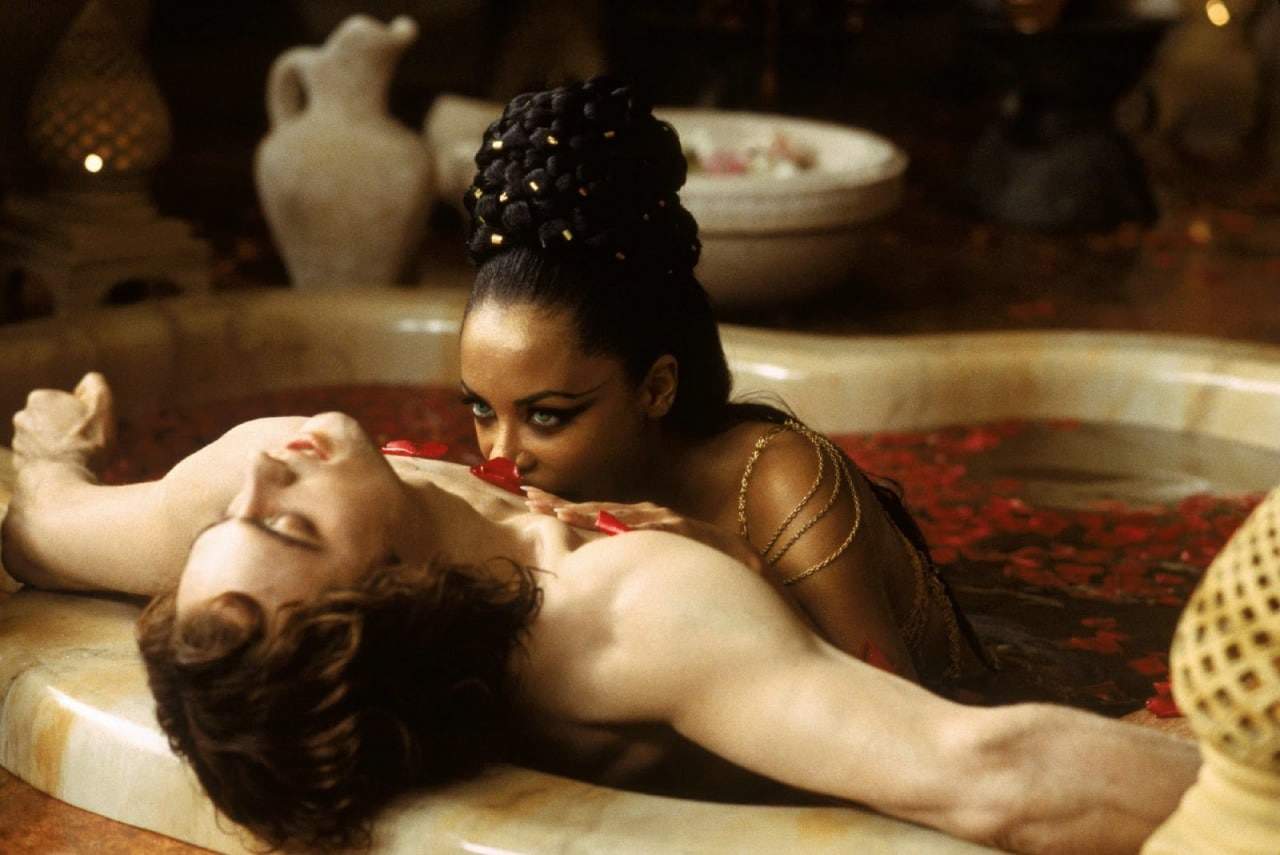
Eli Roth’s career seems to be idling these days, but even if he revs it back up again it’s doubtful he’ll ever top the body horror mayhem of Cabin Fever (2002). And by mayhem I of course mean the ludicrously entertaining pancakes and karate boy. Ti West didn’t find the same kind of success with his turn at bat, but Cabin Fever 2: Spring Fever (2009) is now available too. If your horror interests lean more towards sexy vampires then you can hardly do better than The Lost Boys (1987) and Queen of the Damned (2002). I’ll go to bat for the former any day of the week, but while the latter isn’t nearly as good it’s hard to argue with its visual appeal.

Red Dots

Lost In Space

More Originals

Psychokinesis may be my most anticipated of Netflix’s Originals this month, but it’s far from the only one. The highest profile one looks to be their new in-house series reboot of Lost In Space (premiering on the 13th). It looks interesting and fun, but if you need another reason to tune in just know that Neil Marshall (The Descent) appears to have directed half of this first season. Dude (April 20th) doesn’t have quite the same cachet, but writer/director Olivia Milch also wrote the upcoming Ocean’s 8 so we’re already interested. Also landing on the 20th is Kodachrome which despite the fairly generic road trip plot is high on our watch list thanks to a cast that includes Ed Harris, Bruce Greenwood, Elizabeth Olsen, and Jason Sudeikis. Finally, Netflix’s devilish pact with Adam Sandler continues with the release of The Week Of on the 27th. It’s co-written and directed by Robert Smigel (Triumph the Insult Comic Dog), but before that gets you too excited just remember that he also wrote Sandler’s Jack and Jill and You Don’t Mess With the Zohan.

Red Dots

Hours To Live Ethan Hawke

Aaand Action!

Action junkies will get their fill this month too with the arrival of Michael Bay’s Bad Boys (1995), the video game adaptation Mortal Kombat (1995), and the unfairly maligned Terminator: Rise of the Machines (2003). A couple newer titles are also hitting Netflix this month, and while there’s a good chance you haven’t heard of either one I’m happy to say both are worth your time. 24 Hours to Live (2017) hits on the 7th and features Ethan Hawke as a bad guy trying to make good. Chasing the Dragon (2017) is a Hong Kong gangster epic arriving on the 19th that stars Donny Yen and Andy Lau on opposite sides of the law.

Red Dots

The Complete List

April 1st

Along Came Polly (2004)
Bad Boys (1995)
Battlefield Earth (2000)
Beethoven’s Christmas Adventure (2011)
Big Time (1988)
Body of Lies (2008)
Cabin Fever (2002)
Cabin Fever 2: Spring Fever (2009)
Cats & Dogs (2001)
Cold Mountain (2003)
Dare to Be Wild (2015)
Deep Blue Sea (1999)
The Duchess (2008)
The Family Man (2000)
Fish People (2001)
The Flintstones (1994)
The Flintstones in Viva Rock Vegas (2000)
Friday Night Lights (2004)
The Iron Giant (1999)
Jackass 2.5 (2007)
The Joel McHale Show with Joel McHale (Netflix Original Series)
Life Is Beautiful (1997)
Looney Tunes: Back in Action (2003)
The Lost Boys (1997)
Mortal Kombat (1995)
Nancy Drew (2007)
Pirates of the Caribbean: Dead Man’s Chest (2006)
The Queen of the Damned (2002)
Scarface (1983)
Seven (1995)
Sin City (2005)
A Sort of Family (2017)
Speed Racer (2008)
The Spy Next Door (2010)
Terminator 3: Rise of the Machines (2003)
Wakfu: Season 3 (Netflix Original Series)

April 2nd

La Piloto: Season 1 (2017)

April 3rd

Fary is the New Black (Netflix Original)

April 4th

Behind The Curtain: Todrick Hall (2017)
Despicable Me 3 (2017)

April 6th

The 4th Company (Netflix Original)
6 Balloons (Netflix Original)
Amateur (Netflix Original)
The Boss Baby: Back in Business: Season 1 (Netflix Original Series)
Fastest Car: Season 1 (Netflix Original Series)
Money Heist: Part 2 (Netflix Original)
My Next Guest Needs No Introduction with David Letterman: JAY-Z (Netflix Original Series)
Orbiter 9 (Netflix Original)
Ram Dass, Going Home (Netflix Original)
Sun Dogs (Netflix Original)
Todo lo que sería de Lucas Lauriente (Netflix Original)
Troy: Fall of a City: Season 1 (Netflix Original Series)

April 7th

24 Hours to Live (2017)

April 9th

AMO: Season 1 (Netflix Original Series)

April 10th

Greg Davies: You Magnificent Beast (Netflix Original Stand-Up)

April 12th

Pickpockets (Netflix Original)

April 13th

Chef’s Table: Pastry (Netflix Original Series)
Come Sunday (Netflix Original)
I Am Not An Easy Man (Netflix Original)
Lost in Space: Season 1 (Netflix Original Series)
The Magic School Bus Rides Again: Season 2 (Netflix Original Series)

April 15th

Lakeview Terrace (2008)
Seven Pounds (2008)

April 17th

The Chalet: Season 1 (Netflix Original Series)
The Honeymoon Stand Up Special: Collection (Netflix Original)

April 18th

Friend Request
Pelé

April 19th

Charité: Season 1 (Netflix Original Series)
Chasing The Dragon (2017)

April 20th

Aggretsuko: Season 1 (Netflix Original Series)
Dope: Season 2 (Netflix Original Series)
Dude (Netflix Original)
Kodachrome (Netflix Original)
Mercury 13 (Netflix Original Documentary)
Spy Kids: Mission Critical: Season 1 (Netflix Original Series)

April 21st

The Letdown: Season 1 (Netflix Original Series)

April 24th

Call the Midwife: Series 6: “Christmas Special 2017” (Netflix Original Series)
Kevin James: Never Don’t Give Up (Netflix Original Stand-Up)

April 25th

Bill Nye: Science Guy (2017)
Psychokinesis (Netflix Original)

April 27th

3%: Season 2 (Netflix Original Series)
Bobby Kennedy for President (Netflix Original Documentary)
Candy Jar (Netflix Original)
Holy Goalie (2017)
The Man Who Knew Infinity (2015)
The New Legends of Monkey: Season 1 (Netflix Original Series)
The Week Of (Netflix Original)

Follow all of our monthly streaming guides.

The post What’s New to Stream on Netflix for April 2018 appeared first on Film School Rejects.

Kate McKinnon Eyes A Musical Comedy From Danny Boyle and Richard Curtis

The Saturday Night Live actor might be strapping on her tap shoes for the Trainspotting director.

More details are starting to emerge regarding Danny Boyle and Richard Curtis’ untitled musical comedy. Earlier this month we reported on this unique collaboration and speculated on what variation on the genre we could expect from the British creators. While specific plot details are still under wraps, we now have a better idea of the era they’ll be exploring as well as the characters that might populate it.

Having just attempted her own Girls Trip with Rough Night, Saturday Night Live’s Kate McKinnon will next be seen in The Spy Who Dumped Me. Where she goes from there is still in flux, but The Hollywood Reporter suggests that the actress is eying a key role in the Boyle/Curtis production. McKinnon would be joining Lily James in a 1960s or 70s set musical. James is apparently playing a school teacher while McKinnon would take on the role of a talent agent.

Are we thinking that Boyle and Curtis might have their take on A Star Is Born? That would be interesting especially since the Clint Eastwood remake with Lady Gaga and Bradley Cooper is releasing right around the corner. The mod setting for Boyle will surely separate his aesthetic from anything Eastwood might attempt, and with Curtis behind the screenplay, I imagine their show will be more gala and glam.

We’re about to hit another glut of musicals. On top of A Star Is Born, we have a second Mama Mia coming our way, the live-action Lion King and Aladdin, Tom Hooper’s threatening Cats, and Lin-Manuel Miranda is behind Jon M. Chu’s adaptation of In The Heights. Every few years the genre flares up, and a few killer classics present themselves. Which one of these is Moulin Rouge, and which one is Rock of Ages?

The 60s/70s setting is an immediate draw. Although, that in itself carries with it a rather disparate spectrum of quality and tone. Lean into the early 60s and we have West Side Story. Push up against the borders of the 1980s and we have Hair. LaLa Land borrowed heavily from The Young Girls of Rochefort (1967)and The Umbrellas of Cherbourg (1964) to mostly charming effect. That fashion falls in line with the director who crafted A Life Less Ordinary and Millions.

Kate McKinnon should be a good fit for that world. At the very least, Rough Night and Ghostbusters showed an actor capable of falling into place with a diverse cast of weirdos. She stands out when needed, and with a limited amount of screen time, she draws an audience’s full attention. Can she sing? Can she dance? It’s Hollywood, everyone can.

With casting fully underway, this musical comedy seems to be taking the lead over Danny Boyle’s possibility of helming the next James Bond film. He has confirmed that he is developing the 007 script, but the green light has yet to be flipped. Universal Studios is looking to get this film shooting by the summer. Shaken martinis will have to wait.

The post Kate McKinnon Eyes A Musical Comedy From Danny Boyle and Richard Curtis appeared first on Film School Rejects.

The Best Action Movies of 2018 So Far

Welcome to a quarterly review of the year’s best action movies of 2018 as of right this moment.

Unlike our first quarter look at the best horror movies of the year so far, the action pickings are pretty slim. So rather than fill slots with mediocre examples of the genre our look at the first quarter’s best action movies is currently capping out at a measly six films.

And yes, I did see and very much enjoy Black Panther.

Red Dots

6. Pacific Rim: Uprising

Pacific Rim Uprising

I don’t typically like to include CG-fests on my action lists as there’s something impure and non-tangible about cartoon “action,” but this sequel to Guillermo del Toro’s original puts the focus on giant mechs bashing the hell out of each other and even bigger creatures. Even better, the city-wide carnage includes an unexpected amount of skyscraper-sized martial arts as chops, kicks, and take-downs become the norm for kaiju fights. (But yeah, while the top two film’s below will most likely survive these quarterly lists until the end of the year this one most definitely won’t.)

Red Dots

5. Braven

Braven

Jason Momoa plays a character named Joe Braven, and honestly, that’s already more than enough to land it on our action list. Happily, there’s also some actual action too including well-choreographed brawls in the snow, gunplay, deadly displays of archery, and a viscerally gorgeous sequence involving a man doused in flammable liquid and a flaming hatchet throw. It’s old-school action done well with characters we care about — including family members who prove to be Bravens in training — and a beautiful landscape as a backdrop to the fun.

Red Dots

4. Pork Pie

Pork Pie

Matt Murphy’s action/comedy from New Zealand is actually a remake of his dad’s 1980 film Goodbye Pork Pie, and while I imagine that’s even nuttier (due to the time period and the region’s notable lack of safety concerns) Murphy the younger does him proud with this joyous blast of a road trip/chase movie that also speaks to romance, regrets, and the mistakes we make in life. It’s funny, thrilling, and filled with the kind of rousing heart we don’t see in a lot of action/comedies.

Red Dots

3. Maze Runner: The Death Cure

Maze Runner Death Cure

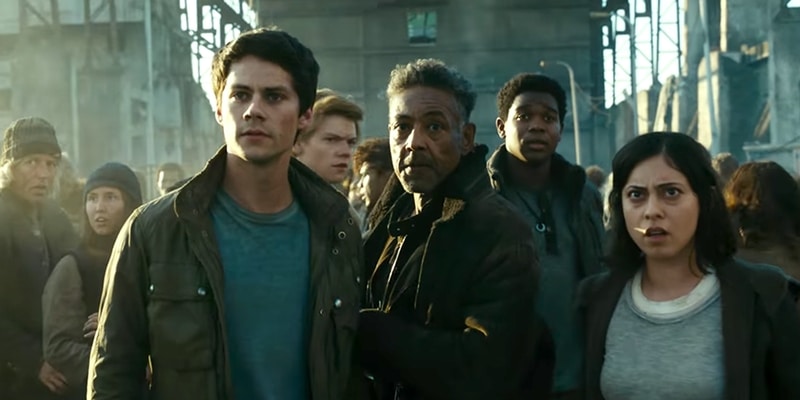
One of the only YA franchises outside of the big three to actually finish its story on the screen, The Maze Runner trilogy starts weak, peaks in the middle, and ends strong with this terrific piece of post-apocalyptic fun. It wraps up the narrative and delivers some solidly thrilling action set-pieces along the way. There’s a Fast & Furious vibe to some of the scenes with heists and off-road vehicle shenanigans, but we also get fist/gunfights and some zombie-ish antics.

Red Dots

2. Accident Man

Accident Man

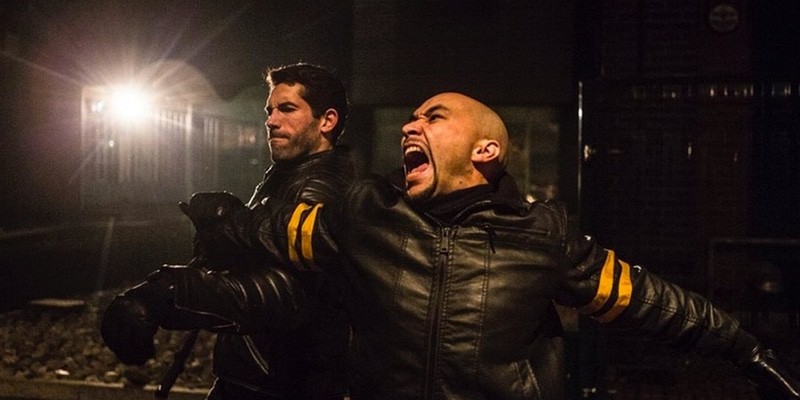
New Scott Adkins movies will pretty much always be contenders for the year’s best action as the guy is a stupidly talented fighter who takes to acrobatics as easily and frequently as I take to pizza. His latest shows off a sense of humor too as he plays a hit man whose shtick is killing people in ways that don’t look like murder. He narrates and introduces viewers to the various personalities in his assassin club, and there are some funny gags along the way. The focus, though, is action, and Adkins shows yet again that crossing him means he’ll most likely be kicking you to death before the credits roll.

Red Dots

1. Kill Order

Kill Order

This feels at times like a sloppy, low budget riff on The Bourne Identity, but all is forgiven when lead Chris Mark begins showing off his talents. He keeps busy in the movies as a stunt performer, but while his acting chops are sketchy his fighting chops are stylish, brutal, and wickedly fast. Just go with the sci-fi gibberish and mildly dramatic story beats because the action is kick-ass fun.

The post The Best Action Movies of 2018 So Far appeared first on Film School Rejects.

Copyright © Cinenus | Powered by Blogger

Design by Anders Noren | Blogger Theme by NewBloggerThemes.com