The film industry in one place - Articles, Reviews, trailers and hype!

Tuesday, 1 March 2016

Off-center 2: This one in the corner pocket

Ministry map 500     Ministry fight

DB here, again:

We got a keen response to my entry on widescreen composition in Mad Max: Fury Road. Thanks! So it seemed worthwhile to look at composition in the older format of 4:3, good old 1.33:1–or rather, in sound cinema, 1.37: 1.

The problem for filmmakers in CinemaScope and other very wide processes is handling human bodies in conversations and other encounters (such as stomping somebody’s butt in an an action scene). You can more or less center the figures, and have all that extra space wasted. Or you can find ways to spread them out across the frame, which can lead to problems of guiding the viewer’s eye to the main points. If humans were lizards or Chevy Impalas, our bodies would fit the frame nicely, but as mostly vertical creatures, we aren’t well suited for the wide format. I suppose that’s why a lot of painted and photographed portraits are vertical.

By contrast, the squarer 4:3 frame is pretty well-suited to the human body. Since feet and legs aren’t usually as expressive as the upper part of the body, you can exclude the lower reaches and fit the rest of the torso snugly into the rectangle. That way you can get a lot of mileage out of faces, hands and arms. The classic filmmakers, I think, found ingenious ways to quietly and gracefully fill the frame while letting the actors act with body parts.

Since I’m watching (and rewatching) a fair number of Forties films these days, I’ll draw most of my examples from them. after a brief glance backward. I hope to suggest some creative choices that filmmakers might consider today, even though nearly everybody works in ratios wider than 4:3. I’ll also remind us that although the central area of the frame remains crucial, shifts away from it and back to it can yield a powerful pictorial dynamism.


Movies on the margins

Safe areas y 400

Early years of silent cinema often featured bright, edge-to-edge imagery, and occasionally filmmakers put important story elements on the sides or in the corners. Louis Feuillade wasn’t hesitant about yanking our attention to an upper corner when a bell summons Moche in Fantômas (1913). A famous scene in Musketeers of Pig Alley (1912) shows Griffith trying something trickier. He divides our attention by having the Snapper Kid’s puff of cigarette smoke burst into the frame just as the rival gangster is doping the Little Lady’s drink. She doesn’t notice either event, as she’s distracted by the picture the thug has shown her, but there’s a chance we miss the doping because of the abrupt entry of the smoke.

Fantomas Moche 300   Musketeers smoke 300

In Keaton’s maniacally geometrical Neighbors (1920), the backyard scenes make bold (and hilarious) use of the upper zones. Buster and the woman he loves try to communicate three floors up. Early on we see him leaning on the fence pining for her, while she stands on the balcony in the upper right. Later, he’ll escape from her house on a clothesline stretched across the yard. At the climax, he stacks up two friends to carry him up to her window.

screenshot_50 300     Neighbots 2 300     Neighbors 2a 300

Neighbors 4 300     Neighbors 6 300

Thankfully, the  Keaton set from Masters of Cinema preserves some of the full original frames, complete with the curved corners seen up top. It’s also important to appreciate that in those days there was no reflex viewing, and so the DP couldn’t see exactly what the lens was getting. Framing these complex compositions required delicate judgment and plenty of experience.

Later filmmakers mostly stayed away from corners and edges. You couldn’t be sure that things put there would register on different image platforms. When films were destined chiefly for theatres, you couldn’t be absolutely sure that local screens would be masked correctly. Many projectors had a hot spot as well, rendering off-center items less bright. And any film transferred to 16mm (a strong market from the 1920s on) might be cropped somewhat. Accordingly, one trend in 1920s and 1930s cinematography was to darken the sides and edges a bit, acknowledging that the brighter central zone was more worth concentrating on.

That tactic came in handy with the emergence of television, which established a “safe area” within the film frame for video transmission. TV cropped films quite considerably; cinematographers were advised in 1950 that

All main action should be held within about two-thirds of the picture. This prevents cut-off and tube edge distortion in television home receivers.

Older readers will remember how small and bulging those early CRT screens were.

By 1960, when it was evident that most films would eventually appear on TV, DP’s and engineers established the “safe areas” for both titles and story action. (See diagram surmounting this section.) Within the camera’s aperture area, which wouldn’t be fully shown on screen, the safe action area determined what would be seen in 35mm projection. “All significant action should take place within this portion of the frame,” says the American Cinematographer Manual.

Studio contracts required that TV screenings had to retain all credit titles, without chopping off anything. This is why credit sequences of widescreen films appear in widescreen even in cropped prints. So the safe title area was marked as what would be seen on a standard home TV monitor. If you do the math, the safe title area is indeed 67.7 % of the safe action area.

These framing constraints, etched on camera viewfinders, would certainly inhibit filmmakers from framing on the edges or the corners of the film shot. And when we see video versions of films from the 1.37 era (and frames like mine coming up) we have to recall that there was a bit more all around the edges than we have now.


All-over framing, and acting

Yet before TV, filmmakers in the 40s did exploit off-center zones in various ways. Often the tactic involved actors’ hands–crucial performance tools that become compositional factors. In His Girl Friday (1940), Walter Burns commands his frame centrally, yet when he makes his imperious gesture (“Get out!”) Hawks and DP Joseph Walker (genius) have left just enough room for the left arm to strike a new diagonal.

HGF 1 300     HGF2 300     HGF 3 300

The framing of a long take in The Walls of Jericho (1948) lets Kirk Douglas steal a scene from Linda Darnell. As she pumps him for information, his hand sneaks out of frame to snatch bits of food from the buffet.

Walls 1 300     WAlls 2 300     Walls 3 300     Walls 4 300

As the camera backs up, John Stahl and Arthur Miller (another genius) give us a chance to watch Kirk’s fingers hovering over the buffet. When Linda stops him with a frown, he shrugs, so to speak, with his hands. (A nice little piece of hand jive.)

Walls 5     Walls 6     WALLS 7 300

The urge to work off-center is still more evident in films that exploit vigorous depth staging and deep-focus cinematography. Dynamic depth was a hallmark of 1940s American studio cinematography. If you’re going to have a strong foreground, you will probably put that element off to one side and balance it with something further back. This tendency is likely to empty out the geometrical center of the shot, especially if only two characters are involved. In addition, 1940s depth techniques often relied on high or low angles, and these framings are likely to make corner areas more significant. Here are examples from My Foolish Heart (1950): a big-head foreground typical of the period, and a slightly high angle that yields a diagonal composition.

MY FOOLISH 2 300     My foolish heart 1 300

Things can get pretty baroque. For Another Part of the Forest (1948), a prequel to The Little Foxes (1941), Michael Gordon carried Wyler’s depth style somewhat further. The Hubbard mansion has a huge terrace and a big parlor. Using the very top and very bottom of the frame, a sort of Advent-calendar framing allows Gordon to chart Ben’s hostile takeover of the household, replacing the patriarch Marcus at the climax. The fearsome Regina appears in the upper right window of the first frame, the lower doorway of the second.

Another part 1 300     Another part 2 300

In group scenes, several Forties directors like to crowd in faces, arms, and hands, all spread out in depth. I’ve analyzed this tendency in Panic in the Streets (1950), but we see it in Another Part of the Forest too. Again, character movement can reveal peripheral elements of the drama.

At the dinner, Birdie innocently thanks Ben for trying to help her family with their money problems and bolts from the room, going out behind Ben’s back. The reframing brings in at the left margin a minor character, a musician hired to entertain for the evening. But in a later phase of the scene he will–still in the distance–protest Marcus’s cruelty, so this shot primes him for his future role.

Another part 3 300     Another part 4 300     Another part 4 200     Another part 6 300

At one high point, the center area is emptied out boldly and the corners get a real workout. On the staircase, the callow son Oscar begs Marcus for money to enable him to run off with his girlfriend. (As in Little Foxes, the family staircase is very important–as it is in Lillian Hellman’s original plays.) Ben watches warily from the bottom frame edge. Nobody occupies the geomentrical center.

Another Part 7 300

Later, on the same staircase, Ben steps up to confront his father while Regina approaches. It’s an odd confrontation, though, because Ben is perched in the left corner, mostly turned from us and handily edge-lit. Marcus turns, jammed into the upper right. Goaded by Ben’s taunts, he slaps Ben hard. Here’s the brief extract.

The key action takes place on the fringes of the frame, while the lower center is saved for Regina’s reaction–for once, a more or less normal human one. Even allowing for the cropping induced by the video safe-title area, this is pretty intense staging.

Another part A 300     Another part B 300     Another part C 300

The corners can be activated in less flagrant ways. Take this scene from My Foolish Heart. Eloise has learned that her lover has been killed in air maneuvers. Pregnant but unmarried, she goes to a dance, where an old flame, Lew asks her to go on a drive. They park by the ocean, and she succumbs to him. Here’s the sequence as directed by Mark Robson and shot by Lee Garmes (another genius).

In the fairly conventional shot/ reverse-shot, the lower left corner is primed by Eloise’s looking down at the water and Lew’s hand stealing around her.

Grip 1 300     Grip 2 300     Grip x 300

Later, when Lew pulls her close, (a) we can’t see her; (b) his expression doesn’t change and is only partly visible; so that (c) his emotion is registered by the passionate twist of his grip on her shoulder. Lew’s hand comes out from the corner pocket.

Grip 3 300     Grip 4 300

Perhaps Eloise is recalling another piece of hand jive, this time from her lost love.

Eloise 300

For many directors, then, every zone of the screen could be used, thanks to the good old 4:3 ratio. It’s body-friendly, human-sized, and can be packed with action, big or small.


Mabuse directs

In other entries (here and here) I’ve mentioned one of the supreme masters of off-center framing, Fritz Lang. Superimpose these two frames and watch Kriemhilde point to the atomic apple in Cloak and Dagger (1946).

kriemhilde-300     Cloak-300

From the very start of Ministry of Fear (1944), the visual field comes alive with pouches, crannies, and bolt-holes. The first image of the film is a clock, but when the credits end the camera pulls back and tucks it into the corner as the asylum superintendant enters. (The shot is at the end of today’s entry.) Here and elsewhere, Lang uses slight high angles to create diagonals and corner-based compositions.

Desk 300     Bed 300

In the course of the film, pistols circulate. Neale lifts one from Mrs. Bellane (strongly primed, upper left), keeps her from appropriating it (lower center), and secures it nuzzling his left knee (lower right).

Bellane 1 300   Bellane 2 300     Bellane 3 300

Later, Neale’s POV primes the placement of a pistol on the desktop (naturally, off-center), so that we’re trained to spot it in a more distant shot, perilously close to the hand of the treacherous Willi.

Desktop 300     Willy 1 300     Willy 2 300

Amid so many through-composed frames, an abrupt reframing calls us to attention. Unlike Hawks and Walker’s handling of Walter in His Girl Friday, Lang and his DP Henry Sharp (great name for a DP, like Theodore Sparkuhl and Frank Planer) gives things a sharp snap when Willi raises his hand.

Willy points 1 300     Willy points 2 300

Lang drew all his images in advance himself, not trusting the task to a storyboarder. Avoiding the flashy deep-focus of Wyler and company, he created a sober pictorial flow that can calmly swirl information into any area of the frame. It’s hard not to see the stolen attack maps, surmounting today’s entry, as laying bare Lang’s centripetal vectors of movement. No wonder in the second frame up top, as Willi and Neale struggle in a wrenching diagonal mimicking the map’s arrows, that damn pistol strays off on its own.


Sometimes film technology improves over time. For instance, digital cinema today is better in many respects than it was in 1999. But not all changes are for the better. The arrival of widescreen cinema was also a loss. Changing the proportions of the frame blocked some of the creative options that had been explored in the 4:3 format. Occasionally, those options could be modified for CinemaScope and other wide-image formats; I trace some examples in this video lecture. But the open-sided framings in most widescreen films today suggest that most filmmakers haven’t explored the wide format to the degree that classical directors did with the squarish one.

More generally, it’s worth remembering that the film frame is a basic tool, creating not only a window on a three-dimensional scene but also a two-dimensional surface that requires composition–either standardized or more novel. Instead of being a dead-on target, the center can be an axis around which pictorial forces push and pull, drift away and bounce around. After all, we’re talking about moving pictures.


Thanks to Paul Rayton, movie tech guru, for information on 16mm cropping.

My image of the safe areas and the second quotation about them is taken from American Cinematographer Manual 1st ed., ed. Joseph C. Mascelli (Hollywood: ASC, 1960), 329-331. The older quotation about cropping for television comes from American Cinematographer Handbook and Reference Guide 7th ed., ed. Jackson J. Rose (Hollywood: ASC, 1950), 210.

I hope you noticed that I admirably refrained from quoting Lang, who famously said that CinemaScope was good only for…well, you can finish it. Of course he says it in Godard’s Contempt (1963), but he told Peter Bogdanovich that he agreed.

[In ‘Scope] it was very hard to show somebody standing at a table, because either you couldn’t show the table or the person had to be back too far. And you had empty spaces on both sides which you had to fill with something. When you have two people you can fill it up with walking around, taking something someplace, so on. But when you have only one person, there’s a big head and right and left you have nothing (Who the Devil Made It (Knopf, 1997), 224).

For more on the stylistics and technology of depth in 1940s American film, see The Classical Hollywood Cinema: Film Style and Mode of Production to 1960 (Columbia University Press, 1985), which Kristin and I wrote with Janet Staiger, Chapter 27,  and my On the History of Film Style (Harvard University Press, 1997), Chapter 6. Many blog entries on this site are relevant to today’s post; search “deep-focus cinematography” and “depth staging.” If you want just one for a quick summary, try “Problems, problems: Wyler’s workarounds.” Some of the issues discussed here, about densely packing the frame, are considered more generally in “You are my density,” which includes an analysis of a scene in Lang’s Hangmen Also Die (1943).

Ministry clock 500

Ministry of Fear (1944).

Check Out Even More Trippy Posters for Ben Wheatley's 'High-Rise'

High-Rise Posters

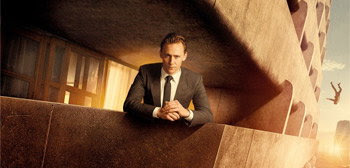
Meet the agents of chaos. Even more unique posters from Ben Wheatley's High-Rise worth featuring. This latest batch is a set of four character posters for Wheatley's movie about a high-rise building that represents the hierarchy of economic classes in society. There's one for Jeremy Irons as Anthony Royal, at the very top, plus Tom Hiddleston as Dr. Robert Laing, Luke Evans as Richard Wilder, and Sienna Miller as Charlotte Melville. A few weeks ago I wrote that High-Rise has the best posters of the year so far, and that's still the case, especially with these trippy kaleidoscopic designs. They've done such an excellent job selling this movie, the more we get, the more I'm looking forward to finally seeing it. Check out the posters below.

Here's the new set of character posters for Ben Wheatley's High-Rise - click for full-size via IMPAwards:

High-Rise Poster - Tom Hiddleston

High-Rise Poster - Sienna Miller

High-Rise Poster - Luke Evans

High-Rise Poster - Jeremy Irons

High-Rise - French Poster

For more updates on High-Rise, follow the film here: @HighRise_movie. It opens in the UK this spring.

High-Rise is directed by British filmmaker Ben Wheatley (Down Terrace, Kill List, Sightseers, A Field in England), from legendary producer Jeremy Thomas (The Last Emperor, Sexy Beast, A Dangerous Method, 13 Assassins, Kon-Tiki, Only Lovers Left Alive), and written by Amy Jump (Kill List, A Field in England). It's based on J.G. Ballard's acclaimed 1975 novel of the same name: "When a class war erupts inside a luxurious apartment block, modern elevators become violent battlegrounds and cocktail parties degenerate into marauding attacks on 'enemy' floors." The film first premiered at the Cannes Film Festival, and also played London and Fantastic Fest last year. Magnolia Pictures will release sometime in 2016 here in the US.

27 New Releases to Watch at Home This Week on Blu-ray/DVD

discs youth

Welcome back to This Week In Discs where we check out tomorrow’s new releases today!

Discs Section: Pick of the Week
blu youthYouth

What is it? Two old friends reunite at a resort in the Swiss Alps to share memories of the past and hopes for their limited futures. Fred (Michael Caine) is a celebrated conductor being wooed by the British government to perform for the Queen, but as a widower his bigger concern is trying to reconnect with his estranged daughter (Rachel Weisz). Mick (Harvey Keitel) meanwhile is a film director past his prime and trying to bring together a new project in an attempt to get back on top.

Why buy it? More observational character piece than narrative-driven drama, Paulo Sorrentino’s wise and relaxing ode to life is quite possibly 2015’s most beautiful film. Each frame reveals eye-catching visuals in nature, architecture, human motion, or even the simple, occasionally sad visage of Caine or Keitel. The beauty extends beyond the visual though with a score (by David Lang) and soundtrack that evoke mood and memory alongside surreal scenes of human affirmation and a lust for life’s smaller pleasures.

[Blu-ray/DVD extras: Featurettes]

sections_best
blu creedCreed

What is it? Adonis (Michael B. Jordan) was a troubled youngster prone to fighting, but he got a second chance when the widow of boxing legend Apollo Creed appeared in his life. The boy was the child of one of Apollo’s affairs and bounced around the foster system, but she takes him in knowing that each of them are connected through Apollo. The present day finds Adonis with a secret hobby of undefeated boxing matches south of the border, but knowing the ring is where his heart is he quits his job and heads to Philadelphia with a plan. He wants his father’s best friend and greatest opponent, Rocky Balboa (Sylvester Stallone), to train and mentor him towards becoming a champion boxer. The future may be Adonis’ goal, but it’s his past that continually threatens to derail that dream as he struggles to find his own voice — his own purpose — both in and out of the ring.

Why buy it? Creed is a rarity in many ways. Not only is it a sequel that continues the over-riding story even as it creates new blood of its own, but it’s also a film that far surpasses the true sequels that preceded it. Adonis’ story is his own, and as immediately similar as it appears to Rocky’s his challenges and path to victory are unique to his character. Director/co-writer Ryan Coogler (Fruitvale Station) finds a freshness beneath trappings that in many ways have grown stale. Stallone’s Rocky has seen a character arc encompassing nearly an entire life, and the franchise’s last film, Rocky Balboa, brought him to a satisfying ending. Bringing him back to the screen could easily have been seen as unnecessary pandering to give this new film a hook, but instead it — and Stallone — work beautifully to use the weight of Rocky’s character as both a tie to the past and an inspired blueprint for the future.

[Blu-ray/DVD extras: Featurettes, deleted scenes]

dvd intrudersIntruders

What is it? Anna (Beth Riesgraf) hasn’t left her home in nearly a decade. Her father’s death ten years ago left her crippled with agoraphobia, and even stepping onto her front porch is enough to debilitate her. She’s kept busy though caring for her sick older brother, but when he finally succumbs she’s left unsure as to her next move. Her hand is forced after a trio of young men arrive with plans to steal what they’ve heard is a fortune stashed away in the house. Unable to escape, Anna’s only hope is to fight back using her will to survive and an intimate knowledge of the house’s secrets.

Why buy it? Intruders (formerly Shut In) knows the best home invasion thrillers value smart characters on both sides of the front door and delivers the goods with wit, brains, and intriguing story turns. It’s Home Alone for people who think breaking and entering should be punishable by death. The setup makes great use of a characteristic (agoraphobia) that has yet to reach a saturation point, and it succeeds with an intense lead performance, fun story progression, and a terrifically realized single location. The house offers up a world that’s familiar while still being full of surprises, and the live-wire personalities roaming its halls light up the environment with their darkness. It’s entertaining and fun without being overly comedic, and it remains a smart ride through to the end.

[DVD extras: Featurette, commentary]

blu taxiJafar Panahi’s Taxi

What is it? Iranian director Jafar Panahi was officially forbidden from filmmaking by his government six years ago, but in that time he’s managed to direct three highly acclaimed films. His latest sees him posing as a taxi cab driver who spends the day picking up a wide variety of Tehran’s citizens, and through a handful of hidden cameras he documents his conversations with them during the drive.

Why rent it? Panahi’s efforts are alone worth praising as he works beneath the power and pressure of a restrictive regime, but the critical response is magnified by the reality that they’re also quite wonderful. Taxi reveals a people and a place that seems foreign to those who only know Iran via the daily news. That said, it should surprise no one that these people are just like us. They have hopes, dreams, fears, and everyday concerns, but perhaps one of the greatest surprises here is the laughter. Panahi finds real joy and humor, and it’s as delightful as it is insightful.

[Blu-ray/DVD extras: Essay]

blu the sinful dwarfThe Sinful Dwarf (Severin Films)

What is it? Olaf (Torben Bille) is a little person who together with his mother runs a boarding house that caters to tourists looking for an inexpensive place to bed down for a night or two, but what the visitors don’t know is that these landlords have ulterior motives. The place doubles as a sex-slave training ground, and Olaf finds a new prospect when a young couple moves in unaware of what’s in store for them.

Why buy it? I’m calling this a ‘buy’ but for a very specific audience only. The film is a sleazy, sordid, and disturbing gem guaranteed to leave you squirming whether you’re watching it alone, with friends, or maybe with your own mother. It’s a disturbing romp filled with sex, nudity, and some wildly inappropriate walking stick antics, and you can’t help but laugh nervously as the vile weirdness unfolds before your eyes. I already have Severin’s dvd release, but this new Blu-ray is packed with enough new extras and limited to only 3000 copies, so you’re damn right I’m going to pull an Olaf and double dip.

[Blu-ray extras: Two versions of film, featurettes, lost feature The Blue Balloon, excerpt from Torben Bille porno]

sections_rest

blu the boyThe Boy

What is it? Ted (Jared Breeze) is a young boy who lives with his father (David Morse) at a rundown motel in the American West. As a business it’s falling apart, but as an education the isolation and rotating residents offer Ted a unique opportunity to explore his dark creativity. His impulses magnify when a suspicious man (Rainn Wilson) checks in, and together they head toward confrontation and conflagration.

Why rent it? There’s an unavoidable obviousness to this slow-burn tale of evil that hurts the suspense and drama in various measures, but it survives on the strength of its performances and atmosphere. Breeze gives a terrifically unnerving turn as a boy destined for darkness, and Morse and Wilson both deliver strong support. The location, both the motel and the mountainous region, work beautifully to create a way-station feel as travelers come and go, and even if we know where its headed we’re engaged in the journey.

[Blu-ray/DVD extras: Featurette]

blu childhoods endChildhood’s End

What is it? Aliens arrive in the skies above the Earth, but rather than attack or invade with violence they communicate a desire to make the world a better place. Their actions lead to an end to war, famine, and illness (and employment and taxes…), but their motivations remain a mystery. The alien leader communicates through a human envoy for fifteen years before finally revealing his true form — and then things get really interesting.

Why rent it? Arthur C. Clarke’s classic novel finally gets an adaptation — and his name is utterly absent from the Blu-ray/DVD cover (front and back). It’s probably fitting as much has been changed on its move to the screen. The story basics remain, but there are enough smaller changes here regarding the children who become central to the narrative to affect the story’s tone and intentions. The reveal of the alien’s appearance is still terrific though, and there’s enough of the novel’s DNA remaining that fans will either enjoy it slightly or despise it wholesale.

[Blu-ray/DVD extras: Deleted scenes]

blu the danish girlThe Danish Girl

What is it? Gerda (Alicia Vikander) asks her husband, Einar (Eddie Redmayne), to stand in as a model for one of her paintings, and his time in women’s clothing triggers something within. He soon begins wearing them in private, and with Gerda’s blessing he takes strides in public as well. The love and trust between them allows for Einar’s much larger strides into history as a pioneer in the transgender experience.

Why rent it? This isn’t a particularly good movie even if the topic is important and relevant, but it’s difficult pointing a finger of blame in any one direction. Redmayne feels like he’s a trying a bit too hard, and director Tom Hooper does the same, but ultimately the film is made worth a watch by newly minted Academy Award-winner Vikander. It’s a lead performance, despite what the Academy says, and it features the entirety of the film’s humanity and heart. She’s a stunning physical presence, but it’s her performance that stands out as a woman whose love for another transcends her own situation.

[Blu-ray/DVD extras: Making of]

dvd don verdeanDon Verdean

What is it? Don Verdean (Sam Rockwell) is a biblical archaeologist who’s built a career on discovering religious artifacts, but his finds of late have been far from inspiring. When a pastor (Danny McBride) hires him to deliver something truly extraordinary Verdean chooses the road most-traveled and lies his ass off. His scam almost immediately lands both of them in hot water.

Why skip it? Director Jared Hess’ films are an acquired taste, and I for one cringe with each subsequent bite. Napoleon Dynamite, Nacho Libre, Gentleman Broncos — these are not good or funny movies. Those of you who disagree will want to give his latest a spin, but for me not even the film’s many knocks on religious frauds were enough to entertain or engage. The jokes and gags just repeatedly fall flat, and while the cast (which also includes Will Forte, Leslie Bibb, and Jemaine Clement) are all amped up the laughs are as fictional and absent as the biblical artifacts.

[Blu-ray/DVD extras: Featurettes, commentary]

dvd drunk history 3Drunk History: Season 3

What is it? Derek Waters sits down with comedians and actors — some of whom you’ll actually recognize — as they share stories from history about America’s states and cities as well as topics like games, spies, space, and inventors. Re-enactments, featuring more comedians and actors, bring these stories to life. Oh, and they’re teaching us these historical facts while drunk off their asses.

Why rent it? The comedy stays fairly consistent throughout the season with laughs coming from the drunken storytellers as often as they do from the re-enactments, and while some episodes are more laugh out loud funny than others they’re never less than entertaining. The fact that they’re also educational is an unexpected bonus.

[DVD extras: Deleted scenes]

dvd dudes and dragonsDudes & Dragons

What is it? An evil wizard (James Marsters) imprisons a helpless princess in an attempt to win her hand, but when she refuses to love him he dispatches a dragon to punish anyone showing public displays of affection. Her only hope is a warrior brave enough and powerful enough to defeat the villain and free her.

Why skip it? It’s necessary to know going in that this is an extremely low budget fantasy film. It’s evident in the casting but even more so in the visual effects department which leave a lot to be desired — having all (or nearly) all of the film shot on a green screen doesn’t help matters either. There are some laughs here, intentional ones, but at nearly two hours this can really only be recommended to hardcore, very forgiving fantasy fans.

[DVD extras: Bloopers, featurettes, deleted scenes]

dvd gods clubGod’s Club

What is it? Michael Evens (Stephen Baldwin) is a single-parent and a widower who also teaches at a local high school. He decides one day to restart the Bible club that his wife once ran, but he quickly runs into obstacles in the form of other parents with concerns. Will he and his club triumph against these challenges?

Why skip it? Don’t worry, the DVD cover goes ahead and spoils that for you — of course he does. The arguments that are thrown up against the club and its use of public school property are paper thin. That’s not because there aren’t good arguments to be found, but instead it just makes it easier for Baldwin to knock them down with bible quotes and stiff acting. The film sets up a young romance of sorts too between Evens’ daughter and the son of the club’s greatest opponent (Lorenzo Lamas), but it seems a bit misguided in its execution and outcome.

[DVD extras: Featurette, bloopers]

blu gogGog

What is it? A secret underground research laboratory becomes the scene of a tragedy when two of its scientists are killed under mysterious circumstances. Something took control of their experiment with malicious and deadly results. A security expert arrives on-site to investigate and makes a frightening discovery involving artificial intelligence and a pair of highly-capable robots.

Why rent it? This sci-fi thriller was originally released in the ’50s in 3-D, but mishandling of film materials meant only standard 2-D versions were available in the decades following its theatrical opening. The missing elements were discovered half a century later, and after a painstaking restoration the film is once again ready to be viewed as originally intended. The movie itself is a fun little sci-fi flick populated with misguided scientists, murderous robots, and sassy chatter between the sexes, and Kino Lorber’s new Blu-ray offers both versions along with informative special features.

[Blu-ray extras: 3-D/2-D versions, commentary, restoration demo, interview]

Copyright © Cinenus | Powered by Blogger

Design by Anders Noren | Blogger Theme by NewBloggerThemes.com