The film industry in one place - Articles, Reviews, trailers and hype!

Friday, 9 April 2021

Dr. Erskine is Still Right in ‘The Falcon and the Winter Soldier’ Episode 4

The Falcon and the Winter Soldier Explained is our ongoing series delving into Marvel’s grand new bromance between Sam Wilson and Bucky Barnes. In this entry, we examine The Falcon and the Winter Soldier Episode 4 (“The Whole World is Watching”) and consider how it confirms what we already know about the Super-Soldier serum. Yes, prepare for SPOILERS.


What’s so special about Captain America? Nothing. It’s a costume, and we’ve already seen multiple people wear it within the Marvel Cinematic Universe. What’s so special about Steve Rogers? There’s only one of him. He was a little fella with a good heart.

Around the midpoint of The Falcon and the Winter Soldier Episode 4, which is entitled “The Whole World is Watching,” John Walker (Wyatt Russell) asks his buddy Lemar Hoskins (Clé Bennett) if he would take the Super-Soldier serum given the chance. Without skipping a beat, Hoskins answers, “Hells yeah.”

Walker is impressed with his quick response. He worries that the serum would alter his biology somehow, making him something he’s not. Hoskins has no concern. He says a line that purposefully echoes something Dr. Abraham Erskine told Steve Rogers before the young soldier went under the needle in Captain America: The First Avenger, “Power just makes a person more of themselves, right?”

When the United States government was considering the Super-Soldier program, they gathered the best of the best. In their minds, that meant the beefiest and toughest bodies amongst their ranks. Dr. Erskine, however, saw something unique in Steve when the scientist stumbled upon him during the first Stark Expo in 1943.

Steve wanted nothing more than to help those who couldn’t fight back. He was a scrawny asthmatic who weighed little more than a wet blanket, but he did not like bullies. And he wouldn’t take “no” for an answer. Rejection after rejection, Steve returned to the army recruitment office. In that determination, Dr. Erskine identified what was missing from his musclehead test subjects: heart.

On the eve of the Super-Soldier procedure, Dr. Erskine jabbed his finger into Steve’s chest. He would repeat the gesture as his final act before perishing from an assassin’s bullet. Steve would struggle with his scientific gift throughout the MCU, but he never forgot why the doctor chose him. He owed Erskine and the world his good nature.

The Super-Soldier serum doesn’t make you better than what you are, it makes what’s you more you. Power amplifies your capabilities. It’s a miracle in that way, but it’s not going to save you from yourself. There’s no escaping you.

John Walker desperately wants to be all that he can be, and when he’s in combat against the Flag-Smashers, all that he can be matters very little. He’s too human, and his body constantly fails him during combat with superior soldiers. Even as a tough brawler, he’s never in a fair fight, and he’s eager to even the playing field.

In The Falcon and the Winter Soldier Episode 4, Zemo (Daniel Brühl) wrestles the remaining Super-Soldier vials from Karli Morgenthau (Erin Kellyman) and goes stomp-crazy, smashing as many of them as he can before getting Cap’s shield bounced off his head. Walker sees his moment and snatches a vial for himself. After his conversation with Hoskins, injecting the serum into his blood seems like the logical option. He wants to do good, and the juice will help him do so.

Except doing good and being good are two different things. When we first properly met John Walker in The Falcon and the Winter Soldier Episode 2, we’re told by Hoskins that the new Captain America can no longer solve problems with his fists. It’s a solution that would reflect poorly on the flag he carries on his chest. Walker knows no other way, and every moment leading toward this week’s climax further solidifies this macho imperfection.

Walker, at his core, is an angry dude. We already know how such a hot emotion can play out with an enhanced creature with the Hulk. Bruce Banner put in the work, and he made his mission the ability to temper and manipulate his rage. Walker needs to do the same, but it might already be too late for him.

As we see at the end of The Falcon and the Winter Soldier Episode 4, the Super-Soldier serum in his veins does for Walker what it did for Dr. Erskine’s first test subject, Red Skull. All that pent-up aggression bubbling below the surface bursts forth.

Karli lets loose her full might upon Hoskins during the heat of battle, and it caves his frail, very human chest. With his pal a corpse, Walker explodes. He chases the Flag-Smashers into the streets and corners one in the public square. Seeing red, he pounds the terrorist into the concrete, lifting Captain America’s shield over his head and slamming it into his opponent’s body over and over and over again while the whole world watches. Whatever the crimes of the dead guy at his feet, the action brands Captain America a stone-cold killer.

Who’s to blame? Walker, certainly. But Sam Wilson (Anthony Mackie) and Bucky Barnes (Sebastian Stan) are standing not too far away. One of them rejected Rogers’ offer of the shield. The other orchestrated Zemo’s escape, propelling all these deadly chess pieces into place. They can no longer ignore the Captain America problem.

Sam and Bucky have to deal with John Walker, now. Once they do, they have to deal with the shield. If they leave it on the ground, someone else will pick it up. To halt others from perverting Steve Rogers’ legacy, Sam or Bucky have to fill that suit. They either stand back and watch Captain America become a monster, or they show folks how it’s meant to be done.

Dr. Erskine believed in Steve Rogers. Steve Rogers believes in Sam and Bucky. The titular BFFs of The Falcon and the Winter Soldier should rest their faith there and continue to doubt their abilities. Constant questioning of self is crucial, and it’s what made Steve Rogers a great Captain America. Bucky is already a master of internal reflection, and Sam is well on his way. He already knows he doesn’t need the Super-Soldier serum to do good in the world. That gives him a jump on John Walker.


The Falcon and the Winter Soldier Episode 4 is now available to stream on Disney+.

The Art and Nostalgia of the Film Company Logo

Welcome to The Queue — your daily distraction of curated video content sourced from across the web. Today, we’re watching a video essay about what makes a great movie studio logo.


Who doesn’t love a good opening shot? Blood-red roses swaying against a pristine white picket fence tell you everything you need to know about the suburban horror of Blue Velvet. The bright, sparkling eye that opens Blade Runner reflects not only plumes of industrial flames but the oracular imagery of the film to come.

But most movies don’t start with the film itself. First come the logos: the (sometimes wildly long) string of corporate thumbprints from the film’s production companies and distributors. And some production logos are built better than others. Some incorporate evocative symbols to get moviegoing audiences in the mood: fireworks; the open sky; physics-defying light sources.

The escalating boom of the THX logo is itself a pavlovian signal to brace yourself for the heightened spectacle of being in a movie theater. Some movie studio logos go one step further and literally shape themselves after the films they introduce, integrating color filters, match transitions, and other impressive sleight-of-hand to seamlessly blur the line between logo and film.

The following video essay unpacks what makes a great film company logo great, from subtle designs to brazen appeals to nostalgia. If this stuff interests you, after you give the video below a watch, I’d highly recommend checking out the Closing Logo Group wiki. It’s a marvelous resource on how movie studio logos shift and modulate over time. And as the video essay notes, that kind of flexibility is a key ingredient to crafting an enduring logo.

Watch “What Makes a Great Film Company Logo?“:

Who made this?

This video comes courtesy of the fine folks at Little White Lies, a film-obsessed magazine based in the United Kingdom. Luís Azevedo wrote and edited this video, and Adam Woodward and David Jenkins produced it. You can follow Little White Lies on Twitter here. And you can check out their official website here. You can subscribe to their YouTube account here.

More Videos Like This

‘Thunder Force’ Packs a Fun and Funny Punch

The world is often unkind to film collaborations between real-life couples, but while Ben Affleck and Gwyneth Paltrow called it quits after Bounce (2000) and Ben Affleck and Jennifer Lopez called it quits after Jersey Girl (2004), others keep right on trucking through the negativity. Ben Falcone has directed four previous features starring Melissa McCarthy, his wife and one of the world’s funniest humans, and while the three theatrical releases all made a profit they’re also almost universally reviled. The fourth, Superintelligence (2020), went straight to Netflix where it also found itself lambasted critically. Turns out fifth time is the charm as their latest film, Thunder Force, is a silly, warm, and frequently funny time at the movies.

Lydia and Emily have been best friends since grade school where the former helped the latter stand up to obnoxious bullies. Emily was orphaned after a miscreant — sociopaths mutated by cosmic rays in the early 80s and given super powers which they now use for evil — killed her parents, and starting from a young age she’s dedicated herself to finding a way to fight back. The two have parted ways for years, but when a now Lydia (McCarthy) goes to visit Emily (Octavia Spencer) at her high-tech lab she accidentally injects herself with a newly invented super serum that was meant for her friend. Emily takes the other half, and soon the two have powers of their own — Lydia is super strong, and Emily can turn invisible.

And just like that, the super duo known as Thunder Force is born.

Thunder Force takes the basic template of numerous superhero movies, dumbs it down, and then proceeds to have an utterly silly time with the concept. Falcone, who also wrote the script (and plays a small but funny role), keeps things loose and playful despite the threat of carnage with frequent dips into absurdity that actively repel any feeling of seriousness. It arguably would have benefited from a more consistent commitment to goofiness, think Barb and Star Go to Vista Del Mar (2021), but it still delivers entertaining action, a little heart, and more laughs than all four previous Falcone/McCarthy comedies combined.

As should be expected, McCarthy is front and center on the comedy front as she continues to be a master at drawing out the giggles from nearly any situation. Some bits get away from her, but others highlight her comedic creativity and delivery with laugh out loud results — come for her Urkel impression, but stay for her Jodie Foster riff. She’s matched beat for beat by one of the film’s miscreant villains, The Crab (Jason Bateman), a normal guy who chose a life of crime after developing crab arms from the shoulders down to his pincers. The character would feel right at home in 1999’s Mystery Men, and Bateman’s dry delivery squeezes every last laugh out of the ridiculous premise. His “crab walk” out of the frame, pincers snapping in the air, is the definition of stupidly fun. The two even share an 80s-inspired dance number that is pure joy on wires, and that’s not even the most ridiculous moment we get between them.

The rest of the cast may not be up to their level with the laughs, but they’re all in on the goofiness. Emily is a character afraid to cut loose, and Spencer’s performance follows suit before eventually relaxing into the silliness. Pom Klementieff nails a mean little miscreant named Laser, Melissa Leo keeps a straight face as Emily’s assistant, and Taylor Mosby does good work as Emily’s brilliant daughter Tracy. The always great Bobby Cannavale plays the mayor of Chicago, a man who goes by The King, and he absolutely revels in the character’s shadiness.

Falcone’s script does layer in a handful of reveals, but all of them, without fail, will be seen miles away by anyone who’s watched more than a dozen movies. The obviousness doesn’t hurt Thunder Force, though, as its mandate towards goofy fun takes precedence over all else. The same goes for lip service paid to the idea that the damage done by heroes might outweigh the good they do as the idea is broached and then quickly forgotten. The friendship at the film’s core works a bit better, as does the relationship with Tracy, but it’s all slight asides next to the jokes and smashy bashy action.

No one will mistake the action set-pieces here for a Marvel film, but it’s entertaining even on a budget. Walls crumble, lightning strikes, and McCarthy clocks more hours on wires as she leaps, falls, and flips through the air. The action is creatively staged to make McCarthy and Spencer viable superheroes, and it’s engaging stuff wrapped in silliness.

One hopes that Thunder Force marks a turning point for Team Falcone/McCarthy, even if that means the duo’s future collaborations are limited to sequels. There’s a whole world of miscreants out there, and only a fool would pass up the opportunity to watch a crab-loving, raw chicken-eating, ass-kicking Melissa McCarthy reign ridiculous hell down upon them all.

Thursday, 8 April 2021

‘Creepshow’ Season 2, Episode 2 Brings Mean Spirits and Creepy Crawlies

Settle in, boils and ghouls, season 2 of Creepshow is upon us! The record-breaking anthology series is back once more from the freaks over at Shudder, and it aims to continue the cursed legacy of Stephen King and George Romero’s classic with episodic double bills of comeuppance-riddled spooky stories. The inimitable Rob Hunter and I reviewed and ranked each episode of season 1, and while it left us wanting better it also left us wanting more. Some episodes/segments captured the pulpy, morbid glee of the original film, and it’s those glimmers of genuinely ghoulish goodies that have us enticed for season 2. Rob has already covered the mixed bag premiere, so let’s shamble on over to the second showing of the series!

“Dead & Breakfast”
Director: Axelle Carolyn
Writer: Michael Rousselet and Erik Sandoval

Pam and Sam Spinster (Ali Larter and C. Thomas Howell) run an especially morbid hotel: a bed and breakfast situated in the boarding house where their grandmother supposedly murdered a good portion of her patrons. Only the siblings aren’t “running” much of anything these days. Their haunted house/hospitality combo isn’t bringing in the customers. Sam wants out, but Pam thinks they just need to find the right audience. They offer a free stay to an influencer named Morgue (Iman Benson) who specializes in true crime, hoping to curry her online favor. But when Morgue begins to doubt the veracity of the house’s murderous history, the siblings cook up a plan to scare her straight.

The idea of making a bed and breakfast out of an H.H. Holmes-style murder house — with secret passageways, murder shoots, and sound-muffling steel walls — is a great idea, and the modern wrinkle that bed and breakfasts live and die by their online social currency is astute. One thing this segment absolutely gets right is pacing, but unfortunately, the speed does make some of the pivotal character moments blur in the rear-view mirror. The final release of Pam’s murderous impulses feels rushed, but her aggressive obsession with her grandmother’s legacy has a precedent, at least. The same cannot be said of Sam’s final act of violence: a cunning and wildly out of character move to further the house’s value as a murder hot spot.

The segment’s apparent target is the commercialization of serial killing. The fact that serial murder has, in recent years, exploded into an unsettling fandom that frequently forgets how genuinely horrifying murder can be. But the power of a critique never really comes into focus. Pam’s obsession with her grandmother’s “place in history” has the best arc, thematically, as her idolization sours into outright mimicry.

Morgue’s contribution to the theme is less straightforward. Benson’s likable performance makes it difficult to know how the segment wants us to feel, both about true crime as a fandom and about the siblings’ hatred for her as an influential, passionate young person. It could be that the segment is trying to say that some forms of true crime fandom are less egregious than others. But for a segment that moves as quickly as this, that’s a tricky tightrope walk to dance across in a very short amount of time.

The final ironic twist reveals that the grandma was, in fact, a mass murderer. So, in the end, Morgue’s fatal skepticism and Sam’s hail mary to re-brand the house in authenticity were all for naught. It’s a twist that would feel more like, well, a twist, had Sam’s Big Plan been more present throughout the segment. In the end, it’s a little messy, but as Creepshow segments go it’s better than most. Low bar cleared.


“Pesticide”
Director: Greg Nicotero
Writer: Frank Dietz

Harlan King (Josh McDermitt) stomps through yards with one, singular purpose: to eradicate pests. After a routine job at a therapy clinic, King pops off to his next gig at a derelict property. Out of the shadows steps Murdoch (Keith David), whose Luciferian bargain fails to raise alarm bells in King’s fume-addled brain. Murdoch can’t tear the property down to build condos until he deals with his pest problem. King is horrified to learn that Murdoch’s scourge is, in fact, the unhoused community living on the premises.

While he initially refuses to exterminate a group of human beings, Murdoch’s large suitcase full of cash prevails and King takes the job. While he ultimately opts not to follow through, King winds up murdering the community anyway, accidentally dropping a poisonous cocktail into the communal soup pot during a scuffle with an agitated man. King’s guilt eats him up, and some of the hallucinations prove more real than others.

The segment has several fingers in several different pies. And on paper the multiple-pie-jamming maneuver makes sense. It’s a kind of Tell-Tale Heart meets Street Trash meets “They’re Creeping Up on You,” a.k.a. the wildly underrated cockroach revenge segment from the original film. Unfortunately, the segment itself seems to get lost in its own sauce. Murdoch’s identity is less mysterious than it is mystifying: is he the Devil, as King claims? Or is he some vengeful Pest Deity who’s come to wreak unholy revenge on the exterminator so mindlessly slaughtering his denizens? I fully expected the final reveal to be that Murdoch was some giant cockroach. Instead, he’s just…vague Satan? I guess?

Another issue (that births others) is King’s comeuppance. In the beginning of the segment, McDermitt is doing his best John Goodman in Arachnophobia impression. And despite lacking social graces, the occupational passion and quirks are more endearing than they are repulsive. We aren’t really provided with enough evidence in these earlier segments to believe that King’s cruelty towards pests might extend towards his fellow man. Heck even when the money sways him his heart’s not in it. And his hand being forced makes his fate unfulfilling. But, more troublingly, it makes the big weighty point the segment is trying to make a little … messy.

I want to give the episode the benefit of the doubt: that the explicit comparison between unhoused folks and rats is meant to repulse and shock us. But just after King scrambles last-minute onto the moral high ground, the script still necessitates the murder of the community. Not only that, it can’t help but indulge the tired trope of unhoused people as jumpscare fodder. Social commentary and horror are long-standing bedfellows, and there’s plenty of punching up to do when it comes to the very real horrors faced by people experiencing homelessness. Here, their stigma and less-dead status serve a protagonist’s punchline. Which, in the end, is a distracting sin no amount of Keith David scene-chewing and enormous practical insects can forgive.

Follow all of our Creepshow coverage!

26 Things We Learned from the ‘Barb and Star Go to Vista Del Mar’ Commentary

Welcome to Commentary Commentary, where we sit and listen to filmmakers talk about their work, then share the most interesting parts. In this edition, Rob Hunter enjoys the commentary for one of the year’s funniest films, Barb and Star Go to Vista Del Mar.


It’s been a while since we’ve gotten a truly silly comedy out of Hollywood, so the arrival of Barb and Star Go to Vista Del Mar earlier this year was a gloriously fun gift for laugh lovers. It is ridiculous, and now that it’s on home video, you’ll be happy to know that the humor holds up on repeat viewings. The Blu-ray/DVD features some fun special features including a commentary with the two leads/co-writers and the director, so you better believe we gave it a listen.

Keep reading to see what I heard on the commentary for Barb and Star Go to Vista Del Mar!

Barb and Star Go to Vista Del Mar (2021)

Commentators: Josh Greenbaum (director), Annie Mumolo (writer/actor), Kristen Wiig (writer/actor)

1. The opening onscreen definition of “culottes” was added late in editing as they all realized that most folks don’t know and love them to the same degree as these three filmmakers.

2. It took Reyn Doi (he plays Yoyo) a single take to land that newspaper on the front step as planned. That’s not true. “I think he had to fake it, then we dropped it right in front of the lens.”

3. They refer to Barb’s and Star’s wigs as the film’s other stars. “We fought with them, we loved them, we hated them.”

4. They wrote and/or shot scenes for a montage of reasons why they’d be fired including writing notes with a Sharpie on the furniture, riding a moped through the store, and jumping out of a cabinet to scare a customer who then proceeded to have a heart attack.

5. “We always write roles for Wendi [McLendon-Covey],” as in addition to being a supremely nice person she delivers pure gold with her every utterance. They add Michael Hitchcock to that shortlist as well.

6. Wiig and Mumolo have been writing comedic, middle-aged ladies since their days back in The Groundlings, the legendary LA improv group.

7. They were all constantly aware of nailing the tone they aimed for, as “if it’s too saccharine it’s not our movie” but if they steamroll through the characters without “getting real” at times then viewers won’t care about them.

8. Barb (Mumolo) and Star’s (Wiig) decision to take the trip was originally followed by a scene where they leave the house and are attacked by an owl. “You mean when the owl sexually assaulted us? And hammered on Kristen?”

9. Jamie Dornan apparently had a big crush on Estelle Getty, circa The Golden Girls, when he was a child.

10. The mice originally had bigger roles before “other people had a say in things and made us cut things.”

11. They reached out to Don Cheadle to make sure he was okay with them mispronouncing his name.

12. Gary the Concierge (Hitchcock) wears a three-piece suit, and as the daily temperatures were usually over a hundred degrees he would sweat in it. They ultimately decided to hide the sweat stains by drenching the entire suit in water. (This is one of the commentary’s many “factual” moments that I’m not entirely sure is factual.)

13. The missing microchip originally ended up in Star’s hair, and the search for it led to an adventure on a glass-bottom boat.

14. That’s really Dornan singing, and it was his choice to tear his shirt off at the end of the song. He wasn’t supposed to — they mention the shirt wasn’t designed as a tear-away — but he felt it was necessary.

15. Production designer Steve Saklad cameos as the author photo on the back of the self-help book that Edgar (Dornan) is reading.

16. The ice cream at 47:25 is actually mashed potatoes. The cotton candy is insulation material.

17. There were alligators in those canals that they’re water-biking through, and Greenbaum didn’t tell either of them until after they finished filming.

18. Damon Wayans Jr. plays Darlie Bunkle, and his first scene with Dornan sees him wearing a face mask which, while funny at the time, plays differently for the trio watching it during a pandemic. “Hopefully when you’re watching this in a decade it’s not normal anymore.”

19. They shot a scene with Darlie and Edgar meeting up at a Pasta & Stuff restaurant that results in disaster, but it was cut for pacing.

20. The Tommy Bahama (Andy Garcia) appearance was originally meant to include Panama Jack — and they really wanted Barack Obama to play him.

21. Barb’s line about Edgar “pleasuring” her was originally “penetrating,” but that was enough to earn an R rating so they made the change.

22. The crab that talks to Star was brought to life by two puppeteers. They don’t mention Morgan Freeman’s name, but while the voice certainly sounds like Morgan Freeman, it most definitely is not Morgan Freeman.

23. Early screenings left people wondering who was playing Sharon Gordon Fisherman. “That’s insane to me,” replies Wiig.

24. They shot the end water fight in the actual ocean, not a water tank.

25. The montage while Barb and Star are underwater thinking they’re about to die is an encapsulation of the film’s themes and tone too. “It is kind of emotional and sweet, and then it’s really absurdist and silly at the same time.”

26. The banana boat was deflated a bit and towed slower than usual for the safety of Wiig and Mumolo, but it meant they had to pretend it was bouncy making for an awkward ride.

Best in Context-Free Commentary

“Should we just go through and say everything that went wrong?”

“Thanks, Getty Images!”

“No one can wear a floral blouse like Jamie.”

“We definitely came up with multiple different positions for you to wake up in.”

“Despite appearances, those bracelets were not expensive.”

“If you’re still listening, well done.”

Final Thoughts

It’s clear that these three had an absolute blast making this bonkers movie. Barb and Star Go to Vista Del Mar is silliness distilled, and their appreciation for that absurdity comes through in the film and in their commentary. The big takeaway here, beyond the laughs, is the lesson to be true to your own vision. Sure Wiig and Mumolo came into this with past credits, but they still had to fight for the things they felt strongly about in the telling of their story. The results speak for themselves.

Read more Commentary Commentary from the archives.

Wednesday, 7 April 2021

The Difference Between Hard and Soft Worldbuilding

Welcome to The Queue — your daily distraction of curated video content sourced from across the web. Today, we’re watching a video essay about the difference between hard and soft worldbuilding.


You might be unfamiliar with the terms “hard worldbuilding” and “soft worldbuilding.” But there’s a very good chance that you do, in fact, know the details of their difference. You’ve likely seen examples of each and simply need to connect the dots to bring the definitions into focus.

There’s a greater chance you’ve heard of “hard science fiction,” which describes a category within the genre chiefly concerned with logic, rules, and scientific accuracy. Think: the eugenics in Gattaca, the potato-growing in The Martian, or the way time accelerates in Interstellar.

Soft science fiction,” on the other hand, cares less about plausibility and more about engaging viewers through character, culture, and relationships. Frankenstein, for instance, is less interested in the specificities of re-animation than the consequences of violating the natural order of things.

This is, effectively, also the difference between hard worldbuilding and soft worldbuilding. The former crafts immersion through concrete, consistent rules. The latter operates independently of logic, with flexibility and fantasy. It is, as the video essay below explains, a difference between explicit and imagined depth. And neither approach is better or worse than the other, merely different.

Watch “Hard Worldbuilding vs. Soft Worldbuilding | A Study of Studio Ghibli“:

Who made this?

This video essay is by Tim Hickson, the New Zealand-based creator of  Hello Future Me. It was co-written by Ellie Gordon. Hickson has quite literally written the book on worldbuilding, the subject of the above video. Hickson’s book is on Amazon (though we’d encourage you to seek out a local retailer, if possible), here. You can follow Hickson on Twitter, here. And you can subscribe to Hello Future Me, here.

More Videos Like This

What’s New to Stream on Amazon Prime for April 2021

Crossing the Streams is our series of guides looking at all the offerings hitting the big streaming services each month. This time we’re checking out the new Amazon Prime arrivals for April 2021, including plenty of new releases, great Westerns, Russell Crowe movies, and more! 


Amazon Prime Pick of the Month for April 2021

Spontaneous Movie

While most YA movies tend to focus heavily on one genre or another, others are far braver in hitting multiple marks simultaneously. Spontaneous (premieres on April 12th) is one of those latter gems as it infuses a thrilling setup — teens start randomly exploding in showers of blood — with big laughs, heartfelt romance, and a heavy as hell metaphorical look at the uncertainty of the world currently faced by teens. There are shades of school shooting trauma here too, and while you wouldn’t think this cocktail would entirely work it absolutely does. Katherine Langford and Charlie Plummer shine, the blood is frequent and copious, and the ending packs an emotional punch. Give this one a spin.


The Many Faces of Russell Crowe

Russell Crowe Master And Commander

Run a poll asking people to name a film they wish had received a sequel, and the odds are quite good that Peter Weir’s Master and Commander: The Far Side of the World (2003) will rank pretty damn high. Based on the acclaimed series of novels by Patrick O’Brian, the film is a sea-set adventure about a British warship in pursuit of a French counterpart through dangerous seas, threats of mutiny, and the harsh pain of time. Russell Crowe plays the British captain and gives a fantastic performance as a man who presses his crew at risk of both his limits and theirs, and the battle sequences are stellar displays of old-school glory.

Remember that time Darren Aronofsky delivered a $360 million box-office haul with a religious epic? Noah (2014) premieres on April 9th and casts Crowe as the titular bible character who, on instructions from God, builds an enormous ark, rounds up a ton of animals, and faces off against asshole mobs and apocalyptic weather. It’s a big, thrilling epic despite hewing close enough to the source material to be considered a respectful adaptation, and it succeeds as large entertainment. Sure, some independent thinker chaos would have been appreciated, but it should appeal to fans of Crowe, big disaster cinema, and bible stories.

Crowe’s most recent feature hasn’t quite gotten a fair shake, so allow me to step up to defend Unhinged (2020). Yes, the protagonist is a dumb bag of rocks — how’s that for the start of my defense?! — but everything else is good stuff for genre fans. Crowe plays a guy having a really bad day, week, month, and life, and when a young woman gives him grief during the morning commute he targets her for a deadly lesson. This is a mean-spirited thriller with a surprisingly high body count, and the car action/stunts are pretty great as they deliver lots of metal-crunching practical effects. Crowe is an absolute monster and legitimately terrifying as the embodiment of the “angry white male,” but while it can be that simple if you want it the film also delivers a strong lesson in empathy — you never know how another person is suffering, so maybe just be nice?


Westerns!

Open Range Costner Duvall

The 60s and 70s are filled with films whose ratings would probably surprise you, and Chato’s Land (1972) is among them. This PG-rated Western is filled with some foul antics en route to a thrilling adventure about a mixed-race Native American (Charles Bronson) targeted by a posse for killing a man in self-defense. Bronson is leathery brilliance, and director Michael Winner keeps the action, suspense, and scenery flowing. The supporting cast includes Jack Palance, Richard Jordan, and James Whitmore, and it’s a fantastic film.

Two movies opened within months of each other in the early 90s which shared a very similar focus, but while the Kevin Costner-led Wyatt Earp (1994) failed to find an audience, Tombstone (1993) has become a beloved Western classic. The cast alone is insane — Kurt Russell, Val Kilmer, Sam Elliott, Bill Paxton, Powers Boothe, Michael Biehn, Stephen Lang, and more — but director George P. Cosmatos backs it up with stylish, highly entertaining action and grand scope. It’s a banger in all the right ways, filled with quotable lines, and endlessly great on rewatch too.

Costner may have lost that particular battle, but he returned a decade later to deliver one of the genre’s best with Open Range (2003). His third and final (as of now) directorial effort, the film is a gorgeous nod to classic Westerns as he and a terrific Robert Duvall find trouble in their attempt to herd cattle through disputed territory. Michael Gambon makes a wonderfully evil villain, Annette Bening crafts a character who’s more than mere window dressing, and Costner shoots the hell out of the American landscape — and action scenes. The violence here is brutally effective, but it never overshadows the character work as these men struggle with past sins and present predicaments. If you’ve missed this one so far, do yourself a favor and watch it now.


New Amazon Originals

Without Remorse Movie

Race and America’s disgraceful past (and present) have often been elements in genre fare up to and including the recent HBO series Lovecraft Country, and now Amazon is entering the fray with Them (premieres on April 9th). The show will follow one story per season involving terror within the American Dream, and first up is the story of a Black family who moves to Los Angeles from the South in the 50s in a search for something better only to find horror both human and otherwise awaiting them. Sounds like heavy stuff, but if it captures and channels real horrors in service of narrative thrills it could be something very special for genre fans.

Amazon already has a successful Jack Ryan series with John Krasinski, and now they’re expanding their world with Tom Clancy’s Without Remorse (premieres April 30th). Granted, while they may not make the play for a crossover (although that would be a mistake) the film looks to have strong bones even as a standalone. Michael B. Jordan takes the lead in this Clancy adaptation for director Stefano Sollima (Sicario: Day of the Soldado, 2018) and co-writer Taylor Sheridan (Sicario, 2015) about a Navy SEAL on a mission of revenge. Yes, please, to all of this… and if it ends with Ryan asking him to join the Clancy initiative, all the better.


The Complete Amazon Prime List for April 2021

Release Date Title Note
4/1 The 6th Day (2001)
About a Boy (2002)
The Abyss (1989)
Aloha (2015)
American Pastoral (2016)
Anaconda (1997)
Anna Karenina (2012)
Art of Falling in Love (2019)
Because I Said So (2007)
Bob Roberts (1992)
The Bone Collector (1999)
Brüno (2009)
Captain Kronos: Vampire Hunter (1974)
Chato's Land (1972)
Cheech & Chong's Still Smokin' (1983)
Cohen And Tate (1989)
Daddy's Little Girls (2007)
The Dead Zone (1983)
Dear John (2010)
Devil In A Blue Dress (1995)
The Devil's Double (2011)
Did You Hear About The Morgans? (2009)
Dirty Rotten Scoundrels (1988)
Evan Almighty (2007)
For Colored Girls (2010)
Forgetting Sarah Marshall (2008)
Four Rooms (1995)
Four Weddings And A Funeral (1994)
Frankie & Alice (2014)
Fun Size (2012)
G.I. Joe: The Rise Of Cobra (2009)
The Gift (2000)
Girl Most Likely (2012)
Girl With A Pearl Earring (2003)
Good Luck Chuck (2007)
The Great Debaters (2007)
Gunfighters Of Abilene (1959)
Hancock (2008)
The Happening (2008)
Head Of State (2003)
A Hologram For The King (2016)
How To Train Your Dragon (2010)
The Hunting Party (1971)
Inception (2010)
Johnny English (2003)
Kung Fu Panda (2008)
Lady In A Cage (1964)
Larry Crowne (2011)
League Of Extraordinary Gentlemen (2003)
The Lincoln Lawyer (2011)
Lords Of Dogtown (2005)
Love in Harmony Valley (2020)
Madea's Big Happy Family (2011)
Madea Goes To Jail (2009)
Mad Max (1980)
The Man Who Could Cheat Death (1959)
Master And Commander: The Far Side Of The World (2003)
Men Of Honor (2000)
Midnight Sun (2018)
Milk (2009)
Minority Report (2002)
Moneyball (2011)
Monster's Ball (2001)
Moonrise Kingdom (2012)
Motel Hell (1980)
Mud (2012)
My Cousin Vinny (1992)
New In Town (1992)
October Sky (1999)
Open Range (2003)
The Pawnbroker (1964)
Platoon (1986)
The Program (1993)
The Replacement Killers (1998)
Road to Perdition (2002)
The Royal Tenenbaums (2011)
Salt (2010)
Seeking A Friend For The End Of The World
Shaft (2000)
Shooter (2007)
A Simple Plan (1998)
The Skull (1965)
Sleeping With The Enemy (1991)
Smiley Face Killers (2020)
So I Married An Axe Murderer (1993)
Something's Gotta Give (2003)
Step Up Revolution (2012)
The Sting (1973)
The Sting II (1983)
The Sum Of All Fears (2002)
Surf's Up (2007)
That Thing You Do! (1996)
Tombstone (1993)
Tyler Perry's Madea's Tough Love
Untraceable (2008)
Valerie (1957)
Waiting To Exhale (1995)
What About Bob? (1991)
What Women Want (2000)
4/2 Unhinged (2020)
4/3 Blair Witch (2016)
4/7 The Answer Man (2009)
Girl From Monaco (2009)
High-Rise (2016)
The Priest (2009)
Pulse (2005)
Ragnarok (2009)
Trollhunter (2011)
4/8 Bleed for This (2016)
4/9 Noah (2014)
Them Amazon Original Series
4/12 Paranormal Activity 4 (2012)
Spontaneous (2020)
4/14 Burden (2020)
Cézanne Et Moi (2017)
Terror's Advocate (2007)
4/16 Cirque Du Freak: The Vampire's Assistant (2009)
Somewhere (2010)
Wander (2020)
4/18 Side Effects (2013)
4/20 Carol (2015)
4/21 The Hero Of Color City (2014)
Merantau (2010)
Muay Thai Giant (2011)
Venus And Serena (2013)
4/26 The Artist (2012)
4/28 Arrival (2016)
Barry Munday (2010)
The Commune (2017)
Harlem Aria (2010)
Kiltro (2008)
The Warlords (2010)
4/30 Tom Clancy's Without Remorse Amazon Original Movie

Follow all of our monthly streaming guides.

Tuesday, 6 April 2021

The 75 Best Final Shots in Movie History

Welcome to a list of The Best Final Shots in Movie History, presented by the team behind One Perfect Shot. It could go without saying, but we’ll say it anyway: this list includes spoilers for at least 75 movies. Please be sure that you’re ready for that before scrolling any further.


Anyone in storytelling will tell you that a good ending is hard-won. That beginning a film, building up a world and getting to know its characters, is one thing, but that figuring out how to leave them is another. When the lights come up, and eyes adjust, how do you want your audience to leave the theatre? Elated? Resolute? Horrified? In tears? Changed?

You’ll need a good ending and, if you’re a real pro, a good final shot. It’s the last thing the audience will see before the credits roll and, done well, the image that will follow them home. You know what they say about last impressions.

Some closing shots provide unexpected answers to big questions. Others let questions dangle endlessly; leaving it to the audience to decide for themselves how the film closed out. Some provide resolve. Others double down on tragedy. 

Below we’ve assembled the seventy-five best, ranked. Enjoy.


75. Sweetheart (2019)

Final Shots Sweetheart

The Shot

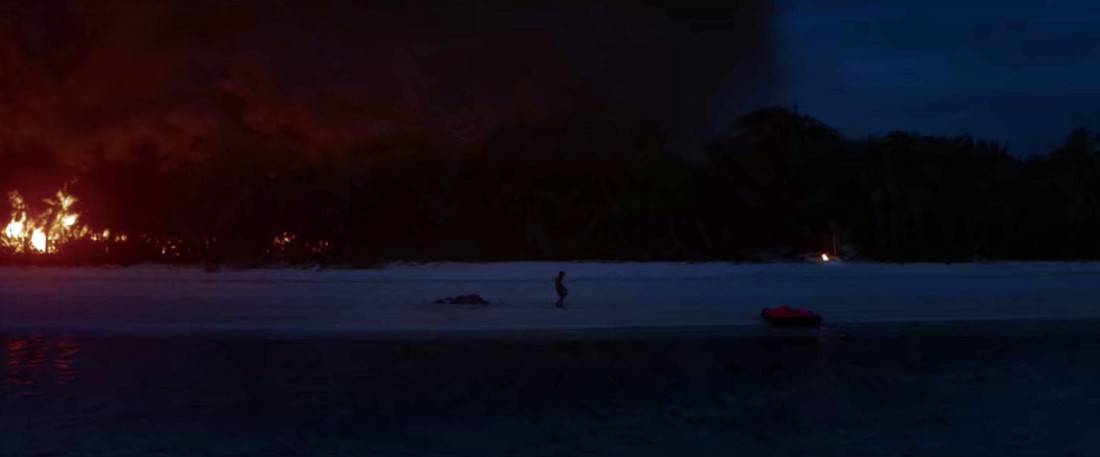
Using nothing but sharpened sticks and bones, Jenn (Kiersey Clemons) tears the skull from the monster’s shoulders and carries it toward her raft. No one believes anything without proof. Well, here’s your goddamn proof. The camera pulls away from the island, flying further and further across the sea. Will her raft make it across such unforgiving terrain? Does it matter? Jen has lit the island forest ablaze. Surely, that’s a large enough spotlight for some passing plane to catch. Jenn will return, and her tale of monsters will be told.

The Talent Behind It

  • Directed by J.D. Dillard
  • Cinematography by Stefan Duscio
  • Production Design by Robbie Porter

The Stinger

“All Over Again” by Georgi Kay


74. Beasts of the Southern Wild (2012)

Beasts Of The Southern Wild Final Shot

The Shot

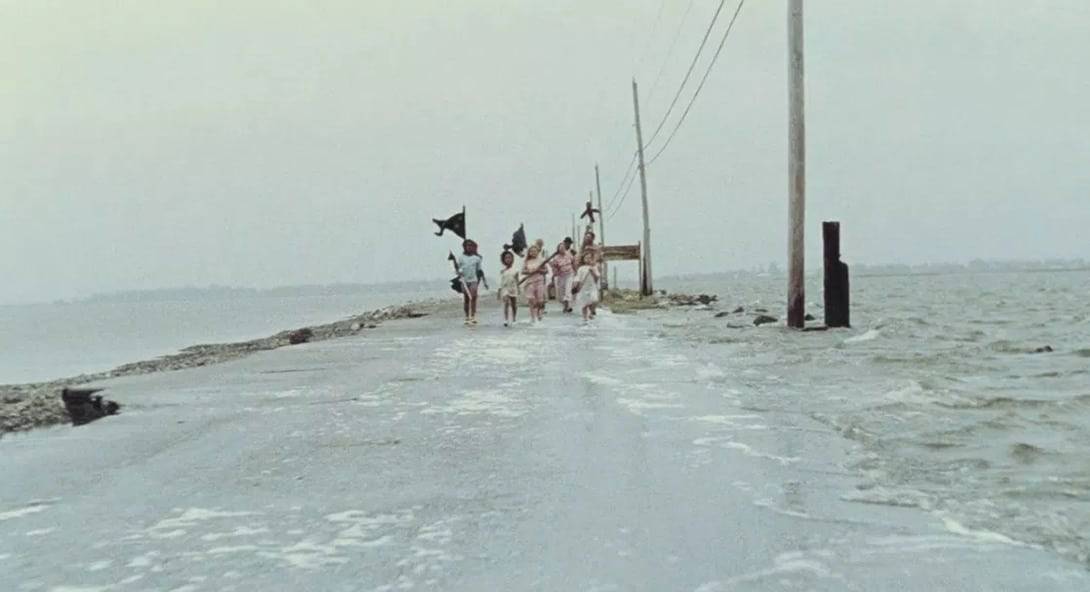
The final shot of Benh Zeitlin’s film is a deeply moving, if problematically romantic, tableau of a community united. It is, like much of Beasts, a slice of visual poetry: in the haze of a storm, a weathered community walks together in procession down a highway, waves lapping at their feet. As the camera zooms away, and the haze dwarfs the crowd, they continue forward, together.

The Talent Behind It

  • Directed by Benh Zeitlin
  • Cinematography by Ben Richardson
  • Location Management by Alana Pryor Ackerman

The Stinger

“Once There Was a Hushpuppy,” by Dan Romer and Benh Zeitlin


73. Shadow (2018)

Final Shots Shadow

The Shot

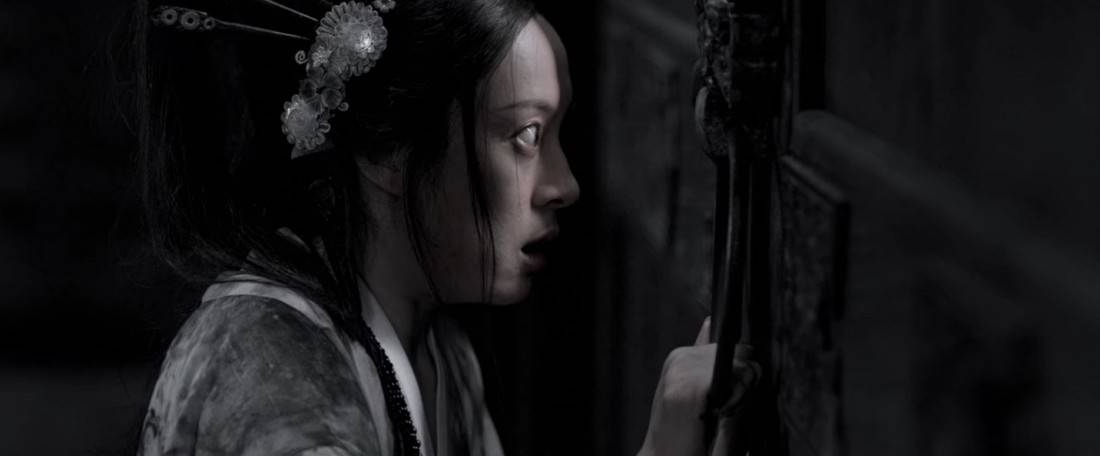
Xiao Ai (Sun Li) races to the castle door and hesitates. She’s just witnessed an incredible turn of events. The king is dead, killed by a not-so-loyal commander, who is currently fabricating a complex web of lies to the officials on the other side. Only she knows the truth. So, why does she pause? Shadow falls and rests on Sun Li’s micro performance. In the span of seconds, we see glee, terror, and confusion. Having experienced an epic torment, we know what we want her to do, but is she the one to fulfill our needs? Our needs are not her needs. When the film cuts to black, it’s a gasp. We’ll never know. We make up our own lies to eradicate curiosity.

The Talent Behind It

  • Directed by Yimou Zhang
  • Cinematography by Xiaoding Zhao
  • Costume Design by Minzheng Chen

The Stinger

“Bloodstains on Embroidered Silk” by Lao Zai


72. Halloween (1978)

Halloween Final Shot

The Shot

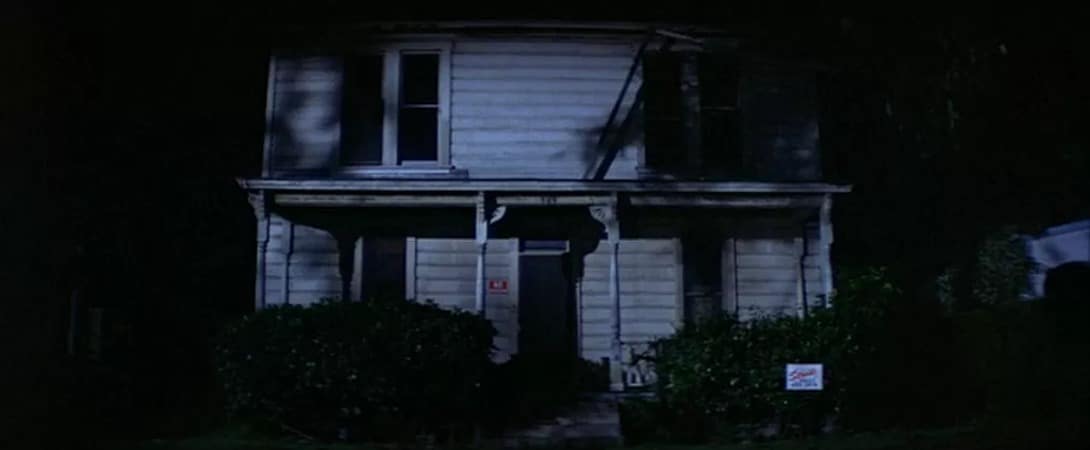
Presumably defeated, the boogeyman lives to slash another day. The lawn which previously housed the crumpled corpse of Michael Myers is now terrifyingly empty. And in a flourish of calculated anticipation, John Carpenter rolls out a montage of suburbia scored by the predatory wheeze of Michael’s breaths. We finally arrive at a dark, abandoned house, and the camera lingers. The suggestion is clear: the rampage isn’t quite over yet.

The Talent Behind It

  • Directed by John Carpenter
  • Cinematography by Dean Cundey
  • Production Design by Tommy Lee Wallace

The Stinger

“Halloween Main Theme” by John Carpenter


71. Gladiator (2000)

Gladiator Final Shot

The Shot

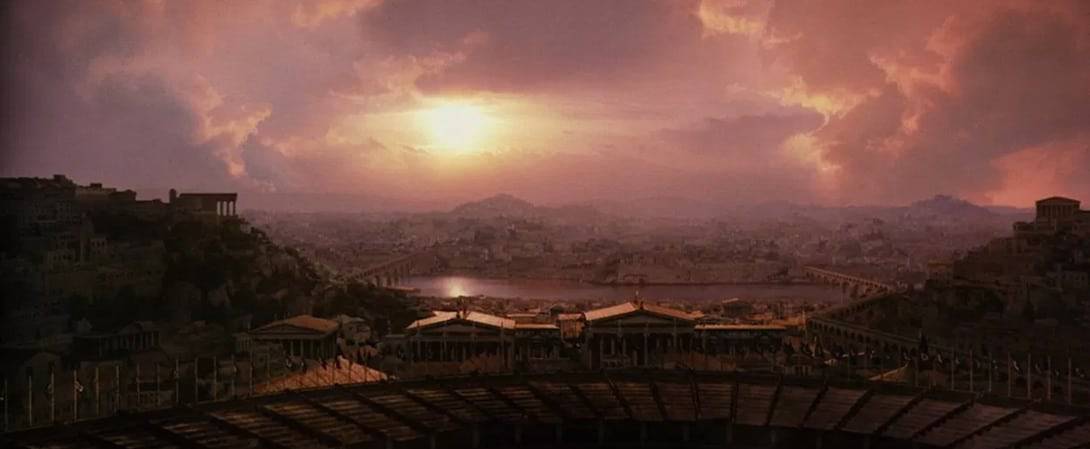
Oddly enough “I will see you again, but not yet” is the same thing I yell at my TV every time after I finish rewatching Gladiator. Look, back in 2000 you only had so many DVDs. With Maximus’ story at a close, a freed Juba (Djimon Hounsou) returns to the Roman Coliseum to bury effigies of Maximus’ wife and son on the spot where he died. Juba promises he’ll see his friend again someday, and the camera pans up. Before us stretches Rome, the early sun, and unworldly rosy clouds; a warmth and beauty denied us for much of the film.

The Talent Behind It

  • Directed by Ridley Scott
  • Cinematography by John Mathieson
  • Visual Effects Supervised by John Nelson

The Stinger

“Now We Are Free” by Lisa Gerrard, Hanz Zimmer, and others


Next Page

Monday, 5 April 2021

How ‘Orphan Black’ Hits the Ground Running with “Natural Selection”

This essay is part of our series Episodes, a column in which senior contributor Valerie Ettenhofer digs into the singular chapters of television that make the medium great. This entry revisits the pilot episode (“Natural Selection”) of BBC America’s award-winning sci-fi series Orphan Black.


You’re at a train station. It’s late. You’re almost out of money, and the last train of the night is moments away. After scrounging up some coins to make a call, you turn around and see them: someone who looks just like you. They’re dressed differently, and they seem upset. Then, before you know what’s happening, they jump in front of an oncoming train.

It’s a scene that’s at once frighteningly unimaginable and classically familiar. The setup would be right at home in an Alfred Hitchcock film or an episode of The Twilight Zone. Instead, it’s the opening scene of Orphan Black, the rip-roaring sci-fi thriller that ran for five seasons on BBC America, winning an Emmy and a Peabody and racking up dozens of other accolades. Conspiratorial, action-packed, and deftly interwoven with crucial exposition, the show has a hit right off the bat with its pilot episode, “Natural Selection.”

When faced with the uncanny situation above, most people would surely crack from fear and pressure. Sarah Manning (Tatiana Maslany) is not like most people. Before the title sequence has even made its first appearance, She has taken advantage of a gruesome situation, stealing her deceased doppelganger’s bag and all its contents. The leather-clad, disheveled young woman soon makes a beeline for her favorite bar.

The episode is written by series co-creator Graeme Manson, and the nimble script effortlessly drops in bits of complicated backstory without sacrificing any of its sleekness or charm. Sarah soon meets up with Felix (Jordan Gavaris, a series standout), her foster brother with impeccable makeup and an even better sense of wit. “How’s Vic the dick?” he asks her. “I hit him first this time…with an ashtray, so he’s a little blue,”

Sarah answers. We soon learn that she is on the run from her abusive boyfriend, hoping to flip some coke she stole from him so she can afford to take her daughter Kira (Skyler Wexler) back from her own foster mother, Mrs. S. (Maria Doyle Kennedy). She also tells Felix about the woman, whom they identify as Beth Childs. The suicide of a posh stranger who may have been Sarah’s long-lost twin is only of passing interest for the pair, who have other threats to worry about.

“Natural Selection” gives viewers a taste of the electric, mood-mimicking camerawork and lighting that will become episode director and Orphan Black co-creator John Fawcett’s signature. Meanwhile, episode editor Brett Sullivan (who previously worked with Fawcett on the film Ginger Snaps), imbues the series opener with a markedly high sense of energy thanks to quick cuts that mimic the plot’s fast-moving, conspiratorial energy.

The best use of their craft comes during a satisfying montage sequence about twelve minutes in. When Sarah and Felix find out that Beth had $75,000 in a brand new bank account, they decide to pull a con. In a thrilling sequence, Sarah becomes Beth. She watches home videos of the dead woman, again and again, masking her own East London accent and taking on Beth’s more formal Canadian cadence. She practices Beth’s signature, raids Beth’s closet, dyes her hair, and scratches the magnetic strip off her debit card.

Finally, as M.I.A.’s “Bad Girls” plays, she struts into the bank in full rich bitch attire in a moment of true transformation. It’s the first of a dozen different entertaining magic tricks Maslany pulls off throughout the series while playing several characters, many of whom are often disguised as other, identical characters.

Across the series’ five seasons, Sarah stays at the heart of Orphan Black, proving herself a scrappy survivor who’s willing to take big risks for a big payoff. She also clearly considers herself a bit of a failure: a mother who isn’t able to keep her daughter; a woman who isn’t able to escape her abusive ex. The seeds of this characterization are planted in this episode, which sees Sarah use reckless ingenuity to adapt to every twist and turn.

When she finds out she can get Beth’s money, she doesn’t hesitate to fake her own death, making Felix ID Beth so she can assume the dead woman’s identity for as long as it takes to steal from her. When she finds out that Beth is a cop set to testify at an internal affairs investigation, she asks for a bathroom break and chugs hand soap to make herself throw up in the middle of the interview. When Beth’s boyfriend Paul (Dylan Bruce) returns early from a business trip and catches on to her personality changes — Sarah is pretty rock and roll, while Beth was seemingly depressed — she goes with the flow and has sex with him on Beth’s pristine kitchen island to distract him.

The first episode — and indeed, the whole first season — manages to successfully masquerade as a comedy of manners when it’s not wearing a half-dozen other narrative hats.

The entire first season of Orphan Black is unparalleled in its mix of adrenaline, cleverness, and surprising sci-fi revelations. Upon rewatch, it’s striking that the pilot episode manages to be so excellent while not yet including several of the show’s signature characters — among them, funky lesbian scientist Cosima, pill-popping housewife Alison, and unhinged Ukrainian assassin Helena, all of whom are played by Maslany.

“Natural Selection” does the work of sewing seeds for the overarching plot of Orphan Black, which involves genetic cloning by shady corporations, but it fascinatingly chooses to remain a down-and-dirty crime thriller first and foremost. Sarah and Felix are too distracted by the promise of quick cash and a French exit to pay much attention to the stack of international birth certificates they find in Beth’s safe deposit box or the shady situation that led to Beth’s demise.

The first hint of the series’ clone plot comes in the episode’s pulse-pounding last few minutes, which involve even more quick changes than the rest of the hour. Comically over-the-top thug Vic (Michael Mando) has caught up to Felix, who has no choice but to put together a fake funeral for Sarah to throw him off the scent of their scheme. Sarah decides to watch her memorial from afar, peeking through binoculars from a parked car and phoning Felix to talk shit about the attendees. “It was always fight-or-flight with her,” Vic says emotionally, calling to mind the scientific principle that gives the episode its title.

Suddenly, things take a turn. Mrs. S and Kira, neither of whom Sarah has clued into her scheme yet, make an appearance at the funeral. “She can’t think I’m dead,” Sarah cries, losing the composure that’s kept her safe until this point. It’s a brief moment, but one that hints at Maslany’s ability to deliver a powerhouse emotional performance. A mother’s love will remain a constant throughline in the series, and we see it here for the first time when all the shenanigans fall away.

All of this would be more than enough to write into a pilot and call it a day, but Orphan Black wouldn’t be the propulsive series it is if it didn’t always turn the dial to eleven. Mid-freakout, a German woman who also looks just like Sarah hops into the backseat of her car. She’s got short red hair, a stylish fur vest, and a mean cough that leaves drops of blood in her tissue. Her name’s Katya Obinger, and she knew Beth. “Just one, I’m a few, no family, too. Who am I?” she riddles, a security question of sorts. When Sarah fails to answer, Katya clocks her. For a moment, it seems the ruse is up, but then a single gunshot, from a distance, tears through Katya’s skull.

The first episode ends on an adrenalized high note, with Sarah making a frantic escape from the mystery sniper. She drives Beth’s car while ducked below the dashboard as more shots ring out, ignoring the cell phone lighting up on the seat beside her. Orphan Black would go on to bring viewers forty-nine more episodes that explore themes like human autonomy, bioethics, fate, and the slipperiness of defining personhood. The series evolves from a Hitchcockian conspiracy thriller into a complex science fiction saga, and it has plenty of watershed installments along the way.

Despite all that, none of the episodes that follow “Natural Selection” are as singularly thrilling and propulsive as the gritty and stylish series opener, which establishes Orphan Black as can’t-miss television from its first moment to its last.


Orphan Black is available to stream on Amazon Prime Video.

The Haunting Power of the Victorian Mansion

Welcome to The Queue — your daily distraction of curated video content sourced from across the web. Today, we’re watching a video essay about why the Victorian mansion is a horror icon.


When you close your eyes and imagine a haunted house, what do you see?

I’d put good money down that you pictured a Victorian mansion; a dollhouse-like monstrosity outfitted with imposing towers, a gabled roof, and shapely windows (maybe framing the spooky outline of a ghostly figure, who knows!). The Victorian mansion is the property of choice when it comes to the horror genre. It was the cozy home of America’s preeminent weirdos, the Addams’ family. It’s where Psycho‘s Norman Bates hid his dark, motherly secrets. And you can’t throw a rock at a collection of gothic pulp novels without hitting a piece of cover art featuring a big, ole menacing Victorian estate.

So, how did the Victorian mansion become a symbol of death and an icon of the horror genre? You’d be forgiven for assuming it all boiled down to innate ooky spookiness. But, like many of the great cinematic nightmares, the basis of this macabre manor’s ghastly reputation has a historical precedent. Namely: as a decaying relic of a grotesque, gilded age; an immediate symbol of decay and rotten excess.

The video essay below digs deeper into the specifics of how the Victorian mansion earned its spot in the pop-culture consciousness. So pass through the rusted iron gates and knock (that is…click!) if you dare:

Watch “Why the Victorian mansion is a horror icon“:

Who made this?

This video is by Vox, an American news website owned by Vox Media, founded in 2014. They produce videos on news, culture, and everything in between. This video is by Coleman Lowndes, with art direction by Dion Lee and story editing by Mona Lalwani. You can follow Lowndes on Twitter here. You can subscribe to Vox on YouTube here. And you can follow them on Twitter here.

More Videos Like This

Copyright © Cinenus | Powered by Blogger

Design by Anders Noren | Blogger Theme by NewBloggerThemes.com