The film industry in one place - Articles, Reviews, trailers and hype!

Sunday, 4 April 2021

Martin Scorsese Just Wants to Hang Out with His Friends

In the sixth episode of Pretend It’s a City, Martin Scorsese‘s new Netflix docuseries starring himself and Fran Lebowitz, the filmmaker and the author are asked a simple question: How did you meet?

While neither is quite sure, the legend goes that the two always found themselves in conversation at the kind of parties that icons of New York attend. So, they became friends. Lebowitz recounts the origins of their friendship like the banal anecdote it used to be. But now, a year into a pandemic, the thought of meeting anyone anywhere is enough to make their friendship seem like a fairytale. And perhaps it is: how many friendships get such a public display?

Before Pretend It’s a City, there was Public Speaking, the 2010 feature documentary Scorsese made for HBO about Lebowitz. If it’s useful to compare one work to the other, the original, as is often the case, is better than the remake: tighter, funnier, and more original in form. Public Speaking, I’ve argued, should be considered among Scorsese’s best work.

But there is at least one thing about Pretend It’s a City, apart from the format, that marks a notable departure from Public Speaking, something that makes clear that while the new project is similar to its predecessor, it is, in fact, something new. Of course, this is true of all of Scorsese’s work (despite the claim by Twitter trolls complaining that he only makes mafia movies).

In Public Speaking, Scorsese appears at the beginning of the film to plant a kiss on Lebowitz’s cheek as she arrives at the Waverly Inn. Scorsese then takes his seat on the edge of the frame, where he asks questions, sometimes responds to her answers, and laughs so deeply and bodily one fears he might roll over at any moment.

That laugh is also on full display in Pretend It’s a City, and it’s there where one finds the key difference between the two works: the man himself. With Public Speaking, Scorsese directs a portrait of a friend. In Pretend It’s a City, he documents a friendship, joining Lebowitz on stage in conversation throughout the series and, at one point, in the halls of the New York Public Library. Who could blame him? Martin Scorsese is like us. He just wants to hang out with his friends.
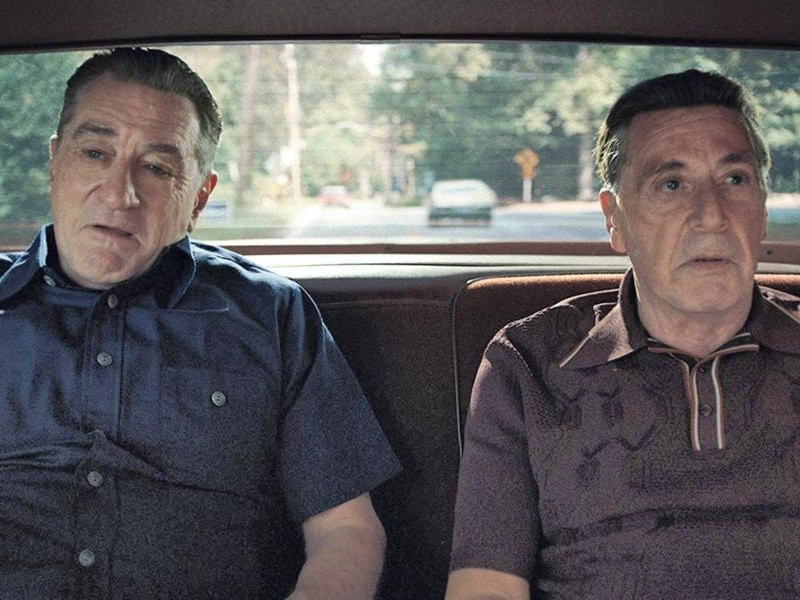
The Irishman

It is this contemplation of friendship that one feels in much of Scorsese’s recent work. Yes, this is somewhat obvious. In The Irishman, Scorsese not only reunites with some of his closest friends and collaborators but also directs a scene in which one friend (Joe Pesci as Russell) asks another (Robert De Niro as Frank) to kill a third (Al Pacino as Jimmy Hoffa).

Rather, Scorsese’s appearance in Pretend It’s a City had me thinking about smaller moments in his films that gesture toward his understanding of friendship. If we return again to The Irishman and look beyond Pesci, De Niro, and Harvey Keitel, we find another friend who, in the film, is a character but was once very much real: the comedian Don Rickles, portrayed by Jim Norton.

Devotees of the film and the comic will know that the real Rickles played casino manager Bill Sherbert in Scorsese’s Casino (1995), a fine but mostly unmemorable performance, except perhaps when Joe Pesci beats him over the head with a telephone in pursuit of his winnings. In One Night Only, a 2014 TV special in tribute to Rickles, Scorsese explains the casting decision: “[Las Vegas] was a character in that movie and Don, you were the link to that town. You gave it authenticity. You gave it a sense of danger,” he says, before roasting Rickles. “At least that was the theory anyway.”
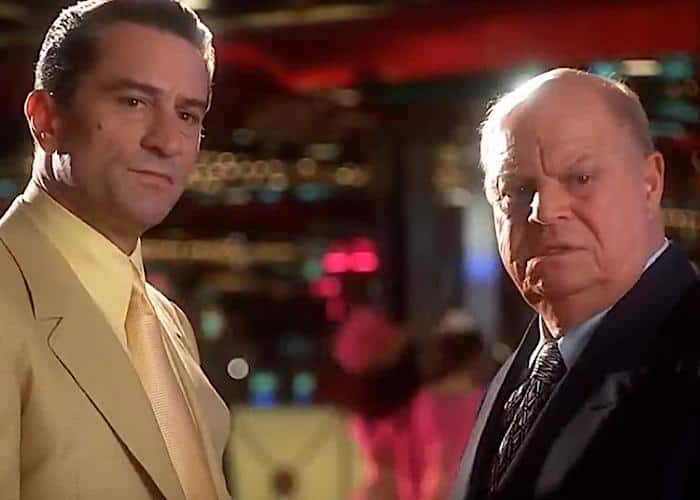
Casino Rickles

True or not, the inclusion of Rickles, who performed in Las Vegas from the days of the Rat Pack until his death in 2017 at the age of ninety, lends a certain authenticity to the image. One of Casino’s strengths is its way of blending fiction with fact, like when De Niro as Ace describes how to surveil the casino floor. Or the implications of a hole in the desert. When the aging Rickles is on-screen in Casino, we see before us not just Don Rickles as “Billy Sherbert,” but the personification of Las Vegas and its history.

Norton as Rickles is on screen for, by my count, less than a minute in The Irishman. His performance at the Copacabana provides a backdrop to a conversation between Frank and Russell about “Crazy” Joe Gallo,” who they believe ordered the shooting of Italian American Civil Rights League leaders. Rickles makes fun of everybody — except, well, “those Italians,” he says, pointing at Gallo and the other mobsters in the audience. Everybody laughs. Just as the real Rickles embodied the real Las Vegas, the fictional Rickles invites us to imagine what it might have been like to be there, at the Copacabana in its heyday.

At the end of the set, Joey walks up to Russ and says of the Italian American Civil Rights League pin on his lapel, “You really believe in that bullshit league?” Frank stands up at the sign of disrespect and moves Joey away from Russ. Frank tells Joey he can’t say things like that. “Why not,” Joey asks, “Rickles is the only one who can make jokes?” Yes. He is. So much of The Irishman is about hierarchy: who can say and do what to who and when. The hierarchy is what compels Frank to defend Russ at that moment, and it’s why he shoots Jimmy in the back of the head later on.

While the inclusion of Rickles makes thematic and historical sense — Scorsese told talk show host Jimmy Kimmel that the jokes were taken from first-person accounts of Rickles’s act that night — Scorsese did not have to include his friend Rickles. But, as Scorsese said in that same interview with Kimmel, “We had to get Don in the film. We had to get him in.” It is as if by writing Rickles into the film, Scorsese was looking to hang out with his friend one last time.
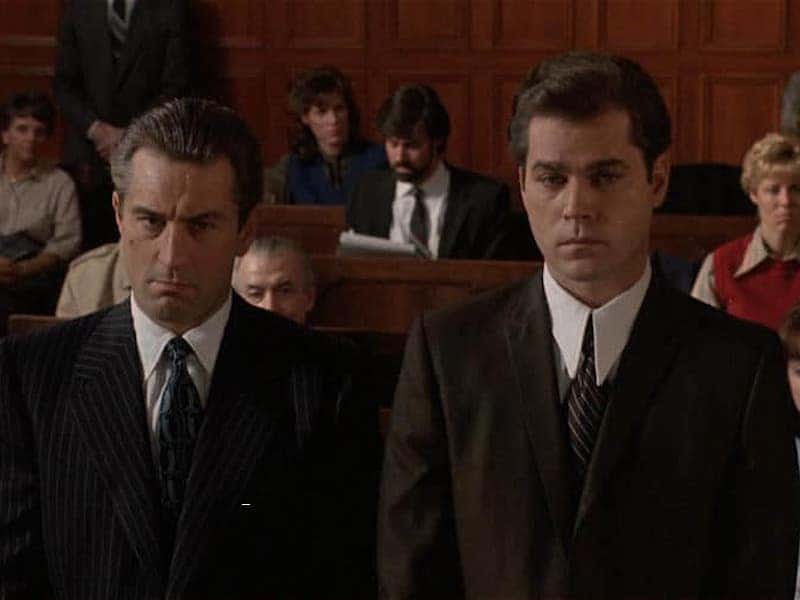
Goodfellas voice-over Ray Liotta Robert De Niro X

Perhaps the most famous line on friendship in Scorsese’s work comes in Goodfellas (1990), just after young Henry Hill gets “pinched” for the first time. Jimmy (De Niro) turns to Henry after the charges are dismissed and tells him he has just learned two things: “Never rat on your friends, and always keep your mouth shut.”

In FSR’s list of the best films of the 2010s, I wrote about The Wolf of Wall Street (2013) and the obvious parallels between Ray Liotta’s Henry Hill and Leonardo DiCaprio’s Jordan Belfort. Both enter chaotic, seemingly lawless worlds as outsiders then make it, get consumed by it, and finally come crashing down by way of the usual vices (sex, drugs, money) and law enforcement.

At the end of Goodfellas, Henry turns on his aging friends and sends them to prison. He opens his mouth. But in The Wolf of Wall Street, Jordan, under the pressure of law enforcement doesn’t rat on his friends. When he visits Donnie (Jonah Hill) at the offices of Stratton Oakmont, he writes him a note: “Don’t incriminate yourself. I’m wearing a wire.”

The next day, Jordan wakes up to a house full of FBI agents. One of them holds up the note and then takes Jordan to jail. A gesture of friendship leads to Jordan’s arrest, the arrest of his friends, and the end of Stratton Oakmont. Was it stupid? Perhaps. But they were all going down anyway. And unlike Henry Hill, who lost everything, Jordan Belfort at least kept his friends.

It’s possible that my search for friendship in Scorsese’s recent work is merely an indication of what I miss most about pre-pandemic life. But I think the message is there: keep your friends close, and hang out with them whenever you can.

15 Movies to Watch After You See ‘Godzilla vs. Kong’

Welcome to Movie DNA, a column that recognizes the direct and indirect cinematic roots of both new and classic movies. Learn some film history, become a more well-rounded viewer, and enjoy like-minded works of the past. This entry recommends movies to watch next if you like Godzilla vs Kong.


If all you know of kaiju movies is what you’ve seen in Legendary’s MonsterVerse franchise, then you obviously owe it to yourself to watch the old Toho Godzilla films (pick up The Criterion Collection’s Show-era box set for starters) as well as the original 1933 King Kong (plus the 1976 and 2005 remakes for their respective charms). We highlighted some relevant classics in our Movie DNA for the previous MonsterVerse installment, Godzilla: King of the Monsters, and a few years ago we listed a whopping thirty-seven giant monster movie titles in our must-read kaiju primer. Add the whole lot to your watchlist.

I’m not going to take up too much of this edition of Movie DNA to highlight all of the essentials or referenced installments (Matthew Chernov has compiled a nice list of Toho easter eggs for Variety) connected to the new MonsterVerse crossover sequel Godzilla vs. Kong, and I tend to let remakes speak for themselves so I’ll just mention 1962’s King Kong vs. Godzilla here and leave it as a given. I’m also skipping over recommendations of director Adam Wingard‘s filmography, though you should definitely see You’re Next (2011) and The Guest (2014) when you get the chance.

What we’re left with below is still an oversized list of fourteen features and one short I find most interesting to discuss and recommend after watching Godzilla vs. Kong. Some are acknowledged influences on the new movie or otherwise directly related titles as confirmed in interviews. The rest include historical precedents — inside and outside of the franchise — going back nearly a century, plus some personal favorites I was reminded of during my viewing. As is often the case, you’ll find even more suggested and pertinent movies (and a couple of television programs) that you may also want to check out for context.


Pacific Rim: Uprising (2018)

The year before Legendary kicked off the MonsterVerse franchise with Gareth Edwards’ Godzilla, Guillermo del Toro brought kaiju back to Hollywood in a big way with the mecha vs. monster movie Pacific Rim. Well, it wasn’t quite as big as hoped-for in the US, but it was enough of an international hit to spawn this sequel. Why am I recommending part two (which shares its editor, Josh Schaeffer, with Godzilla vs. Kong) instead of part one? Well, I actually like it better (our publisher thinks I’m crazy for that), plus the original is in that kaiju movie list I link to above.

Also, back in 2017, Pacific Rim: Uprising co-writer/director Steven S. DeKnight told Collider that there’d been talk (by whom, it’s unclear) of a MonsterVerse crossover:

“I won’t say there’s an Easter Egg but there’s been a lot of discussion about that possibility [of crossing over]. Look I think it would be fantastic to have the ‘Pacific Rim’ universe join Legendary’s Monster Universe, it seems like a natural step. And part of the big overall plan after the third movie we’ve talked about is that could happen, it’s always a possibility. It’s by far not a certainty; it’s merely theoretical at this point, but as a fan myself I would love to see that happen.”

Earlier this year, del Toro admitted on Twitter he’d love to see it happen, as a fan. A month later, DeKnight claimed on social media that he saw it as more than just a theoretical, tweeting in reply to an inquiry: “That was actually my long-term plan. [Pacific Rim 3] was structured to end in a way that married the two universes.” Then Godzilla vs. Kong (and regular MonsterVerse) screenwriter Max Borenstein told We Got This Covered, “I saw what [DeKnight] said, and I think if he has the vision for it, that would be dope. You know, he’s a really talented storyteller so I would certainly be eager to see it.”


Eight Legged Freaks (2002)

Conspiracy theorist characters go hand in hand with disaster movies and monster movies. But Brian Tyree Henry’s podcaster Bernie Hayes in Godzilla vs. Kong made me recall one in particular: Doug E. Doug’s Eight Legged Freaks character, Harlan Griffith, who spouts alien-abduction theories from a pirate radio station that he operates from his trailer home before becoming mixed up in the movie’s plot. However, unlike Hayes’ claims, Griffith’s are not validated since the giant spiders in Eight Legged Freaks are not extraterrestrial in origin. Anyway, this is an underrated large-monster movie I’m happy to include for any reason.


Beyond the Mat (1999)

Eight Legged Freaks co-star David Arquette, who has had a controversial side career as a professional wrestler, would appreciate this high-profile documentary bumping up against the above selection. The Ron Howard and Brian Grazer-produced Beyond the Mat is a fascinating look at pro wrestling and probably was the first time I viewed the entertainment seriously as an adult (my childhood enjoyment of Hulk Hogan’s Rock ‘n’ Wrestling doesn’t count). And one of its featured subjects, Mick Foley, then known as Mankind, is namechecked by Adam Wingard in our interview with the director:

“I always saw Godzilla as the heel of the movie. He’s Undertaker, and Kong is Mankind Mick Foley. Whenever you have that sort of opposition, the heel has to be more mysterious. He’s blowing stuff up, and there are obviously characters trying to figure out why that is. But at the end of the day, that creates this protagonist kind of thing with Kong.”

If you’re not familiar with the wrestlers that Wingard references, you can see them fight in the most memorable sequence of Beyond the Mat. The director’s analogy isn’t too outrageous — many reviews of Godzilla vs. Kong also compare it to wrestling — considering film and cultural historians equate the first kaiju-vs-kaiju movies with the rise of pro wrestling in Japan in the 1950s. Also, the notorious international match between Japan’s Rikidôzan, Toyonobori, and Great Togo and America’s “Classy” Freddie Blassie, Lou Thesz, and Mike Sharpe in April 1962 and the event’s controversial (and allegedly lethal) TV broadcast as was a likely influence on the plot and the satirical themes of King Kong vs. Godzilla, released later that same year.


Romeo + Juliet (1996)

No, this isn’t recommended because I saw some implication that Godzilla and Kong had some sexual tension between them or anything, but it would have been funny if one of the human characters who were Team Godzilla and one of the characters who were Team Kong would have started dating only for that drama to exacerbate the rift between the two Titans. Actually, no, the less the humans have to do, the better. In fact, my including Baz Luhrman’s adaptation of the William Shakespeare tragedy is just to acknowledge that fact by pointing out that there almost was more to the human characters than what made it on screen.

According to Godzilla vs. Kong co-stars Millie Bobby Brown and Julian Dennison, via JoBlo.com:

MBB: But the script was supposed to be that we [Madison and Josh] were in a relationship…

JD: Our first screentest together we have to recite some “Romeo and Juliet” lines…

MBB: Oh my god.

JD: It was so bad.

MBB: It was so bad. But [by the end] we weren’t even doing the script, it was just me and him laughing. We were laughing and talking. And then I remember they left and they were like, “So, Millie, do you like him?” And was like, “Uhhh do I like him? He’s like an angel. Yes. Tell him he has the job, like, right now.”

Now that I’ve got that out of the way, I can reveal that the real movie for this spot is the other modern-day update of Romeo and Juliet released in 1996: Tromeo and Juliet. It’s so loose with the source material and involves so many more laughs that maybe that’s what Brown and Dennison’s reading was closer to. Also, one of the main characters turns into a monster, so that fits, too. But maybe I should have gone with a different twist on classic literature by recommending Enola Holmes (2020), which is a more enjoyable movie than Godzilla vs. Kong with Brown and a couple of dudes on an investigative adventure.

Next Page

Saturday, 3 April 2021

The 10 Best Moments from Genndy Tartakovsky’s ‘Clone Wars’

Welcome to Saturday Morning Cartoons, our weekly column where we continue the animated boob tube ritual of yesteryear. Our lives may no longer be scheduled around small screen programming, but that doesn’t mean we should forget the necessary sanctuary of Saturday ‘toons. In this entry, we celebrate the Genndy Tartakovsky Clone Wars series just in time for its Disney+ relaunch.


While in the midst of crafting his prequels, George Lucas let his Star Wars stranglehold slip for a moment. The toy sales between The Phantom Menace and Attack of the Clones were not as strong as possible. He, and Hasbro, did not want that trend to continue during the empty years between Attack of the Clones and Revenge of the Sith. Lucas couldn’t allow his action figures to stagnate, and to prevent that, he needed new stories flowing ’round the clock. He turned to Genndy Tartakovsky.

In the early aughts, Tartakovsky already had quite the reputation. With Dexter‘s Laboratory, The Powerpuff Girls, and Samurai Jack, the animator cornered the market on peculiar ideas and action. On the surface, he did not seem like a perfect match for Lucas, but their collaboration would result in Star Wars‘ freshest spin in decades, and it would establish a massive new playground for other animators to eventually run wild.

While Genndy Tartakovsky’s Star Wars: Clone Wars would eventually get de-canonized by Lucasfilm, its three seasons remain some of the most vibrant Star Wars entertainment out there. With its arrival on Disney+ this month, we wanted to highlight the moments that made this experiment so damn special. Tartakovsky’s Clone Wars is an exhilaratingly hyper watch, operating in short bursts designed to make the most impact. No second is wasted. Good luck catching your breath.

Originally, Clone Wars was released via chapters, most of which lasted little more than three minutes. When the series came to DVD, they packaged the first two seasons as one disc and the third season as another. Disney+ has chosen to replicate the physical media format, presenting the stories as two volumes to view. As such, I chose not to select the best episodes or chapters from the series but the best moments.


10. Yoda Lays It Down

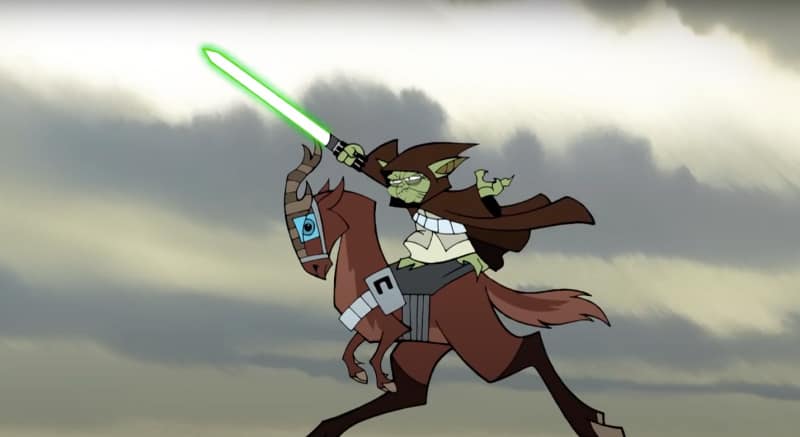
Star Wars: Clone Wars Yoda

We gotta start at the beginning. The first shot of “Chapter 1” is taken from a long distance. We see a tiny Yoda silhouette riding atop an armored Kybuck. As he charges into battle, he raises his green lightsaber, and the John Williams-like score roars to life. Yoda lays it all down for the viewer, “Like fire across the galaxy, the Clone Wars spread.”

The storytelling economy is incredible. Within a few frames, Tartakovsky establishes Clone Wars‘ terrifying significance. The Separatists are on the verge of dismantling the Republic: planets are crumbling, democracies leaving with them. Anakin Skywalker’s secret love affair takes a backburner to a viral fear. Obi-Wan Kenobi has prepared his whole life for this moment. The battlefield is their new home.

While the fanbase took a few lines from A New Hope and transformed them into an epic, George Lucas never intended to wallow in the warfare. You know he hated straying too far from the Skywalkers. Tartakovsky was the first creative given the space to celebrate what the fandom always imagined. In “Chapter 1” of Clone Wars, Tartakovsky reveals his understanding of what we want: to drill into every nook and cranny.


9. Maul Ain’t Missed

Sith

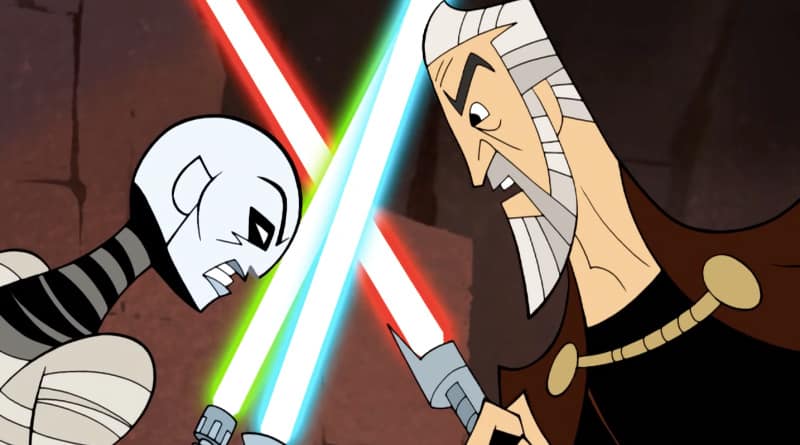
As rad as Christopher Lee was, his Count Dooku could not match Darth Maul’s striking figure. For Revenge of the Sith, Lucas worked hard on his replacement, General Grievous, and Tartakovsky was tasked with the unveiling of that nasty creation in Clone Wars (more on that asthmatic in a moment). However, Tartakovsky may have even upped the main big bad with a throwaway side villain: Asajj Ventress.

When it comes to Star Wars thugs, Sith always rolls downhill. Darth Sidious barks orders at Dooku, and Dooku returns the favor on Ventress. Not that he welcomed her with open arms. She came to him looking for a job, and only after they square-off violently in “Chapter 7” does he bother to give her the time of day. During that climax, the deadly duel-blading assassin gets her first assignment from Darth Sidious, and she takes to it with gusto. Ventress would go on to be a critical character throughout The Clone Wars‘ next iteration, but she was badass from minute one.


8. A Mechanical Nightmare

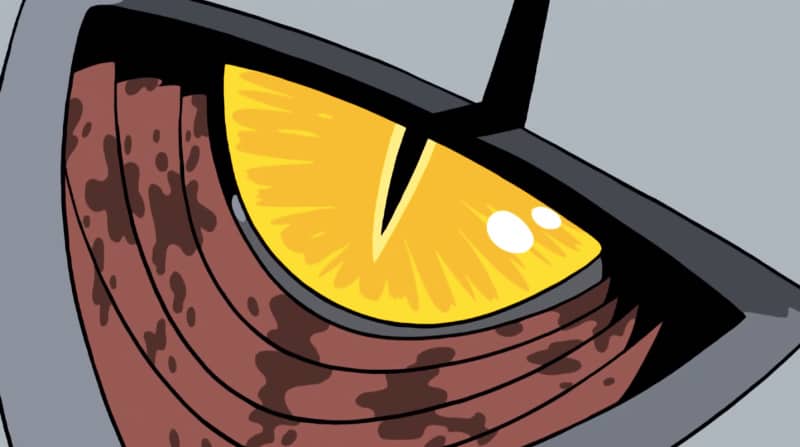
Genndy Tartakovsky Clone Wars General Grievous

“Chapter 20” marks a major turning point in Genndy Tartakovsky’s Clone Wars. The Republic wins a mighty skirmish against the Separatists, but a new threat emerges with every victory. Master Ki-Adi-Mundi and a small squad of Jedi clash against the new droid commander, General Grievous, and their superiority comes immediately into question. These Knights are fierce, but they fall quickly, and they don’t stand up. Clone Wars plays for keeps.

As seen in the films, Grievous is a wheezing, lumbering hulk with furious outbursts. As introduced in “Chapter 20,” Grievous is a mechanical nightmare. The robo-general bounces at his prey like a cat, playing with their desperation before cutting them in half. Ki-Adi-Mundi holds his own, but barely. The Knights around him fall hard and mostly in pieces. Clone Wars‘ Grievous is as close to a slasher film killer as Star Wars is willing to get. “Ki ki ki ma ma ma…


7. Brave New Worlds

Kit Fisto

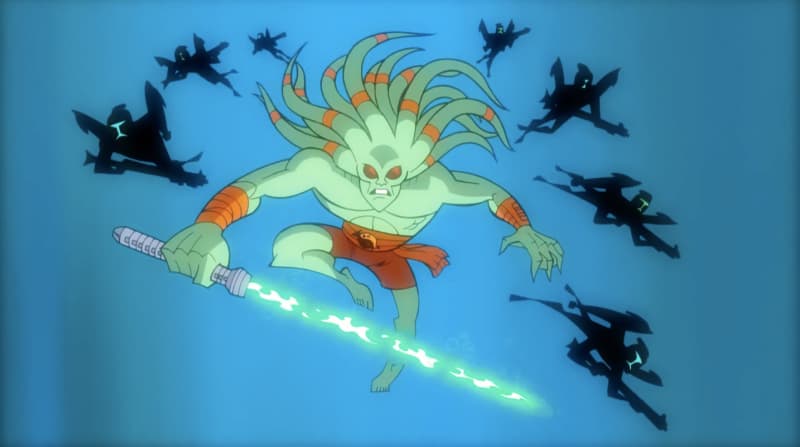
The prequels’ appeal was that they showed us realms from the Star Wars universe hinted at in comics and novels but never properly realized on screen. Lucas delivered that mostly, but Clone Wars kicked it up several notches. In “Chapter 5,” we travel to the ocean planet Dac for the first time. It’s home to two of my favorite Hasbro action figures: Admiral Ackbar and Squid Head. Their two species — the Mon Calamari and the Quarren, respectively — are divided by the Separatist civil war, and Yoda sends aquatic Jedi Kit Fisto to lend a helping hand, or er, lightsaber.

Fisto got a moment or two during the climactic siege in Attack of the Clones, but his majesty isn’t truly revealed until “Chapter 5” of Star Wars: Clone Wars. Underwater, Fisto chews through multiple Manta Subfigthers while never dropping his smile. He’s hit nirvana, and so have we. Star Wars fans love an elemental environment, and Dac proudly places itself alongside Hoth and Tatooine. Once these pesky firefights depart, their tourism board will ignite.


6. More Than A Legend

Yoda Legend

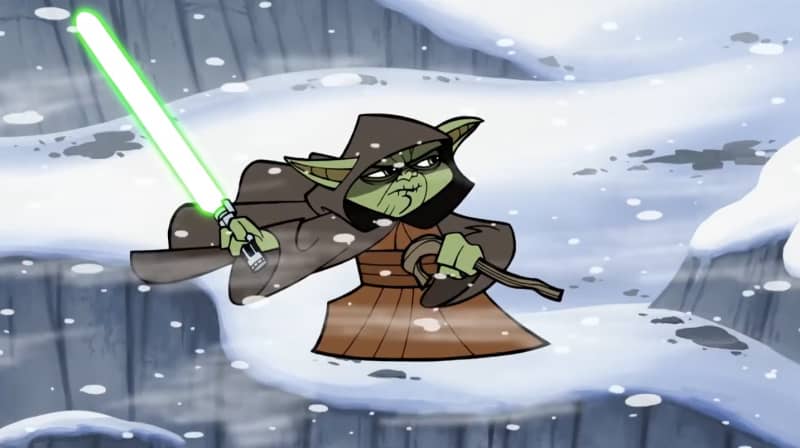
Attack of the Clones showed us that Yoda is more than a legend; he is a legendary fighter. From the first shot, Genndy Tartakovsky’s Clone Wars doubles down. He may be short, he may be old, but he’s fast, and he cuts with a precision that comes from wisdom. Why stretch out a fight in ten moves when five will do.

In “Chapter 15” of Star Wars: Clone Wars, Yoda diverts Senator Amidala’s mission to another planet. He can sense two Jedi in peril, and as he makes his way to their location, he is attacked by a Battle Droid battalion. He doesn’t hesitate. The blade comes out, and the heads come off. They’re not people; they’re parts.

Along with investing heavily into Star Wars canon, Tartakovsky studied the Samurai cinema that initially inspired Lucas. Watching Yoda cut through these rusty chumps, you can see the movements of Toshiro Mifune. Clone Wars‘ lightsaber battles race to their conclusion, but they never lose their balletic quality. There is a rhythm to every conflict, and they’re built for the rewind button. You wanna watch Yoda dice on repeat.

Next Page

Friday, 2 April 2021

The Black Panther Connection in ‘The Falcon and the Winter Soldier’ Episode 3

The Falcon and the Winter Soldier Explained is our ongoing series delving into Marvel’s grand new bromance between Sam Wilson and Bucky Barnes. In this entry, we examine The Falcon and the Winter Soldier Episode 3 (“Power Broker”) and consider how it connects to the Black Panther universe. Yes, prepare for SPOILERS.


Maybe it’s time for the Marvel heroes to take up chess. The villains being the only ones five steps ahead is tiring. After twenty-three films and one television series, you would think these characters would start considering the consequences of their actions. Did Tony Stark and Steve Rogers teach their teammates nothing?

Desperate to uncover the Power Broker from whatever rock they’re hiding under, Bucky Barnes (Sebastian Stan) busts Baron Zemo (Daniel Brühl) from his Berlin prison. He knows Sam Wilson (Anthony Mackie) won’t go for it, so he doesn’t bother to include him in his plan. Once the deed is done, Sam has two options: return the killer to his cell, or offer him the shotgun seat in their ride. He chooses to kick the can down the road. Let the law and its paperwork be tomorrow’s problem.

Except, tomorrow’s problem is always today’s problem ignored. Freeing Zemo gains more than just the attention of wannabe Captain America John Walker (Wyatt Russell). Wakanda never loses tabs on its enemies. The Falcon and the Winter Soldier Episode 3 ends with Bucky coming face-to-face with Dora Milaje bodyguard Ayo (Florence Kasumba). She is not amused.

Zemo planted the bomb that killed King T’Chaka in Captain America: Civil War. The assault was designed to frame Bucky as the culprit and bring the Avengers upon his head, forcing Steve Rogers to defend his friend. During that film’s climax, Zemo and Black Panther watch as Iron Man and Captain America tear into each other. As each punch disassembles the franchise, T’Chaka’s son T’Challa lets the hate in his heart slip away. He will not allow vengeance to consume him as it does Tony, as it did Zemo.

Captain America: Civil War ends with the villain smiling in his cell. He won. Zemo’s actions imploded the team, sending Steve Rogers and his co-conspirators to the dark corners of the world, leaving its population vulnerable to Thanos’ inevitable Infinity War raiding party.

And now, Bucky breaks Zemo out in the hopes that somewhere in his crooked mind is enough information to jumpstart their Flag-Smashers investigation? If Bucky had kept in touch with Sharon Carter (Emily VanCamp), he could have relied on her new position as an underworld hustler to connect the dots. But nope. Just as Sam and Bucky haven’t taken two minutes from their day to visit the Sokovian memorial, they hadn’t bothered to follow up with the friend who stole their gear from the CIA when they needed it most. An action that made her a criminal.

In the time between Avengers: Infinity War and Avengers: Endgame, when Steve Rogers, Sam Wilson, and Black Widow were operating from the shadows, Sharon Carter snuck off to crime island (the fictional Madripoor, a recurring destination in Marvel Comics) and established herself as a deadly art dealer. Unbeknown to the fellas, Carter has the same connections as Zemo. When Zemo’s gangland buddies turn on Sam and Bucky, Carter comes to the rescue and leads them to the scientist who’s been cooking super-soldier serum.

Dr. Wilfred Nagel (Olli Haaskivi) claims to have perfected the serum that originated with Dr. Erskine. He’s done this using Isaiah Bradley’s blood, and once injected, it does not bulk its subjects into inhuman hulks. This is certainly convenient for actors looking to avoid Chris Evans’ diet.

Before he can reveal any more ties between Hydra, the CIA, and the super-soldier program, Zemo puts a bullet in Nagel’s noggin. Where’d he get the gun? They’re in an evil laboratory. Evil scientists always stash pistols under their desks. It’s a known fact.

With few clues to go on, Zemo, Sam, and Bucky land in Riga, the last known location of a woman named Donya Madani. She died from tuberculosis, but she’s somehow connected to head Flag-Smasher Karli Morgenthau (Erin Kellyman). Bucky lets Sam hold Zemo’s leash for a bit, falling back to catch some fresh air and a stroll. Sam seems unbothered by this and lets his bud do his thing.

What Sam and Zemo did not see was the Kimoyo Bead resting on the ground. This advanced Wakandan technology is frequently used for surveillance and communication. In Black Panther, we saw them used to commandeer vehicles and halt paralysis after Everett Ross was shot in the spine during Klaue’s jailbreak. Wakandans are given their first bead upon birth, and they add more as they advance through different jobs. It’s more than a handy-dandy tool.

Bucky circles the building collecting several more beads, and that’s when he encounters Ayo. She’s here for Zemo and not excuses from Bucky. She gives him the same hard stare she gave Black Widow in Captain America: Civil War. What happens when an immovable object meets an irresistible force? Nothing good.

We have no idea what will happen now that Zemo is out of his cage. He wants to stop more than super-soldiers. He says idolatry leads to levitating cities and innocent lives lost. Yet, Zemo yanks a purple hood from his family treasure chest. If you can’t beat them, join them. Become your own symbol.

Sam and Bucky suffer from overconfidence. They think they can control the situation. The Wakandans know they cannot.

The unconquerable nation has only recently stepped beyond its borders. They did so because their stranglehold on their technological wonderland stirred fatal retaliation. Wakanda hopes to join the world, but they reach out cautiously. They understand consequence. They understand how one domino topples into another and how Wanda’s choice regarding where to fling an exploding terrorist results in a dozen dead Wakandans. How constructing Ultron leads to the assassination of their king.

Choice demands thought, not gut instinct. Ayo steps into frame, and Bucky better have more to offer than a “Trust me.” He can bend Sam to his will with those words, but not a Dora Milaje, not a Wakandan.

The Falcon and the Winter Soldier Episode 3 should give us pause regarding Sam and Bucky’s headwork. Jumping to Zemo got them a little closer to the Flag-Smashers, but only as close as Sharon Carter could have gotten them if they had bothered to consider her in the first place. Check in on your friends, people!

Couldn’t Bucky have also reached out to the Wakandans first? They didn’t just give him the hookup with that Vibranium arm. They wiped Hydra’s muck from his brain. Wakanda offered him rest and relaxation, and he gave them his body as a soldier when Thanos came knocking. Did he lose their number? Did they lose his?

With Zemo in play, it’s easy to imagine the Black Panther connection increasing as we cross the midway point of The Falcon and the Winter Soldier. Ayo has been dispatched. If she can’t bring Zemo in quick, more Dora Milaje could follow. Sam and Bucky can bully each other into hair-brained schemes, but no one can budge General Okoye (Danai Gurira). To do so would require a lot more mediation from Sam and Bucky.

Spoiled in a Spoiled World: The Feminist Chaos of ‘Daisies’

Welcome to The Queue — your daily distraction of curated video content sourced from across the web. Today, we’re watching a video essay about the rebellious feminist vision of 1966’s Daisies.


Look: sometimes, the best way to stick it to the man is through a series of increasingly chaotic farcical vignettes.

Or at least that’s the premise behind Vera Chytilová’s 1966 film DaisiesIn the film, two young women (both named Marie), see the wretchedness of the world and decide to become wretched themselves. What ensues is a string of anarchic fun and free-spirited action as the two Maries resolve to take nothing seriously, be it war, food, clothes, or men. But especially men.

Chytilová’s riotous opus is simultaneously nonsensical and profound. The two Maries reject what their society expects of them: pranking would-be suitors, trampling food, and tearing up restrictive lingerie (as well as their own bodies). Even the film itself shuns convention: overturning established rules of cinema in a prescient move of pre-punk absurdism.

In this way, Daisies is both aesthetically and politically rebellious. So much so that, despite (or rather, because) of its influential contribution to feminist cinema, after its release, the then-communist Czech government suppressed the hell out of it. For its wanton audacity, the film was pulled from all major cinemas, finally being banned outright for several years. Chytilova herself was not allowed to make another film in her native country until 1975.

Despite the Soviet government’s best efforts, Daisies persists to this day as a chaotic delight. As the video essay below underlines, it is a marvelous romp of excess and disobedience: a dreamy vision of two women refusing to go along with men and the world men have created.

Watch “Daisies (1966) – The Impact Of Feminist Rebellion“:

Who made this?

You Have Been Watching Films is produced by United Kingdom-based writer Oliver Bagshaw. The channel provides video essays on an assortment of films including examples from cult, documentary, experimental, and classic strains of cinema history. You can subscribe to their YouTube channel here. And you can follow them on Twitter here.

More Videos Like This

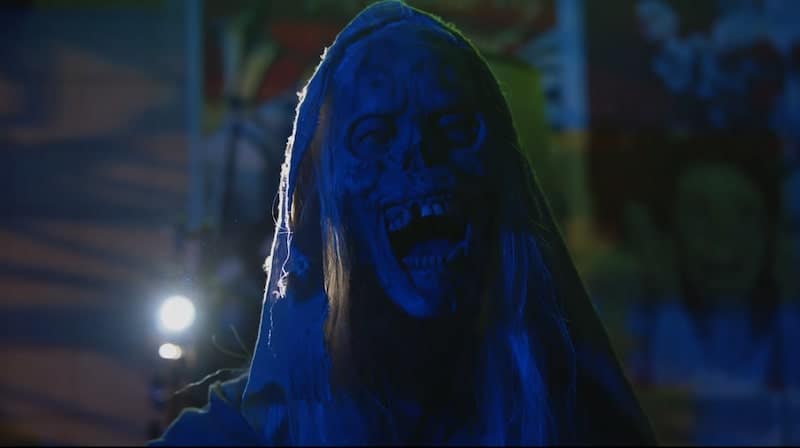
‘Creepshow’ Bounces Back with Season 2 Premiere

Shudder continues to be a devil send for horror and genre fans as the streaming service brings more gems, new and old, into our lives. While feature films are their mainstay, they’ve also dipped into the world of horror series with their most popular one being an anthology show adaptation and continuation of a certain Stephen King and George Romero classic. Now Creepshow Season 2 has begun, and they’ve already greenlit a third.

The legendary Meg Shields and I reviewed and ranked Season 1 and we were a bit underwhelmed. We each had a favorite, but the season as a whole was something of a disappointment (an opinion that admittedly put us in the minority). Still, both the premise and the promise are too great to give up hope, so we’re entering into the second season optimistic for thrills, fun, and EC Comics-style chills. We’ll once again be reviewing the episodes and then seeing how they all stack up at the end, so let’s jump in and get our feet wet once more with the Creepshow Season 2 premiere!

“Model Kid”
Director: Greg Nicotero
Writer: John Esposito

Joe’s (Brock Duncan) life isn’t great — he’s bullied outside, and he’s stressed inside by his mother’s ailing health — so he finds solace in a love for horror movies, characters, and hobbies. When his mom dies, Uncle Kevin (Kevin Dillon) and Aunt Barb (Jana Allen) take over on the parental front, but neither is truly up for the task. Kevin is a brute incapable of understanding or appreciating the boy’s interests, and that intolerance soon leads to him destroying and throwing out much of Joe’s collection. Big mistake since one of the ads in Joe’s horror magazines offers a fun little toy called a voodoo doll.

One of the issues that plagued Season 1 is a sort of clunkiness with its editing and transitions, sometimes in the stories themselves but frequently in the wraparound host segments featuring the Creep. It happens again here as his fumbling with a film projector shifts to animation right before giving a Gillman Meets the Mummy title card — then jumping into the Creepshow opening credits — and then moving back to the magazine contents and a return to the black & white Gillman film (a nod to Universal horrors inexplicably presented as a silent film). It’s a minor thing to be sure, but the disjointed feel hurts the flow.

The segment’s real issue, though, is an obvious familiarity as it takes the wraparounds from the films and turns them into a full story, but it does so without adding anything to the mix. You know immediately and completely what’s coming as Joe is pushed too far by both the uncle and a bully and calls in some supernatural assistance from the classified ads. Curiously, the troubled boy character in the film wraparounds is named Billy, but here it’s the bully who’s named Billy.

There are a couple of highlights here in the writing as Joe’s mom describes movies as “time machines” that transport viewers back to past viewings. It’s not a new concept, but it’s a nice nod towards what draws people to revisit films both with and without loved ones. Uncle Kevin is a cruel character, but his argument that it’s “hard being a man these days” speaks to an issue that still threatens society today — namely, the fragility of the male ego. More exploration here would have helped the segment stand apart from the movie wraparounds, but it’s not to be. It’s a dull disappointment no matter how you slice it, but happily, the episode rebounds mightily with segment two.


“Public Television of the Dead”
Director: Greg Nicotero
Writer: Rob Schrab

It’s just another day WQPS, a public television station in Pittsburgh, PA, and various shows are filming across a handful of soundstages. Mrs. Bookberry (Coley Campany) is charming children with her morality tales, a Bob Ross-inspired painter named Norm (Mark Ashworth) is calmly creating works of art, and the host (Peter Leake) of The Appraiser’s Road Trip is checking out his first guest’s family heirloom. The guest is Ted Raimi. And the heirloom? It’s the Necronomicon from his brother Sam’s film, The Evil Dead. “It’s been in the family for years,” says Ted, and once the host starts reading the text all hell breaks loose at WQPS.

Look, if you don’t find “Bob Ross versus the Deadites” to be a genius concept then you are not someone I want to know. Ashworth is terrific, and watching him gently intone a warning to an undead Raimi while rolling up his sleeves to expose a skull tattoo from his time in Vietnam is just a delight. The carnage comes quick as the painter, along with his producer (Marissa Hampton) and cameraman (Todd Allen Durkin), try to escape and stop the unfolding supernatural threat spreading blood splatter throughout the studio.

Nicotero manages a few Raimi-esque camera moves along the way as he floats demonically down a hallway and turns paint thinner into a fireball. It’s an energetic romp that, despite the body count, delivers a ton of fun across its short running time. Raimi is highly entertaining, both alive and dead, and more laughs come courtesy of the increasingly foul-mouthed Mrs. Bookberry. It’s an undeniably silly segment — preventing a live broadcast of the incantation becomes a necessity, but no one thinks to simply move the camera — but that playfulness succeeds in blending the tones of both Creepshow and the Evil Dead films.

Karma, an element often at the forefront of the Creepshow films and the EC Comics that inspired them, is woven through the segment — both segments, to be fair, but here it’s less one-note and more creative and satisfying — both for its characters and public television itself. The story finds value in these people, whether it be teaching art and calmness or fighting for others in the face of adversity (and monsters, and cheekily reminds viewers to contribute during the next pledge drive. It also ends the premiere episode on a high and leaves us excited for the rest of the season, and that’s no small thing.

Follow all of our Creepshow coverage!

Thursday, 1 April 2021

‘Chad’ is an Unpleasant Trip Back to High School

Welcome to Up Next, a column that gives you the rundown on the latest TV. This week, Valerie Ettenhofer reviews Chad, the new TV show from Saturday Night Live alum Nasim Pedrad.


High school can be hell if you don’t fit in. This basic truth forms the premise of the TBS comedy series Chad, which takes on the perils of adolescence from the perspective of an excruciatingly awkward fourteen-year-old Iranian-American boy. The twist is that the boy is played by series creator Nasim Pedrad, the thirty-nine-year-old actress and comedian who also writes and directs the show. The Saturday Night Live alum actually blends easily into the teenage landscape with a short wig, a series of oversized polo shirts, and a deeper-than-usual vocal tone.

Chad was originally developed for Fox in 2016 but was never made at the network. That’s too bad because the series might have fared better back then, in a pre-Pen15 world. In 2021, it’s impossible not to compare Chad, with its mostly shallow plotlines and off-putting comedic preoccupations, to other recent teen series that feel infinitely more grounded and authentic. Chad is too often one-note, and that sole note is: annoying.

Pedrad has always been funny, and the series isn’t without its comedic high points. Chad talks with a uniquely silly cadence, tripping over pronunciations and speaking with the rushed excitement of a kid who’s at once socially anxious and utterly over-the-top. On the first day of ninth grade, he smokes a USB drive like a vape pen to look cool and lies that he had sex with a girl over the summer, “horny style” and with “a lot of verbal consent.”

In nearly every episode, we see Chad fixate on something new, be it K-pop or Lebron sneakers or a gifted authentic sword. He’s childish and geeky in a way that he can’t overcome, even after getting his brace off and making some headway with a group of cool boys led by his most consistent object of obsession, Reid (Thomas Barbusca). Chad is so aggressively dorky that the young actor who is best known for playing the most awkward character in the film Eighth Grade  — Jake Ryan, who is great in this as Chad’s best friend, Peter — is essentially cast as the straight man in comparison.

The series’ biggest problem is that, in addition to being a weirdo, Chad is also an out-and-out jerk. He’s insensitive towards other cultures in a way that doesn’t serve the series nor lead to any deeper reflection. In an early episode, he becomes disturbingly obsessed with his mother’s Black boyfriend, Ikrimah (Phillip Mullings Jr.), and shows up at his house to crash a hang-out with his friends. “Chad, seriously, what is your obsession with Black stuff?” a man at the party (Kris D. Lofton) asks angrily after the teenager creepily touches his dreads, among other offenses.

With that arc running the length of the first three episodes, it’s a question viewers may find themselves asking as well. In the fourth episode, just as you might breathe a sigh of relief that Chad is over his racialized obsession, he joins a club that’s meant to appreciate diversity within Asian cultures. Before long he’s asking another member if his birth name is Keiko and citing his iPhone as an Asian product he appreciates. It’s unclear whether we’re supposed to be laughing with Chad or at him, but it doesn’t matter, since these moments just aren’t funny.

Such cringe-inducing cultural missteps would maybe make sense if they ultimately served to highlight Chad’s own consistent reluctance to identify with his family’s Persian roots, but like most other aspects of his identity — including his more pathological behaviors and his seemingly romantic feelings for Reid — that intriguing plot thread largely goes unexamined. Every time the show seems as if it’s about to head into deeper waters, it instead piles on more scenes of Chad being frustratingly needy and off-putting, alienating his peers in hard-to-watch exchanges that don’t serve any larger narrative purpose.

In many ways, Chad is the inverse of Pen15, another series that sees two of its creators (Maya Erskine and Anna Konkle) playing teenagers among a cast that’s otherwise made up of actual kids. Pen15’s protagonists are eager to grow up, but their precociousness is thwarted — oftentimes with a sense of impressionistic tragedy — by the fact that they’re still only seventh graders.

Chad, in contrast, seems immature for his age, with a simplistic view of the world around him that makes it difficult for him to adjust to the new rules of engagement in high school. This is the case for a lot of real-life kids, and it could make for a heartfelt, bittersweet story, but the material to support that more emotionally honest version of Chad’s story simply isn’t there. What we get instead is a mixed-bag sitcom that’s lightly entertaining but just as equally grating.

By the end of the first season of Chad, it’s unlikely that viewers will be rooting for its titular character as the impulsive, underdog outcast he’s set up to be — unless they’ve got a sky-high tolerance for the off-putting and borderline offensive. Maybe there’s a good reason no one likes the kid.

Chad debuts on TBS on April 6th.

All the Horror You Need to Stream in April 2021

Welcome to Horrorscope, a monthly column keeping horror nerds and initiates up to date on all the genre content coming to and leaving from your favorite streaming services. Here’s a guide to all the essential horror streaming in April 2021.


Spring has sprung!

Dead foliage has given way to eager flowers, budding shrubbery, and all manner of hideous pastoral displays. Some of you may have noticed that your sense of smell has returned to greet you with olfactory delights such as: grass. Oh look, what’s that? Forgotten trash, emerging like some frozen leviathan out of a melting snowbank. How nice. 

But look: April is only the cruelest month if you want it to be. Screw your head on straight and all those breeding lilacs and stirring dull roots take on a more tantalizing aspect. We’re out of winter, friends. Time to greet a new season with open arms. 

In that spirit, this month’s horror highlights are all-new, from either this year or the last. This is something of a departure for this column, which usually tries (an operative word!) to strike a balance between new fare and ye old spooks. But it’s spring, damn it! So brace yourselves for round two of a record-breaking anthology series, a marital nightmare, an explosive coming-of-age horrorshow, and an insightful documentary about how indie horror gets made.

Be sure to peruse the complete list below, calendar in hand, for a full picture of what horror flicks are coming and going from your favorite streaming services this April.


Pick of the Month: Creepshow Season 2 (2021)

Creepshow Season horror streaming april 2021

Synopsis: A revamp of the classic George A. Romero and Stephen King horror anthology films of the same name, Creepshow delivers bite-sized spooks of murder, monsters, and cosmic comeuppance. WIth a pulpy, comic-book gait and an episodic zing, the popular series is back for a second season.

We’ve said it once, and we’ll say it again: there can never be enough horror anthologies.

When Shudder’s reboot of Creepshow debuted in 2019, it broke viewership records and quickly carved out a name for itself as one of the streaming service’s big draws. After the first installment’s runaway success, Shudder enthusiastically greenlit two more seasons. I had the pleasure of reviewing Creepshow‘s first go-round with Rob Hunter. We’re both excited to see what Shudder cooks up for Season 2. 

Executive produced by The Walking Dead‘s Greg Nicotero, the series features two ooky-spooky stories in each episode. This is the great boon of horror anthologies: if something doesn’t turn your crank before you know it, you’re on to the next nightmare. 

This new season’s guest stars include Kevin Dillon, Iman Benson, Josh McDermitt, Keith David, Molly Ringwald, Barbara Crampton (!), Justin Long, and D’Arcy Carden, among others.

Arrives on Shudder on April 1st (new episodes every thursday).

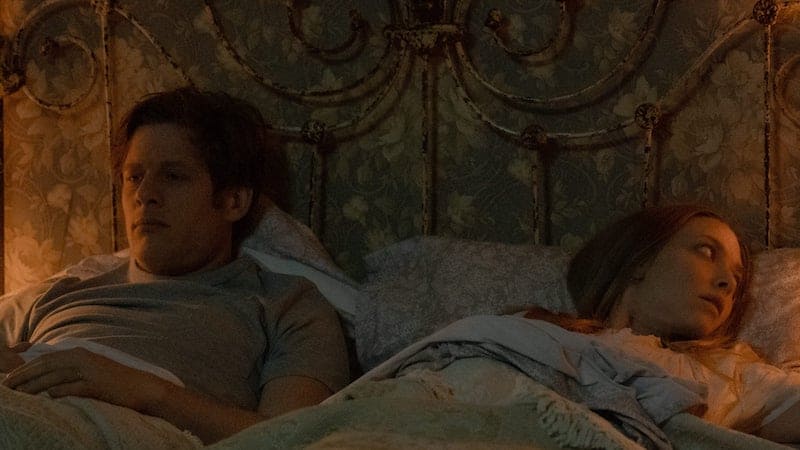
Haunted marriage? Haunted marriage.

Heard And Seen

Synopsis: After moving from Manhattan to a peaceful hamlet in the Hudson Valley, a married couple begins to suspect that their idyllic new home is haunted by its dark past. Soon enough both their house and relationship begin to rot and crack, with one dark secret after another peeling away to reveal generational scars and sinister longings.

Now, look. When it comes to sussing out “what is and isn’t horror,” I’m not above a little semantics here and there. How else am I going to claim historical dramas like The Devils? Or more noir-heavy fare like The Leopard Man? Semantics should be used to enrich a genre, not to gatekeep it. So forgive me for raising a suspicious eyebrow at Things Heard & Seen‘s directors claiming that the film “isn’t a horror film; it’s a supernatural thriller.”

Is “horror” really such a dirty word? In any case, even if this is more of a thrilling spooky experience than an outright gorefest, I’m including this “literary ghost story” on a horror round-up. Fight me in the comments (we don’t have comments, haha!).

Things Heard & Seen is based on Elizabeth Brundage’s novel All Things Cease to Appear. You might remember writer-directors-spouses Robert Pulcini and Shari Springer Berman from their fantastic Harvey Pekar biopic American Splendor. Headlining with Amanda Seyfried and James Norton, Things Heard & Seen‘s cast also includes Natalia Dyer (Stranger Things), Rhea Seehorn (Better Call Saul), Indiana Jones legend Karen Allen, and F. Murray Abraham (Amadeus).

All told: Things Heard & Seen sounds like a compelling portrait of trouble in paradise that promises to be haunting in more ways than one. In any case, we’ll have to wait until the end of the month until we get to…hear and see it for ourselves.

Premieres on Netflix on April 29th.

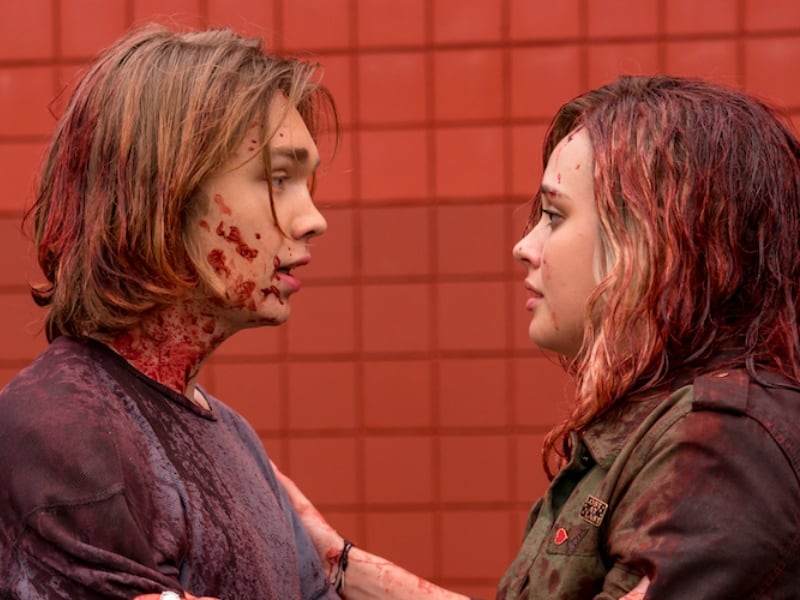
A coming of age romance about growing up…and blowing up

Spontaneous

Synopsis: A teenage dream with an explosive twist, Mara’s senior year was supposed to be full of romance and plans for the future. Then, on an otherwise boring day, one of her classmates explodes, coating the walls with gore and viscera, dashing Mara’s dreams of a totally chill final year. Then, before the authorities can get a grip on what’s happening…another kid goes kaboom. Suddenly small-time annoyances (like that weird kid having a crush on her) are the least of Mara’s troubles.

Genuinely horrific horror comedies are hard to come by. And genuinely horrific romantic comedies are harder still. Which makes Brian Duffields debut feature, Spontaneous (2020), all the more of a hat-trick. A darkly sly examination of explosive grief, Spontaneous agrees that all coming-of-age stories should be a little messy. For all the pep in its step, Spontaneous never lets the other (more horrific) shoe drop.

And yet, faced with the reality of gruesome, sudden death, Mara (Katherine Langford) chooses to cherish life and fall in love (with the aforementioned weird kid, played by Charlie Plummer). I’ve been waiting with rocks in my stomach to see how genre film will react to the (ongoing) global pandemic. And while Spontaneous’ allegorical intentions are more geared pointedly towards school shootings, the film still manages to inadvertently answer the question: how do you make a comedy about COVID?

We’ve all had to make our peace with taking things as they come during these weird times. And as Spontaneous astutely notes, even in the face of amorphous trauma, holding on to the people you love is sometimes the only thing that helps. 

Arriving on Amazon Prime and Hulu on April 12th.

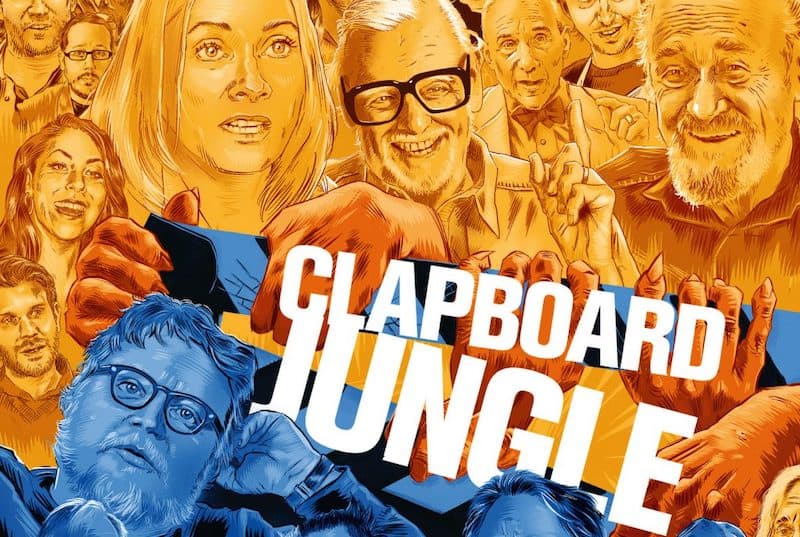
A warts-and-all exploration of what it takes to make a movie

Clapboard Jungle Ocard D Us X

Synopsis: Following five years in the life and career of indie filmmaker Justin McConnell (Lifechanger), this documentary features interviews with genre luminaries and industry mainstays to answer the question: how do you make and release a movie?

Are you a freak for behind-the-scenes content? Love the nitty-gritty of movie-making? Well, have I got the documentary for you. 

These days, anyone can make a film. The hard part is making a living while doing it. Clapboard Jungle: Surviving the Independent Film Business (2020) surveys the crags and crannies of the low-budget movie business. The doc includes interviews with the likes of Guillermo Del Toro (Crimson Peak), Tom Holland (Fright Night), George A. Romero (The Crazies), Barbara Crampton (Re-Animator), and a veritable rogues gallery of horror royalty.

There’s something compelling about the contrast between such accomplished talking heads versus McConnell, the film’s largely unfamiliar subject-director. There’s an endearing implication: that even the biggest names in the low-budget biz were, at some point, aspiring unknowns. 

Clapboard Jungle also comes with a tsunami of ephemera. ARROW subscribers will be treated to commentaries, nearly thirty extended interviews, and a collection of eight short stories by McConnell. So whether you’re an aspiring director or an arms-length fan of the industry, this is well-worth checking out!

Arrives on ARROW on April 19th.

Streamable Horror Incoming This Month

Fresh blood: A list of all the horror content coming to streaming services in April 2021.
Streaming Service Movie Date
Amazon Prime Captain Kronos: Vampire Hunter (1974) April 1
Amazon Prime Lady in A Cage (1951) April 1
Amazon Prime Mad Max (1980) April 1
Amazon Prime Motel Hell (1980) April 1
Amazon Prime Smiley Face Killers (2020) April 1
Amazon Prime So I Married An Axe Murderer (1993) April 1
Amazon Prime The Dead Zone (1983) April 1
Amazon Prime The Gift (2001) April 1
Amazon Prime The Happening (2008) April 1
Amazon Prime The Man Who Could Cheat Death (1959) April 1
Amazon Prime The Skull (1965) April 1
Amazon Prime Blair Witch (2016) April 3
Amazon Prime Pulse (2005) April 7
Amazon Prime Trollhunter (2011) April 7
Amazon Prime THEM (2021) April 9
Amazon Prime Paranormal Activity 4 (2012) April 12
Amazon Prime Spontaneous (2020) April 12
Amazon Prime Merantau (2010) April 21
ARROW Bad Meat (2011) April 12
ARROW Slaughterhouse (1987) April 12
ARROW Mirror Mirror (1990) April 16
ARROW Soul Contact (2020) April 16
ARROW Do You See What I See? (2016) April 16
ARROW Clapboard Jungle (2021) April 19
ARROW Battle Royale (2002) - Director’s and Theatrical cuts April 26
ARROW Battle Royale II (2003) - Requiem and Revenge cuts April 26
ARROW Video Nasties: Moral Panic, Censorship and Videotape and Video Tape Nasties: Draconian Days (2014) April TBA
The Criterion Channel Night Train Murders (1975)
April 1
The Criterion Channel The Bird with the Crystal Plumage (1970) April 1
The Criterion Channel Hair Wolf (2018) April 6
HBO Max Blindness (2008) April 1
HBO Max The Collection (2012) April 1
HBO Max Dark Shadows (2012) April 1
HBO Max Dead Silence (2007) April 1
HBO Max Ghost Rider (2007) April 1
HBO Max Leatherface Texas Chainsaw Massacre III (1990) April 1
HBO Max The Texas Chainsaw Massacre: The Beginning (2006) - Extended Version April 1
HBO Max White Noise (2005) April 1
HBO Max Within (2016) April 1
HBO Max Wolves At The Door (2017) April 1
HBO Max The New Mutants (2020) April 10
Hulu 28 Days Later (2003) April 1
Hulu Bug (2007) April 1
Hulu Captain Kronos: Vampire Hunter (1974) April 1
Hulu The Dead Zone (1983) April 1
Hulu The Gift (2000) April 1
Hulu Lady in a Cage (1964) April 1
Hulu Mad Max (1980) April 1
Hulu The Man Who Could Cheat Death (1959) April 1
Hulu Motel Hell (1980) April 1
Hulu Scary Movie 4 (2006) April 1
Hulu The Skull (1965) April 1
Hulu So I Married an Axe Murderer (1993) April 1
Hulu Blair Witch (2016) April 3
Hulu Paranormal Activity 4 (2012) April 12
Hulu Spontaneous (2020) April 12
IMDb TV Anaconda (1997) April 1
IMDb TV Cirque Du Freak: The Vampire's Assistant (2009) April 16
Netflix Insidious (2010) April 1
Netflix Leprechaun (1993) April 1
Netflix The Possession (2012) April 1
Netflix What Lies Below (2020) Apri4
Netflix Crimson Peak (2015) April 16
Netflix Things Heard and Seen (2021) April 29
Shudder Creepshow - Season 2, Premiere (2021) April 1
Shudder Train to Busan Presents: Peninsula (2020) April 1
Shudder The Texas Chainsaw Massacre 2 (1986) April 1
Shudder Don’t Panic (1988) April 5
Shudder Zombie for Sale (2019) April 5
Shudder The Power (2021) April 8
Shudder The McPherson Tape (1989) April 12
Shudder The Day of the Beast (1995) April 12
Shudder Dance with the Devil (1997) April 12
Shudder The Banishing (2020) April 15
Shudder The Last Drive-in with Joe Bob Briggs, season premiere April 16
Shudder 2021 FANGORIA Chainsaw Awards (2021) April 18 - 8pm ET / 5pm PT
Shudder The Stepfather (1987) April 19
Shudder Thale (2012) April 19
Shudder The Conspiracy (2012) April 19
Shudder Housebound (2014) April 19
Shudder Boys from County Hell (2020) April 22
Shudder The Similiars (2015) April 26
Shudder Attack of the Demons (2019) April 26
Shudder In Search of Darkness: Part II (2021) April 26
Shudder Horror Express (1972) April 29
Shudder Deadhouse Dark (2020) April 29
Tubi Scary Movie 4 (2006) April 1
Tubi Moon (2009) April 1
Tubi 30 Days of Night (2007) April 1
Tubi 30 Days of Night: Dark Days (2010) April 1
Tubi Cry Wolf (2005) April 1
Tubi Dominion: Prequel to the Exorcist (2005) April 1
Tubi Home Invasion (2015) April 1
Tubi Night of the Living Dead (1990) April 1
Tubi Psycho IV: The Beginning (1990) April 1
Tubi Raw (2016) April 1
Tubi The Intruders (2015) April 1
Tubi The Unborn (2009) April 1
Tubi Wer (2013) April 1
Tubi Flatliners (2017) April 1
Tubi Resident Evil (2002) April 1
Tubi Resident Evil: Extinct (2007) April 1
Tubi Slumber (2017) April 15

Horror Titles Expiring from Streaming Soon

Streaming Service Movie Date
HBO Max An American Werewolf In London (1981) April 30
HBO Max Critters 2 (1988) April 30
HBO Max Critters 4 (1992) April 30
HBO Max The Exorcist (1973) April 30
HBO Max Godzilla: King Of The Monsters (2019) April 30
HBO Max Godzilla Vs. Kong (2021) April 30
HBO Max The Hills Have Eyes II (2007) - Extended Version April 30
HBO Max The Hills Have Eyes (2006) - Extended Version April 30
HBO Max The Invisible Man (2020) April 30
HBO Max Ma (2019) April 30
HBO Max Open Water (2004) April 30
HBO Max Open Water 2: Adrift (2006) April 30
HBO Max Tim Burton’s Corpse Bride (2005) April 30
HBO Max What Ever Happened To Baby Jane? (1962) April 30
Hulu Beloved (1998) April 30
Hulu Damien - Omen II (1978) April 30
Hulu Frankenstein and the Monster from Hell (1974) April 30
Hulu From Hell (2001) April 30
Hulu Gargoyles: Wings of Darkness (2004) April 30
Hulu The Haunting In Connecticut (2009) April 30
Hulu The Haunting In Connecticut 2: Ghosts Of Georgia (2013)
April 30
Hulu Mad Max (1980) April 30
Hulu Motel Hell (1980)
April 30
Hulu The Omen (1976) April 30
Netflix Antidote (2018) April 14
Netflix Cirque du Freak: The Vampire’s Assistant (2009) April 16
Netflix The Vatican Tapes (2015) April 20
Netflix Doom (2005) April 28
Netflix I Am Legend (2007) April 30

Mini Monsters Will Always Be More Terrifying Than Titans

As we’ve seen with the year-plus of COVID, the smallest things are what will kill us. Viruses, bacteria, and other microscopic menaces are unseen and so they’re particularly scary. Forget the towering, bigger-than-a-barn types of monsters, which will likely squash you beneath their feet or crush you under a pile of rubble. They’re at least seen coming a mile away. But while the smaller you go in terms of a deadly foe, the potentially deadlier they are, I’m not here to talk about the near-totally invisible threats, which are rarely personified — or even creature-ified — outside of movies with incredible shrinking protagonists. I’m here to recognize the other mini-monsters, those that are just big enough to see only after it’s too late to notice them leaping toward you.

Whether it’s Gremlins, Krites, Munchies, or Ghoulies, the commonality of little monsters is they’re just as scary-looking as any other horrible creature — big or tiny — when you actually can see them, but they’re also good at getting into small spaces and staying hidden, either to be more stealthy in their murderous missions or undetected while causing mischief. Mini-monsters can be like the genuinely-invisible poltergeist in their sabotage and shenanigans. Mythologically, gremlins have been unseen creatures blamed for malfunctions and other unlikely mechanical problems, particularly in aircraft, going back a hundred years. Such vandalism would possibly cause death by apparent accident, and movie mini-monsters sometimes do similar damage, meaning a lot of the time there’s no trace that a creature was even around and responsible for the deaths.

But many mini-monsters are quite vicious and will chomp on your meaty parts as if they were flesh-eating bacteria, and a number of them aren’t concerned with cleaning up the bloody mess they leave behind. Because they are small and easily concealed, they like to jump out at you and dig in, maybe leaping into your clothing and continuing to mostly remain unseen while clawing and biting. That can be extra frightening for others, to see someone flailing about in agony while they’re being eaten alive but not witness the culprits. Often mini-monsters will sneak away, still-undiscovered, and drop a mystery along with a body. While the monsters devised for movies and folklore are fantastical in design, they’re not that unlike real small creatures, such as venomous spiders, who act similarly — and occasionally get great movies of their own that align well with the more imaginary kind.

Don’t they seem more vulnerable for their diminutive size, though? You can just kick them away, right? One misconception about mini-monsters might be that they’re always just wee creatures. But numerous movies have shown us that they can come in a larger size as well. Gremlins in great numbers — oh, and the fact that they and other minis multiply themselves is also pretty horrifying, by the way — can appear as an overwhelming wave of horror. Krites, the aliens from the Critters franchise that roll up into a ball when swiftly traveling, will band together in the form of one giant ball of terror, like a ravenous Voltron comprised of spiky fur and teeth, making an even quicker meal out of anything or anyone in their collective path. And Ghoulies can be conjured in super-size, though those monsters can actually be helpful to humans if they only desire to eat their smaller cousins.

The mini-monsters trend of the 1980s came at a booming time for horror in general, but I think it’s interesting to compare the wave with the same decade’s films about killer toys, killer pets, and killer kids because the trendsetter of mini-monster movies, Gremlins, relates to all three of those. The originating creature, Gizmo the Mogwai, is technically a pet but also kind of like a toy by being a Christmas gift, and it comes with strict rules for survival, which is also like a pet, yes, but is extreme in its responsibilities and repercussions in the way that parents will understand more so than mere pet owners (sorry not sorry to the pet owners who think they’re parents). There is a connotation with small things to be cuter, but not only can small things hurt you — in a way that is minor but lasting, as opposed to Godzilla stepping on your house — but so can cute things turn ugly and deadly.

Consider the killer rats and dogs or the cats and kids coming back to life in Pet Sematary or the puppets and dolls and toys in Puppet Master, Child’s Play, and Joe Dante’s own Small Soldiers, which is essentially a Gremlins remake with plastic in place of body tissue. The antagonistic entities in these movies are also mini-monsters but have a more familiar and relatable — and therefore presumably scarier — quality to them. You can think of Gremlins and Ghoulies as metaphors for any of those other categories, especially when they’re represented with children’s clothing or personalities or come across as playthings or are in the possession of or are the responsibility of a human character. When you become the parent of a toddler, you understand better than ever why anything of that size coming up behind you or up to you while you’re sleeping is plenty startling.

Considering how much scarier mini-monster movies can be compared to giant creature features, I’m surprised that we don’t see more of them. A lot of horror trends go in cycles, but outside of the ’80s wave, there hasn’t been a lot of other good Gremlins followers. Is it because Gremlins is so iconic that everything else would feel like a knockoff? That doesn’t stop Hollywood from milking other ideas, for better or worse. Every now and then we do get a Slither or a Grabbers with small deadly creatures, though they’re not quite the same without personalities likening them to kids or pets and are instead more related to bugs and sea animals — not that they aren’t still great and plenty creepy and scary for all their burrowing and infecting and bloodsucking. But so are leeches and squids. I’ll still take the lot of them over any massive monstrosities, however.

Sure, the last decade has brought us Chubbies, Weedjies, Slimoids, and Ghastlies, but they’re not good enough. Instead, these comedy-horror cheapies seem content with being cheesy throwbacks, yet they feel more intent on being ironic than scary (they’re more like Troll 2 than even Ghoulies). The original and peak duo of mini-monster movies, Gremlins and Critters (and their arguably better sequels), came about so well so suddenly — and coincidentally! Was it somehow a one-time occasion? Are we to settle on resurrections of each of them, in whatever form we can have them? Does there need to be a Gremlins vs. Krites movie? I’d watch it, no lie. But I would love more quality mini-monsters overall, with a variety of little creatures — or they can even technically be based on the gremlins myth a la Shadow in the Cloud for all I care — in a variety of situations.

Copyright © Cinenus | Powered by Blogger

Design by Anders Noren | Blogger Theme by NewBloggerThemes.com